Marcus Rashford: From Childhood Poverty to Fighting Child Hunger
How Marcus Rashford turned memories of childhood food insecurity into a campaign that helped secure England’s £120m summer food fund in 2020.
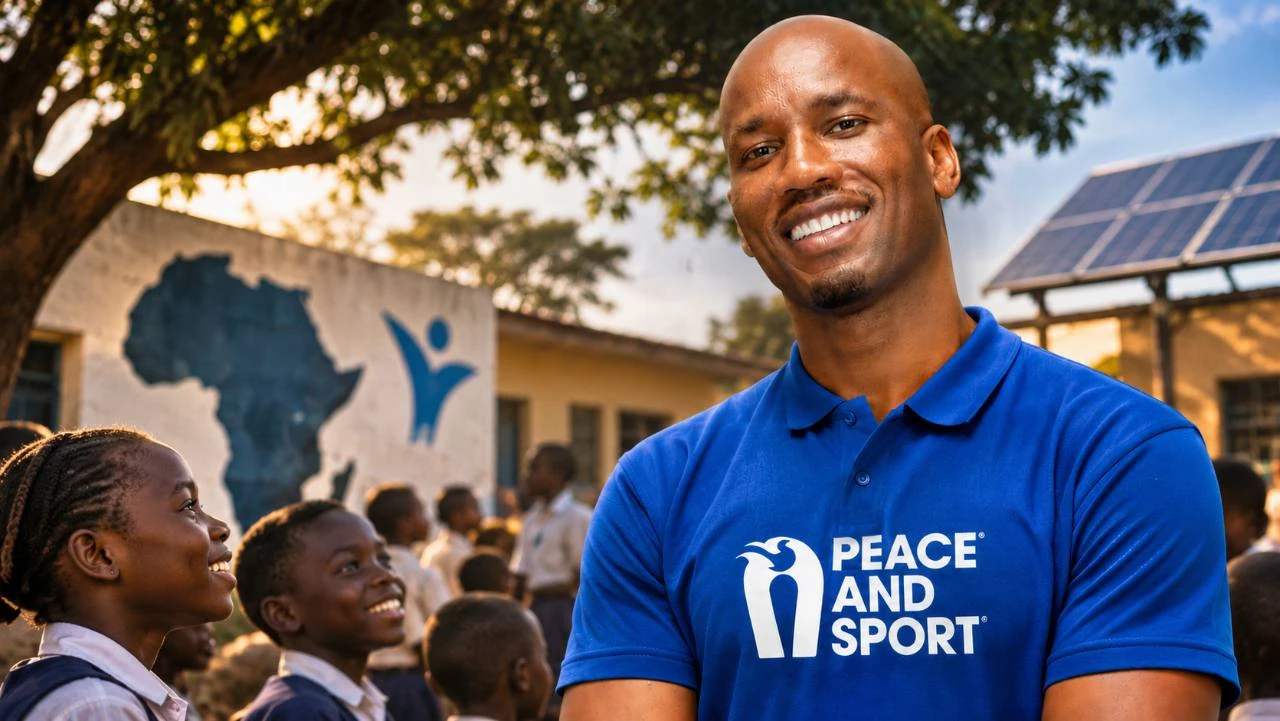
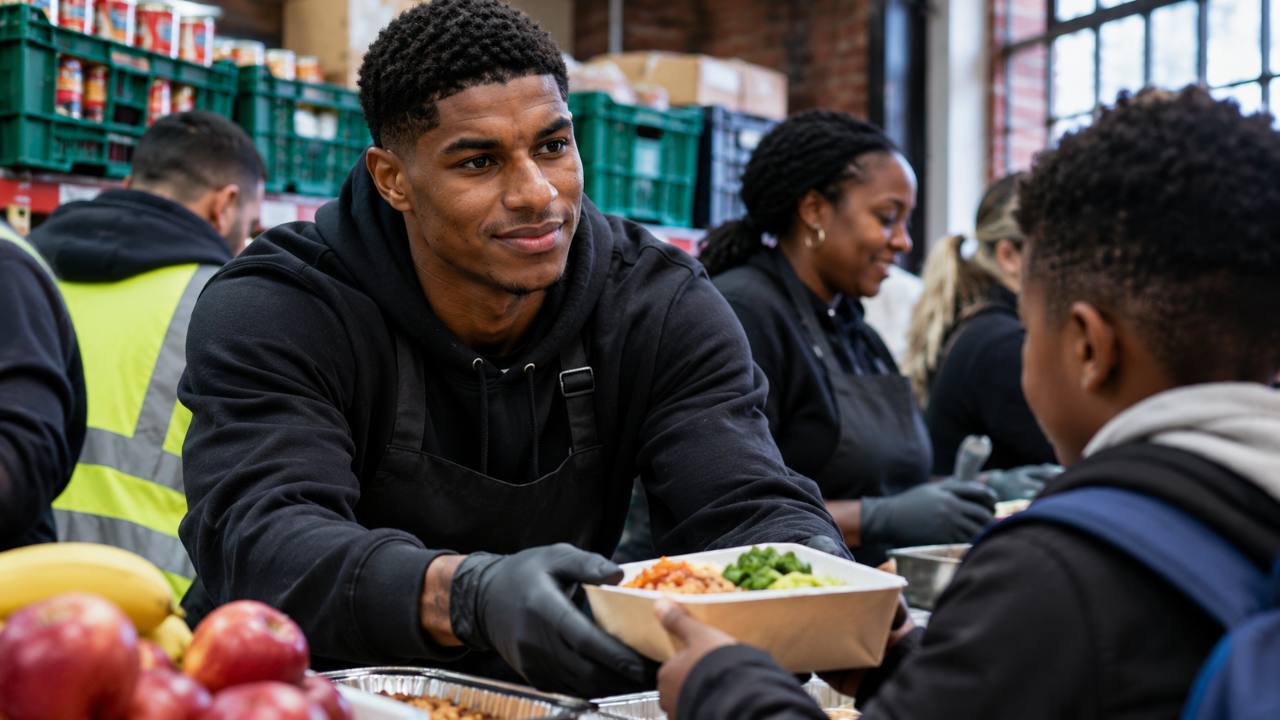
AI-generated editorial illustration supplied for PRESDA. The people and food-service scene are imagined, not a photograph of a verified visit or beneficiaries.
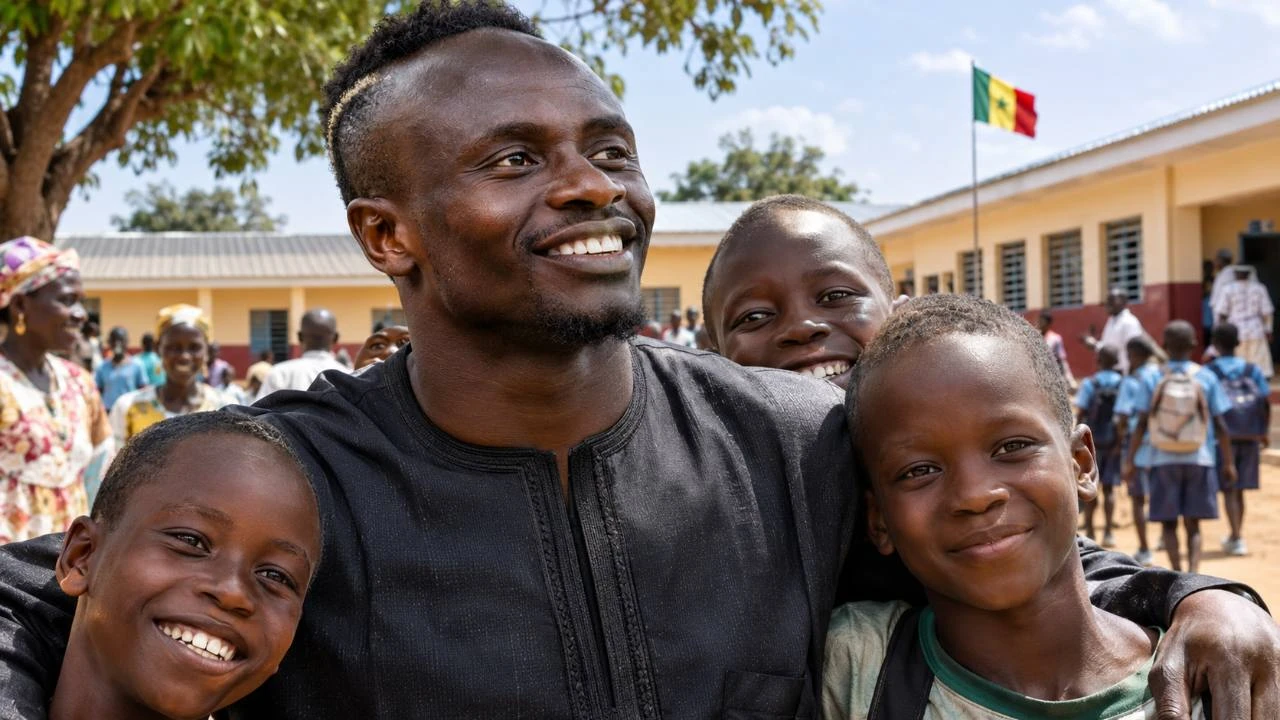
AI-generated editorial illustration of an imagined gathering. No real person, community or historical event is depicted.
Marcus Rashford’s campaign against child hunger began with an experience he could describe from memory. Growing up in Greater Manchester, he had relied on free school meals and other food support while his mother worked to provide for her family. In 2020, the Manchester United and England forward used that history to challenge a simple assumption: a child’s need for food does not disappear when school closes. Manchester United, December 28, 2020: Rashford on his childhood BBC, June 15, 2020: Rashford’s free school meals appeal
The most consequential result came on June 16, 2020, when the government announced a £120 million Covid Summer Food Fund for England. It was public money, not a personal donation by Rashford. His achievement was helping turn a problem familiar to families into a political decision that could be measured in weeks of support and children reached. FareShare, June 16, 2020: summer food fund response House of Commons, June 16, 2020: summer school meals debate
What did Rashford’s campaign achieve?
The summer fund covered around 1.3 million eligible children in England. The provision amounted to six weeks of support, with vouchers worth £15 per week for eligible pupils. The House of Commons record preserves the government’s explanation of the scheme on the day of its announcement, while FareShare welcomed the change immediately. Those records anchor the story more securely than retrospective slogans about one footballer “feeding Britain”. FareShare, June 16, 2020: summer food fund response House of Commons, June 16, 2020: summer school meals debate
| Date | Development |
|---|---|
| March 2020 | Partnership with food redistribution charity FareShare |
| June 15, 2020 | Public appeal to MPs over holiday food provision |
| June 16, 2020 | Government announces £120m Covid Summer Food Fund for England |
| Summer 2020 | Support for around 1.3m eligible children, using six weeks of provision |
| September 2020 | Child food poverty task force brings businesses and charities together |
| October 2020 | MBE recognition for services to vulnerable children |
A childhood that made the policy personal
Rashford’s account of childhood poverty centres on his mother’s efforts, not a lack of care at home. He described a family in which work and determination did not always produce enough money for food. Free school meals and breakfast provision helped close that gap. In his later conversation with Manchester United’s official podcast, he returned to those memories and the commitment to help that grew from them. Manchester United, December 28, 2020: Rashford on his childhood
That testimony matters because debates about poverty can become detached from ordinary family routines. Hunger is experienced through a missed breakfast, an anxious shopping trip or an adult trying to make limited food last. Rashford brought those experiences into public discussion without suggesting that a child’s circumstances should determine how much support they deserve.
Why school holidays became the pressure point
School meals are delivered through an institution children attend during term time. Holidays interrupt that structure, while household costs continue. The disruption caused by the pandemic made the gap particularly visible in 2020. Rashford’s June appeal asked decision-makers to consider what happened to eligible children when the usual school-based support was unavailable. BBC, June 15, 2020: Rashford’s free school meals appeal
His argument was effective because it connected a defined policy mechanism to a recognisable human need. It was not simply a general request for kindness. It asked for food support to continue across a specific period, for an identifiable group of children, at a moment when families faced exceptional uncertainty.
FareShare turned visibility into an organised effort
Rashford began working with FareShare in March 2020. The charity redistributes food through a wider network, linking supplies to organisations that support people in need. His name brought attention and fundraising power, but the work depended on staff, volunteers, suppliers and local groups already able to move food where it was needed. FIFPRO, July 2020: £20m charity support and £120m public funding
FIFPRO’s July 2020 account described his help in raising £20 million with FareShare, alongside the separate £120 million public fund. These are different kinds of achievement. The first concerned charitable mobilisation; the second concerned government spending. Combining them into an invented personal donation would erase both the contributors and the policy change. FIFPRO, July 2020: £20m charity support and £120m public funding
One public figure, many people doing the work
Celebrity can make a message travel quickly. It cannot by itself create a reliable distribution system or establish a family’s eligibility for public support. Rashford’s campaign worked through organisations and institutions, rather than around them. The distinction is central to understanding why a footballer’s intervention had practical consequences.
It also prevents the story from becoming a claim that charitable generosity can replace public services. Food redistribution can respond to immediate need. A publicly funded school-meal scheme operates through different rules, responsibilities and budgets. The campaign’s importance lies partly in bringing those two spheres into the same national conversation.
From the June appeal to a broader coalition
Rashford’s open appeal to MPs on June 15 was followed by the government’s announcement the next day. The short interval made the reversal striking, but the issue did not end with a summer scheme. In September, FareShare joined a child food poverty task force bringing together businesses and charities around proposals linked to the National Food Strategy. BBC, June 15, 2020: Rashford’s free school meals appeal FareShare, June 16, 2020: summer food fund response FareShare: child food poverty task force
The coalition widened the discussion to eligibility for free school meals, holiday provision and support for young children through Healthy Start. Those were policy aims, not proof that every proposal had already become law. The campaign was moving from an emergency response towards a more sustained argument about how children should be supported. FareShare: child food poverty task force
Recognition did not mean the problem was solved
In October 2020, Rashford received MBE recognition for services to vulnerable children, recorded by the Football Association. The honour acknowledged an unusual form of sporting influence: a player using a platform earned on the pitch to make the state answer a question about children’s welfare. The FA, October 10, 2020: MBE recognition
The continued debate is visible in Parliament’s January 2021 session on child food poverty, linked to a petition that had attracted more than 1.1 million signatures. That public engagement shows the campaign’s reach, but neither an honour nor a petition establishes that hunger was eliminated. They are milestones in a continuing struggle, not a final result. UK Parliament, January 21, 2021: child food poverty petition
Why this belongs in sporting history
Footballers are often assessed through goals, transfers and trophies. Rashford’s intervention introduced another measure of influence: whether a public figure could make an institution reconsider a decision affecting people outside sport. His credibility came partly from speaking about an experience he remembered, then attaching that testimony to a concrete demand.
There are parallels with Sadio Mané’s support for Bambali and Didier Drogba’s work in education and health. The mechanisms differ, from public advocacy to funded facilities, but careful reporting must identify who paid, who delivered the service and what the evidence actually demonstrates.
The lasting lesson of a specific victory
The supplied hero imagines Rashford serving food in a community setting. It is an AI-generated illustration, not a photograph of a particular visit or an identifiable child receiving assistance. The documented record is more specific and more meaningful than an imagined scene: a partnership, an appeal, a public fund and a continuing coalition.
Rashford did not end child poverty in one summer. He helped make the loss of holiday food support politically harder to ignore. That is a substantial achievement precisely because it can be described without exaggeration: a young sportsman drew on childhood experience, worked with others and helped secure a defined change for children in England.
FAQ
Frequently Asked Questions
Did Rashford donate £120 million?
No. That was public funding announced by the UK government for England’s Covid Summer Food Fund. His campaign helped secure the policy change.
Why did he campaign on school meals?
He described relying on free school meals and other food support during his own childhood, and argued that children still needed help during holidays.
Was the 2020 summer fund UK-wide?
The £120m fund discussed here covered England. Education and food support policies differ across the UK’s nations.
What was his relationship with FareShare?
He partnered with the food redistribution charity in March 2020, helping raise money and attention alongside its wider network.
PRESDA Dispatch
Stay Informed. Stay Aware.
A sharp briefing across AI, gaming, sport, business, world affairs, paparazzi, and lifestyle.