THE WORLD'S MOST EXPENSIVE PAINTINGS EVER SOLD
Explore record painting sales through 11 October 2026, with exact auction prices, qualified private-sale figures, original artwork images and sources.
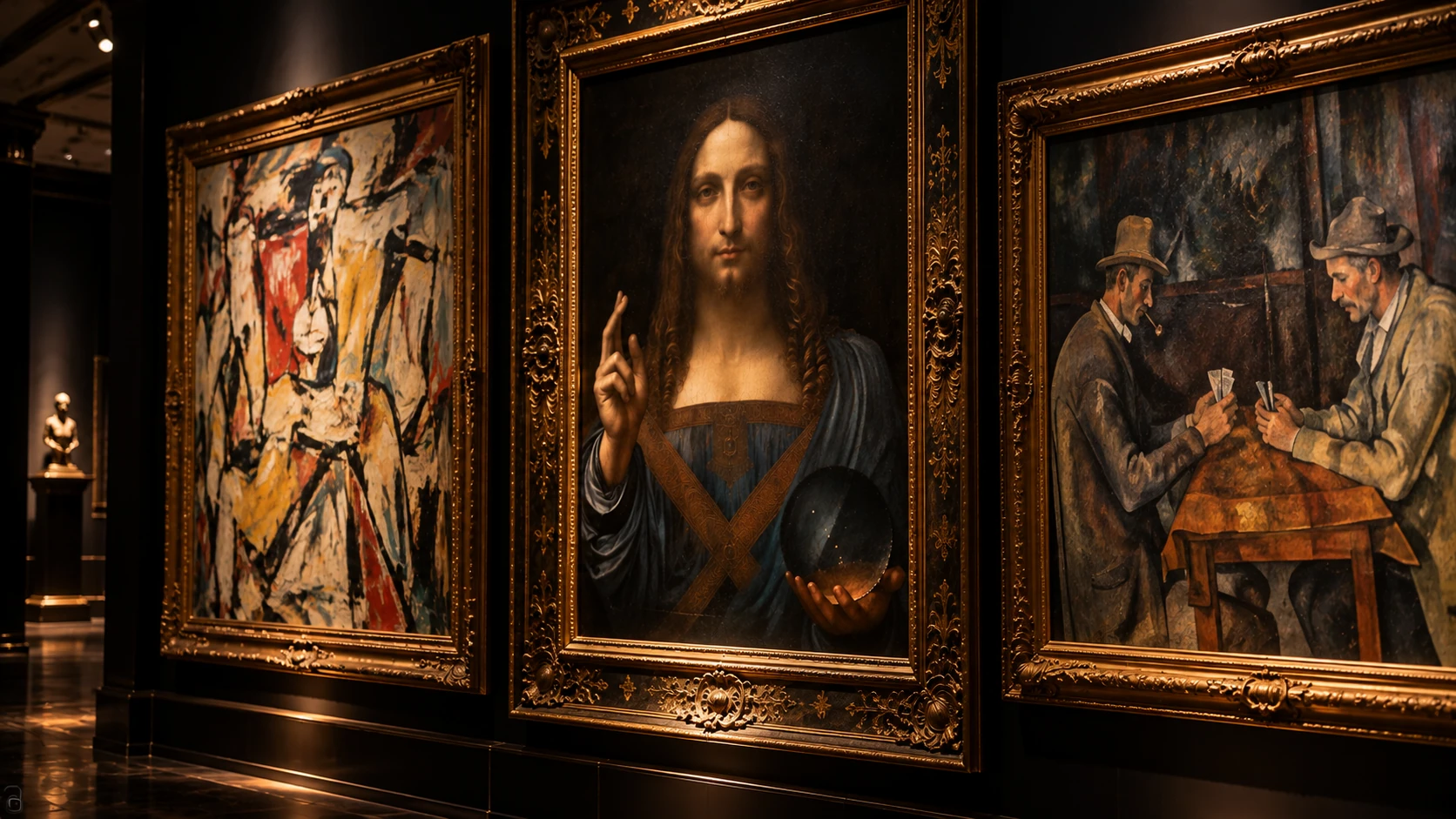
AI-generated editorial illustration. Imagined gallery, not a real exhibition or faithful reproductions of the paintings.
The surprise goes beyond money. A familiar face, a pair of card players or a field of apparently unstructured paint becomes the meeting point of history, scarcity, scholarship and the ambitions of a handful of collectors. When the auctioneer lowers the hammer, those forces briefly acquire a number.
That number needs interpretation. This feature, checked through 11 October 2026, brings together fifteen of the highest documented or credibly reported nominal painting-sale prices. It includes public auctions and private transactions, but does not pretend their evidence is identical. The seven auction results below are published totals including buyer’s premium. Private figures retain their qualifications.
How to read the ranking
Amounts are historical US dollars, without inflation adjustment. Approximate private figures determine provisional positions, not mathematical certainty: a reported sum near $250 million cannot be treated like an independently disclosed invoice to the dollar. Each work appears once at its selected high-price transaction. For Gauguin, court-documented $210 million evidence replaces the early $300 million story. For Klimt’s Wasserschlangen II, a September 2012 invoice described in a court complaint is distinguished from later reporting that gives 2013. A complaint is a party’s account, not a judicial finding of wrongdoing. Original titles identify the exact objects, especially where an artist painted several versions.
PRESDA Data Graphics
Fifteen high-price painting transactions
Checked through 11 October 2026. Nominal dollars, not inflation-adjusted. Auction totals include buyer’s premium. Approximate private figures give provisional positions; currencies and disclosure differ. A court complaint is not a finding of wrongdoing.
| Painting / artist | Created / movement | Historical USD price | Sale date / evidence | Source |
|---|---|---|---|---|
| 1. Salvator MundiLeonardo da Vinci (attributed) | c. 1500Italian Renaissance | US$450,312,500 | November 15, 2017Public auction, including premiumChristie's New York | Price evidence: Salvator Mundi |
| 2. InterchangeWillem de Kooning | 1955Abstract Expressionism | ≈ US$300,000,000 | September 2015Reported private figure | Price evidence: Interchange |
| 3. Les Joueurs de cartesPaul Cézanne | 1892–96Post-Impressionism | ≈ US$250,000,000 | 2011Reported private figure | Price evidence: Les Joueurs de cartes |
| 4. Bildnis Elisabeth LedererGustav Klimt | 1914–16Vienna Secession | US$236,360,000 | November 18, 2025Public auction, including premiumSotheby's New York | Price evidence: Bildnis Elisabeth Lederer |
| 5. Nafea faa ipoipoPaul Gauguin | 1892Post-Impressionism | US$210,000,000 | September 10, 2014Court-documented private sale | Price evidence: Nafea faa ipoipo |
| 6. Number 17AJackson Pollock | 1948Abstract Expressionism | ≈ US$200,000,000 | September 2015Reported private figure | Price evidence: Number 17A |
| 7. Shot Sage Blue MarilynAndy Warhol | 1964Pop Art | US$195,040,000 | May 9, 2022Public auction, including premiumChristie's New York | Price evidence: Shot Sage Blue Marilyn |
| 8. No. 6 (Violet, Green and Red)Mark Rothko | 1951Colour Field / Abstract Expressionism | ≈ US$186,000,000Reported historical equivalent of €140 million | August 2014Reported private figure | Price evidence: No. 6 (Violet, Green and Red) |
| 9. Wasserschlangen IIGustav Klimt | 1904/1906–07Symbolism / Vienna Secession | US$183,800,000 | September 2012Private figure in court complaintSeptember 2012 invoice; later summaries give 2013 | Price evidence: Wasserschlangen II |
| 10. Number 7A, 1948Jackson Pollock | 1948Abstract Expressionism | US$181,185,000 | May 18, 2026Public auction, including premiumChristie's New York | Price evidence: Number 7A, 1948 |
| 11. Les femmes d’Alger (Version ‘O’)Pablo Picasso | 1955Cubism | US$179,365,000 | May 11, 2015Public auction, including premiumChristie's New York | Price evidence: Les femmes d’Alger (Version ‘O’) |
| 12. Nu couchéAmedeo Modigliani | 1917–18Modernism / École de Paris | US$170,405,000 | November 9, 2015Public auction, including premiumChristie's New York | Price evidence: Nu couché |
| 13. MasterpieceRoy Lichtenstein | 1962Pop Art | US$165,000,000 | 2017Documented private sale | Price evidence: Masterpiece |
| 14. Nu couché (sur le côté gauche)Amedeo Modigliani | 1917Modernism / École de Paris | US$157,159,000 | May 14, 2018Public auction, including premiumSotheby's New York | Price evidence: Nu couché (sur le côté gauche) |
| 15. Le RêvePablo Picasso | 1932Cubism / dreamlike modernism | ≈ US$155,000,000 | March 2013Reported private figure | Price evidence: Le Rêve |
1. Salvator Mundi, attributed to Leonardo da Vinci
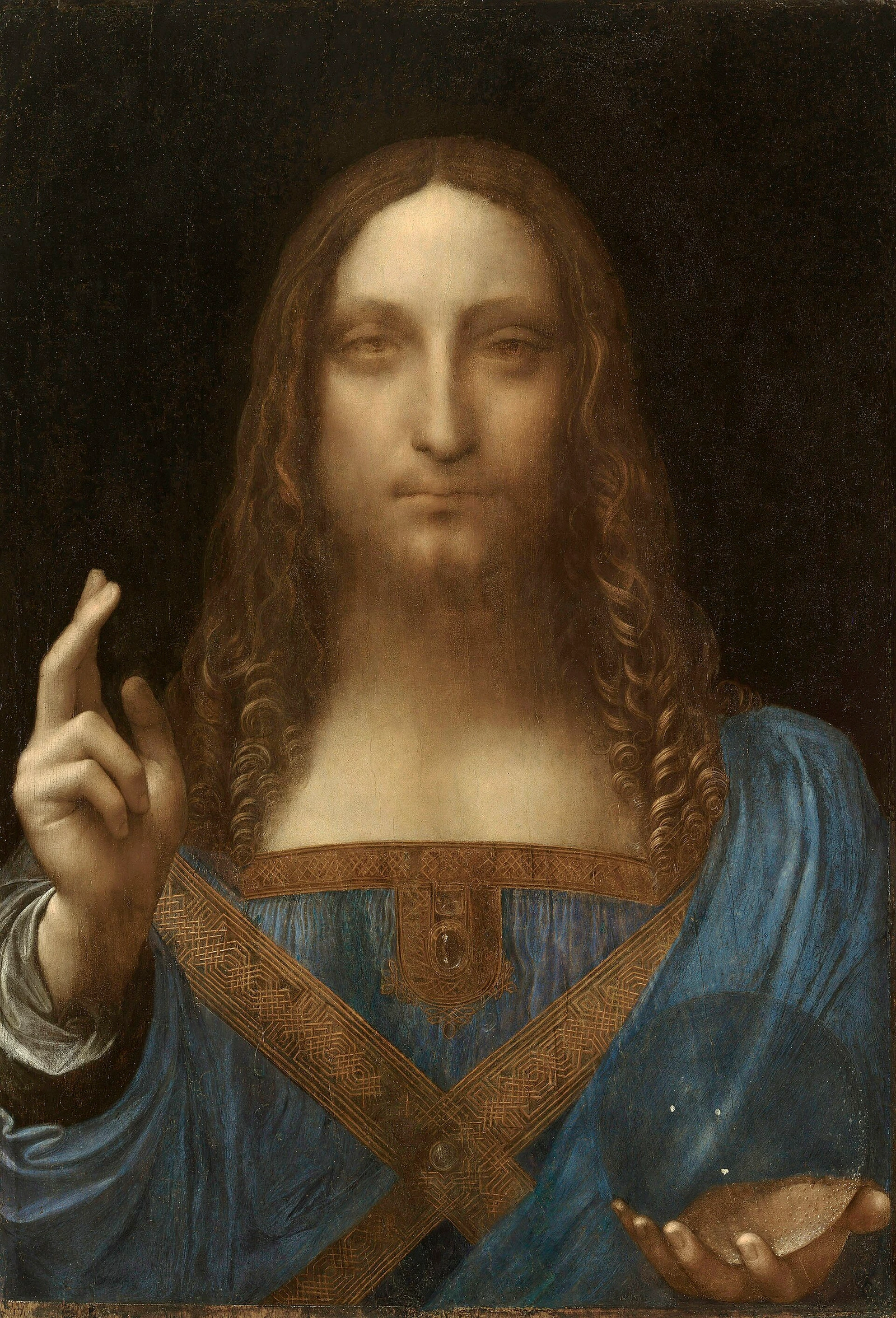
Salvator Mundi, Leonardo da Vinci (attributed), c. 1500.
Public-domain artwork reproduction via Wikimedia Commons. Leonardo da Vinci (attributed) / Wikimedia Commons. PD-Art. Resized and converted to WebP; no crop.
US$450,312,500 · November 15, 2017
Public auction, including premium · Christie's New York
Created circa 1500 and associated with the Italian Renaissance, Salvator Mundi sold for $450,312,500 at Christie’s New York on 15 November 2017. The total includes buyer’s premium. Its half-length Christ raises a hand in blessing and holds a transparent orb. Christie’s offered it as Leonardo; the National Gallery had included it in its 2011 exhibition. However, scholarly disagreement about attribution and the extent of restoration remains. We retain “attributed to” rather than presenting market acceptance as unanimous expert agreement. The ultimate beneficial buyer’s identity is not established by the auction result alone. Salvator Mundi: sale evidence Attribution review
A potential Leonardo occupies a different collecting category from an accomplished workshop picture, even when the painted image is recognisably related. The work’s rediscovery and changing attribution are essential to its modern provenance. They also make it a caution against confusing price with certainty. The auction record is demonstrable; every assertion about authorship still needs its own evidence.
2. Interchange, Willem de Kooning
Original artwork title: Interchange
View the exact painting: InterchangeThe exact artwork opens on its credited source page. Republication rights were not established, so no image is copied here.
Interchange, Willem de Kooning, 1955.
Artwork source: Wikipedia artwork record.
≈ US$300,000,000 · September 2015
Reported private figure
De Kooning painted Interchange in 1955, during the development of American Abstract Expressionism. Bloomberg reported that a 2015 private transaction valued it at approximately $300 million, within a roughly $500 million deal involving Pollock’s Number 17A. The allocation to each painting came from people familiar with the deal, not a public auction result or an accessible contract. September 2015 is the reported transaction period; no exact closing day is independently established here. The price therefore remains an attributed estimate, and we do not convert reported participant names into independently confirmed transaction identities. Interchange: sale evidence
The painting compresses bodily suggestion, urban energy and broad, restless marks into abstraction. Its importance is not that it looks expensive. It represents a period in which painting could retain the force of a figure without describing one conventionally.
3. Les Joueurs de cartes, Paul Cézanne
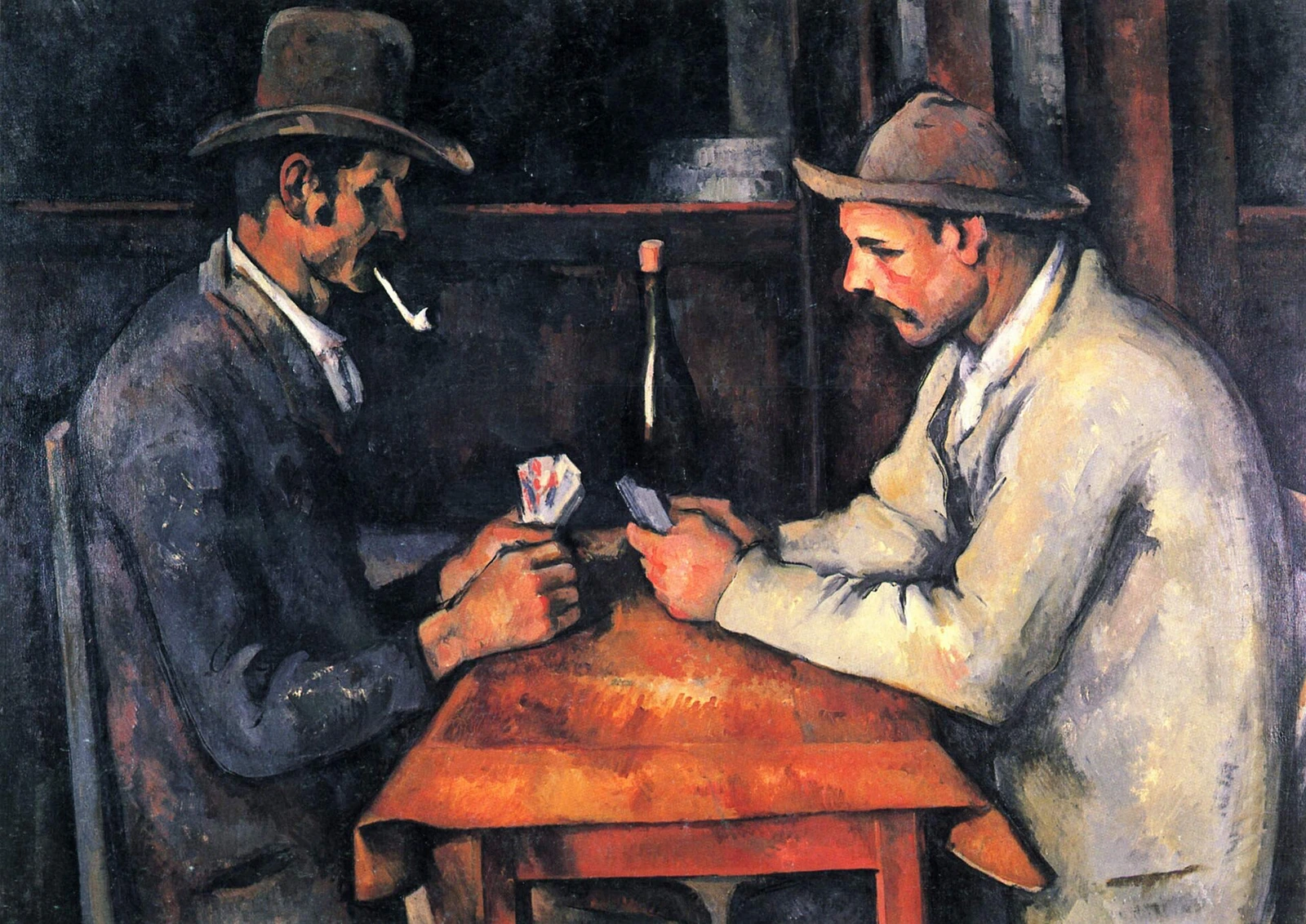
Les Joueurs de cartes, Paul Cézanne, 1892–96.
Public-domain artwork reproduction via Wikimedia Commons. Paul Cézanne / The Yorck Project / Wikimedia Commons. PD-Art. Resized and converted to WebP; no crop.
≈ US$250,000,000 · 2011
Reported private figure
This entry concerns the 97-by-130-centimetre canvas from the former George Embiricos collection, not the differently sized versions in museums. The Cézanne catalogue raisonné dates it 1892–96, while other catalogues narrow the dating to 1892–93. The Post-Impressionist work was reported sold privately in 2011 for around, or more than, $250 million. Public reporting did not disclose a contract, and published estimates vary. Our $250 million reference is a ranking convention, not an exact confirmed payment. It leaves this position provisional relative to other exceptionally high private prices. Les Joueurs de cartes: sale evidence Cézanne catalogue raisonné
Two men concentrate on cards across a table, but the painting’s enduring force lies in the weight and organisation of forms. A quiet everyday activity becomes a study of balance and human presence. Cézanne’s series is central to his mature work, yet the existence of several related paintings makes identification unusually important. Substituting the Musée d’Orsay or Metropolitan Museum version would illustrate the artist while misrepresenting the transaction. Here the reproduction and the text refer to the privately held, larger two-player canvas.
4. Bildnis Elisabeth Lederer, Gustav Klimt
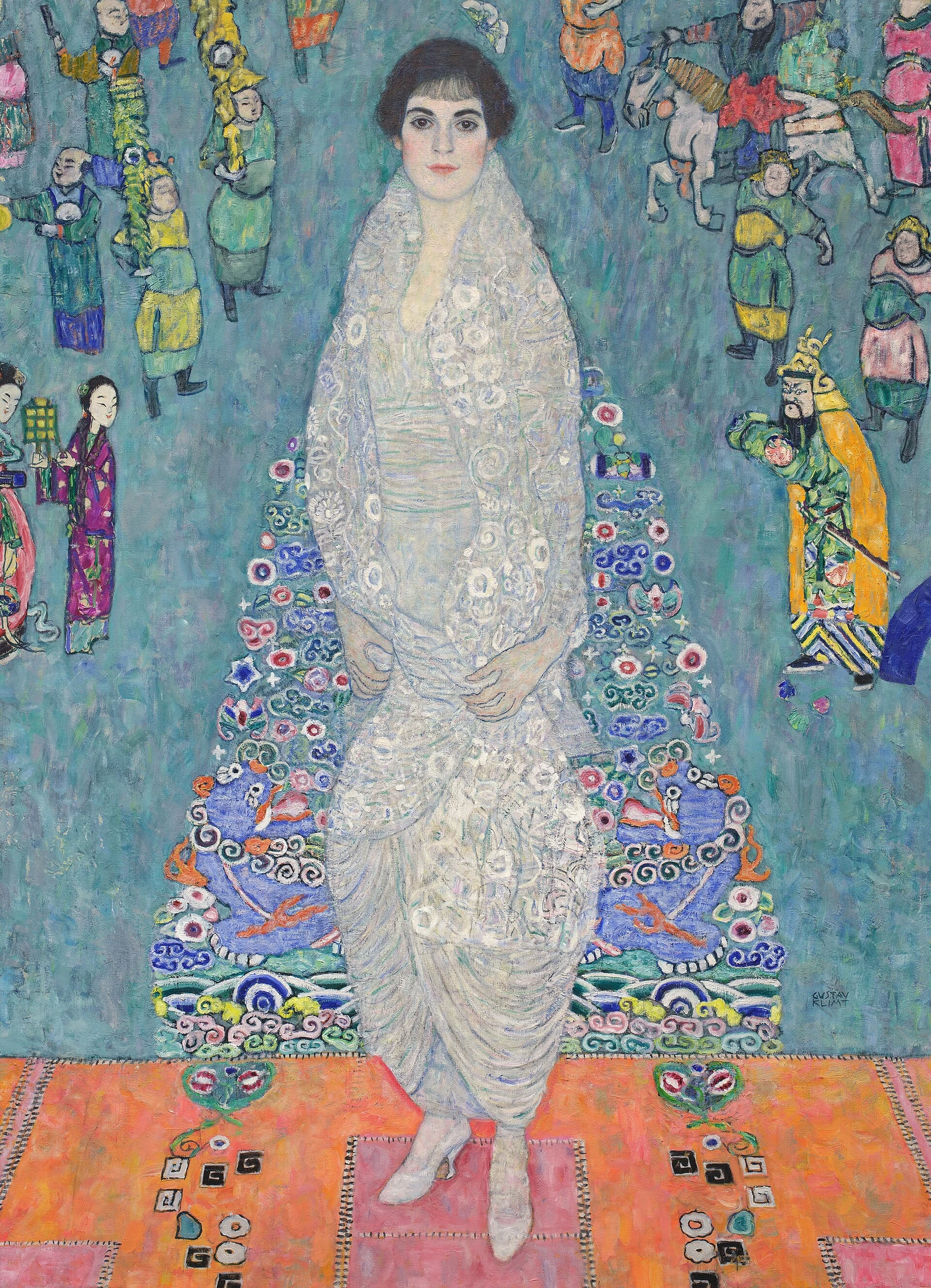
Bildnis Elisabeth Lederer, Gustav Klimt, 1914–16.
Public-domain artwork reproduction via Wikimedia Commons. Gustav Klimt / Wikimedia Commons. PD-Art. Resized and converted to WebP; no crop.
US$236,360,000 · November 18, 2025
Public auction, including premium · Sotheby's New York
Klimt’s Portrait of Elisabeth Lederer, painted in 1914–16, realised $236,360,000 at Sotheby’s New York on 18 November 2025. The published price includes fees. It came from the Leonard A. Lauder collection; the auction house did not publicly identify the buyer in its sale announcement. Its provenance begins with August and Serena Lederer, who commissioned the portrait and acquired it in 1916. The late Vienna Secession painting sets the full-length sitter within a richly patterned environment, making dress, ornament and pictorial space inseparable from the portrait’s presence. Bildnis Elisabeth Lederer: sale evidence Portrait catalogue
The sale changed the upper tier of the auction ranking, but calling it a record is only the beginning of understanding it. The painting brings together a major artist, an unusually ambitious portrait and a documented collecting history. A recognisable masterpiece can attract buyers who want a defining work rather than a representative example. That distinction is difficult to quantify and powerful in competition. The result is an auction fact; assertions that it proves every Klimt has become more valuable would require wider market evidence.
5. Nafea faa ipoipo, Paul Gauguin
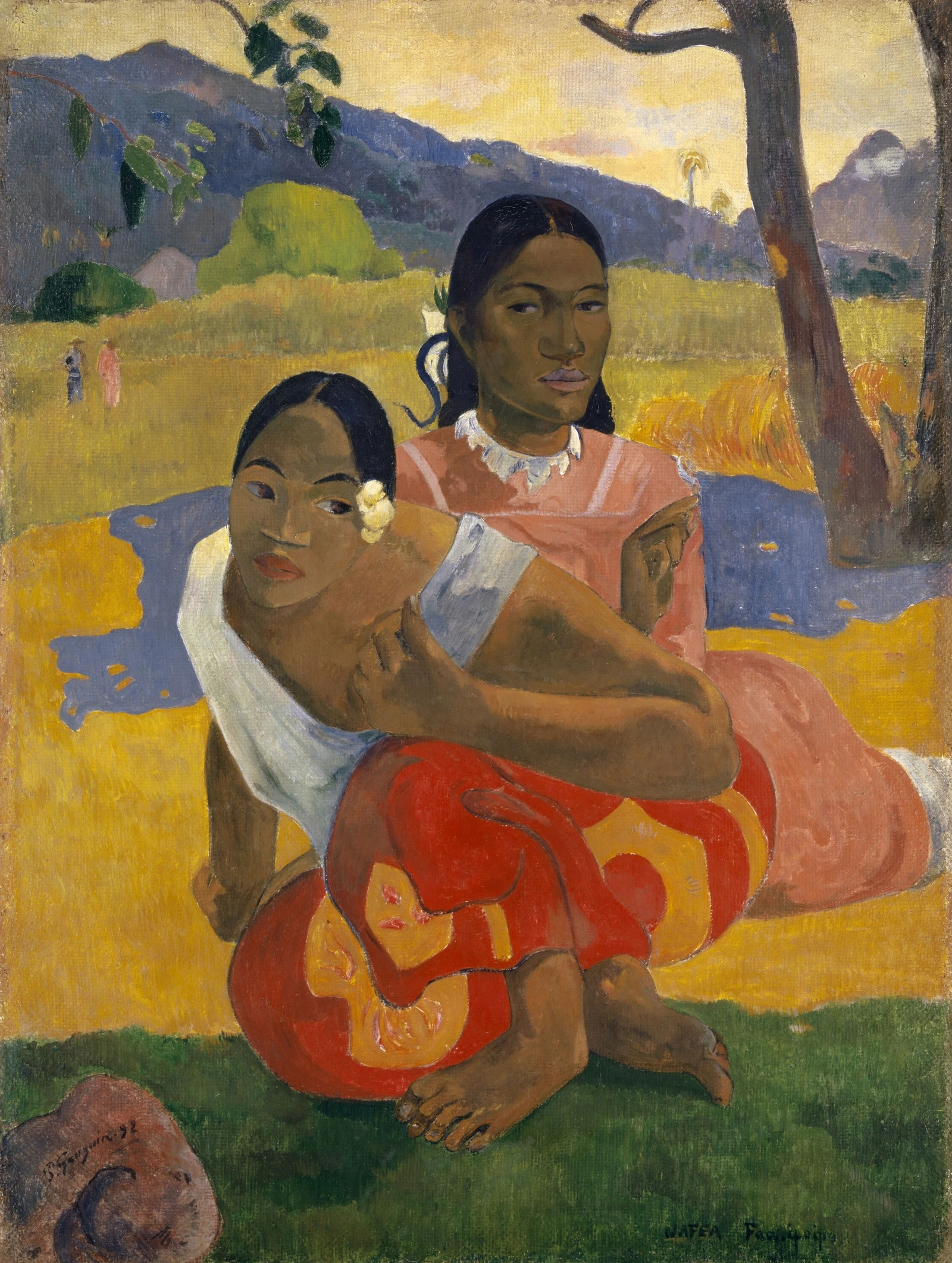
Nafea faa ipoipo, Paul Gauguin, 1892.
Public-domain artwork reproduction via Wikimedia Commons. Paul Gauguin / Kunstmuseum Basel, Martin P. Bühler. PD-Art. Resized and converted to WebP; no crop.
US$210,000,000 · September 10, 2014
Court-documented private sale
Gauguin painted Nafea faa ipoipo, usually translated as When Will You Marry?, in Tahiti in 1892. The Post-Impressionist painting’s private sale was widely announced in 2015 with a supposed $300 million price. English court records provide a firmer account: the transaction was agreed on 10 September 2014 for $210 million, involving the Rudolf Staechelin Family Trust and the Emir of Qatar. The later Court of Appeal judgment upheld a commission decision based on that sale. The correction matters: neither the old headline nor a different circulating $170 million figure should replace the documented sum. Nafea faa ipoipo: sale evidence Appeal judgment
The work places two women within a densely coloured landscape. Its historical importance needs to be considered alongside the colonial circumstances of Gauguin’s Tahitian work, rather than treating the setting as an uncomplicated tropical fantasy. A famous image and an exceptional price do not exempt an artist’s representation of people from critical discussion. This sale also offers a rare lesson in evidence: private markets can become more visible when litigation brings agreements into public records.
6. Number 17A, Jackson Pollock
Original artwork title: Number 17A
View the exact painting: Number 17AThe exact artwork opens on its credited source page. Republication rights were not established, so no image is copied here.
Number 17A, Jackson Pollock, 1948.
Artwork source: Wikipedia artwork record.
≈ US$200,000,000 · September 2015
Reported private figure
Pollock’s Number 17A dates from 1948 and belongs to Abstract Expressionism. Bloomberg’s account of the 2015 two-painting deal assigned it approximately $200 million. As with Interchange, that separate value is a reported allocation within a private transaction, not a published auction total. September 2015 is the reported period; an exact day and underlying contract are not independently disclosed in the evidence used here. Its position must remain qualified. It is also a different work from Number 7A, 1948, which achieved a public auction record in May 2026. Number 17A: sale evidence
Pollock’s layered marks reward attention to density, rhythm and the relationship between a painted surface and the surrounding space. The viewer need not imagine a hidden figure to find structure. Its appeal to a major collection can lie in the strength of that visual experience and its place in the development of a transformative painting method.
7. Shot Sage Blue Marilyn, Andy Warhol
Original artwork title: Shot Sage Blue Marilyn
View the exact painting: Shot Sage Blue MarilynThe exact artwork opens on its credited source page. Republication rights were not established, so no image is copied here.
Shot Sage Blue Marilyn, Andy Warhol, 1964.
Artwork source: Christie's catalogue.
US$195,040,000 · May 9, 2022
Public auction, including premium · Christie's New York
Warhol’s 1964 Shot Sage Blue Marilyn sold for $195,040,000 including premium at Christie’s New York on 9 May 2022. It was offered within the Thomas and Doris Ammann collection sale. This is the sage-blue painting, not one of the other Marilyn compositions or a print from an edition. Pop Art brought advertising, celebrity and mechanically repeated imagery into an arena traditionally associated with unique handmade objects. Here a famous face and an instantly recognisable colour arrangement give the painting a remarkable capacity to remain memorable after a brief encounter. Shot Sage Blue Marilyn: sale evidence
The price invites a useful paradox: an image concerned with reproduction can become an exceptionally scarce original. Countless people know Warhol’s Marilyn imagery, but familiarity does not make the specific canvas available to every collector. Physical uniqueness, condition and provenance remain distinct from the circulation of the image. That distinction also governs our presentation. A photograph displayed on an auction site does not automatically grant another publisher reproduction rights.
8. No. 6 (Violet, Green and Red), Mark Rothko
Original artwork title: No. 6 (Violet, Green and Red)
View the exact painting: No. 6 (Violet, Green and Red)The exact artwork opens on its credited source page. Republication rights were not established, so no image is copied here.
No. 6 (Violet, Green and Red), Mark Rothko, 1951.
Artwork source: Wikipedia artwork record.
≈ US$186,000,000 · August 2014
Reported private figure
Rothko’s No. 6 (Violet, Green and Red), created in 1951, represents the colour-field direction of Abstract Expressionism. Bloomberg reported a private agreement in August 2014 at €140 million, then commonly expressed as approximately $186 million. The dollar number is a reported historical currency equivalent, not evidence of a dollar-denominated payment. The transaction became part of the broader Bouvier–Rybolovlev dispute. Its inclusion here describes a reported acquisition figure; it does not establish the truth of allegations about how the price was negotiated or whether anyone acted unlawfully. No. 6 (Violet, Green and Red): sale evidence
Broad areas of colour make this kind of painting seem simple in reproduction, while scale, edges and the encounter with the surface can complicate that first impression. A title naming colours offers little narrative guidance, encouraging the viewer to spend time rather than decode a scene. The market’s valuation of such work can depend on an outstanding example’s availability and reputation. It cannot be justified by counting colours or measuring canvas alone.
9. Wasserschlangen II, Gustav Klimt
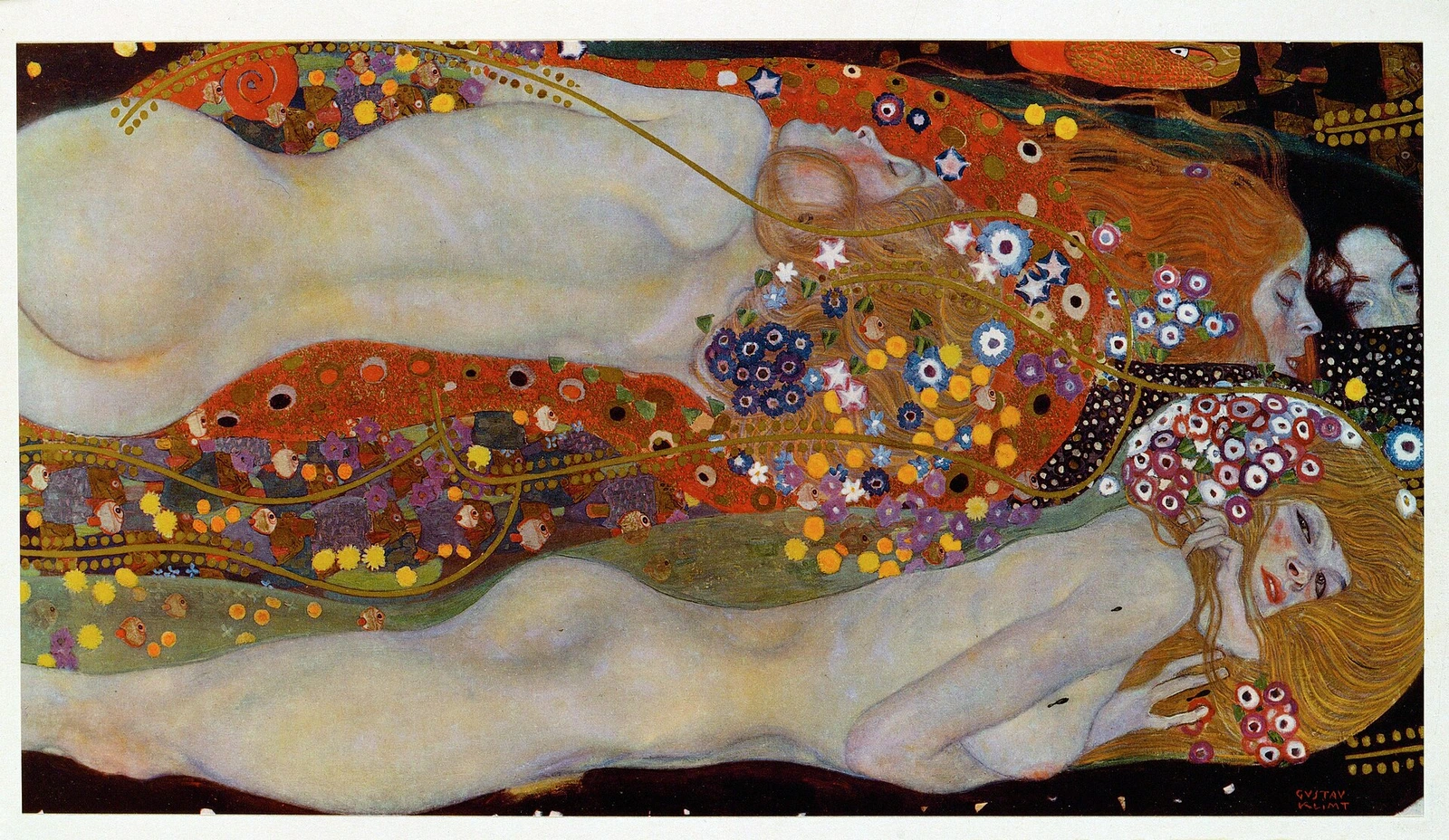
Wasserschlangen II, Gustav Klimt, 1904/1906–07.
Public-domain artwork reproduction via Wikimedia Commons. Gustav Klimt / Wikimedia Commons. PD-Art. Resized and converted to WebP; no crop.
US$183,800,000 · September 2012
Private figure in court complaint
The Belvedere dates Wasserschlangen II, or Water Serpents II, to 1904/1906–07. This Symbolist work was invoiced at $183.8 million in September 2012, according to the Rybolovlev-related companies’ 2018 complaint against Sotheby’s. The filing says the invoice was issued on 13 September and paid; numerous later summaries instead label the acquisition 2013. We use the documented invoice period with explicit attribution, not an invented reconciliation. The complaint’s allegations are not findings. A New York jury rejected the claims against Sotheby’s in January 2024. This is a private transaction figure described in litigation, separate from an auction result. Wasserschlangen II: sale evidence Belvedere catalogue 2024 verdict
Interwoven bodies, aquatic imagery and decorative pattern make the painting immediately different from Klimt’s Lederer portrait. It also demonstrates why provenance is more than a list of prestigious names. Collection history, wartime displacement, ownership and later dealer transactions need careful object-specific research. Where histories are contested, admiration cannot substitute for documentation. The picture’s place in this list rests on a stated high-price transfer, not on a claim that every later resale reached the same amount.
10. Number 7A, 1948, Jackson Pollock
Original artwork title: Number 7A, 1948
View the exact painting: Number 7A, 1948The exact artwork opens on its credited source page. Republication rights were not established, so no image is copied here.
Number 7A, 1948, Jackson Pollock, 1948.
Artwork source: Christie's catalogue.
US$181,185,000 · May 18, 2026
Public auction, including premium · Christie's New York
On 18 May 2026, Christie’s New York sold Number 7A, 1948 for $181,185,000 including buyer’s premium. The official result identifies it as a new auction record for Pollock. It was offered in Masterpieces: The Private Collection of S.I. Newhouse. The title includes the year; Number 7A is not Number 17A, despite the visual similarity of their names. Christie’s catalogue describes a broad, unprimed canvas carrying poured and dripped paint. The completed sale, rather than its presale estimate, is the evidence that places it in this ranking. Number 7A, 1948: sale evidence Pollock catalogue
This entry shows why an updated list must distinguish a new auction record from an artist’s highest reported private-sale price. The 2026 result does not automatically overtake the roughly $200 million attributed to Number 17A. It does provide a more transparent public benchmark. We provide the exact catalogue link, allowing readers to examine the work in its source context without presenting an unlicensed copy as an editorial illustration.
11. Les femmes d’Alger (Version ‘O’), Pablo Picasso
Original artwork title: Les femmes d’Alger (Version ‘O’)
View the exact painting: Les femmes d’Alger (Version ‘O’)The exact artwork opens on its credited source page. Republication rights were not established, so no image is copied here.
Les femmes d’Alger (Version ‘O’), Pablo Picasso, 1955.
Artwork source: Christie's sale announcement.
US$179,365,000 · May 11, 2015
Public auction, including premium · Christie's New York
Picasso painted Version O in 1955 as part of his variations on Delacroix’s Women of Algiers. Christie’s New York recorded $179,365,000, including premium, on 11 May 2015 in Looking Forward to the Past. It was then an auction record, not the current overall record. The final lettered canvas uses Picasso’s mature Cubist vocabulary to reshape an earlier artistic subject. Identification by version is indispensable: another painting from the series would have a different composition, provenance and sale history. An anonymous winning bid does not establish an ultimate owner’s identity. Les femmes d’Alger (Version ‘O’): sale evidence
Its attraction combines the history of modern painting with a conversation across generations of artists. Picasso does not simply reproduce Delacroix; he changes the visual language through which figures and space are organised. That makes the painting an example of cultural continuity as well as artistic disruption. The work’s historical auction-record status belongs to 2015. Presenting an old record without its date would mislead readers about a market that has continued to change.
12. Nu couché, Amedeo Modigliani
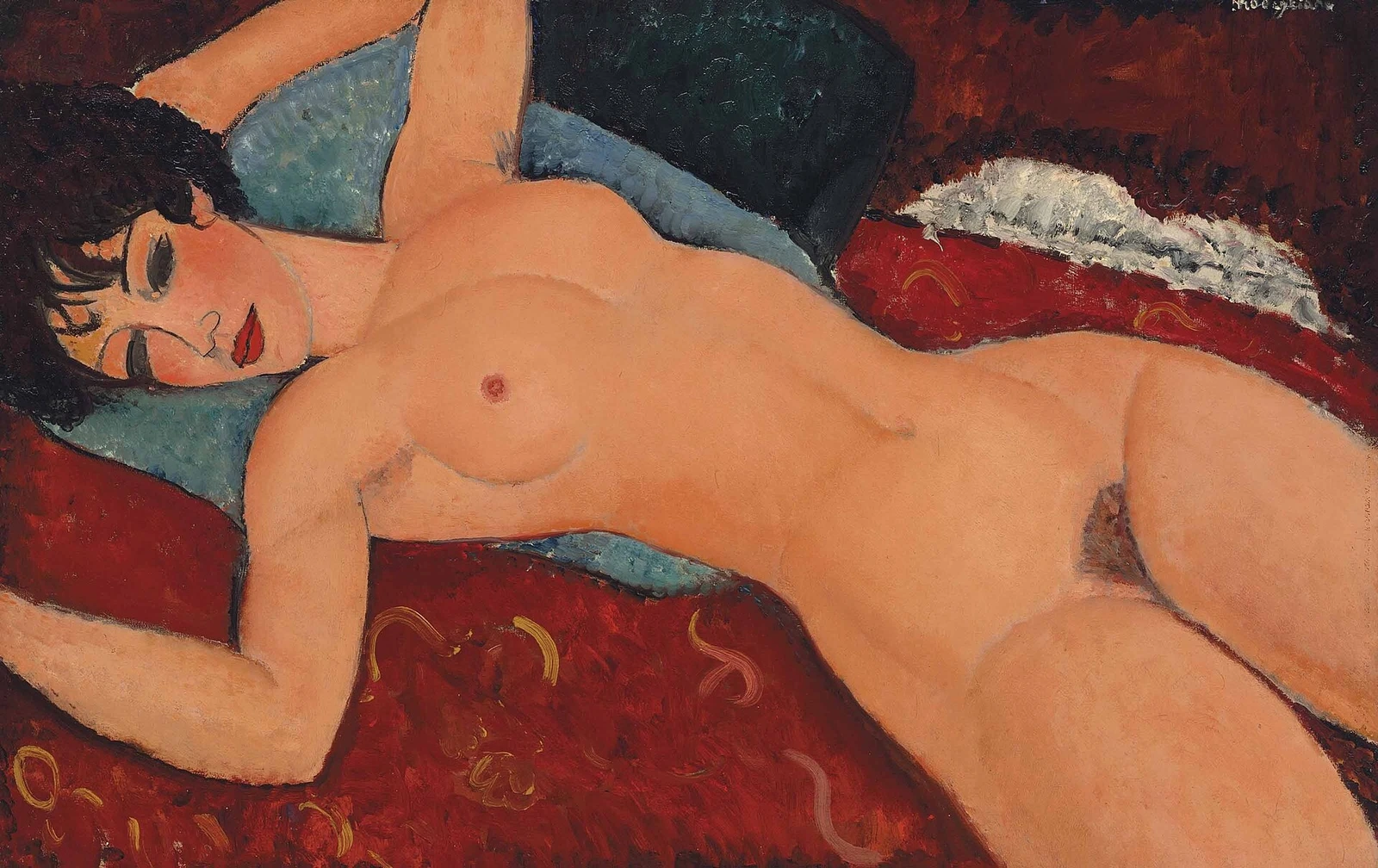
Nu couché, Amedeo Modigliani, 1917–18.
Public-domain artwork reproduction via Wikimedia Commons. Amedeo Modigliani / Wikimedia Commons. PD-Art. Resized and converted to WebP; no crop.
US$170,405,000 · November 9, 2015
Public auction, including premium · Christie's New York
Modigliani’s Nu couché, catalogued by Christie’s as 1917–18, achieved $170,405,000 including premium in New York on 9 November 2015. It belonged to The Artist’s Muse evening sale. This is the red-background reclining nude measuring approximately 60 by 92 centimetres, not the larger nude sold at Sotheby’s in 2018. It belongs to the artist’s modernist Parisian work, often grouped under the École de Paris. The catalogue’s object history connects it to the dealer Léopold Zborowski and subsequent Italian collections, providing a more informative context than the sale number alone. Nu couché: sale evidence
The figure’s extended contours and the contrast between skin and surrounding colour create a composition that is both direct and highly constructed. Its significance lies within Modigliani’s treatment of the nude, rather than a claim that nudity automatically produces high prices. The exact canvas’s exhibition and collecting history distinguish it from related works. We reproduce the public-domain image that matches this transaction.
13. Masterpiece, Roy Lichtenstein
Original artwork title: Masterpiece
View the exact painting: MasterpieceThe exact artwork opens on its credited source page. Republication rights were not established, so no image is copied here.
Masterpiece, Roy Lichtenstein, 1962.
Artwork source: Roy Lichtenstein Foundation catalogue raisonné.
US$165,000,000 · 2017
Documented private sale
Lichtenstein painted Masterpiece in 1962, using the comic-derived language associated with early Pop Art. Its $165 million private sale in 2017 is supported by reporting and by Christie’s later account of Agnes Gund’s collection. Gund used proceeds to establish Art for Justice, with a founding donation of $100 million. That donation should not be confused with the full painting price. The transaction was not a public auction, and no exact closing day is asserted here. The foundation’s catalogue raisonné provides an authoritative image and object record for the specific painting. Masterpiece: sale evidence Lichtenstein catalogue raisonné
The picture’s title is part of its wit. A painting can comment on recognition and success while eventually becoming a trophy in the very market it appears to examine. Its later role in funding criminal-justice reform adds another dimension: a privately owned cultural object can be converted into resources for a public purpose. Artistic value, a negotiated sale price and the use of sale proceeds remain three related yet different stories.
14. Nu couché (sur le côté gauche), Amedeo Modigliani
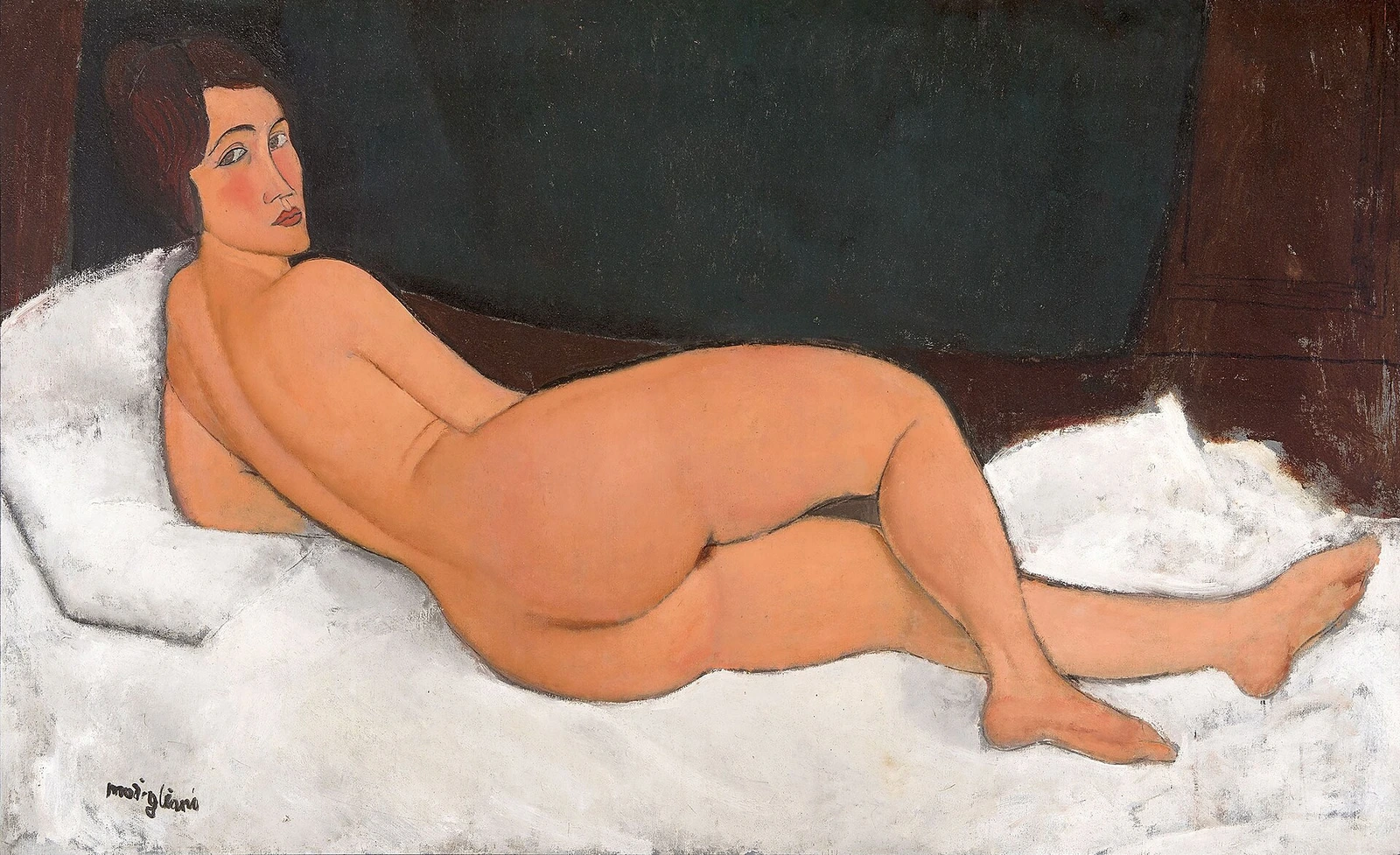
Nu couché (sur le côté gauche), Amedeo Modigliani, 1917.
Public-domain artwork reproduction via Wikimedia Commons. Amedeo Modigliani / The Yorck Project / Wikimedia Commons. PD-Art. Resized and converted to WebP; no crop.
US$157,159,000 · May 14, 2018
Public auction, including premium · Sotheby's New York
Sotheby’s New York published a price of $157,159,000 including premium for Nu couché (sur le côté gauche), painted in 1917, on 14 May 2018. It was then the house’s highest artwork auction result. The modernist reclining figure occupies an approximately 89-by-146-centimetre canvas, distinct from the 2015 red nude. Sotheby’s described it as the largest painting in Modigliani’s oeuvre and the only horizontal nude in the series containing the full figure. Its catalogue records earlier collection and exhibition history; these details should be attached to this canvas rather than transferred from another similarly titled nude. Nu couché (sur le côté gauche): sale evidence
The work demonstrates how a familiar artistic subject can produce a radically different pictorial experience through viewpoint, proportion and the limits of the canvas. It also shows why a ranking needs more precision than a photograph labelled “Modigliani nude.” The two paintings in this feature have different dates, dimensions, poses and auction outcomes.
15. Le Rêve, Pablo Picasso
Original artwork title: Le Rêve
View the exact painting: Le RêveThe exact artwork opens on its credited source page. Republication rights were not established, so no image is copied here.
Le Rêve, Pablo Picasso, 1932.
Artwork source: Artsy / Art Resource.
≈ US$155,000,000 · March 2013
Reported private figure
Picasso’s Le Rêve, painted in 1932, was reported sold privately in March 2013 for $155 million. It depicts Marie-Thérèse Walter within the artist’s interwoven Cubist and dreamlike vocabulary. Contemporary reporting links the transaction to the work’s well-known history of accidental damage and restoration. The private price remains attributed to reporting, rather than a public auction total. We do not supply an unverified exact sale day or treat reported buyer and seller names as independently confirmed by a released contract. The painting’s image is linked through a documented artwork source. Le Rêve: sale evidence
Its place at the end of this list is a consequence of the selected dollar figures, not a judgement about its historical importance. A painting’s condition can change while its reputation remains powerful, making restoration documentation part of serious collecting. Knowing how it has been cared for matters alongside knowing how much someone was reported to have paid.
Auctions, private rooms and the meaning of a record
An auction offers a published result, but even that requires distinctions. The hammer price is not the premium-inclusive total, and the seller’s proceeds may differ again. Estimates are expectations, not completed transactions. Guarantees and irrevocable bids can shape risk before the public bidding begins. Private sales may disclose almost nothing, or acquire unusually strong documentation through a court case. Our categories describe the available evidence; they are not a claim that privacy alone makes a transaction illegitimate.
Nor should the ranking be read as a survey of all valuable art. Museum masterpieces that have never been sold are absent, whatever a speculative valuation might suggest. We exclude insurance values, asking prices and unsupported valuations. Picasso, Pollock and Klimt appear more than once because distinct canvases generated distinct transactions. If stronger evidence changes a private figure, the published order should change too, with the original publication date preserved and the modification date made visible.
Why a name, a history and a scarce canvas command millions
Supply at this level is constrained by the exact object. An artist’s death ends production, but not every surviving work is equally available, important or well preserved. Major museum holdings remove many outstanding examples from ordinary circulation. Provenance, exhibition history and scholarly acceptance help establish what a collector is buying. Competition can then add another layer: an opportunity to acquire a defining work may not recur on a convenient schedule.
Recognition also has emotional and social force. Our Psychology of Brands feature explores how names and identity influence willingness to pay; art adds a uniquely complicated history of authorship, ownership and cultural meaning. Collectors can seek beauty, status, scholarship, philanthropy or financial opportunity, sometimes together. Assigning a single motivation to an unnamed buyer would be speculation.
Inflation, investment and the risk behind the frame
Nominal records compare sale-time dollars. Inflation-adjusted comparisons require a stated index, currency method and endpoint; different choices can change the order. A 2014 euro agreement reported in dollars is not converted again at today’s exchange rate in this table. Buying power and reported market price are different questions.
For anyone considering art financially, costs and uncertainty matter: buyer’s fees, selling commissions, taxes, shipping, insurance, conservation and storage can consume gains. Sales are infrequent, and an owner may need time to find a suitable counterparty. Authenticity or ownership disputes can affect value and saleability. A spectacular historical result is neither a current appraisal nor a promise of profit. The most useful lesson of these fifteen paintings is to look beyond the number: the stronger the story, the more carefully its evidence deserves to be read.
FAQ
Frequently Asked Questions
What is the most expensive painting sold at public auction?
Salvator Mundi, attributed to Leonardo da Vinci, sold for $450,312,500 including buyer’s premium at Christie’s New York on 15 November 2017. Its attribution remains debated; that does not change the recorded auction price.
Why is Gauguin listed at $210 million rather than $300 million?
The English court judgments concerning Nafea faa ipoipo record a $210 million private sale. That documented figure supersedes the widely repeated early $300 million claim.
Are private-sale prices as transparent as auction results?
Usually not. This ranking labels reported estimates, transaction figures described in court filings and a court-documented sale separately from published auction results. Undisclosed deals cannot be ranked reliably.
Does the ranking adjust prices for inflation?
No. It orders nominal US-dollar amounts at the time of sale or the reported historical conversion. Inflation-adjusted rankings answer a different question and require a specified index and comparison date.
Can record paintings guarantee an investment return?
No. Fees, condition, authenticity, ownership disputes, insurance, storage, taxes and difficulty finding a buyer can affect returns. A historic sale price is not a current appraisal or guaranteed resale value.
Why are some paintings linked rather than reproduced here?
Public-domain reproductions are displayed where verified. For protected works whose republication rights were not established, a credited link opens the exact artwork on its source page. The AI hero is an illustration only.
PRESDA Dispatch
Stay Informed. Stay Aware.
A sharp briefing across AI, gaming, sport, business, world affairs, paparazzi, and lifestyle.