
AFCON 2027: SIX HOST CITIES CONFIRMED ACROSS EAST AFRICA
Nairobi, Dar es Salaam, Arusha, Zanzibar, Kampala and Hoima form AFCON 2027’s host-city map. What is confirmed, and what stadium assignments still require.
Supplied editorial montage, preserved unchanged. The trophy, flags and stadium illustrations are not a photographic record of certified 2027 venues.
The host-city map for AFCON 2027 now covers six destinations across Kenya, Tanzania and Uganda: Nairobi, Dar es Salaam, Arusha, Zanzibar, Kampala and Hoima. Football Kenya Federation’s official PAMOJA page lists those cities and makes an important distinction: host governments have named stadiums, while CAF will confirm which matches each ground stages. The announcement should therefore be described as six host cities, not a final allocation of six individual stadiums. Football Kenya Federation: official PAMOJA host-city list
The tournament is scheduled for June 19 to July 17, 2027. It will be the first Africa Cup of Nations jointly hosted by three countries, bringing the finals back to East Africa for the first time since Ethiopia in 1976. The city list gives that regional ambition a more concrete shape, while leaving significant operational work between a place on the map and a completed match schedule. CAF: tournament dates, format and three-country hosting
| Country or milestone | Confirmed position |
|---|---|
| Kenya | Nairobi |
| Tanzania | Dar es Salaam, Arusha and Zanzibar |
| Uganda | Kampala and Hoima |
| Tournament dates | June 19 to July 17, 2027; specific stadium match allocations remain for CAF to confirm |
Which six cities are on the host map?
Kenya’s selected city is Nairobi. Tanzania has three: Dar es Salaam, Arusha and Zanzibar. Uganda has two: Kampala and Hoima. That distribution is stated on the host federation’s official page and was reported by The Star on November 21, 2026. It describes the geography of the tournament, rather than the number of matches each country will receive. Football Kenya Federation: official PAMOJA host-city listThe Star: November 21 host-city announcement
Nairobi’s inclusion concentrates Kenya’s preparations in one metropolitan area. Tanzania’s three-city contribution spreads its hosting responsibilities across distinct destinations, while Uganda’s two-city selection links its capital with Hoima. None of those observations establishes an opening-match venue, a final venue or a country-by-country share of the knockout rounds. Those decisions require an official fixture allocation.
A city is not a stadium allocation
The distinction is visible in Nairobi, where the federation page names both Raila Odinga International Stadium at Talanta Sports City and Moi International Sports Centre, Kasarani. Two listed grounds in a single host city are enough to show why “six cities” and “six stadiums” cannot be used interchangeably. The number of destinations does not, by itself, settle the final number of match venues. Football Kenya Federation: official PAMOJA host-city list
For supporters, the difference is practical. A city announcement identifies where preparation is centered, but it does not yet tell a ticket holder which ground hosts a particular team or round. It also does not fix the kickoff time, access arrangements or the route between a training base and the stadium. A useful guide keeps those later decisions separate from the confirmed city list.
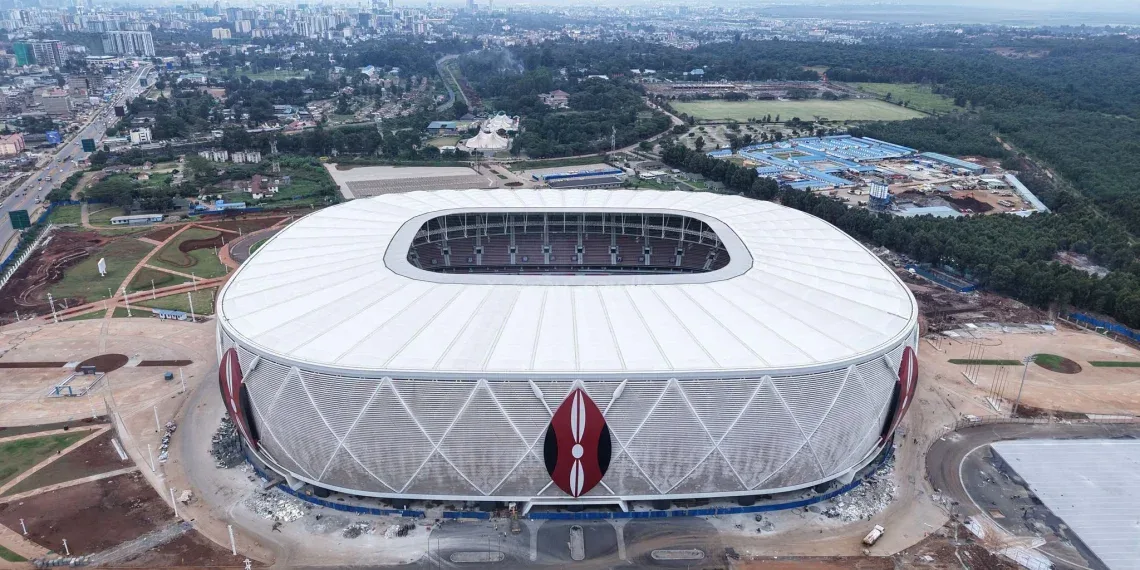
Raila Odinga International Stadium in Nairobi, June 19, 2026. This dated construction photograph documents that stage of work, not final CAF certification or a match allocation.
The stadiums named by the host federation
The official PAMOJA page identifies Benjamin Mkapa Stadium for Dar es Salaam, Samia Suluhu Hassan Stadium for Arusha and the New Amaan Complex for Zanzibar. It lists Mandela National Stadium, Namboole, for Kampala and Hoima City Stadium for Hoima. These are the grounds presented by the host federation as government-named venues; the page reserves match assignments to CAF. Football Kenya Federation: official PAMOJA host-city list
Their inclusion gives the announcement substance beyond a promotional map. Existing grounds, newly developed sites and facilities still being prepared create different operational tasks. An aerial photograph can show a roof, a pitch or a surrounding road, but it cannot independently certify floodlighting, broadcast systems, crowd management or every other requirement for a continental finals match.
What CAF’s inspections actually covered
CAF’s September 4, 2026 account describes an eight-day inspection involving competitions, safety and security, transport, marketing, media, television and logistics officials. The delegation visited stadiums alongside training grounds, hotels, airports and other tournament facilities. That breadth matters: the event’s readiness is a network of services, not simply a set of completed grandstands. CAF: September 2026 inspection of host facilities
The same report identified the new Talanta stadium and other Nairobi infrastructure among the inspected facilities. Inspection is evidence that a venue is being assessed and prepared. It should not be rewritten as a guarantee that every operational requirement has been permanently cleared, or that a particular stadium has already been awarded the opening ceremony or final.
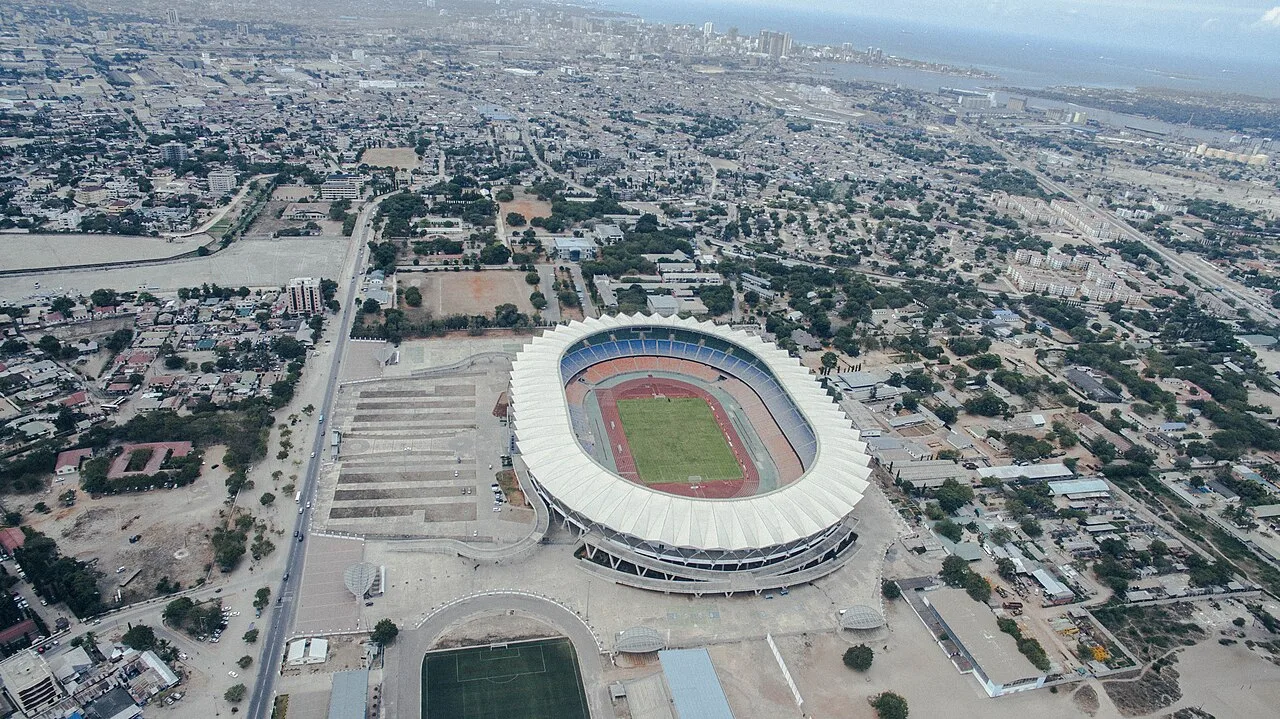
Benjamin Mkapa Stadium, Dar es Salaam, September 27, 2016. An archival view of the existing ground; the photograph does not establish its condition or readiness for 2027.
Why three-country hosting changes the job
The 2027 edition is a national-team competition organized across three sovereign hosts. CAF describes PAMOJA, meaning “together” in Swahili, as the expression of that shared project. Its official tournament explainer sets out a 24-team finals and automatic qualification for Kenya, Tanzania and Uganda. Those are confirmed features of the format, distinct from the remaining football qualification places. CAF: tournament dates, format and three-country hosting
A shared tournament also requires coordination beyond the stadium gates. Teams, officials, broadcasters and supporters have to move between destinations while accommodation, security and training arrangements remain dependable. The city list identifies the places around which that work is organized. It does not remove the need to coordinate national systems or turn every inter-city journey into a single, simple connection.
The map is a planning framework
Six cities across three countries can distribute the tournament’s visibility more widely than a single-city event. That geographical reach also means that the experience will depend on how local preparations connect with the continental schedule. The relevant questions are concrete: which teams are based where, when must they travel and what services are available around each match?
Those questions can be asked without inventing promised economic returns. Construction spending, visitor numbers and long-term benefit are different measures, and a host-city announcement supplies none of them automatically. A sound account of the event’s significance begins with the confirmed format and locations, then evaluates the eventual delivery rather than treating the announcement as a completed legacy.
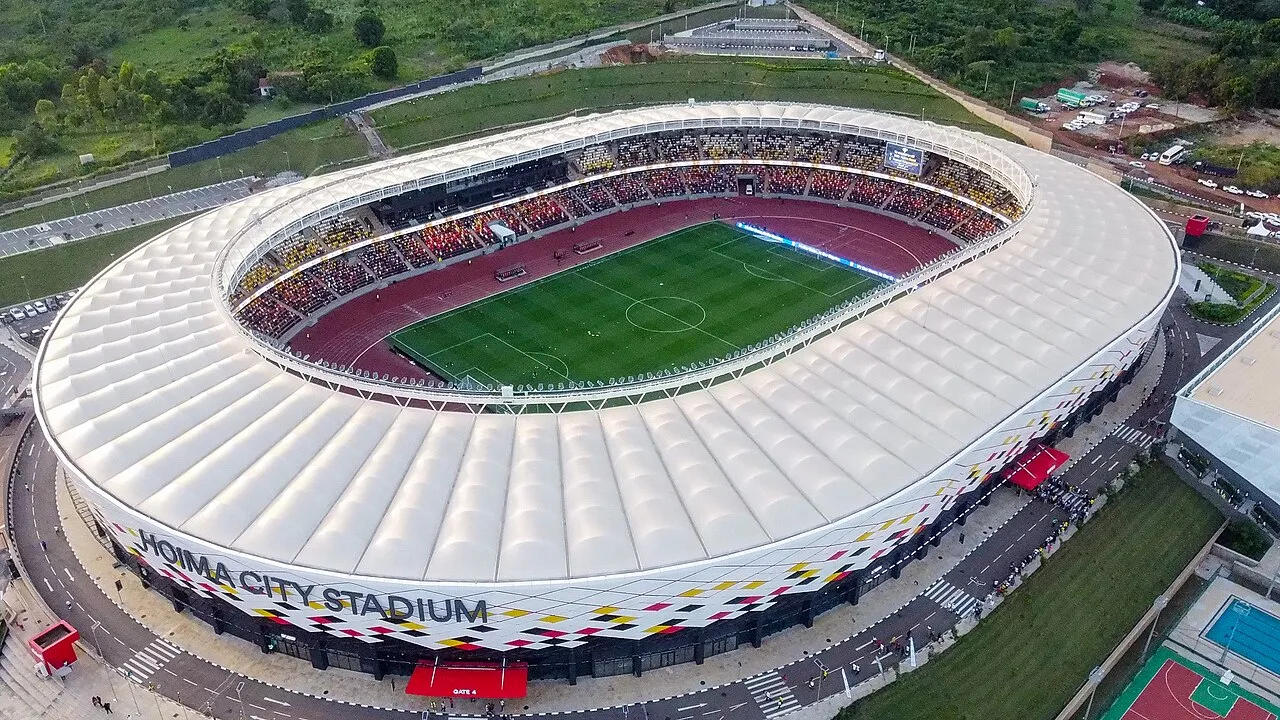
Hoima City Stadium in Uganda, September 29, 2026. A genuine photograph of one of the grounds named on the host federation’s page; it is not an AFCON 2027 match photograph.
Qualification is moving on a separate track
CAF reported on November 18 that Benin, Burkina Faso, Cameroon, Mali, Morocco and Senegal had qualified after Matchday 4 concluded on November 17. Together with the three automatic host qualifiers, that made nine confirmed finalists at the time of the report. The six qualified visiting teams are not another version of the six-city list: one describes participants, the other locations. CAF: nine finalists confirmed after Matchday 4
The remaining qualifying matches are scheduled for March 2027. CAF’s draw announcement specifies Matchdays 5 and 6 within the March 22–30 international window. The qualification process must finish before the final field and associated tournament planning can be treated as complete. A country’s presence in a qualifying group is not yet the same thing as a confirmed place in the finals. CAF: qualifying windows and qualification rules
How the host groups are treated
CAF’s rules give the co-hosts automatic places irrespective of their qualifying results. In a group containing a host, the highest-placed other team qualifies alongside that host. In the other groups, the top two progress. That distinction explains why reading a table without its qualification rule can mislead supporters about how many open places remain. CAF: qualifying windows and qualification rules
The June 19 opening date and July 17 final date are already established. The eventual combination of teams, stadiums and kickoff times is another layer of information. Keeping the two separate allows a reader to follow the tournament’s progress without confusing a calendar announcement, a city reveal and a completed fixture list.
What the announcement means for supporters
The clearest immediate change is that the tournament has a named six-city geography. Supporters can now distinguish the official destinations from earlier suggestions or speculation. They should still look to CAF and the host federations for the actual match schedule and venue assignments, rather than assuming that an illustration of a stadium indicates which round it will receive. Football Kenya Federation: official PAMOJA host-city list
PRESDA’s reporting on football supporters and the psychology of collective identity provides context for why these decisions attract attention well beyond construction or administration. A host city becomes a meeting point for visiting fans and local communities. Organizing that encounter safely and accessibly is part of the tournament itself, rather than a secondary detail after the football.
An East African edition with specific limits to what is known
CAF places the tournament’s regional significance in the return to East Africa after the 1976 edition in Ethiopia. That is more precise than claiming the competition has never been staged in the region. The three-country format is new; East Africa’s connection with the tournament is not. Both facts can coexist without diminishing the importance of 2027. CAF: tournament dates, format and three-country hosting
The six confirmed cities also sit within a much wider region, explored in PRESDA’s feature on Africa’s less familiar travel destinations. For this event, however, the reporting should remain anchored to Nairobi, Dar es Salaam, Arusha, Zanzibar, Kampala and Hoima. That is the verified map. The next decisive step is the official match-by-match allocation, not another unqualified list of “six stadiums.”
FAQ
Frequently Asked Questions
Which six cities will host AFCON 2027?
Nairobi in Kenya; Dar es Salaam, Arusha and Zanzibar in Tanzania; Kampala and Hoima in Uganda are listed on Football Kenya Federation’s official PAMOJA page.
Has CAF confirmed exactly six stadiums?
The announcement identifies six host cities. The federation lists more than one ground in Nairobi and says CAF will confirm which matches each stadium stages.
When will AFCON 2027 take place?
CAF schedules the opening match for June 19, 2027, and the final for July 17, 2027.
Have all participating teams qualified?
No. CAF’s November 18 update identified nine confirmed finalists, including the three hosts. The remaining qualifying rounds are scheduled for March 2027.
PRESDA Dispatch
Stay Informed. Stay Aware.
A sharp briefing across AI, gaming, sport, business, world affairs, paparazzi, and lifestyle.