Bilingual Brains: How Speaking Two Languages Shapes the Mind
How bilingualism shapes brain networks, memory and childhood development, and what research really says about attention, aging and dementia.
PRESDA AI-generated editorial illustration of a woman studying languages in an imagined library. Not a photograph of a research participant or scientific experiment.
Imagine answering a colleague in English, reading a message in Arabic and calling a parent in French. This illustrative everyday sequence involves more than replacing one set of words with another. A speaker must recognize the situation, find the intended meaning and choose expressions that another person will understand. Much of that work happens without conscious calculation.
Bilingualism gives neuroscience a way to investigate how repeated experience shapes the mind. The evidence is compelling in some areas and unsettled in others. Learning and using languages can alter brain organization. Whether that experience reliably improves unrelated attention tasks, strengthens every kind of memory or prevents dementia is a different question. Those promises require evidence that brain scans alone cannot provide.
What does it mean to have a bilingual brain?
Bilingualism means using or knowing two languages, but researchers do not apply one universal threshold. Someone who reads a second language confidently may rarely speak it. Another person may switch languages throughout the day while knowing different vocabulary in each. Multilingualism extends this experience to more languages. Equal fluency, an accent-free pronunciation and childhood acquisition are not prerequisites for a meaningful multilingual life.
This variation matters scientifically. Angela de Bruin’s 2019 methodological review argues that proficiency and age of acquisition are insufficient descriptions without information about language use, switching and interactional settings. Grouping a retired translator, a recent learner and a child in a bilingual household together can conceal important differences. Researchers increasingly ask what people do with their languages, rather than treating bilingualism as a simple on/off property. De Bruin: describing bilingual experience
Two languages can remain active at once
The mind does not always put one language away before opening another. Experiments reviewed by Judith Kroll and colleagues show that knowledge of an apparently unused language can influence comprehension and production. Overlapping sounds, related words and competing meanings can become available together. This parallel activation helps explain both cross-language assistance and interference. It does not mean that a fluent bilingual constantly feels confused. Kroll and colleagues: Bilingualism, Mind, and Brain
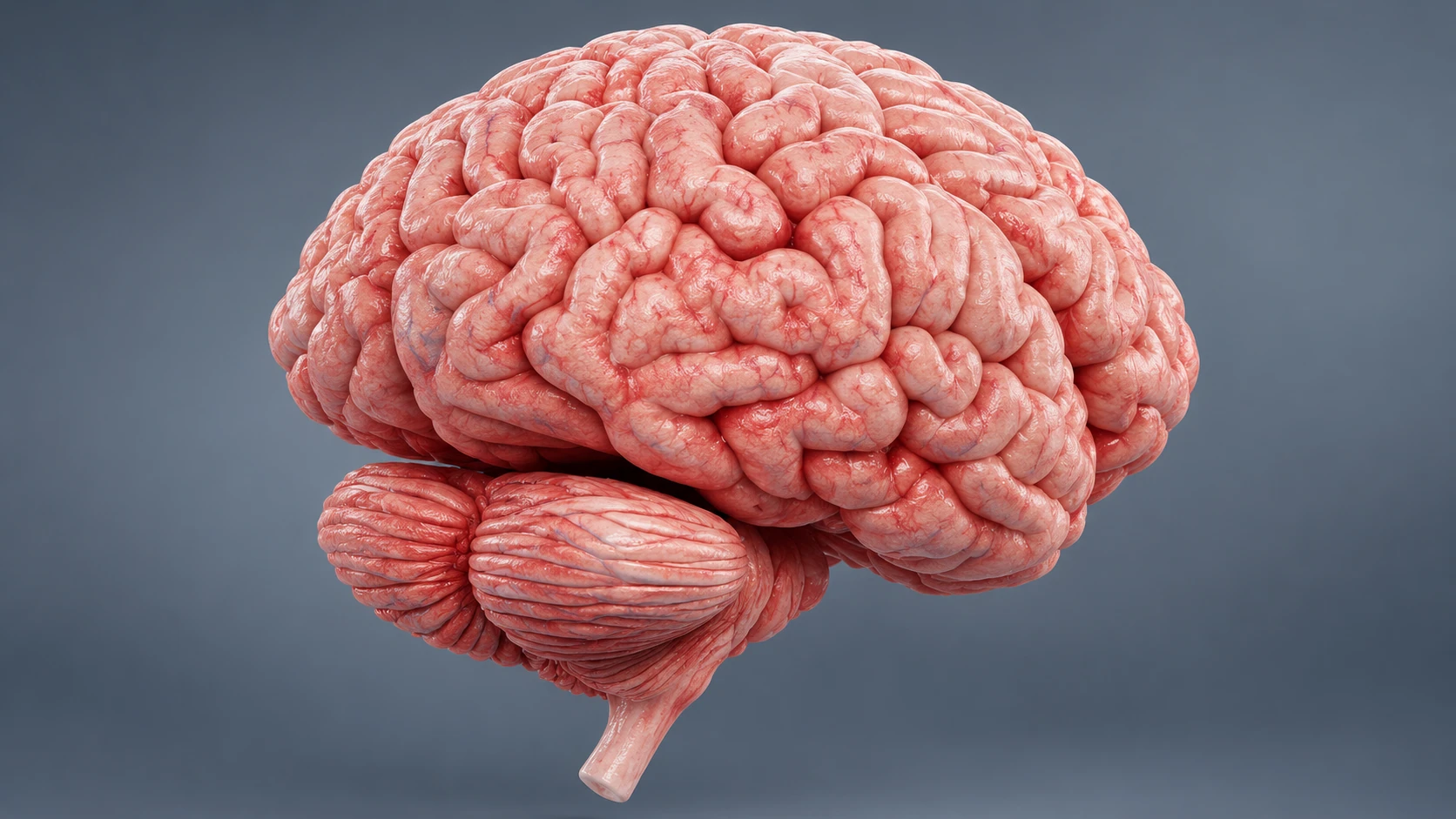
Language also depends on distributed systems rather than a single bilingual compartment. Networks involved in speech, meaning and control interact; their recruitment varies with proficiency and task demands. Neuroimaging reviews describe substantial overlap between the systems supporting a person's languages, alongside differences associated with how those languages were learned and used. PRESDA’s guide to the human brain explains the broader distinction between specialized regions and interacting networks. The bilingual brain: flexibility and control
Does learning a language change brain structure?
Yes, measurable changes have been reported, although their meaning needs care. In a 2012 study, Johan Mårtensson and colleagues scanned conscript interpreters before and after three months of intensive language study. Compared with controls, the interpreters showed increases in hippocampal volume and cortical thickness in several left-sided regions associated with language. This is a concrete example of adult experience accompanying structural adaptation, not evidence that any short course enlarges the entire brain. Mårtensson and colleagues, 2012
MRI measures are not direct counts of newly created neurons, and larger is not automatically better. Christos Pliatsikas’s Dynamic Restructuring Model proposes that adaptations change as language experience accumulates: expansion, reorganization and increased efficiency may occur at different stages. It is a framework for interpreting diverse findings, not a universal growth timetable. Cross-sectional differences between groups cannot establish whether language use caused them or whether other experiences contributed. Dynamic Restructuring Model
Neuroplasticity continues, but results are not automatic
Neuroplasticity is the nervous system’s capacity to change with experience. Bilingualism is one example, alongside many other forms of learning. Its consequences depend on practice, intensity, age and context. A scan taken before and after learning can be more informative about change than a single comparison between unrelated groups, but a suitable control group remains essential.
A 2021 randomized study illustrates the limits. Researchers assigned 160 Swedish adults aged 65 to 75 to an introductory Italian course or relaxation training for 11 weeks. The language course did not produce detectable changes in the measured brain morphology. Greater initial hippocampal volume and better associative memory predicted vocabulary learning. A null result does not mean that participants learned nothing; it means the particular structural prediction was not supported under those conditions. Second-language learning in older adults
Language switching is a skill, not a malfunction
Switching can follow the person being addressed, the topic or the social setting. In a hypothetical bilingual household, a speaker might use one language for a family joke and another for a term learned at work. This is different from a laboratory task that orders someone to name pictures in alternating languages. Both involve language selection, but they are not identical tests of everyday competence.
David Green and Jubin Abutalebi’s adaptive control hypothesis proposes that recurrent interaction patterns shape the control processes speakers use. Keeping languages separate, alternating between speakers and freely mixing languages can place different demands on attention and selection. The proposal makes testable predictions; it does not establish that frequent switching produces superior executive function in everyone. Some tests of its predictions have not found the expected relationship. Adaptive control hypothesis A test of language-use patterns and inhibition
Are bilingual people better at attention and cognitive flexibility?
This is the center of the bilingual advantage debate. Executive functions include keeping a goal in mind, resisting distraction, holding information temporarily and changing task rules. Because bilingual speakers select between languages, researchers have asked whether this practice transfers to non-language tasks. The hypothesis is plausible. Plausibility, however, is the starting point for an experiment, not its result.
Minna Lehtonen and colleagues’ 2018 meta-analysis synthesized 891 effect sizes from 152 adult studies. Small advantages appeared in some domains before correction for bias, but no bilingual advantage remained after those corrections. The analysis also found a small verbal-fluency disadvantage. The result challenges a broad, dependable cognitive bonus; it does not prove that every subgroup, task or life stage must show identical outcomes. Lehtonen and colleagues: adult executive-function meta-analysis
A 2021 meta-analysis of children’s executive functioning likewise found that the small overall association was largely explained by moderators and bias. The practical distinction is between becoming skilled at managing languages and becoming generally better at every demanding mental activity. A child can gain enormously from communicating with more people without outperforming classmates on an inhibition test. Children’s executive-function meta-analysis
Memory is not a single ability
Remembering a shopping list, recognizing a face and recalling a childhood conversation are different operations. A claim that bilingualism improves “memory” needs to specify which one, measured how, and compared with whom. Better performance on vocabulary learned during a course is not the same outcome as improved memory for unrelated events.
Language can also act as a retrieval cue. In Viorica Marian and Ulric Neisser’s studies of Russian-English bilinguals, the language used during recall influenced which autobiographical memories were accessible. Experiences associated with a matching linguistic environment were easier to retrieve. That finding concerns access to memories, not proof that one language stores a separate personality or that bilingual people possess a larger total memory capacity. Language-dependent autobiographical recall
For an everyday illustration, a childhood nickname might bring back a family scene more readily than its translation. The example is hypothetical, but it shows why context matters. Memory experiments must distinguish familiarity with the testing language from the capacity they intend to measure. Otherwise, a vocabulary demand can be mistaken for a general memory difference.
Why does the right word sometimes disappear?
Bilingual speakers can experience competition between languages and unequal familiarity with words in each. Knowing a concept does not guarantee equally rapid access to every translation. A person who discusses cooking in one language and engineering in another may have an uneven vocabulary without having an impaired mind.
Verbal fluency tasks ask participants to generate words under constraints, often within a time limit. They therefore measure language exposure as well as retrieval and control. An apparent cost on one such task should not be converted into a claim that bilingualism damages intelligence. Equally, greater effort during language selection should not automatically be advertised as brain training with proven benefits everywhere else. Kroll and colleagues on language processing
Do two languages confuse young children?
Mixing words is not, by itself, evidence of confusion. A child may borrow an available word, imitate community speech or adapt to a familiar listener. Developmental researchers Krista Byers-Heinlein and Casey Lew-Williams describe evidence that infants distinguish their languages and that children’s mixing follows meaningful patterns. Skills develop unevenly across settings, just as children encounter different people and topics in each language. Bilingualism in the early years
Vocabulary assessment must consider both languages. Testing only one can miss words and concepts known in the other, although adding two vocabulary scores without accounting for overlapping meanings can also mislead. Rich conversation, stories and opportunities to use each language matter more than pursuing perfectly symmetrical ability. There is no requirement that every family follow the same language arrangement.
Bilingualism does not cause developmental language disorder. The US National Institute on Deafness and Other Communication Disorders states that the condition can affect monolingual and multilingual children and can affect all of a multilingual child’s languages. Concerns about communication deserve an appropriate assessment rather than being dismissed as “just bilingualism.” Maintaining another language is not inherently harmful to a child with the disorder. NIDCD: developmental language disorder
Can bilingualism prevent dementia?
Prevention has not been established. Some studies associate bilingualism with later symptoms or diagnosis, but that is different from reducing the probability of developing disease. A 2020 systematic review by Stefano Brini and colleagues found a pooled association with dementia diagnosis about 3.3 years later, while the analysis of dementia risk found no statistically significant reduction. Results varied substantially across settings. These are group-level research findings, not extra years that an individual learner can count on. Brini and colleagues: systematic review and meta-analyses
One proposed explanation is cognitive reserve: people may maintain everyday functioning despite brain pathology by drawing on adaptable cognitive systems. This is not the same as preventing the pathology itself. Studies of patients who already have dementia and studies following initially healthy people answer different questions. Education, migration, healthcare access and how symptom onset is recalled can complicate comparisons. Later diagnosis is not automatically proof of a biological protective effect.
What does newer aging research actually show?
A 2025 Nature Aging paper modeled biobehavioral age gaps using data from 86,149 participants across 27 European countries. Crucially, multilingualism was measured as a country-level exposure, not as each participant’s personal language history. The reported associations therefore cannot tell an individual that speaking another language will slow their aging by a particular amount. The outcome was a model combining health and functional measures, not a direct measurement of dementia prevention or brain age on MRI. Nature Aging study
An author correction published on October 5, 2026 addressed a country-label mismatch that had excluded the Slovak subsample from epidemiological analyses. This feature links the correction because methodological updates matter as much as striking headlines. National associations are useful for generating questions, but cannot substitute for individual exposure data and well-controlled intervention studies. Published author correction
Is learning a language later in life worthwhile?
Yes, for communication, interest and participation, without needing to promise medical protection. Trials testing broader cognitive benefits have produced mixed findings. An 18-month randomized Age-Well trial, reported in a 2023 secondary analysis, did not find cognitive benefits from non-native language training on its assessed outcomes. A separate 2023 trial reported possible response-inhibition benefits among participants with poorer baseline cognition, rather than a general improvement across the tested functions. Age-Well trial analysis Response-inhibition trial
Learning a language can create an immediate, concrete achievement: understanding a conversation, reading a story or joining a community. These outcomes remain valuable when a laboratory test is unchanged. A short beginner course, decades of daily language use and professional interpreting are different experiences; evidence from one should not be used as a guarantee about the others.
Why research findings sometimes disagree
The central problem is separating language experience from the lives surrounding it. Bilingual and monolingual groups can differ in schooling, income, migration, occupation, health and familiarity with testing. Statistical adjustment helps, but cannot recover information that was never measured. Small studies can miss real effects or overestimate unstable ones; publication bias can make positive findings more visible than null results.
Better evidence combines detailed language histories, reliable tasks, sufficiently large samples and transparent analysis plans. Longitudinal research follows change within people. Randomized courses help investigate causation, though they cannot randomly assign an entire multilingual childhood. Replication across countries and language pairs tests whether an observation extends beyond one setting. The most informative question is often which experience affects which process, under which conditions.
What benefits are worth celebrating?
The strongest everyday benefit is also the most direct: access to another language. It can let people participate in relationships, education and culture that would otherwise be harder to reach. These opportunities depend on social circumstances, and bilingualism does not guarantee employment, empathy, creativity or higher intelligence.
The challenges are real too. Maintaining a less-used language takes opportunities and effort. A speaker may feel more confident in one setting than another, and a test conducted in an unfamiliar language can obscure their knowledge. Treating an accent or a slower word search as a measure of intelligence mistakes communication history for intellectual worth.
A brain shaped by experience, not a promise of superiority
The evidence supports a nuanced picture. Languages interact during processing; learning can be accompanied by neural adaptation; children can develop more than one language without being confused by the fact of bilingualism itself. Broad claims about better executive function remain contested, and dementia prevention is unproven. These conclusions can coexist.
For more context on biology and experience, PRESDA’s DNA feature explains why genes do not determine a person’s life in isolation. Bilingualism similarly resists a single score or destiny. Its deepest significance is not that it makes one group of people inherently superior, but that a human mind can learn to move between different systems of meaning and use them to connect.
FAQ
Frequently Asked Questions
What is this PRESDA article about?
How bilingualism shapes brain networks, memory and childhood development, and what research really says about attention, aging and dementia.
Which category does this story belong to?
This story is part of PRESDA's Science coverage.
Who published this article?
Bilingual Brains: How Speaking Two Languages Shapes the Mind was published by PRESDA Editorial on PRESDA.
PRESDA Dispatch
Stay Informed. Stay Aware.
A sharp briefing across AI, gaming, sport, business, world affairs, paparazzi, and lifestyle.