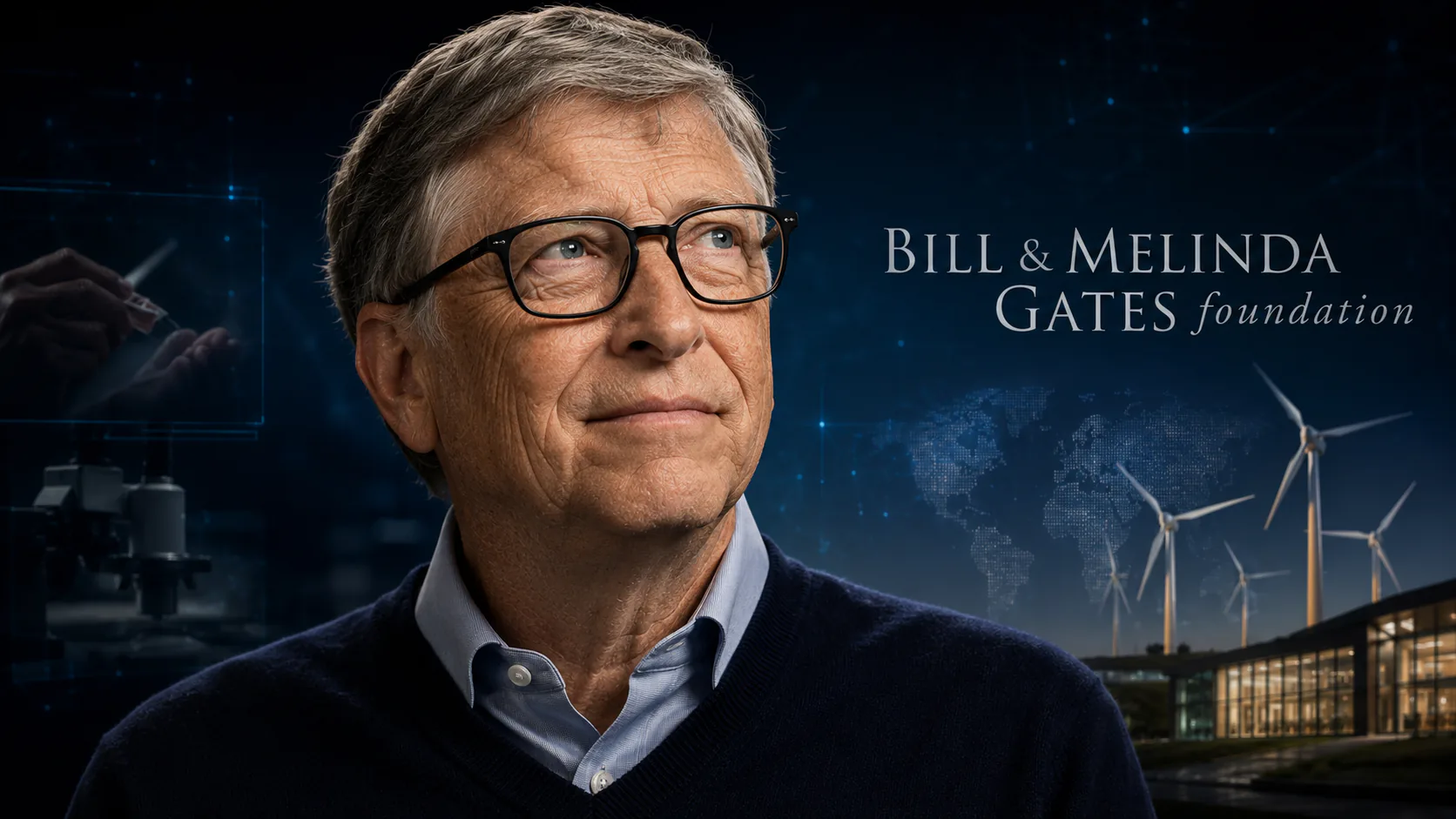
Gates Foundation: $110 Billion, 25 Years and Its Global Impact
A verified, data-led look at Gates Foundation spending, grants, global health work, criticism and the plan to spend down by 2045.
The Gates Foundation is one of the largest private philanthropic institutions in modern history. Since 2000, it has helped reshape how governments, research groups, vaccine alliances, health agencies and development organizations talk about measurable progress. Its scale is unusual. Its influence is unusual. So is the scrutiny around it.
The headline number is big: the foundation reports $110.9 billion in total charitable distributions through the fourth quarter of 2025. It also reports $90.0 billion in total grant payments, $8.47 billion in charitable support during 2025, an $89 billion endowment at the end of 2025, 2,506 grants approved in 2025 and work reaching 143 countries that year. In January 2026, its board endorsed a $9 billion annual payout commitment.
Those figures make the Gates Foundation a defining case study in 21st-century philanthropy. But money alone is not the story. The harder question is impact: what changed, who else made it happen, what can be measured, and where private philanthropy becomes too powerful for comfort.
This article treats the Gates Foundation as both a data story and a public-interest story. It looks at the foundation's history, spending, grants, global health work, education programs, criticisms, governance and future strategy, including the plan to spend more than $200 billion through 2045 and close by the end of that year. For more context on technology, capital and public influence, read PRESDA's Business coverage and AI coverage.
Gates Foundation Key Statistics In 2026
The safest way to understand the Gates Foundation is to separate its own spending from the outcomes achieved by partners. The foundation funds research, delivery systems, advocacy, data platforms and large multilateral organizations. It does not vaccinate every child by itself, eradicate diseases by itself or run national health systems by itself.
That distinction matters because the foundation often works through organizations such as Gavi, the Vaccine Alliance; the Global Fund to Fight AIDS, Tuberculosis and Malaria; UNICEF; WHO; national ministries of health; universities; research institutes; and local implementers. A Gates grant can be decisive, but the final achievement usually belongs to a coalition.
| Metric | Latest Figure | How To Read It |
|---|---|---|
| Founded | 2000 | Created by Bill Gates and Melinda French Gates through the merger of earlier Gates family foundations |
| Total charitable distributions | $110.9B through Q4 2025 | Includes grants, contracts, program-related investments, asset acquisitions and operating spending on a cash basis net of returns |
| Total grant payments | $90.0B through Q4 2025 | Grant payments made by the foundation and previous Gates family foundations from 1994 onward |
| 2025 charitable support | $8.47B | Rounded annual support from the 2025 Annual Report |
| Endowment | $89B at Dec. 31, 2025 | Foundation Trust endowment; June 30, 2026 unaudited figure was $92B |
| Employees | 2,215 at Dec. 31, 2025 | Current foundation employees reported by the official fact sheet |
| 2025 grants | 2,506 | Number of grants approved in 2025, reported by the official foundation fact sheet |
| Geographic reach | 143 countries in 2025 | International grant funding supported work in 143 countries, plus 45 U.S. states and D.C. |
| 2026 payout commitment | $9B | Board-endorsed annual payout announced in January 2026 |
| Planned closure | December 31, 2045 | Foundation plans to spend down and close by the end of 2045 |
The figures above come from the foundation's official 2025 Annual Report and fact sheet. They show a mature institution with a very large endowment, a very large annual payout and a clear time limit: spend down, increase giving and close in 2045.
How The Foundation Began
The modern Gates Foundation was created in 2000 by Bill Gates and Melinda French Gates through the merger of earlier Gates family charitable entities. From the beginning, the organization focused on problems where large-scale funding, science, measurement and partnerships could change outcomes over time.
Its early identity was closely tied to global health. Vaccines, infectious diseases and child survival became central because they were areas where relatively proven interventions could save lives if they reached people at scale. The foundation also invested heavily in U.S. education, especially high school reform, college readiness and pathways for students from lower-income communities.
The foundation's model was different from traditional charity. It was not built mainly around small emergency grants or local patronage. It brought a technology-sector belief in metrics, strategy, experimentation and scale into philanthropy. That made it ambitious, effective in some areas and controversial in others.
Bill Gates, Melinda French Gates And Warren Buffett
Bill Gates and Melinda French Gates were the institution's defining public figures for more than two decades. Their wealth, public visibility and personal involvement gave the foundation unusual reach. Melinda French Gates stepped down as co-chair in 2024, and the organization later simplified its public name while continuing its work.
Warren Buffett also changed the foundation's history. Beginning in 2006, Buffett committed large gifts of Berkshire Hathaway shares, adding enormous financial capacity and turning the institution into an even larger global player. His giving also linked the foundation to the broader Giving Pledge movement, which encouraged billionaires to commit much of their wealth to philanthropy.
The result is an institution funded by private wealth but operating in areas often associated with public responsibility: health, education, poverty, agriculture, sanitation, gender equality and global development policy. That mix explains both its reach and the debate around it.
How The Gates Foundation Is Funded
The Gates Foundation is funded primarily through the Bill & Melinda Gates Foundation Trust, which holds and invests assets for charitable purposes. The foundation reports an $89 billion endowment at December 31, 2025, with an unaudited figure of $92 billion at June 30, 2026.
This endowment matters because it lets the foundation make multi-year commitments. Vaccine development, malaria research, polio eradication, health system strengthening and education reform do not work on one-year attention cycles. Predictable funding can help partners plan.
At the same time, the investment model creates accountability questions. The foundation's assets are private, but its spending affects public systems. Critics argue that such scale can shape priorities in global health and education without the same democratic accountability as governments. Supporters argue that the foundation fills funding gaps, supports innovation and helps keep neglected problems on the agenda.
2025 Spending By Major Program
The foundation's 2025 Annual Report shows how its giving is distributed across program areas. The numbers below are best read as charitable support by division, not as a direct measurement of lives saved, cases prevented or students reached.
| Program Area | 2025 Support | Major Work Included |
|---|---|---|
| Global Development | $2.175B | Polio, immunization, Global Fund contributions, Africa and India offices, primary health care |
| Global Health | $1.897B | Malaria, HIV, tuberculosis, vaccine development, discovery sciences, pneumonia and pandemic preparedness |
| Gender Equality | $952M | Maternal, newborn and child nutrition and health, women's health innovations, family planning |
| Global Growth & Opportunity | $925M | Agricultural development, inclusive financial systems, water and sanitation, nutrition, digital public infrastructure |
| United States Program | $847M | K-12 education, postsecondary success, economic mobility, pathways, scholarships and Washington State work |
| Global Policy & Advocacy | $364M | Advocacy, partnerships, development finance and regional policy work |
| Other Charitable Programs | $144M | Other charitable initiatives reported outside the major program divisions |
| Operational Expenditure | $1.166B | People, systems and operations needed to run the foundation |
Global Development and Global Health remained the largest program areas in 2025. Together, they covered the foundation's most visible work: polio eradication, immunization, malaria, HIV, tuberculosis, vaccine development, primary health care, pandemic preparedness and support for major health financing partnerships.
Gender Equality, Global Growth & Opportunity and the United States Program also received major support. These areas reflect the foundation's wider belief that health, poverty, gender, agriculture, education and financial access are connected rather than separate problems.
Global Health: Vaccines, Malaria, HIV, Tuberculosis And Polio
Global health is the center of the Gates Foundation's public identity. Its strategy has often focused on diseases and interventions where scientific tools exist but access remains unequal. That includes vaccines, malaria prevention and treatment, HIV and tuberculosis research, polio eradication, maternal and child health, nutrition and health data systems.
Vaccine work is especially important. The foundation was a founding funder of Gavi in 2000 with a $750 million pledge. Gavi reports that, through its alliance model with governments and partners, it has helped immunize more than one billion children since 2000. That is not a Gates-only achievement; it is a partner achievement in which Gates funding has been one major input.
The same logic applies to the Global Fund. The foundation has been a significant private-sector partner in the fight against AIDS, tuberculosis and malaria, but results come through country programs, health workers, procurement systems, donors, communities and multilateral coordination. In global health, the Gates Foundation often acts as funder, convener and accelerator, not the sole operator.
Polio shows both the ambition and difficulty of this model. The disease has been pushed close to eradication through decades of work by governments, Rotary, WHO, UNICEF, the U.S. CDC, Gavi, the Gates Foundation and other partners. But the final stage has been hard because conflict, misinformation, access barriers and fragile health systems can keep transmission alive.
Maternal And Child Health, Nutrition And Gender Equality
The foundation's health agenda extends beyond infectious disease. Maternal and newborn health, family planning, nutrition and women's health have become central to its strategy. These programs are built around a practical idea: survival and opportunity are connected. A child who is malnourished, a mother without quality care, or a community without reliable health services faces risks that compound over time.
The foundation's Gender Equality work includes women's health innovations, maternal and child nutrition, family planning and economic empowerment. As with global health, the strongest claims are usually about funding and partnership, not direct ownership of outcomes.
That careful language is important. When child mortality falls or vaccination rises, credit belongs to many actors: families, local health workers, governments, public agencies, researchers, community groups and donors. Gates Foundation grants can support the system, but the system does the work.
Agriculture, Poverty, Sanitation And Digital Public Infrastructure
The foundation's Global Growth & Opportunity program covers several areas that affect daily life but often receive less attention than vaccines. Agricultural development focuses on smallholder farmers, crop resilience, productivity and food security. Water, sanitation and hygiene work focuses on safer systems in places where conventional infrastructure is expensive or difficult to scale.
Inclusive financial systems and digital public infrastructure have also become important. The foundation has supported work around digital payments, identity systems and financial access, especially where formal banking has excluded low-income populations. The goal is not technology for its own sake. The stronger argument is that well-governed digital rails can make benefits, remittances, savings and small-business activity easier to access.
There are risks here too. Digital systems can exclude people without documentation, connectivity or trust. Sanitation technologies can fail if maintenance, local economics and public acceptance are ignored. Agricultural interventions can raise concerns about dependence, seed systems and local choice. The foundation's best work is strongest when it funds local adaptation rather than assuming one solution travels everywhere unchanged.
United States Education And Economic Mobility
In the United States, the Gates Foundation has been most associated with education. Its work has included K-12 improvement, postsecondary success, scholarships, economic mobility and Washington State programs. The foundation has supported data systems, school networks, college-completion initiatives and efforts to help students move through education into stable opportunity.
U.S. education has also been one of the foundation's most debated areas. Earlier reform efforts, including large investments in school structure and teacher effectiveness, produced mixed results and strong public debate. The foundation has acknowledged over time that education systems are deeply local and that lasting improvement depends on educators, communities, students, policymakers and evidence.
That lesson is useful for reading the foundation's broader work. Scale can help, but systems are human. Money can buy research, tools, pilots and attention; it cannot substitute for trust, local leadership or democratic legitimacy.
Major Organizations And Programs Funded
The Gates Foundation's influence often comes through large partner institutions. Gavi is one of the clearest examples. The foundation helped launch it and has continued to fund vaccine access. The Global Fund is another, channeling resources into country-led programs against HIV, tuberculosis and malaria.
WHO, UNICEF, the World Bank and major research universities have also received Gates-related support in different forms. The foundation funds product-development partnerships, disease research, delivery science, data platforms, advocacy groups and local organizations. In some areas, its role is direct grantmaker. In others, it is a catalytic funder trying to bring additional money or attention into a field.
For readers tracking Gates Foundation grants, the key is to look beyond a single press release. Ask what the grant funded, who implemented the work, whether the program was independently evaluated, how long funding lasted and whether local institutions gained durable capacity.
Measurable Achievements And Attribution
The foundation's most defensible achievements are the ones described through partner systems and verified outputs: money committed, grants paid, research supported, delivery programs funded and alliances strengthened. The broader outcomes, such as lives saved or disease burden reduced, usually come from partner estimates or public-health trend data.
Gavi's immunization figures, Global Fund results reporting, WHO disease updates, UNICEF child health data and World Bank development indicators can all help measure the broader world in which Gates funding operates. But none of those outcomes should be attributed only to one private foundation.
A fair reading is this: the Gates Foundation has helped move capital, science and political attention toward problems that were underfunded relative to their human cost. It has also benefited from and depended on public agencies, local workers, national governments and multilateral institutions. The impact is real, but it is shared.
Criticism, Controversy And The Limits Of Private Philanthropy
The Gates Foundation is admired, but it is not above criticism. Scholars and public-health analysts have questioned whether a private foundation should have such influence over global health priorities. Others have argued that disease-specific funding can sometimes pull attention away from broader health system needs, local governance and long-term public financing.
There are also questions about transparency, accountability and agenda-setting. The foundation publishes grants and annual reports, but its board and leadership are not elected by the publics affected by its work. That does not make its work illegitimate, but it does mean scrutiny is necessary.
Criticism also comes from within the practical world of development. A grant can look strong in a strategy document and still struggle in a clinic, school, farm or district office. Implementation depends on people, logistics, politics, infrastructure and culture. Philanthropy can reduce friction, but it cannot erase reality.
Governance, Influence And Accountability
Governance is the central tension in mega-philanthropy. The Gates Foundation can move faster than many governments, fund early science that markets ignore and support global institutions through long funding cycles. Those are strengths.
But speed and scale bring responsibility. When a foundation influences vaccine policy, agricultural research, education reform or health financing, it should be clear about what evidence it uses, how it listens to affected communities, how it measures failure and how partners can challenge its assumptions.
The foundation's planned closure by 2045 changes this debate. Spending down may reduce the long-term concentration of private philanthropic power, but it also raises questions about what happens to programs when funding ends. The best test of the next two decades will be whether Gates-backed work leaves stronger public and local systems behind.
Future Strategy: $200 Billion And The 2045 Closure
In 2025, Bill Gates announced that the foundation would accelerate its giving, spend more than $200 billion through 2045 and close by December 31, 2045. The plan is historically significant because it rejects the idea of existing forever. Instead, the foundation aims to spend heavily while Bill Gates is still alive and while major global health and development goals remain urgent.
The strategy has a clear argument: capital sitting in an endowment cannot solve problems until it is spent. The foundation's 2026 $9 billion payout commitment reflects that acceleration. But the strategy also creates execution pressure. Spending more money well is harder than spending more money quickly.
If the 2045 plan succeeds, the foundation's legacy will not be the size of its endowment. It will be whether its final decades helped strengthen vaccination systems, reduce disease burdens, improve maternal and child health, support agricultural resilience, expand economic opportunity and leave partners with durable capacity.
Major Historical Milestones
| Year | Milestone | Why It Mattered |
|---|---|---|
| 2000 | Foundation created | Bill Gates and Melinda French Gates launched the modern foundation through the merger of earlier Gates family foundations |
| 2000 | Gavi support begins | The foundation pledged $750M to help launch Gavi, the Vaccine Alliance |
| 2002 | Global Fund partnership | The foundation became a private-sector partner of the Global Fund to Fight AIDS, Tuberculosis and Malaria |
| 2006 | Warren Buffett commitment | Buffett began giving Berkshire Hathaway shares to the foundation, later becoming one of its defining donors |
| 2010 | Giving Pledge launched | Bill Gates, Melinda French Gates and Warren Buffett helped launch the Giving Pledge |
| 2024 | Melinda French Gates departs | Melinda French Gates stepped down as co-chair; the foundation later simplified its public name |
| 2025 | 25-year strategy reset | Bill Gates announced a plan to spend more than $200B through 2045 and close the foundation |
| 2026 | $9B annual payout | The board endorsed a $9B annual payout and a stronger operating-cost cap |
Was The Gates Foundation's Impact Worth The Scale?
The honest answer is mixed, but not neutral. The Gates Foundation has moved extraordinary resources into global health, poverty reduction, education and innovation. It helped make vaccine access, malaria, polio, sanitation and health data part of a higher-level development conversation. It has funded research and delivery systems that many commercial markets would not prioritize.
It has also concentrated philanthropic influence in ways that deserve public scrutiny. It can shape agendas, elevate certain metrics, favor technocratic solutions and create dependency if programs are not locally owned. Large private giving can help public systems, but it should not replace them.
The best way to judge the Gates Foundation is not to ask whether it single-handedly changed the world. It did not. No foundation does. The better question is whether its money, partnerships and urgency helped public and civil-society actors do work that otherwise would have been slower, smaller or unfunded. On that measure, its impact is substantial, complicated and still unfinished.
FAQ
Frequently Asked Questions
What is the Gates Foundation?
The Gates Foundation is a large private philanthropic foundation founded in 2000 by Bill Gates and Melinda French Gates. It funds work in global health, development, gender equality, U.S. education, agriculture, sanitation and poverty reduction.
How much money has the Gates Foundation distributed?
The foundation reported $110.9 billion in total charitable distributions through the fourth quarter of 2025, including $90.0 billion in grant payments.
How much did the Gates Foundation spend in 2025?
The Gates Foundation reported $8.47 billion in charitable support in 2025 across global development, global health, gender equality, U.S. education and other program areas.
How large is the Gates Foundation endowment?
The foundation reported an $89 billion endowment at December 31, 2025, with an unaudited $92 billion figure at June 30, 2026.
Is the Gates Foundation closing?
Yes. The foundation says it plans to spend down its resources and close by December 31, 2045, with more than $200 billion expected to be spent through 2045.
Did the Gates Foundation cause global health improvements by itself?
No. Gates Foundation funding has supported important programs, but global health gains are produced by governments, health workers, communities, researchers, WHO, UNICEF, Gavi, the Global Fund and many other partners.
Why is the Gates Foundation controversial?
Critics argue that its scale gives a private foundation unusual influence over public priorities, especially in global health and education. Supporters argue it fills funding gaps and accelerates work on neglected problems.
What does the Gates Foundation fund?
It funds vaccine access, infectious disease programs, maternal and child health, nutrition, agriculture, sanitation, gender equality, U.S. education, digital public infrastructure, advocacy and research.
PRESDA Dispatch
Stay Informed. Stay Aware.
A sharp briefing across AI, gaming, sport, business, world affairs, paparazzi, and lifestyle.