Casablanca vs Madrid: The Battle to Host the 2030 World Cup Final
Morocco is building a 115,000-seat stadium. Madrid offers the renovated Bernabéu. Both want the final, but FIFA has awarded it to neither. Inside the projects, claims and practical questions.
When the 2030 World Cup reaches its final night, will football’s biggest match be played under the giant tent of Morocco’s new Hassan II Stadium near Casablanca, or inside Madrid’s Santiago Bernabéu?
As of October 3, 2026, that question remains open. FIFA has not awarded the final to either stadium or country. Morocco, Spain and Portugal are confirmed as the main hosts, while Argentina, Paraguay and Uruguay will each stage a centenary celebration match. Choosing the countries and choosing the final venue are separate decisions. FIFA: the confirmed 2030 hosts Reuters, via Geo Super: Lekjaa's statement and FIFA's response, September 10, 2026
The contest brings together two distinct propositions: an immense new Moroccan arena designed around a national development project, and an operating Madrid stadium embedded in a global football capital. Neither proposition can be reduced to its seating total. The final needs a city, transport system and event operation capable of working together under exceptional pressure.
WHAT FIFA HAS CONFIRMED, AND WHAT IT HAS NOT
FIFA's Congress appointed the hosts on December 11, 2024. The centenary arrangement links the main tournament across the Mediterranean with the competition's South American origins. It does not constitute an allocation of the final. Portugal remains a main co-host even though the public argument examined here has centred on Morocco and Spain. FIFA: the confirmed 2030 hosts
In September, Reuters reported FIFA's response to the Moroccan federation president's claim: ‘a decision will be made by FIFA in due course.’ That is the governing body's position, rather than a promise to either side. A national federation's confidence cannot substitute for an official venue announcement. Reuters, via Geo Super: Lekjaa's statement and FIFA's response, September 10, 2026
MOROCCO'S CASE: A NEW STADIUM WITH A NATIONAL PURPOSE
Grand Stade Hassan II is planned for El Mansouria in Benslimane province, near Casablanca, rather than the city's centre. Populous and Oualalou + Choi designed a 115,000-seat arena beneath a vast tent-inspired canopy. The reference is the Moroccan moussem, a communal gathering associated with celebration. The architecture is intended to give the building a recognisably Moroccan identity. Populous: Hassan II Stadium design and project specifications
The distinction between a design and a delivered venue matters. Reuters described Hassan II as under construction in September 2026. In a dated July 2026 project account, Populous gave 2028 as the completion target and described it as a potential final venue. That remains a target, not confirmation that construction, commissioning or tournament acceptance has been completed. Reuters, via Geo Super: Lekjaa's statement and FIFA's response, September 10, 2026 Populous: World Cup venues and Hassan II's 2028 target, July 3, 2026
The project includes hospitality areas and landscaped public spaces, with Raja and Wydad among its intended future users. Its commercial proposition therefore extends beyond one match. In PRESDA's assessment, a permanent club role offers a clearer legacy argument than a stadium built only for a tournament. It does not, by itself, establish future attendance, profitability or a return on public investment. Populous: Hassan II Stadium design and project specifications Populous: World Cup venues and Hassan II's 2028 target, July 3, 2026
Morocco's wider stadium programme combines the new Benslimane complex with the modernisation of six existing venues. It is part of a broader effort to make the country capable of staging major international football across several cities. The final would be its most visible showcase, but much of the infrastructure programme exists independently of that allocation. SNRT: Morocco's stadium modernisation agreement
GETTING 115,000 PEOPLE THERE IS PART OF THE PROJECT
A stadium outside the established urban core needs more than a spectacular roof. ONCF's 2025 annual report describes a Casablanca regional rail programme including a Benslimane–Nouaceur connection serving the new stadium. These are planned connections. They should not be represented as a direct stadium rail service already operating today. ONCF: 2025 annual financial report, Casablanca regional rail plans
Casablanca already has an international gateway at Mohammed V airport. The government has announced works for a new terminal, with entry into service targeted for 2029. Separately, its agreement with airport operator ONDA provides for a 38 billion dirham investment programme for 2025–2030, covering expansion, maintenance, modernisation and land acquisition across the airport network. That is a programme commitment, not money already spent on the stadium. Moroccan government: Mohammed V airport's new terminal works Moroccan government: ONDA's 2025–2030 investment agreement
The practical test is the complete journey: arrival, accommodation, travel to Benslimane, accessible entry and safe departure. A larger crowd increases the importance of each link. Planned railway or airport capacity cannot be treated as demonstrated match-day performance until the infrastructure is operating and the event plan has been tested.
LEKJAA'S STATEMENT AND THE REACTION
In comments reported on September 10, FRMF president Fouzi Lekjaa said Benslimane would host the final. He was speaking at a political event in Bouznika. His wording sounded definitive, which made FIFA's response essential: the venue had not been decided. The distinction is between a Moroccan official's assertion and a decision belonging to the tournament organiser. Hespress: Lekjaa's Bouznika remarks and local housing issues Reuters, via Geo Super: Lekjaa's statement and FIFA's response, September 10, 2026
Inside Morocco, Le360 framed the remarks as a direct answer to Spain's campaign. Its coverage also acknowledged that FIFA had not allocated the final. That records a strand of Moroccan media reaction, not a survey of public opinion. The public exchange shows competing national ambitions within a joint hosting project; it does not, by itself, establish a diplomatic confrontation. Le360: Moroccan coverage of the competing statements, September 10, 2026
There is also a local story beneath the international headlines. Hespress reported that Lekjaa addressed housing and relocation disputes around Benslimane and Mansouria, promising to review residents' cases and improve conditions for families required to move. Those are promises attributed to him, not evidence that every dispute has been resolved. A stadium's legacy includes the people living around it. Hespress: Lekjaa's Bouznika remarks and local housing issues
SPAIN'S CASE: READINESS AND THE BERNABÉU
Madrid offers an existing elite football venue rather than a new stadium awaiting its first match. The Bernabéu hosted the 1982 World Cup final and the 2010 Champions League final. Its renovation has added a retractable roof and a pitch that can be stored underground, allowing the building to accommodate different kinds of events. These are installed systems, unlike specifications for a future arena. Real Madrid: the Bernabéu's major international finals Real Madrid: retractable pitch and roof
Capacity requires particular care. Madrid's official tourism page lists 80,242 seats. FIFA's 2024 bid table records a different figure, 78,297 gross seats for the submitted proposal. These figures describe different published configurations and should not be silently interchanged. FIFA said it would work with the stadium authority on the optimum configuration if allocated an opening match or final. Madrid official tourism: Bernabéu capacity and renovation FIFA: 2030 Bid Evaluation Report, November 2024, pp. 62–67 and 85–89
The surrounding city is another part of Spain's argument. Madrid-Barajas is an established international airport with Metro and suburban rail connections. The capital has an existing urban transport and accommodation ecosystem. Yet readiness is not the same as having no work left: CRTM's Bernabéu station expansion has involved service disruption, with the redesigned station targeted for the first quarter of 2027. Spain's official tourism portal: Madrid airport connections CRTM: Bernabéu station redevelopment and 2027 target
That station project is intended to improve accessibility and passenger circulation for busy event days. It illustrates a useful distinction: an operating stadium can still require surrounding infrastructure upgrades. Equally, Morocco's new-build status is not proof that its project cannot be delivered. Both cases need to be assessed against their actual remaining tasks. CRTM: Bernabéu station redevelopment and 2027 target
LOUZÁN'S ARGUMENT, AND BARCELONA'S PLACE
In a September 11 Cadena SER interview, RFEF president Rafael Louzán acknowledged that no decision had been made while insisting Spain should stage the final. He cited organisational capacity and the country's status as world champion. These were arguments for Spain, not confirmation that FIFA had selected Madrid. Cadena SER: interview with Rafael Louzán, September 11, 2026
Spain won the 2026 men's World Cup, adding sporting prestige to that campaign. A world title does not allocate the next final, however. For the national team's recent story, see PRESDA's feature on Luis de la Fuente and his leadership of Spain. Sporting achievement and hosting selection remain separate questions. FIFA: Spain's 2026 World Cup title
Nor has FIFA formally reduced the choice to the two venues in this headline. The 2024 evaluation also lists Barcelona's Camp Nou as a proposed opening-match or final venue. The Bernabéu is central to the Madrid case because it combines a renovated operating stadium, Real Madrid's profile and previous final experience. That does not erase Barcelona from the bid documentation. FIFA: 2030 Bid Evaluation Report, November 2024, pp. 62–67 and 85–89 Real Madrid: the Bernabéu's major international finals
HASSAN II STADIUM VS SANTIAGO BERNABÉU
The comparison below uses the same FIFA bid table for capacity and distinguishes proposals from operating facilities. It is not a ranking. Airport passenger forecasts, stadium capacities and hotel room inventories measure different things; combining them into a single score would create a misleading appearance of precision.
Documented comparison, not a ranking. Capacities use the same 2024 FIFA bid table: gross proposed seats, not confirmed final tickets. The Bernabéu's separately published operating capacity is 80,242.
- Bid capacity
Hassan II · Morocco
115,000 planned seats
Bernabéu · Madrid
78,297 submitted seats
Sources: digitalhub.fifa.com
- Stadium status
Hassan II · Morocco
Under construction
Bernabéu · Madrid
Operating, renovated stadium
Sources: geosuper.tvesmadrid.com
- Readiness
Hassan II · Morocco
Completion target: 2028
Bernabéu · Madrid
Operating; final configuration still to be agreed
Sources: populous.comdigitalhub.fifa.com
- Ground transport
Hassan II · Morocco
Planned Benslimane–Nouaceur rail connection
Bernabéu · Madrid
Existing city network; station redesign targeted for Q1 2027
- Airport access
Hassan II · Morocco
Mohammed V; new terminal targeted for 2029
Bernabéu · Madrid
Madrid-Barajas; existing Metro and suburban rail links
Sources: maroc.maspain.info
- Accommodation
Hassan II · Morocco
Casablanca hotel market; event inventory must be secured
Bernabéu · Madrid
Madrid hotel market; event inventory must be secured
Sources: digitalhub.fifa.com
- Venue experience
Hassan II · Morocco
No completed events in the new stadium
Bernabéu · Madrid
1982 World Cup and 2010 Champions League finals
Sources: realmadrid.com
- Technology
Hassan II · Morocco
Tented canopy and new installations planned
Bernabéu · Madrid
Retractable roof and underground pitch storage installed
Sources: populous.combernabeu.realmadrid.com
- Hospitality
Hassan II · Morocco
Premium areas designed into the new venue
Bernabéu · Madrid
Existing multipurpose and hospitality offer
Sources: populous.combernabeu.realmadrid.com
- Symbolism
Hassan II · Morocco
A return of the final to Africa
Bernabéu · Madrid
A return to a previous final venue
Sources: populous.comrealmadrid.com
PRESDA Data Graphics
Accommodation deserves similar care. FIFA's 2024 assessment found the proposed core-group accommodation adequate across the host cities, while identifying outstanding hotel agreements, particularly in Spain. This was a dated bid assessment, not a current hotel booking guarantee. An established hotel market still needs contracted rooms, suitable locations and workable transport to the venue. FIFA: 2030 Bid Evaluation Report, November 2024, pp. 62–67 and 85–89
For commercial hospitality, both projects offer a substantial proposition. Hassan II's architects describe several hospitality levels and premium areas; the Bernabéu operates a transformed multipurpose venue. Public descriptions do not provide a comparable forecast of final-match revenue. PRESDA therefore does not assign either a financial advantage from promotional specifications alone. Populous: Hassan II Stadium design and project specifications Real Madrid: retractable pitch and roof
WHY CAPACITY DOES NOT CHOOSE THE FINAL
FIFA has the authority to allocate the match. Its host evaluation covers stadiums, transport, accommodation, broadcast facilities, commercial matters, safety and sustainability. It is an assessment of a complete hosting operation. The published process does not offer a simple rule under which the biggest proposed stadium automatically receives the final. FIFA: 2030 hosting and evaluation process
Operationally, the questions extend from accessible seating and crowd circulation to security perimeters, broadcast compounds, dependable electricity, team facilities and hospitality. A large site can provide room for temporary structures but require new transport. A central urban stadium can benefit from existing services but face space constraints. These are trade-offs to investigate, not proof of a predetermined result. FIFA: 2030 Bid Evaluation Report, November 2024, pp. 62–67 and 85–89
The previous tournament offers a lesson in timing. Reuters noted that the venue for the 2026 final was not announced until February 2024. Host-country confirmation can therefore precede the final allocation by years. That precedent does not set a deadline for 2030, and FIFA's phrase ‘in due course’ should not be converted into an invented announcement date. Reuters, via Geo Super: Lekjaa's statement and FIFA's response, September 10, 2026
Selected milestones, equally spaced rather than drawn to scale. A statement or construction target is not a FIFA venue award.
- 11 Dec 2024
Confirmed: FIFA appoints the host countries
Sources: FIFA - 3 Jul 2026
Published target: Populous cites 2028 completion for Hassan II
Sources: Populous - 10 Sep 2026
Reported claim: Lekjaa says Benslimane will host; FIFA says it will decide in due course
Sources: Reuters - 11 Sep 2026
Public position: Louzán argues for Spain while acknowledging no decision
Sources: Cadena SER - 2028
Project target: Hassan II completion, not a final allocation
Sources: Populous - 2030
Tournament: final venue still unannounced as of October 3, 2026
Sources: Reuters / FIFA
PRESDA Data Graphics
A FINAL IN AFRICA, OR A RETURN TO MADRID?
A Moroccan final would bring the occasion back to Africa, where Johannesburg staged the 2010 decider. It would also place a North African venue at the centre of the tournament's final global broadcast. That is the symbolic force of the Moroccan case: the final as continental visibility and recognition, alongside the practical case being built around a new stadium. Populous: World Cup venues and Hassan II's 2028 target, July 3, 2026
The significance would reach beyond one national team. Morocco's recent football profile, explored in PRESDA's Achraf Hakimi feature, gives the infrastructure campaign a human and sporting context. But a final's visibility should not be confused with guaranteed development gains for African leagues, youth football or local communities. Those depend on decisions and investment beyond the ceremony.
A Madrid final would return the tournament's closing match to a stadium with an established place in football history. Spain's case draws on what is already operating and on its experience of elite events. Morocco's draws on a much larger new arena and the transformation surrounding it. Neither history nor ambition removes the need to satisfy FIFA's operational requirements. Real Madrid: the Bernabéu's major international finals FIFA: 2030 hosting and evaluation process
THE DECISION STILL BELONGS TO FIFA
PRESDA's assessment is that the strongest comparison is between delivery models, not national slogans. Madrid has an existing stadium and city network to adapt. Morocco must deliver and integrate a new stadium with planned connections, while offering greater proposed capacity and a different continental symbolism. The available evidence supports those distinctions. It does not support declaring a winner.
The public statements have moved faster than the formal decision. Lekjaa has claimed the final for Benslimane; Louzán has pressed Spain's case. FIFA has awarded it to neither. Until the governing body announces its choice, the question at the heart of this shared World Cup remains genuinely open: where will the 2030 World Cup final actually be played?
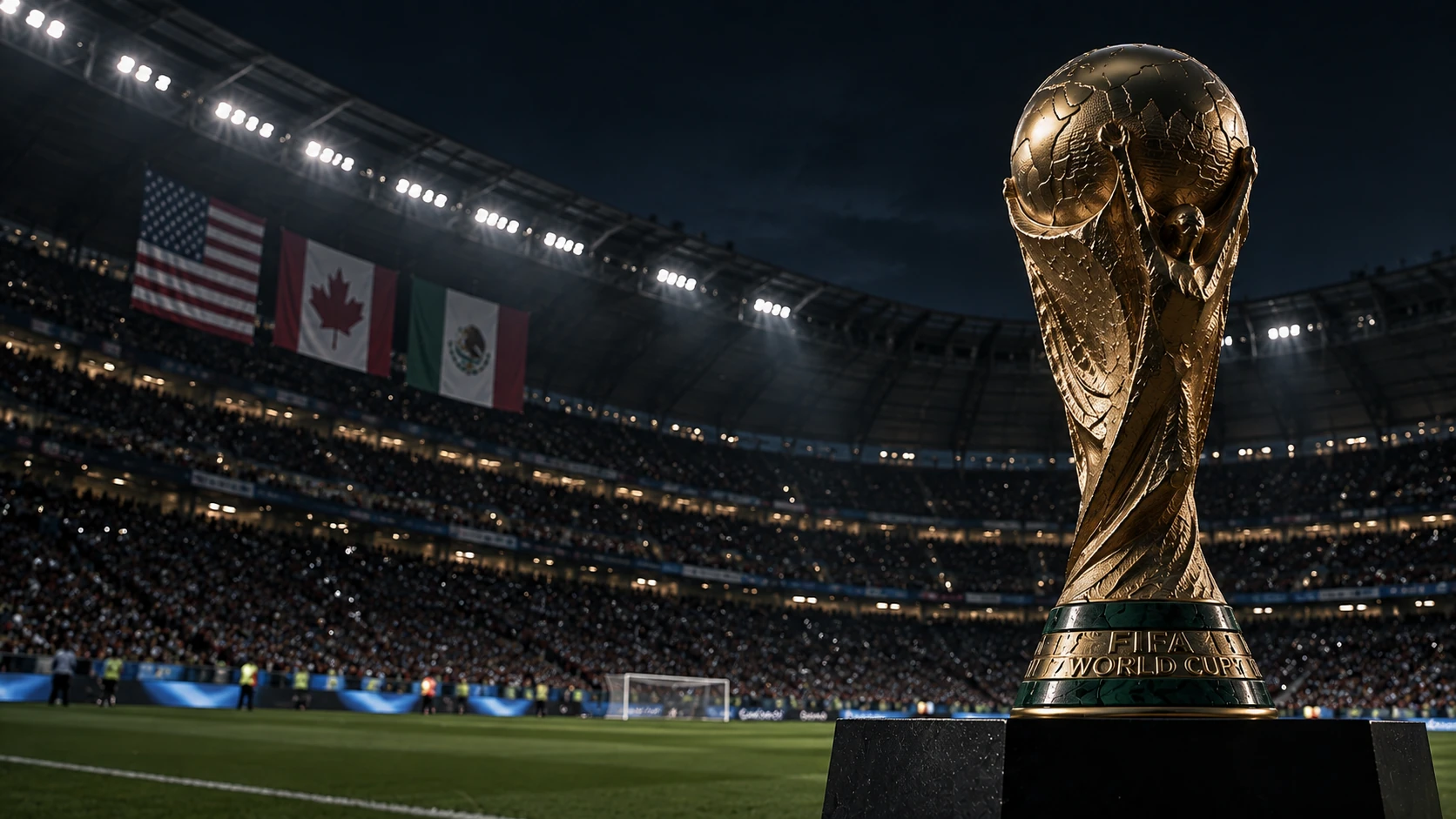
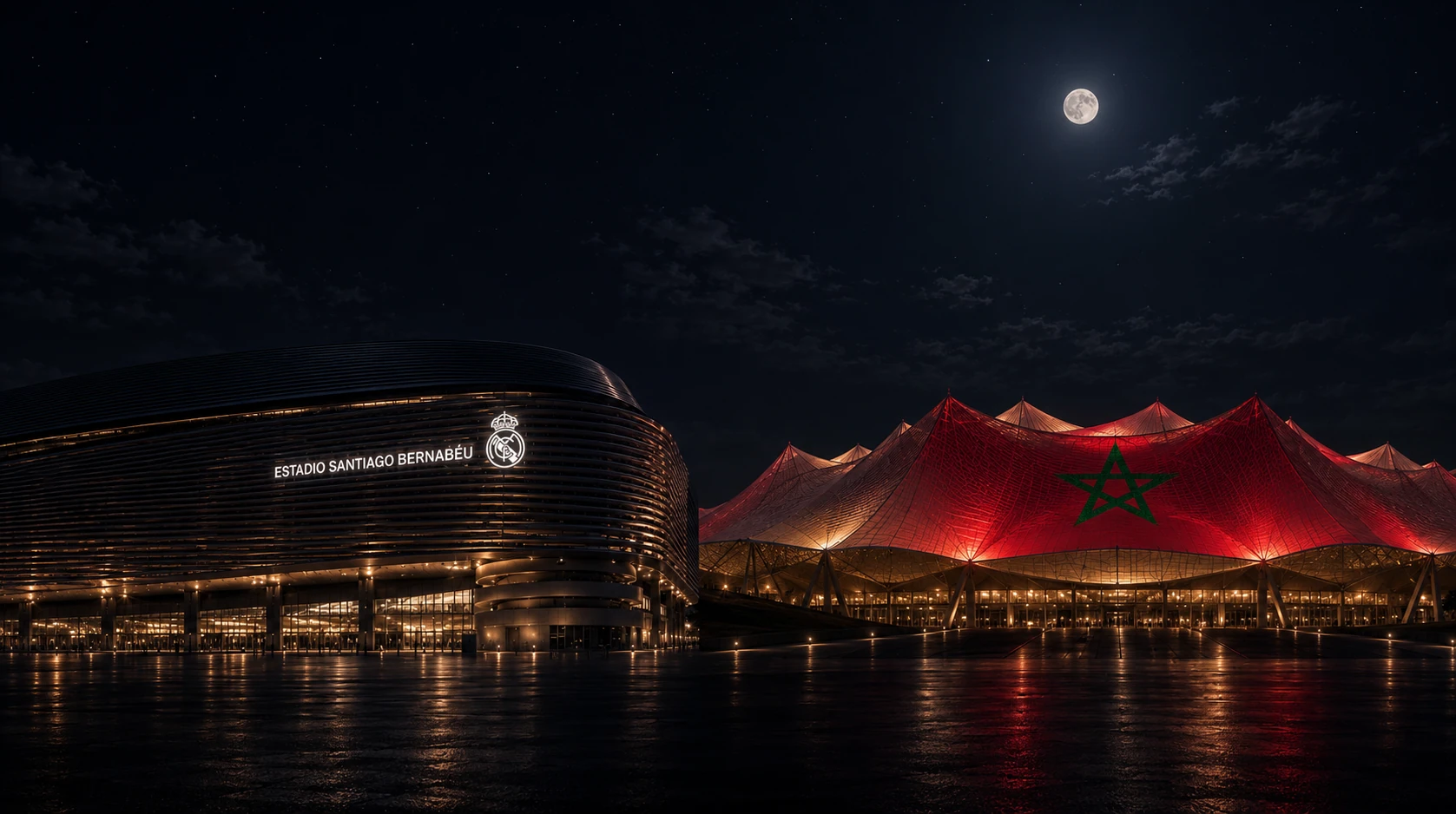
Sources checked October 3, 2026. Bid figures are labelled by their 2024 reporting date; project completion dates remain targets. The hero is an editorial illustration, not a documentary photograph of two completed stadiums.
FAQ
Frequently Asked Questions
Where will the 2030 World Cup final be played?
FIFA has not announced the final venue as of October 3, 2026. Hassan II Stadium and the Santiago Bernabéu are proposals, and Camp Nou also appears in the bid evaluation as a possible final venue.
Has Morocco won the right to host the final?
No final allocation has been announced. Fouzi Lekjaa's September statement was an official's claim. FIFA said the decision would be made in due course.
How big will Hassan II Stadium be?
The planned capacity is 115,000 seats. The stadium is under construction in Benslimane province near Casablanca, with Populous citing a 2028 completion target in July 2026.
Why do Bernabéu capacity figures differ?
Madrid's tourism page lists 80,242 seats, while FIFA's 2024 bid table records 78,297 gross seats for the submitted configuration. Neither should be presented as the confirmed ticket inventory for a 2030 final.
Which countries will host the 2030 World Cup?
Morocco, Portugal and Spain will host the main tournament. Argentina, Paraguay and Uruguay will each host one centenary celebration match.
PRESDA Dispatch
Stay Informed. Stay Aware.
A sharp briefing across AI, gaming, sport, business, world affairs, paparazzi, and lifestyle.