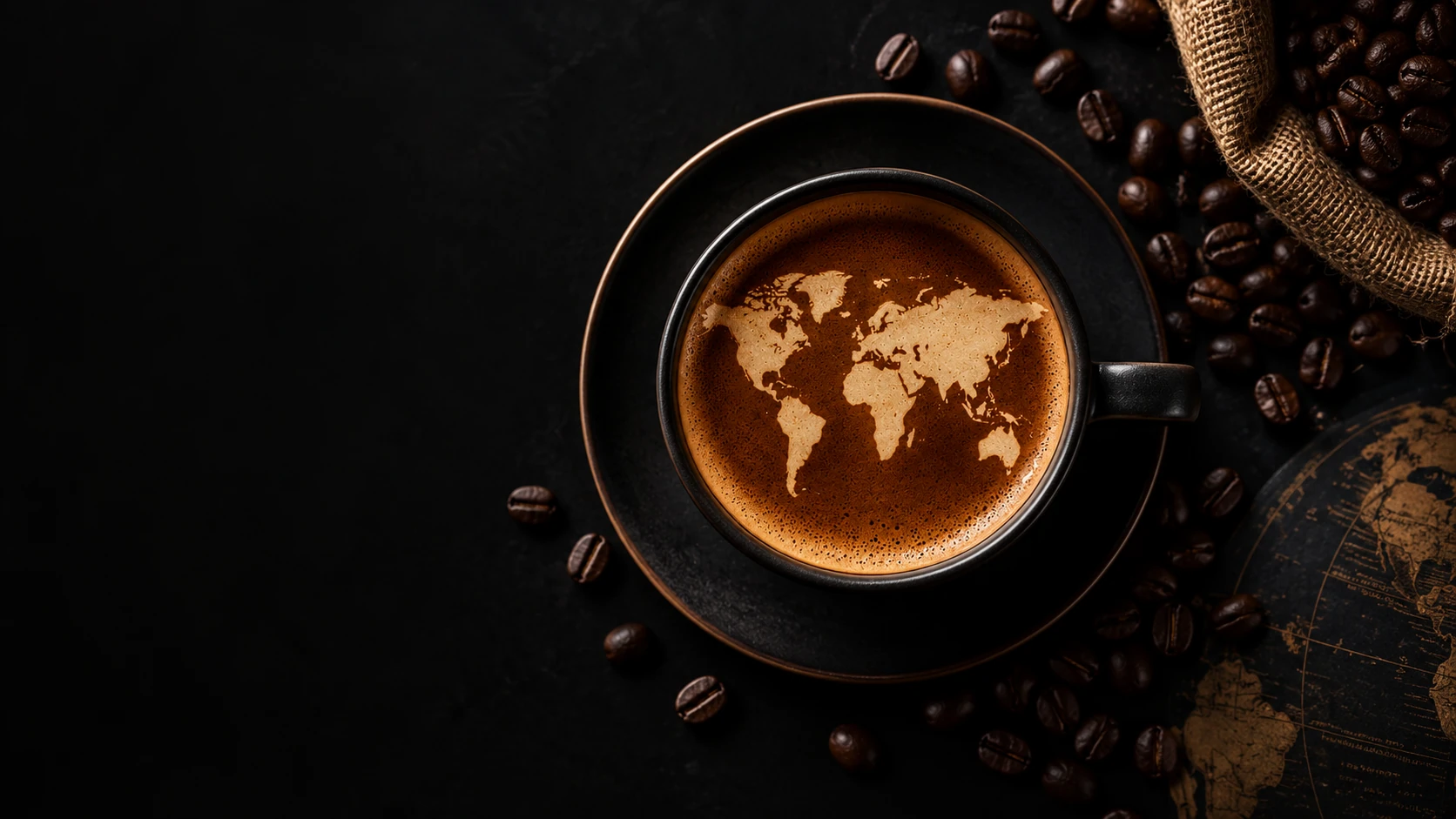
International Coffee Day 2026: The World Drinks More Than 3 Billion Cups a Day
A daily ritual connects billions of cups to millions of farming families. On October 1, new UN recognition puts the people behind coffee in the spotlight.
The first cup can feel like a private ritual. Taken together, those cups form a global economy. UNIDO, the United Nations Industrial Development Organization, puts daily coffee consumption at more than 3 billion cups. Its April 2025 publication provides the estimate behind this headline; it is not a newly measured count of drinks poured on October 1, 2026. UNIDO: global daily coffee consumption estimate, April 10, 2025
International Coffee Day falls on October 1. This year's celebration has a new status: it is the first since the UN General Assembly formally recognized the date on March 10, 2026. The observance brings coffee's social value together with the livelihoods, trade and environmental questions behind it. ICO: International Coffee Day and its 2026 recognition
This report uses information available as of October 1, 2026. Estimates, forecasts and reporting periods are identified throughout. The hero is an editorial illustration, not a photograph documenting an official event.
HOW MUCH COFFEE DOES THE WORLD DRINK?
The cup is familiar; the statistical unit is less so. Coffee agencies generally report volumes in 60-kilogram bags of green coffee or their equivalent. A daily cup estimate is useful for explaining scale, but it should not be treated as interchangeable with a weighed commodity balance: serving sizes, brewing methods and the amount of coffee used differ.
The ICO's August 2026 report incorporates supply-and-demand estimates released on September 10. For coffee year 2025/26, it estimates consumption at 180.6 million bags and production at 183.6 million. Consumption is estimated to be 0.8% lower than in 2024/25, following that year's strong growth. These are October-to-September figures, and consumption is an apparent-consumption calculation using supply, trade and stocks rather than a survey of individual cups. ICO: August 2026 Coffee Market Report, including September 10 estimates
USDA's July 2026 outlook instead forecasts 2026/27 consumption of 179.736 million bags and production of 189.667 million. Its marketing years vary by producing country. Keep these series separate: their periods and methods differ, so subtracting an ICO consumption figure from a USDA production forecast would not produce a valid surplus. USDA: Coffee, World Markets and Trade, July 2026
WHICH COUNTRIES LEAD COFFEE PRODUCTION?
Brazil leads, followed by Vietnam. The table uses one consistent source: USDA's July 2026 forecast for 2026/27, expressed in million 60-kilogram bags. These are expected harvest volumes, not final calendar-year 2026 results.
| Country | Forecast production |
|---|---|
| Brazil | 71.90 |
| Vietnam | 32.50 |
| Colombia | 13.40 |
| Ethiopia | 12.10 |
| Indonesia | 11.38 |
| Uganda | 7.16 |
Source: USDA's Coffee Summary, page 7. The six countries are ranked by forecast total production. USDA: Coffee, World Markets and Trade, July 2026
Brazil's size makes its growing conditions consequential far beyond its borders. USDA's June country report linked its anticipated recovery to better weather and the higher-yielding phase of the trees' alternating production cycle. It also described producers adapting management practices and looking for more resilient varieties. A forecast for a large crop does not remove the need to manage weather risk. USDA: Brazil Coffee Annual, June 1, 2026
WHERE IS COFFEE CONSUMED?
USDA forecasts consumption of 42.50 million bags in the European Union, 26.95 million in the United States and 22.39 million in Brazil for 2026/27. The EU is a bloc, not a country. These are total volumes, not a per-person ranking. USDA: Coffee, World Markets and Trade, July 2026
Brazil demonstrates why the familiar division between countries that grow coffee and countries that drink it is incomplete. USDA's Brazil report describes a substantial home market, with roasted and ground coffee making up most projected domestic consumption. Beans can support domestic businesses and everyday routines as well as export earnings. USDA: Brazil Coffee Annual, June 1, 2026
The differences matter when reading claims about the world's biggest coffee drinkers. A populous country's total demand answers a different question from how much the average resident consumes. Neither measure, on its own, captures the importance of a drink to a particular community.
MILLIONS OF FARMERS BEHIND THE CUP
FAO says coffee supports around 25 million farmers. The ICO's 2026 campaign cites roughly 12.5 million farming families. These figures describe different units and should not be added together or presented as competing headcounts. FAO: UN recognition and coffee's economic importance, March 10, 2026 ICO: 2026 Coffee Is Part of the Solution campaign
For some countries, coffee is also central to the ability to pay for imports. FAO reports that it represented 27.9% of Ethiopia's merchandise exports, 20.1% of Uganda's and 19.5% of Burundi's in 2024. Those are dated trade shares, not estimates for 2026. They show why a discussion that begins at a cafe counter quickly becomes a question of rural incomes and national economic security. FAO: UN recognition and coffee's economic importance, March 10, 2026
Farm conditions vary sharply. USDA's April 2026 Honduras report describes expected gains from improved nutrition, pruning and maturing plantations, while identifying leaf rust and rising operating costs as continuing concerns. Better harvest prospects and pressure on farmers' margins can coexist. A higher international coffee price is not, by itself, a measurement of household profit. USDA: Honduras Coffee Annual, April 29, 2026
In El Salvador, USDA's April report identifies labour shortages and restricted access to finance as practical obstacles to pruning, replacing trees and harvesting. Its account makes the work behind the beverage tangible: producing a crop requires people, investment and care long before a roaster or customer sees the beans. USDA: El Salvador Coffee Annual, April 20, 2026
WHY COFFEE PRICES REMAIN A 2026 STORY
The ICO Composite Indicator Price averaged 287.29 US cents per pound in August 2026, almost unchanged from July. Within the month, concerns about El Niño and limited near-term Arabica availability supported a rally; later, Brazilian rainfall and expectations of more supply eased the pressure. A nearly flat monthly average can therefore conceal substantial movement. ICO: August 2026 Coffee Market Report, including September 10 estimates
That indicator is not a cafe menu price. USDA's Honduras report notes that contracts, inventories and pricing structures can delay the transmission of commodity-market changes to retail prices. The price of a bag on an exchange and the price of a finished drink belong to different stages of the chain. USDA: Honduras Coffee Annual, April 29, 2026
For readers, the useful distinction is between a reported market movement and a prediction about tomorrow's cup. This article makes no retail-price forecast. It also does not infer that every farmer benefited equally from a period of higher commodity prices.
COFFEE CULTURE IS STILL CHANGING
Coffee culture is not confined to one preparation, one type of shop or one continent. The ICO's International Coffee Day platform connects growers, roasters, baristas and consumers, presenting the celebration as a shared occasion across the whole chain. The people making coffee at origin belong in that cultural picture as much as those serving it. ICO: International Coffee Day and its 2026 recognition
El Salvador provides a current example. USDA reports expanding coffee-shop activity and interest in premium local varieties alongside continued preference for affordable, convenient soluble coffee. Specialty cafes and instant coffee are not mutually exclusive descriptions of a country's drinking habits. Different budgets, tastes and occasions can sustain both. USDA: El Salvador Coffee Annual, April 20, 2026
For the much longer journey from Ethiopia and Yemen through Ottoman coffee culture and beyond, read PRESDA's history of coffee. This October 1 report focuses on the present: who grows coffee, where it is consumed and what the institutions behind the observance are doing in 2026.
WHAT MAKES INTERNATIONAL COFFEE DAY 2026 DIFFERENT?
Recognition at the United Nations
The March decision gives the date formal UN recognition. FAO was invited to facilitate the observance with relevant organizations, particularly the ICO. Coffee's cultural and social significance is part of that mandate, alongside its role in livelihoods and development. FAO: UN recognition and coffee's economic importance, March 10, 2026
FAO has scheduled a headquarters celebration in Rome for October 1, from 12:15 to 13:30 CEST. Its announced programme centres on the people and partnerships connecting farms to cups. This is a scheduled event, not a claim that proceedings have already concluded. FAO: October 1, 2026 celebration at headquarters in Rome
In Geneva, FAO and the permanent missions of Indonesia, Rwanda and Türkiye have announced a 10:00–11:30 CEST event at the Palais des Nations. The programme combines discussion of coffee's economic, environmental and cultural role with a tasting and networking session. The format brings policy conversation and the shared experience of drinking coffee into the same room. FAO: International Coffee Day 2026 programme in Geneva
A campaign focused on livelihoods and resilience
The ICO's year-long 2026 campaign, Coffee Is Part of the Solution, asks the sector to demonstrate how cooperation can support livelihoods, climate resilience and inclusive development. It is a campaign agenda, not certification that every coffee business or farming system has already achieved those outcomes. ICO: 2026 Coffee Is Part of the Solution campaign
Skills are part of that effort. In July, the ICO reported on a Brussels discussion involving UNIDO and other partners about education and professional training, including coffee training centres in East Africa. The emphasis was on enabling people in producing countries to gain technical knowledge and participate in more stages of the industry. ICO: coffee education and skills, July 15, 2026
Better access to market information
On September 30, one day before the observance, the ICO launched its Coffee Market Intelligence Platform. The tool brings together prices, stocks, trade flows, production and consumption. Its public dashboards offer free access to current indicators and selected recent data; detailed historical and bulk access is subject to separate arrangements. ICO: Coffee Market Intelligence Platform launch, September 30, 2026
This matters because the same commodity can look very different to a farmer planning investment, a cooperative arranging sales and a buyer negotiating a contract. The ICO presents shared, credible information as a way to reduce uncertainty, not as a way to eliminate market volatility. Readers can explore the ICO's official coffee-data platform directly. ICO: Coffee Market Intelligence Platform launch, September 30, 2026
WHAT SHOULD WE NOTICE BEYOND THE CUP?
International Coffee Day offers a useful pause between ordering and drinking. Where were the beans grown? What can the seller explain about the producer and the route to market? Is a sustainability statement backed by specific information? Those questions are more informative than assuming an expensive drink automatically guarantees a good farm income.
The occasion can celebrate pleasure and connection while making room for the work behind them. A barista's skill, a farmer's decisions and the risks of a growing season all belong to the story. In 2026, the strongest reason to mark October 1 is to see those people more clearly, alongside the extraordinary scale of the world's daily coffee habit.
FAQ
Frequently Asked Questions
When is International Coffee Day 2026?
International Coffee Day is October 1, 2026. This is the first observance since the UN General Assembly formally recognized the date on March 10, 2026.
Does the world drink more than 3 billion cups of coffee a day?
UNIDO used that estimate in an April 2025 publication. It describes global scale, not a newly measured daily count for 2026; cup sizes and brewing methods vary.
Which country produces the most coffee?
Brazil leads USDA's July 2026 forecast for 2026/27, at 71.9 million 60-kilogram bags, followed by Vietnam at 32.5 million. These are forecasts, not final harvest totals.
Why do ICO and USDA coffee figures differ?
The ICO figures cited here use October-to-September coffee years, while USDA uses marketing years that vary across producing countries. Different periods and estimation methods mean the series should not be mixed.
PRESDA Dispatch
Stay Informed. Stay Aware.
A sharp briefing across AI, gaming, sport, business, world affairs, paparazzi, and lifestyle.