Margot Robbie: From Hollywood Star to Powerful Producer
Explore Margot Robbie's acting career, Barbie, LuckyChap partnerships, producing influence and verified 2026 developments, beyond celebrity wealth myths.
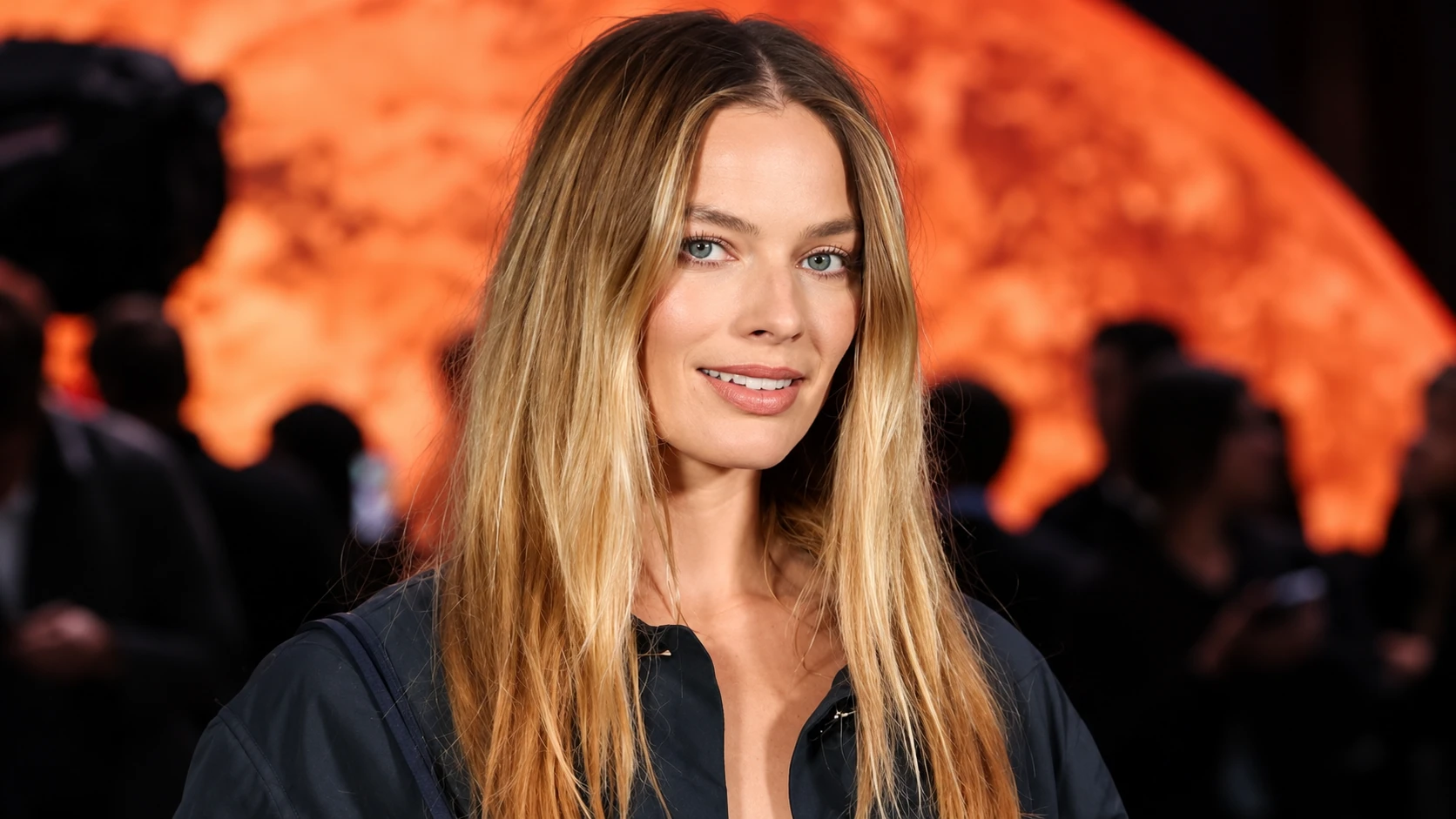
PRESDA editorial illustration: user-supplied, approved portrait of Margot Robbie. The backdrop is not presented as documentation of a specific premiere.
The most revealing image of Margot Robbie's career is not necessarily a red carpet. It is a film credit. An actor can be the face of a production without deciding what gets made; a producer works earlier, helping turn an idea into a project that can survive financing, casting and distribution. Robbie's importance lies in building a career on both sides of that divide.
Barbie made that combination impossible to ignore. Yet the shift did not begin with a pink blockbuster. It developed through Australian television, conspicuous Hollywood roles and LuckyChap, a company whose films do not always feature its most famous founder. This is a story about performance and institutional influence, not evidence that one person controls an industry. Developments below are checked through October 22, 2026.
Queensland, television and a working apprenticeship
Born in Queensland in 1990, Robbie grew up on Australia's Gold Coast before pursuing acting in Melbourne. Her early international foundation was Neighbours, where she played Donna Freedman. In a 2018 interview reported by Australia's ABC, she described the programme's demanding production rhythm as valuable preparation. The significance is practical: sustained television work teaches repetition, preparation and collaboration before a global audience knows an actor's name. ABC: how Neighbours prepared Robbie for Hollywood
Her move into American work was not an uninterrupted parade of hits. Pan Am offered network-television exposure but did not become a long-running vehicle. About Time and The Wolf of Wall Street, both released in 2013, placed her in very different cinematic worlds. The first belonged to romantic storytelling; the second brought the heightened aggression and appetite of Martin Scorsese's financial satire. Magnolia Pictures: Robbie career biography in Borderline production notes
A breakthrough that could also become a trap
As Naomi in The Wolf of Wall Street, Robbie made an impression opposite Leonardo DiCaprio in a film crowded with extravagant performances. The role delivered visibility, but visibility is not the same as range. Hollywood can reward a distinctive debut by repeatedly offering versions of it. Her subsequent career is interesting partly because it moves between glamour, comedy, physical transformation and characters who resist easy audience sympathy.
That movement should not be mistaken for a perfectly planned ascent. Casting depends on filmmakers, available material and commercial decisions beyond any actor. Looking backwards can make a career seem more inevitable than it was. Robbie's record is better understood as accumulating opportunities and then using some of that recognition to participate in selecting and developing work, rather than merely waiting to be selected.
Harley Quinn and the scale of franchise fame
Suicide Squad in 2016 made her Harley Quinn recognizable to an audience far beyond prestige drama. Birds of Prey in 2020 and The Suicide Squad in 2021 extended that association. The character allowed a physically expressive, comic and volatile performance within expensive franchise filmmaking. A recognizable role can strengthen bargaining power, but it can also encourage an industry to see the performer mainly as a reusable asset.
Birds of Prey matters here because Robbie was also a producer. Acting and producing are distinct credits, with different responsibilities; one does not automatically imply the other. The broader question is whether an actor can help shape an ensemble and a project's perspective rather than simply occupy the centre of a familiar property. Her filmography offers examples of both franchise participation and attempts to change how such projects are assembled.
I, Tonya: performance meets production
I, Tonya, released in 2017, joined Robbie's acting ambitions to LuckyChap's emerging identity. The film's competing accounts, abrasive humour and depiction of class and abuse complicated the conventional inspirational sports biography. Robbie's performance as Tonya Harding brought a leading-actress Oscar nomination at the 2018 ceremony. Allison Janney won supporting actress; the film also received an editing nomination. These are distinct achievements, not a Best Picture nomination. Academy: 2018 awards
The business lesson is not that difficult material always pays. It is that producing can create a route toward roles and stories an actor wants to explore. Development remains uncertain, and a finished film depends on writers, directors, editors and many other collaborators. Robbie's contribution matters without requiring the fiction that a producer single-handedly authors everything on screen.
Building LuckyChap with partners
LuckyChap was founded in 2014 by Robbie, Tom Ackerley, Josey McNamara and Sophia Kerr. Film Victoria's reporting describes a mandate to support women's stories and women creators. Naming the partners matters: the company is not simply a celebrity nickname attached to every Robbie film. It has a separate production history, with projects that place other performers and filmmakers at the centre. Film Victoria: annual report 2019–2020
Producing can involve finding material, securing rights, developing scripts, building a creative team and navigating financing and release. The exact division of labour changes by project. A public producer credit does not reveal every private negotiation, ownership percentage or profit-sharing term. For that reason, company success should be assessed through documented work and partnerships, rather than unsupported estimates of Robbie's personal fortune.
A company beyond its founder's starring roles
Promising Young Woman is a clear example. Emerald Fennell wrote and directed the film, Carey Mulligan starred, and Robbie was among its producers. Its handling of sexual violence, revenge and social complicity was deliberately confrontational. The project demonstrates how an actor-producer can support a filmmaker's perspective without taking the lead role. The distributor's credits make those responsibilities explicit. Focus Features: Promising Young Woman
LuckyChap's wider slate includes Saltburn, the television series Dollface and the coming-of-age film My Old Ass. These projects differ in tone and audience. Their existence suggests a company interested in developing a portfolio, rather than repeating one image of its founder. That does not make every project equally successful or beyond criticism; creative identity and commercial predictability are different things. Hasbro: LuckyChap production background
Barbie: cultural event, commercial achievement
Barbie brought together Robbie as star and producer, Greta Gerwig as director and co-writer, Noah Baumbach as co-writer, and major studio and toy-company interests. Its worldwide theatrical gross exceeded $1.4 billion. That figure describes ticket revenue, not LuckyChap's profit or Robbie's salary: cinemas, distributors, production costs, marketing and contractual arrangements all stand between a box-office headline and personal income.
The film's editorial interest lies in its tension. It used an exceptionally recognizable commercial property to stage arguments about femininity, power and self-definition, while also generating enormous attention for the brand. Viewers can find its satire meaningful and still question its relationship with consumer culture. Treating the film only as liberation or only as advertising misses the coexistence of those forces.
Awards, recognition and the limits of shorthand
Robbie's supporting performance in Bombshell earned an Oscar nomination at the 2020 ceremony. Barbie then brought a different kind of recognition: she shared its Best Picture nomination as a producer at the 2024 awards. She was not nominated for lead actress for Barbie. That distinction is essential when describing a career increasingly defined by work behind the camera. Academy: 2020 awards Academy: 2024 awards
Awards provide a verifiable record, but cannot measure every form of influence. A role may change public perception without winning; a producer may help establish a director whose later work travels further. Conversely, prominence should not exempt a film from critical evaluation. Robbie's strongest claim to influence is the combination of visible performances and a continuing production operation, not the idea that acclaim makes every choice correct.
Partnerships are opportunities, not guaranteed hits
In February 2024, Warner Bros. and LuckyChap announced a multiyear first-look film agreement. Such a relationship gives a studio an early opportunity to consider projects under the arrangement; it is not a promise that every proposal will be financed or released. It signals an established working relationship after Barbie, while leaving the uncertainty of individual films intact. Variety: LuckyChap's Warner Bros. agreement
The difference between development and delivery also applies to familiar intellectual property. Hasbro and Lionsgate announced LuckyChap's involvement in a Monopoly film in April 2024. EA subsequently announced a Sims film project with Amazon MGM Studios and LuckyChap among its producers. Those announcements document development, not completed films or guaranteed release dates. This feature does not convert a project announcement into a claim of release. EA: The Future is Plumbob Green
What changed in 2025 and 2026?
Robbie's acting work continued with A Big Bold Beautiful Journey, a 2025 film opposite Colin Farrell, as documented by Sony Pictures. It is useful to distinguish this performance credit from LuckyChap's production catalogue. A famous actor's company does not automatically produce everything in which that actor appears. The distinction keeps a business profile from inflating its subject's corporate reach. Sony Pictures: A Big Bold Beautiful Journey
In 2026, Wuthering Heights reunited her with Fennell, opposite Jacob Elordi. Warner Bros.' official materials identify a Lie Still and LuckyChap production and a US theatrical release on February 13, 2026. Reuters' February premiere reporting independently documented the film's arrival. It belongs among released work, not a perpetually upcoming project copied from an old biography. No unverified final box-office total is needed to establish that milestone. Warner Bros.: Wuthering Heights Reuters: February 2026 reporting
Power means helping a project exist
The limits remain real. Star power cannot remove financing risk, guarantee audience enthusiasm or substitute for good writing. Large intellectual properties offer recognition but can constrain experimentation. Supporting new voices and making commercially ambitious films are not automatically compatible goals; the value of a production company is partly in how it handles that tension over time.
Robbie's trajectory therefore offers something more substantial than a story of fame becoming greater fame. It shows an actor using recognition to participate in the machinery that chooses stories. PRESDA's examination of brand psychology offers a related lens on Barbie, while its history of video games provides context for the expansion of screen adaptations. The lasting test of producing power is the work it helps bring into existence, including work in which the producer never appears.
FAQ
Frequently Asked Questions
What is this PRESDA article about?
Explore Margot Robbie's acting career, Barbie, LuckyChap partnerships, producing influence and verified 2026 developments, beyond celebrity wealth myths.
Which category does this story belong to?
This story is part of PRESDA's Paparazzi coverage.
Who published this article?
Margot Robbie: From Hollywood Star to Powerful Producer was published by PRESDA Editorial on PRESDA.
PRESDA Dispatch
Stay Informed. Stay Aware.
A sharp briefing across AI, gaming, sport, business, world affairs, paparazzi, and lifestyle.