Neuralink Announces FDA Clearance for LINK Pivotal Brain-Implant Trial
Neuralink announced permission for its LINK trial on November 25, 2026. Explore the ALS study, brain-interface science and limits of the approval.
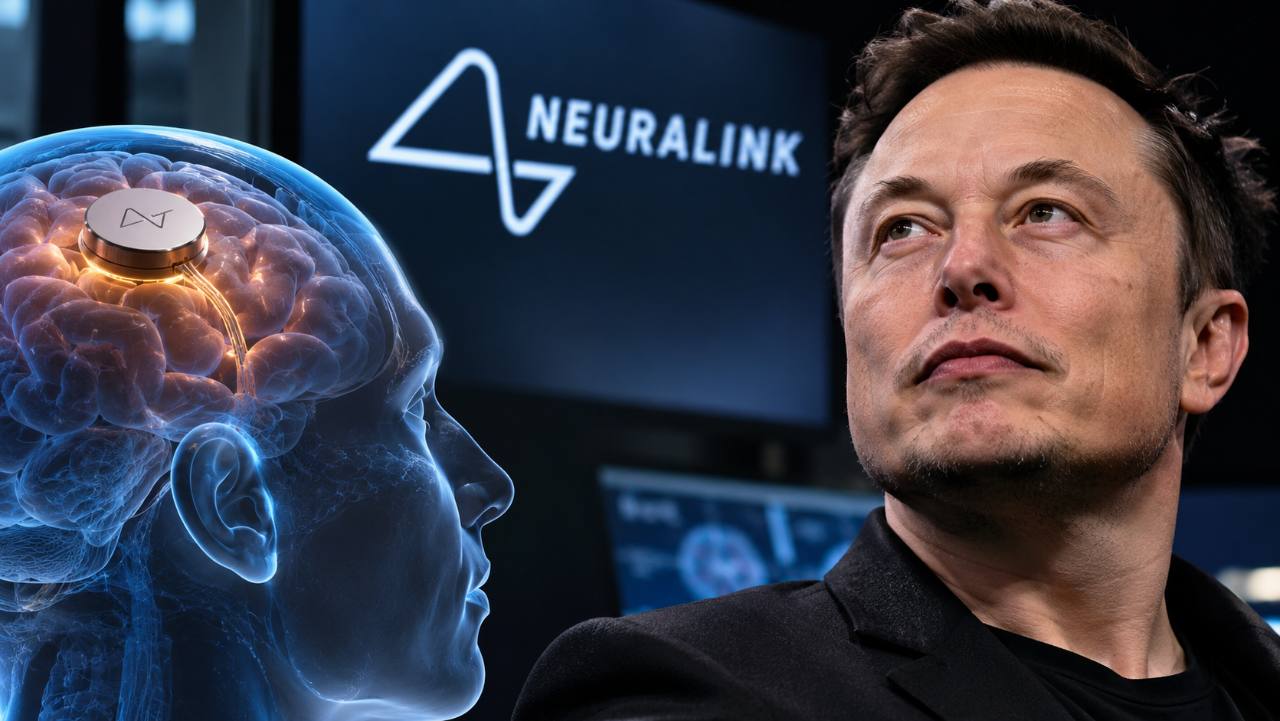
AI-generated editorial illustration supplied for PRESDA. The brain and implant are conceptual, not an anatomical placement guide, a clinical scan or a photograph of a trial participant.
Neuralink announced on November 25, 2026 that the US Food and Drug Administration had authorized the launch of its LINK Pivotal Study. The proposed investigation concerns people with severe paralysis due to amyotrophic lateral sclerosis, or ALS. It is a step in clinical development, not approval to sell a brain implant as a routine treatment. Neuralink, November 25, 2026: LINK pivotal study announcement
The distinction is central to the story. For someone unable to operate an ordinary computer, reliable control of a cursor can mean communicating, studying or managing everyday tasks with less assistance. Whether an implanted system delivers that benefit safely and consistently is precisely what a clinical investigation must establish.
What Neuralink actually announced
The company says LINK will assess safety and effectiveness, including digital-device control, functional outcomes and longer-term reliability across multiple clinical sites. It describes the study as the first US pivotal trial for an implantable brain-computer interface. That priority claim is the company’s description, not an independently established comparison of every competing protocol. Neuralink, November 25, 2026: LINK pivotal study announcement
| Question | Verified scope |
|---|---|
| Who announced it? | Neuralink, on November 25, 2026 |
| Which study? | LINK Pivotal Study |
| Target population in announcement | People with severe paralysis due to ALS |
| Main focus | Digital device control, functional independence, safety and reliability |
| Commercial status | Investigational, not approved for routine sale or treatment |
| What remains unknown? | Future results, full public protocol details and any marketing decision |
Neuralink also says more than 30 people implanted in earlier feasibility studies in the United States, Canada and United Kingdom have contributed thousands of hours of use. These are company-reported aggregate experience figures. They are not the number enrolled in LINK, a published success rate or completed results from the new pivotal study.
Permission to test is not permission to market
The FDA’s investigational device framework allows qualifying studies to collect safety and effectiveness evidence. The agency’s approval-process guidance explicitly distinguishes research from commercialization and restricts promotion or misrepresentation of investigational devices. A pivotal study is designed to support a consequential assessment; its name does not guarantee a positive outcome or a later marketing decision. FDA: investigational device exemption approval process
What can be checked publicly
The specific November 25 clearance is reported in Neuralink’s primary announcement. The FDA’s own guidance explains the regulatory framework but does not publish this company’s authorization letter. Its FAQ states that regulations restrict disclosure of investigational-device information. An absence of a public FDA press release should not be presented either as proof of commercial approval or as proof the study is unauthorized. FDA: questions about investigational device exemptions and disclosure
The trial website continues to identify Neuralink devices as investigational. Joining a patient registry is an expression of interest, not confirmation of eligibility, a promised operation or a guaranteed clinical benefit. Exact inclusion criteria and consent requirements belong to the research protocol and study team. Neuralink: device-control trial information and investigational status
How a brain-computer interface works
The basic idea is to record neural activity associated with an intended action, then translate selected patterns into commands for an external device. The computer learns a relationship between recorded signals and a task. This bypasses part of the ordinary movement pathway; it does not mean a person’s underlying neurological disease has been cured.
In an April 12, 2024 technical update, Neuralink described its N1 implant as using 1,024 electrodes across 64 flexible threads, inserted with its R1 surgical robot. Electronics process the recordings and transmit information wirelessly to an application, which translates signals into actions such as cursor movement. Those figures describe the device in that dated account, not an independently verified final LINK protocol specification. Neuralink, April 12, 2024: PRIME study and implant architecture
The same update placed the first human implantation in January 2024. Therefore, the latest announcement is not the start of all human testing. Earlier feasibility work and a later pivotal investigation answer related but different questions: can the approach work in a small experience base, and can its safety and useful performance be assessed more systematically?
Device control and speech are different research programs
LINK’s announcement emphasizes digital-device control in severe ALS-related paralysis. Neuralink separately describes speech-restoration research for people with severe communication impairment. A speech demonstration should not be silently substituted for LINK’s objectives, eligibility or outcomes. The speech program also remains investigational. Neuralink: speech-restoration research, separate from device control
The broader field predates this announcement. A 2023 Nature paper by Francis Willett and colleagues reported speech decoding in a participant with ALS using another research system. It demonstrates the scientific relevance of neural decoding, but its results cannot be credited to Neuralink or transferred to LINK as if the devices and participants were interchangeable. Willett and colleagues, Nature, August 2023: independent speech neuroprosthesis study
What meaningful results would need to show
A compelling video can demonstrate a task on one occasion. Clinical evidence needs a fuller denominator: how many participants were assessed, how consistently the system worked, what assistance or calibration was required, and which complications or losses of function occurred. The new study’s future reporting will need to make benefits and harms interpretable together.
Long-term reliability also matters. A useful interface must remain workable beyond a laboratory session and fit a person’s life, including maintenance, training and follow-up. Because the public announcement is not a complete protocol or results paper, this article does not invent an enrollment target, an error-rate threshold, a completion date or a complication rate for LINK.
The next milestone is evidence
As of November 28, 2026, the verified development is Neuralink’s announcement of authorization for the pivotal investigation. It is reasonable to recognize the importance of a more advanced study while withholding conclusions that only its results can support. Trial participants are research partners, not proof that an experimental implant is already a universally available therapy.
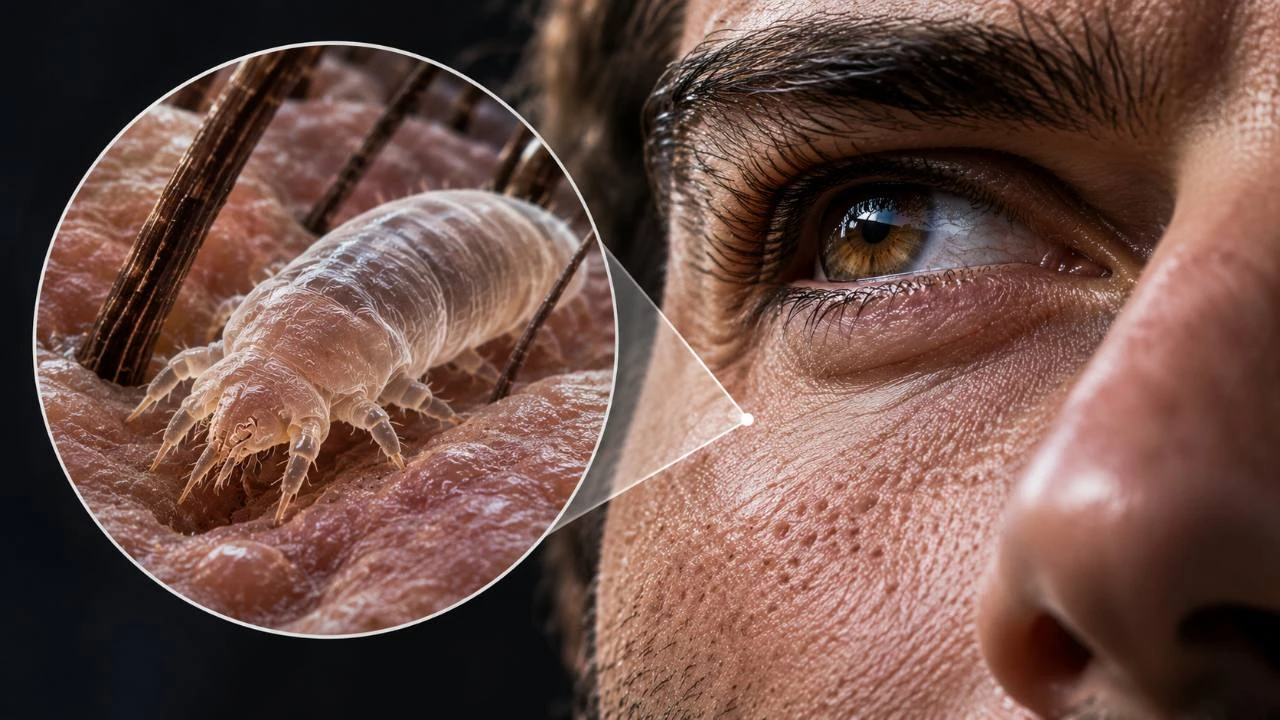
Read also our coverage of experimental pig-kidney transplantation, the separation of craniopagus twins and the medical evidence on Demodex.
FAQ
Frequently Asked Questions
Has the FDA approved Neuralink as a treatment?
No. Neuralink announced authorization to conduct the LINK pivotal study. Its devices remain investigational; study permission is distinct from marketing approval.
Who is LINK intended to study?
The November 25 announcement identifies people with severe paralysis due to ALS. Detailed eligibility must be checked with the study team.
Is this Neuralink’s first human implant?
No. Neuralink reported its first human implantation in January 2024 within the earlier PRIME feasibility program.
Does the implant read every private thought?
The described assistive system decodes trained neural signals for intended tasks. Evidence for device control does not establish unrestricted access to every thought.
PRESDA Dispatch
Stay Informed. Stay Aware.
A sharp briefing across AI, gaming, sport, business, world affairs, paparazzi, and lifestyle.