PAMUKKALE: TURKEY'S EXTRAORDINARY WHITE TERRACES
Explore the geology of Pamukkale’s white terraces, the ancient city of Hierapolis and the conservation work behind this Turkish World Heritage site.
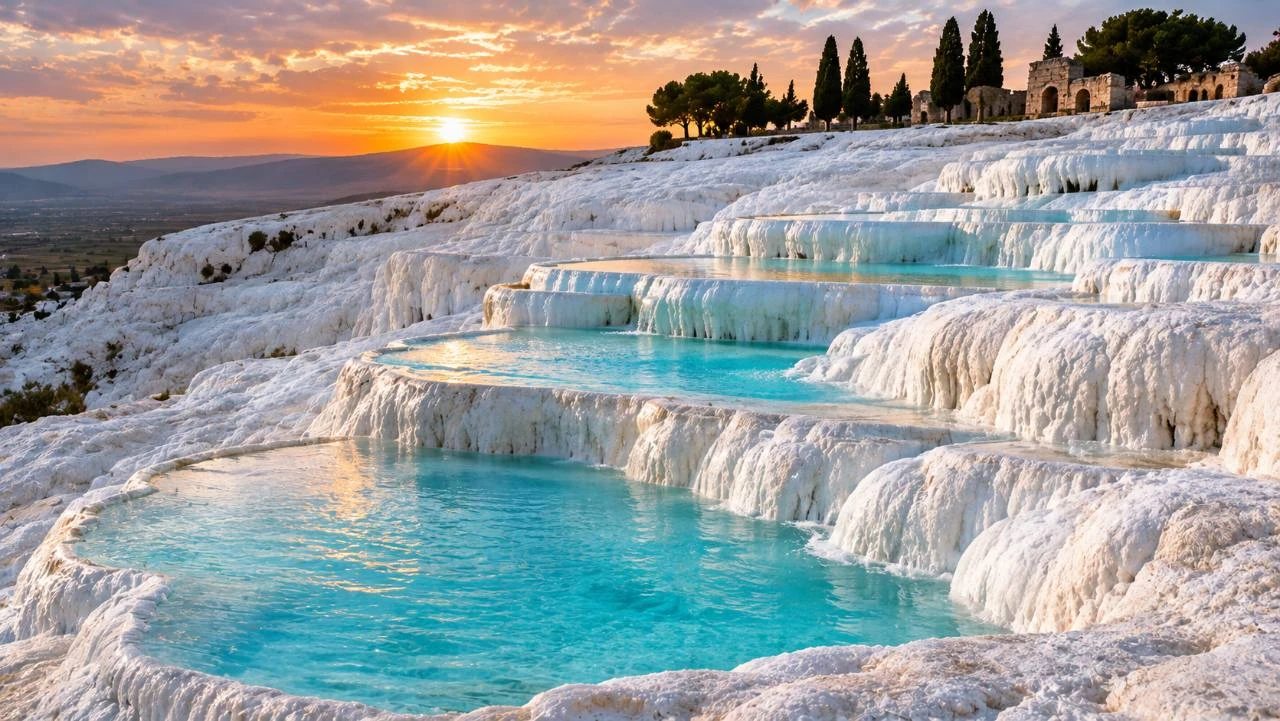
Supplied editorial depiction, not a live site-conditions report. Water levels, colours and access shown are not guaranteed. Editorial image supplied for PRESDA. Original creator and reuse licence not provided.
Pamukkale looks almost like a landscape made from another season: white slopes that resemble snow, holding pools of blue water. But the terraces are stone, and their formation is still tied to moving water. The compelling question is not whether the scene is natural or spectacular. It is how water can construct a landscape, how people have lived beside it and what happens when a changing geological system becomes an image expected to stay perfect.
The cotton castle is made of travertine
The International Union of Geological Sciences identifies Pamukkale, in Denizli, as an outstanding travertine locality associated with active faults and geothermal water. Its Turkish name means cotton castle. The white colour is not snow, table salt or a painted surface: the landscape is built from carbonate deposits. Thinking of it as a construction process rather than a frozen object makes the terraces more interesting, because the water and the rock cannot be understood separately. IUGS, Pamukkale Travertines
The basic chemistry of travertine offers a useful explanation. Carbon-dioxide-rich water can carry dissolved carbonate material; when conditions change at the surface and carbon dioxide escapes, calcium carbonate can precipitate. The US Geological Survey describes that mechanism at Yellowstone’s Mammoth Hot Springs. It is a comparison of carbonate deposition, not a claim that Pamukkale shares Yellowstone’s entire volcanic system. Similar-looking terraces do not require identical geological histories. USGS, carbonate deposition at Mammoth Hot Springs
The ancient city above the pools
The World Heritage property is called Hierapolis-Pamukkale for a reason. UNESCO recognises the relationship between the natural terraces and the archaeological city, rather than treating the ruins as an optional decoration. The property was inscribed in 1988 as a mixed cultural and natural site. Its appeal is therefore larger than a bathing photograph: water, settlement and monumental remains belong to one connected landscape. UNESCO, Hierapolis-Pamukkale World Heritage listing
Türkiye’s culture portal identifies the theatre, necropolis, gates, baths and other remains at Hierapolis. Those features offer different ways to look at the site: a city needs routes, public spaces and places for the dead as well as an impressive view. Without inventing a particular ancient visitor’s experience, we can recognise that the same landscape held many forms of human activity. The white slope is not the whole historical story. Türkiye Culture Portal, Pamukkale-Hierapolis
Why a perfect photograph is the wrong expectation
A living geological site does not promise a fixed arrangement of full pools, identical colours and uninterrupted access. A photograph records one presentation of light, water and viewpoint. The supplied image is an editorial view, not a live conditions report or a guarantee of which pools will be filled. Treating the postcard as a contract with nature makes ordinary variation look like failure. Reading the process makes that variation part of the attraction.
Conservation belongs inside the experience
The terraces should be understood as heritage rather than an endlessly replaceable stage set. UNESCO’s account includes the management of visitor routes and the relationship between protection and tourism. For any visit, current access instructions belong to the site authorities, not an old photograph or a social post. This article promises neither opening hours nor access to every pool. Looking carefully can mean accepting that a fragile place must sometimes be experienced from the route provided.
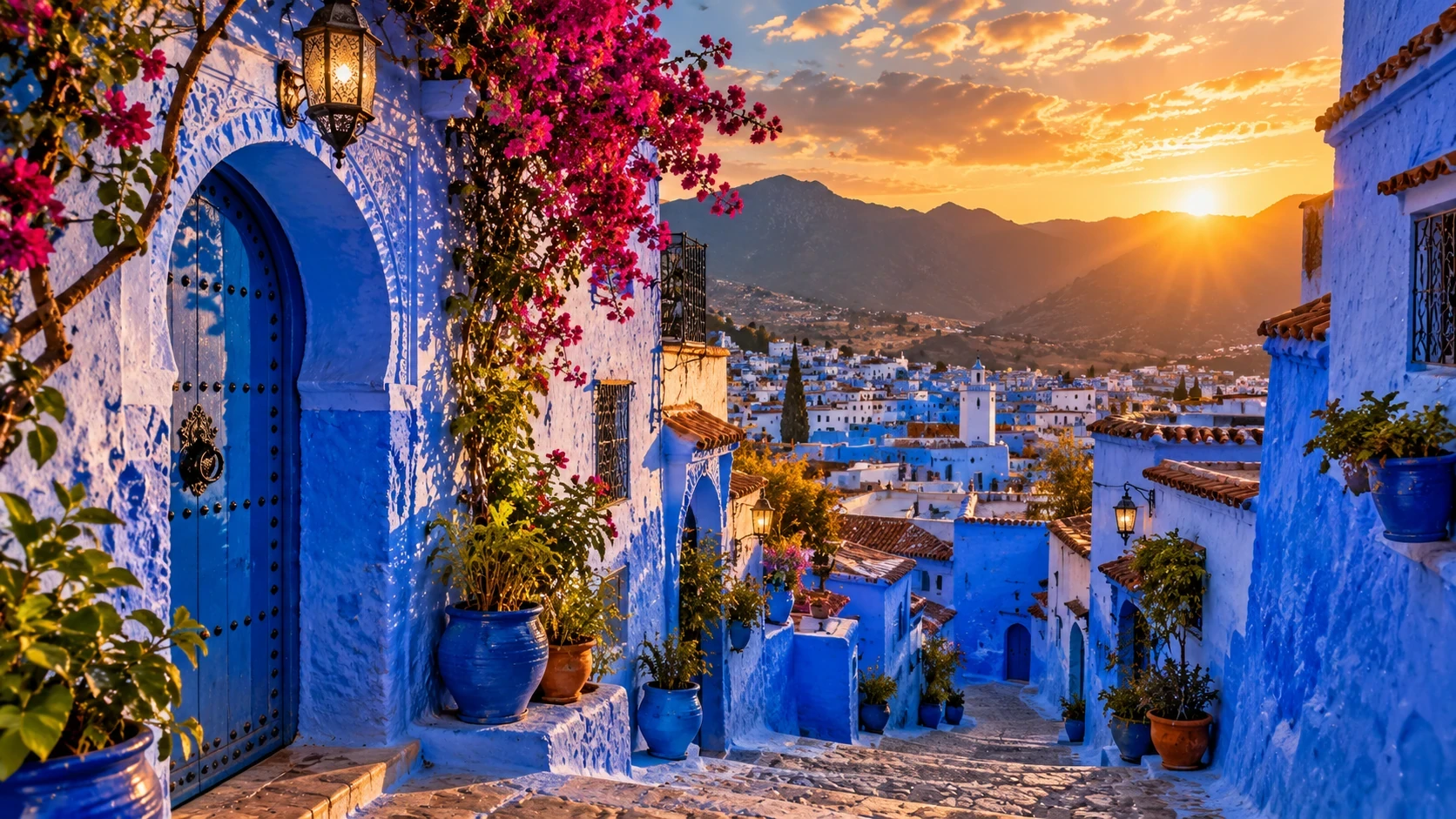
Related reading: The story behind Morocco’s blue city.
FAQ
Frequently Asked Questions
What are Pamukkale’s white terraces made of?
They are travertine, a calcium-carbonate rock deposited by mineral-rich water, not snow or table salt.
Is Hierapolis part of the same heritage site?
Yes. Hierapolis-Pamukkale is a mixed cultural and natural UNESCO World Heritage property, inscribed in 1988.
Will every pool look like the hero image?
No. The image is editorial, not a guarantee of current water levels, colours or access. Follow current site instructions.
PRESDA Dispatch
Stay Informed. Stay Aware.
A sharp briefing across AI, gaming, sport, business, world affairs, paparazzi, and lifestyle.