Chefchaouen: The Story Behind Morocco's Blue City
Explore Chefchaouen's 1471 origins, blue-wall traditions, Rif landscapes and living heritage, with sourced history and practical advice for a thoughtful visit.
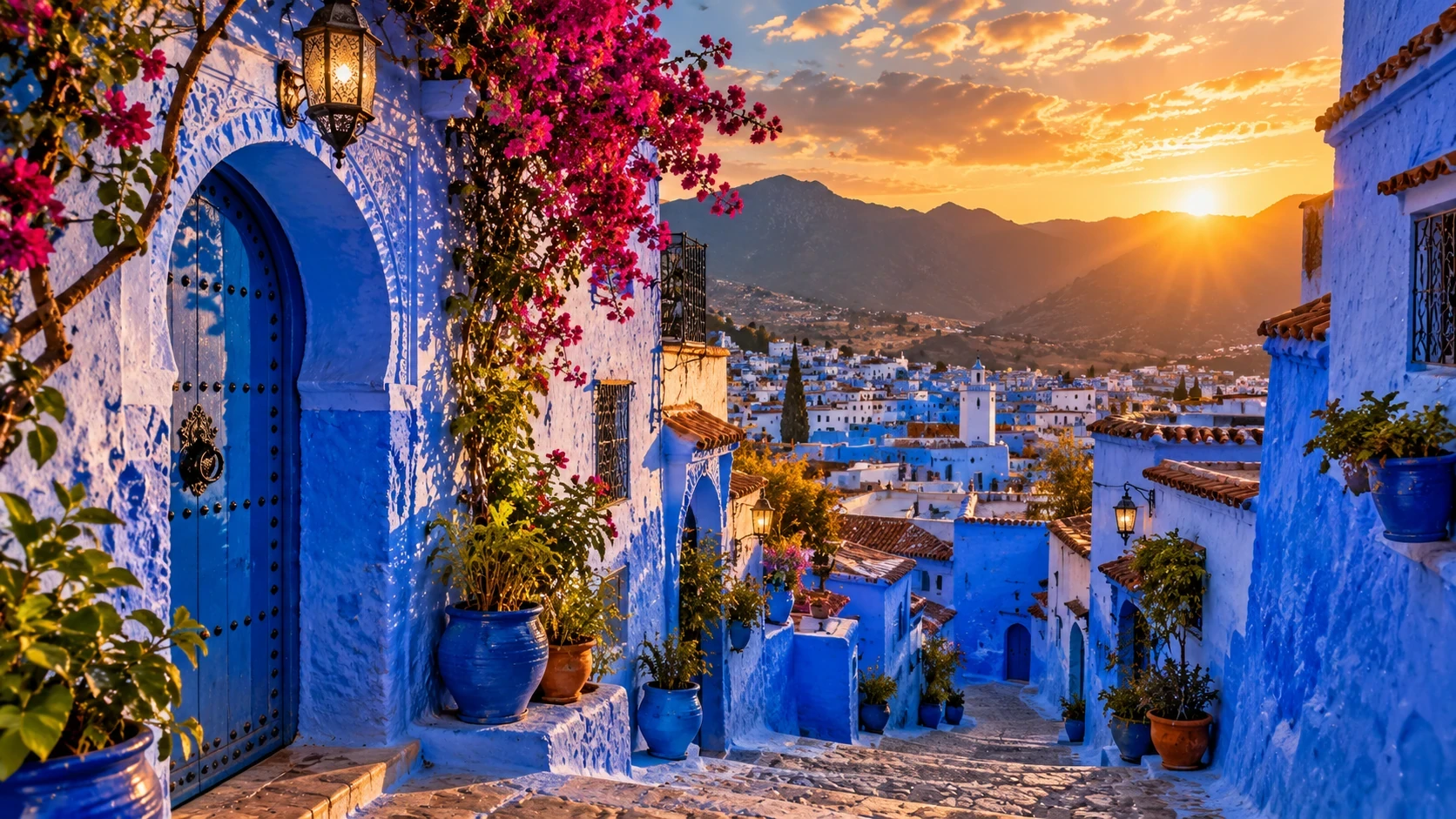
PRESDA · AI-generated editorial illustration inspired by Chefchaouen; not a photograph of a verified street.
Chefchaouen is easy to recognize and harder to explain. Blue walls turn ordinary stairs, doorways and washing lines into an extraordinary streetscape, but the photographs leave out much of the story: a mountain settlement built for defence, shaped by migration and still inhabited by people whose routines continue between the camera stops.
The city stands in Morocco's Rif Mountains. Its founding is associated with 1471 and Ali ben Rached, whose kasbah anchored the settlement. The origins of the blue paint are less securely documented than that date. A responsible visit can enjoy the colour without turning one attractive explanation into established history. Moroccan Ministry of Culture
A fortress before a photographic icon
The kasbah is a useful place to begin because it gives the city a chronology beyond its colour. Morocco's culture ministry dates its construction to 1471 and describes a defensive enclosure that also contained the ruler's residence. Its towers, garden and former prison make a different first impression from the surrounding souvenir shops: this was a place of authority and protection, not a backdrop designed for visitors.
A medina shaped by movement
The Moroccan tourism office describes the old town through its winding streets, blue-and-white houses and crafts. Woodworking, wool and weaving belong to that account alongside the architecture. Looking at a doorway's workmanship or asking how a textile was made can reveal more than collecting another photograph of the same staircase. Purchases are also more meaningful when the maker, material and place of production are clear. Moroccan National Tourist Office
Why is Chefchaouen blue?
There is no single securely established explanation for every blue wall. Popular accounts invoke Jewish religious symbolism, cooling, insects or later tourism. Those are different kinds of claim: a cultural association is not a dated painting record, and a practical explanation needs evidence of both the effect and the original intention. The official heritage sources used here establish the kasbah's history, but do not establish one definitive inventor of the city's blue appearance.
That uncertainty does not make the colour meaningless. Repainting is a present-day practice, and a town can adopt and renew a visual identity without every household sharing one origin story. Ask residents about their own street and experience; treat the answer as that person's account rather than a universal explanation for the entire medina.
What to see beyond the blue walls
The kasbah, square and working streets
The kasbah's garden and museum collections offer a change of pace. The tourism office highlights old photographs, textiles and weapons, which place everyday objects beside the city's defensive history. Leave time for streets beyond the busiest photographic corners, while remembering that a quieter residential lane is not an invitation to enter a home. Official destination guide
The Rif is part of the destination
Talassemtane National Park and the Akchour area are nearby possibilities highlighted by Morocco's tourism office. They require their own planning, rather than being treated as an effortless extension of a medina walk. Before a hike, establish the route, daylight available, transport back and current conditions. A guide can be especially useful when the path or weather is unfamiliar; a scenic photograph says nothing about today's footing.
Living heritage includes the meal
Chefchaouen is one of the communities associated with the Mediterranean diet's UNESCO intangible heritage recognition. Here, “diet” means more than a nutritional formula: it encompasses knowledge, food preparation and social practices around eating. This recognition is not a UNESCO World Heritage inscription of the blue medina itself. UNESCO: Mediterranean diet
For a visitor, that distinction suggests a better question than where to find the most photogenic table. Ask what is seasonal, how a dish is prepared and who supplies its ingredients. A shared meal can give the city texture that a list of monuments cannot. Heritage remains alive through use, work and transmission, not simply through preserving a view.
Planning a visit without invented bargains
As checked on 27 October 2026, the culture ministry lists kasbah opening hours of 09:00–17:00 and admission of 80 Moroccan dirhams for a foreign adult. Other visitor categories have different prices. Recheck the official booking page before travelling; this is one attraction's published admission, not an estimate for an entire day in Chefchaouen.
Two nights is a useful planning suggestion if you want a slower medina visit and time beyond it, rather than a minimum requirement. Compare accommodation by its exact location and access as well as its photographs. Ask about stairs, luggage assistance, heating or cooling, and the distance from your arrival point. Confirm your onward transport before committing to a tightly timed connection.
Weather, access and photography
Choose dates around the conditions you want, not a guarantee of an empty blue city. Check a local forecast for both the town and any mountain excursion, carry layers and use footwear with grip on uneven steps. Travellers with limited mobility should seek a precise description of their accommodation route. Ask before photographing people, avoid blocking doorways and accept that an attractive courtyard may be private.
Chefchaouen rewards a shift in attention: from obtaining an image to understanding a place. Its colour is the invitation; the work, food, history and ordinary life behind it are the visit. For another perspective on how beauty is maintained through repeated care, read PRESDA's exploration of kintsugi and the craft of repair.
FAQ
Frequently Asked Questions
What is this PRESDA article about?
Explore Chefchaouen's 1471 origins, blue-wall traditions, Rif landscapes and living heritage, with sourced history and practical advice for a thoughtful visit.
Which category does this story belong to?
This story is part of PRESDA's Travel coverage.
Who published this article?
Chefchaouen: The Story Behind Morocco's Blue City was published by PRESDA Editorial on PRESDA.
PRESDA Dispatch
Stay Informed. Stay Aware.
A sharp briefing across AI, gaming, sport, business, world affairs, paparazzi, and lifestyle.