THE PLASTIC SURGERY REVOLUTION: BEAUTY AT ANY COST
An evidence-based investigation of cosmetic surgery, social media, satisfaction, medical tourism and procedure-specific risks, using the ISAPS 2025 survey.
Cosmetic surgery changes anatomy to alter appearance; non-surgical aesthetic treatments change features without an operation. Neither is a promise of happiness. In 2026, their appeal sits at the intersection of personal agency, medical capability and an increasingly commercial culture of looking better. The essential question is whether the choice is informed, proportionate and genuinely the patient’s own.
The scale is striking. The newly released ISAPS survey estimates more than 35 million procedures performed by plastic surgeons in 2025. Behind that aggregate are people seeking modest changes, major transformations, relief from longstanding discomfort or a sense that their reflection better fits their identity. There are also patients who experience complications, disappointment or pressure to keep changing. Both realities deserve attention without turning ordinary patients into cautionary caricatures.
Why people change their appearance
There is no single cosmetic-surgery personality. Psychiatrist Martha Ward’s 2025 review describes interacting motivations involving media, relationships and life events. A useful consultation explores the individual goal rather than assuming vanity: an unwanted feature, changes after pregnancy or weight loss, aging, confidence, identity, or the wish to stop thinking constantly about one part of the body.
Personal choice and external influence can coexist. Someone may freely want a procedure while navigating an environment that rewards particular faces, body shapes or signs of youth. A partner’s criticism, perceived workplace expectations or repeated comparisons can change what feels desirable. These are possible influences to explore, not explanations that should be imposed on every patient. The same intervention can have very different meanings for different people.
A practical distinction is between a bounded anatomical goal and a promise that surgery will repair a relationship or transform social status. A clinician can discuss what tissue can be changed. Nobody can guarantee love, career advancement or lasting confidence. Respect for autonomy includes the right to proceed after a balanced assessment, but also the right to postpone or decline without being told that the body is defective.
The social media effect: association is not causation
Instagram, TikTok and other platforms make appearance comparisons unusually frequent and portable. Filters, lighting, selected angles and edited images can make ordinary variation seem like a correctable flaw. Selfies are also shaped by camera distance and perspective. Comparing a face with a processed image is therefore different from comparing two unedited faces, even when the filter is subtle and the post feels intimate or authentic.
A 2024 systematic review links social media use, body-image dissatisfaction and consideration of cosmetic surgery. That association does not establish a simple causal chain. People already concerned about appearance may seek beauty content; age, peer groups and prior dissatisfaction can affect both viewing and treatment interest. Cross-sectional questionnaires cannot reliably separate these pathways. Evidence about wanting surgery is also not automatically evidence about undergoing it.
Influencer endorsements and celebrity culture can make interventions seem routine, especially when recovery, complications or commercial relationships are absent from the story. Yet appearance alone cannot establish that a celebrity had surgery. This feature makes no such diagnoses. The useful journalistic question is how promotion frames choices: whether viewers see alternatives and uncertainty, whether payment is disclosed, and whether a medical decision is presented as a quick consumer upgrade.
Women, men and younger generations
ISAPS reports women received 85.6% of surgical procedures and 84.8% of non-surgical procedures in its 2025 estimates. These are shares of procedures within the survey’s female/male categories, not the percentage of women who seek treatment. They do not fully describe gender identity. Repeated appointments also mean the activity of one person can contribute more than once. A gender gap in recorded volume does not explain its causes.
The age tables show different patterns for different interventions rather than a universal youth surge. Breast augmentation and rhinoplasty concentrate in younger adult categories; liposuction and botulinum toxin are more concentrated in midlife. The accompanying figure gives the precise shares and denominators. These patterns cannot show that every young patient was influenced by a platform or every older patient was responding to aging.
Culture, affordability, provider availability and accepted ways of discussing appearance may all shape demand. Men’s treatment choices should not be reduced to one masculinity stereotype, nor women’s to insecurity. For adolescents, developing preferences, vulnerability to pressure and legal limits deserve special care. A parent’s willingness to pay is not a substitute for the young person’s wishes, maturity, appropriate medical assessment or applicable law.
PRESDA Data Graphics
ISAPS 2025, released September 29, 2026. Verified October 10, 2026.
Gender shares are within surgical or non-surgical procedures, using the survey’s female/male categories. Age shares are within each listed procedure. Two adult age bands are shown, not the entire distribution.
Scroll horizontally to read the complete table.
| Procedure | Women | Men |
|---|---|---|
| Surgical | 85.6% | 14.4% |
| Non-surgical | 84.8% | 15.2% |
| Procedure | 18–34 | 35–50 |
|---|---|---|
| Breast augmentation | 49.5% | 40.1% |
| Rhinoplasty | 57% | 30.3% |
| Liposuction | 39.1% | 44.1% |
| Botulinum toxin | 20.9% | 47% |
The numbers behind the revolution
The ISAPS 2025 report was released on September 29, 2026. It estimates 35,204,030 procedures: 17,883,610 surgical and 17,320,420 non-surgical. Its worldwide extrapolations use data supplied by 2,900 plastic surgeons. The survey measures their activity, not all cosmetic work performed by dermatologists, other clinicians or nonmedical providers, and it counts treatments rather than unique patients. Exact-looking totals remain estimates.
The methodology matters when describing a boom. More locations and new procedure categories changed coverage. ISAPS’ comparable-category year-on-year figures are minus 8.7% overall, minus 0.4% surgical and minus 15.7% non-surgical. Those published comparisons exclude newly added procedures. They must not be confused with subtracting the displayed raw totals, which produces different changes. The graphics preserve the distinction instead of drawing a misleading uninterrupted growth curve.
Large volume does not measure quality, safety, revenue or unmet need. Nor does a change in this survey prove people everywhere have lost interest in aesthetic treatment. It is one important view through a defined provider population. An investigation should ask what was counted, how it was estimated and what changed between editions before converting millions of procedures into a social explanation.
PRESDA Data Graphics
ISAPS 2025, released September 29, 2026. Verified October 10, 2026.
2,900 responding plastic surgeons; worldwide extrapolation. Added categories and coverage changes mean raw totals and comparable-category changes differ. Procedures are not unique patients or all providers’ activity.
Scroll horizontally to read the complete table.
| Procedure | Estimated procedures | Comparable-category annual change |
|---|---|---|
| Surgical | 17,883,610 | -0.4% |
| Non-surgical | 17,320,420 | -15.7% |
| Total | 35,204,030 | -8.7% |
What the most popular procedures actually do
The ranked graphic lists the leading surgical and non-surgical categories. ASPS’ procedure guides explain that eyelid surgery removes or repositions tissue around the eyes; rhinoplasty reshapes the nose. Neither is a universal facial makeover. Goals must account for anatomy and function, including eyelid closure or breathing. Swelling, bruising and healing can obscure early results, and the final appearance may take substantially longer than return to desk work.
Liposuction removes localized fat to change contour. It is not an obesity treatment or a dependable cellulite solution. Breast augmentation adds volume, often through implants; a breast lift reshapes and raises existing tissue, with different scars and trade-offs. These procedures are not interchangeable. Implant selection adds decisions about materials, monitoring and possible future operations rather than a single permanent purchase.
Abdominoplasty, or a tummy tuck removes excess abdominal skin and can address weakened abdominal musculature. It is more extensive than an injection or small-area contouring. Recovery can involve dressings, compression, drains and temporary limits on lifting or exercise. The relevant question is not merely how soon someone looks presentable, but when normal activity is safe and what support is needed at home.
Botulinum toxin temporarily reduces targeted muscle activity. Botox is one brand, not a synonym for every injectable. Hyaluronic acid fillers add volume or alter contour and are different products with different indications. Swelling can initially change the visible result. Maintenance may be necessary, and dissolution or removal has its own limitations. A minimally invasive label describes the method, not an assurance of trivial risk or perfect reversibility.
Recovery is procedure-specific and patient-specific. Patients need a written plan for wound care, travel, driving, work, exercise and follow-up, rather than a universal countdown borrowed from an influencer. A staged decision may be preferable to buying several procedures together. The benefit of convenience must be weighed against the extent of surgery, anesthesia exposure and the clinician’s assessment of individual risk.
PRESDA Data Graphics
ISAPS 2025, released September 29, 2026. Verified October 10, 2026.
Bars start at zero, scaled to the largest count within each group. Counts are estimates, not patients.
Surgical
- Eyelid surgery2,457,677
- Liposuction1,849,828
- Breast augmentation1,622,639
- Breast lift1,143,862
- Tummy tuck1,039,808
- Rhinoplasty1,015,685
Non-surgical
- Botulinum toxin7,333,647
- Hyaluronic acid fillers4,737,957
- Skin tightening1,528,552
- Hair removal1,150,365
- Chemical peel659,942
Is plastic surgery safe?
Safety cannot be answered with one percentage. Anesthesia, infection, bleeding, clots, wound problems, scars, nerve injury and dissatisfaction are different outcomes. Risk depends on the procedure’s extent, the patient’s health, technique, setting and aftercare. A statistic recording only events requiring hospital treatment will be lower than one counting every minor problem. Studies need comparable definitions, follow-up and populations before their percentages can be ranked.
Julian Winocour and colleagues’ 2015 study examined 25,478 abdominoplasty patients in the US CosmetAssure database during 2008–2013. It reported a 4.0% major-complication rate, compared with 1.4% for other aesthetic procedures in that dataset. This is a historical, selected insured population, not the probability for every tummy tuck in 2026. It excludes the idea that all recovery problems or long-term dissatisfaction are captured by that figure.
Combination operations were associated with more complications in that analysis. Association with a facility type should not be interpreted as proof that avoiding hospitals is safer: case selection can differ. Individual counselling should ask which complications a practice records, how long follow-up lasts and who is included. A clinic’s impressive percentage is not informative without those denominators and definitions.
FDA breast-implant guidance identifies rupture, capsular contracture, pain and additional surgery among important concerns. Implants are not lifetime devices. BIA-ALCL is a lymphoma associated particularly with textured implants, distinct from ordinary breast cancer. Device-specific evidence and surveillance matter; one lifetime risk cannot be applied to every implant. Patients should retain their implant information and discuss monitoring and new symptoms with their clinician.
The FDA’s filler guidance warns that accidental injection into a blood vessel can damage tissue and cause blindness or stroke. These serious events are uncommon but potentially permanent. A reports database does not supply the denominator needed for a reliable universal incidence. The risks table therefore states the concern without inventing an odds figure or suggesting that every injection site is equivalent.
The BOTOX Cosmetic prescribing information also distinguishes common effects from its warning about toxin effects spreading. Difficulty swallowing or breathing requires urgent medical attention. Its label notes no confirmed serious distant-spread cases at recommended cosmetic doses for the listed indications. That nuance matters: a boxed warning warrants attention, but it is not evidence that routine licensed use has the same risk as counterfeit products or inappropriate dosing.
PRESDA Data Graphics
Sources: ASPS, FDA, BOTOX Cosmetic label and Winocour’s historical study. Each row links to its evidence. Verified October 10, 2026.
Different procedures, populations and outcome definitions prevent a universal risk ranking. Absence of a rate here does not mean absence of risk.
Scroll horizontally to read the complete table.
| Procedure | Important risks | Evidence and limitations |
|---|---|---|
| Surgery generally | Anesthesia, infection, bleeding, clots, scars and nerve injury | Depends on operation, health, setting and follow-up; no single worldwide rate. |
| Tummy tuck | Major complications; combined operations need particular assessment | 4.0% in 25,478 US CosmetAssure patients, 2008–2013; published 2015. Historical major-event definition, not all complications or a 2026 global rate. |
| Breast implants | Rupture, capsular contracture, reoperation; BIA-ALCL particularly associated with textured implants | Not lifetime devices. Risk varies by device and surveillance. |
| Eyelid surgery | Dry eyes, closure problems and rare vision injury | Procedure-specific ASPS guidance; no universal incidence asserted. |
| Gluteal fat grafting / BBL | Fat embolism, potentially fatal | 2022 joint safety guidance supports ultrasound verification of subcutaneous placement above muscle fascia; not a zero-risk guarantee. |
| Dermal fillers | Vascular occlusion, tissue death, blindness or stroke | FDA warning. Rare serious events; reports alone cannot establish universal incidence. |
| Botulinum toxin | Bruising or weakness; warning about toxin spread | BOTOX Cosmetic label notes no confirmed serious distant spread at recommended cosmetic doses for listed indications. Product and dose matter. |
Why the BBL requires particular scrutiny
Gluteal fat grafting transfers a patient’s fat to the buttocks. It differs from a buttock lift, an implant operation and injectable body contouring. The 2022 joint ASPS safety statement addresses fatal fat embolism and supports ultrasound guidance to verify placement above the gluteal muscle fascia. Deep fat entering large veins can travel to the lungs. The procedure’s name or popularity does not settle the safety question.
Historical mortality estimates drawn from surveys and reported deaths vary and should not be presented as a current worldwide rate. Ultrasound and technique safeguards are important developments, but they do not justify a zero-risk promise. For any proposed BBL, patients need a clear explanation of qualifications, permitted setting, imaging, emergency transfer and aftercare. A package advertised as easy or inexpensive cannot replace those answers.
The psychology of perfection
The NHS describes body dysmorphic disorder as a distressing preoccupation with perceived appearance flaws. It is not simply wanting to look different, and a journalist cannot diagnose it from the number of procedures someone has had. Screening should identify distress and unrealistic expectations without stigmatizing cosmetic patients. Where concern is significant, appropriate mental health assessment can be more helpful than offering another anatomical change.
There is evidence of satisfaction, but it needs context. David Sarwer and colleagues’ 2005 prospective study reported 87% satisfaction and improvements in body image in a small surgical sample. Follow-up loss and the study’s setting limit generalization. Being pleased with an altered feature is also different from curing depression, improving every relationship or establishing long-term psychological benefit across all procedures.
Kirsty Garbett and colleagues’ 2025 systematic review examined 17 controlled prospective studies and found the evidence generally weak. Some short-term outcomes improved, while broader mental-health conclusions remained uncertain. That research perspective challenges both blanket condemnation and promotional promises. A satisfied patient’s experience is real, but it does not establish what every prospective patient will gain.
Regret can involve the aesthetic outcome, complications, costs or a changed preference. Revision may address a technical issue; repeat treatments may be planned maintenance. Neither automatically proves pathology. Still, a moving target that no result satisfies deserves careful discussion. Clinics should record patient-reported outcomes and complaints, not just selected before-and-after photographs, and make room for outcomes that do not fit their marketing.
The business of beauty and medical tourism
The country graphic compares estimated activity, not revenue or national safety. The US leads total volume in the ISAPS table, while Brazil leads surgical volume; South Korea and Turkey are substantial markets with different procedure mixes. These totals are not resident prevalence, per-capita rankings or a measure of surgeons’ skill. International patients and repeat treatments can contribute to a country’s recorded activity.
Price comparisons need equally careful boundaries. ASPS’ 2024 fee tables report projected surgeon-fee ranges rather than the full cost of every treatment. Anesthesia, facilities, tests, garments, time away from work and revisions can change the bill. This feature does not multiply those US fees by global procedure counts to invent industry revenue. Commercial market forecasts vary by what they include and remain estimates, not audited worldwide receipts.
Turkey, Brazil, the US and South Korea should not be treated as single-quality systems. Clinics within a country vary. A lower quote abroad may reflect different costs or an incomplete package; a high domestic price does not guarantee better care. Ask who performs the operation, where it happens, which charges are excluded and who pays if the result requires treatment after returning home.
CDC’s June 2026 investigation reviewed adverse outcomes among US residents travelling for cosmetic procedures, including domestic travel. It documents infection-control and follow-up concerns, but its selected consultations cannot yield a complication rate for all medical tourists. That distinction prevents a real warning from becoming a misleading country ranking. CDC travel guidance also highlights the difficulty and expense of managing complications across borders.
The economic tension is straightforward: providers sell an intervention while patients need independent information about its limits. Financing and repeat subscriptions can make initial access easier while expanding long-term commitments. Transparent total pricing, realistic aftercare and the freedom to refuse extras are therefore part of quality. An attractive hotel or persuasive coordinator is not evidence that the medical arrangements have been independently checked.
PRESDA Data Graphics
ISAPS 2025, released September 29, 2026. Verified October 10, 2026.
Highest estimated total volumes among reported countries. Not revenue, resident prevalence, per-capita activity or a safety ranking. Published totals may differ slightly from component sums because of rounding.
Scroll horizontally to read the complete table.
| Country | Surgical | Non-surgical | Total |
|---|---|---|---|
| United States | 2,229,368 | 3,232,108 | 5,461,476 |
| Brazil | 2,361,010 | 855,655 | 3,216,665 |
| China | 1,409,000 | 1,435,500 | 2,844,500 |
| Japan | 427,248 | 1,620,653 | 2,047,901 |
| South Korea | 844,085 | 1,122,358 | 1,966,442 |
| Germany | 641,683 | 883,780 | 1,525,462 |
| Italy | 574,350 | 903,206 | 1,477,556 |
| Mexico | 862,535 | 607,259 | 1,469,794 |
| Turkey | 794,390 | 524,590 | 1,318,980 |
| India | 574,840 | 486,640 | 1,061,480 |
The ethical question: when does choice become pressure?
Informed consent is a conversation about benefits, risks, alternatives and uncertainty, not a signature acquired after a sales pitch. GMC standards place particular responsibility on doctors treating young people and prohibit marketing that targets them. The guidance also addresses continuity of care. Local legal limits differ, and permission to buy a treatment does not remove a clinician’s duty to assess whether it is appropriate.
Patients should have time to think, see realistic examples and understand what happens if they are unhappy. A consultation that offers only more intervention narrows the decision before it begins. Refusing unsuitable treatment is a professional responsibility, not an insult to the patient. Conversely, assuming everyone who wants cosmetic work is psychologically damaged disregards autonomy. Both ethical errors substitute a stereotype for an individual assessment.
Advertising deserves the same scrutiny as the procedure: edited results, undisclosed sponsorship, time-limited discounts and promises of transformation can distort expectations. The practical test is whether the patient understands limitations before paying. NHS guidance on choosing treatment offers an independent starting point. The most useful questions concern credentials, complications, realistic results and aftercare, rather than which clinic has the most followers.
The future: safer decisions, not a perfected humanity
Progress includes ultrasound-assisted safety checks, better outcome measurement, traceable products and more transparent device information. Emerging techniques need comparative studies and long-term surveillance. A new instrument, injectable or digital simulation should be evaluated for a defined indication, not assumed superior because it is new. A projected face is a counselling aid, not a contractual guarantee of what healing will produce.
Regulation is also evolving. England’s August 2025 licensing consultation outcome sets out planned restrictions and licensing work, subject to further legal processes. A government commitment must not be reported as every proposed rule already being in force. FDA action against illegally marketed botulinum toxin in November 2025 illustrates the parallel problem of product authenticity, even where approved alternatives already exist.
The realistic revolution is the capacity to make more informed decisions and reduce avoidable harm. It cannot abolish aging, create a universal ideal or guarantee a satisfying life. Research into longevity, explored in PRESDA’s Jonathan feature, is also distinct from changing visible signs of age. Aesthetic intervention and biological rejuvenation are different claims requiring different evidence.
What this investigation establishes
The evidence supports a large and diverse aesthetic-treatment sector, important procedure-specific risks and some satisfied patients. It does not support a single worldwide complication rate, a claim that social media explains every decision or a promise that surgery improves mental health. The word revolution describes changing access and culture, not a medical guarantee. Choice is most meaningful when declining treatment remains a respected option.
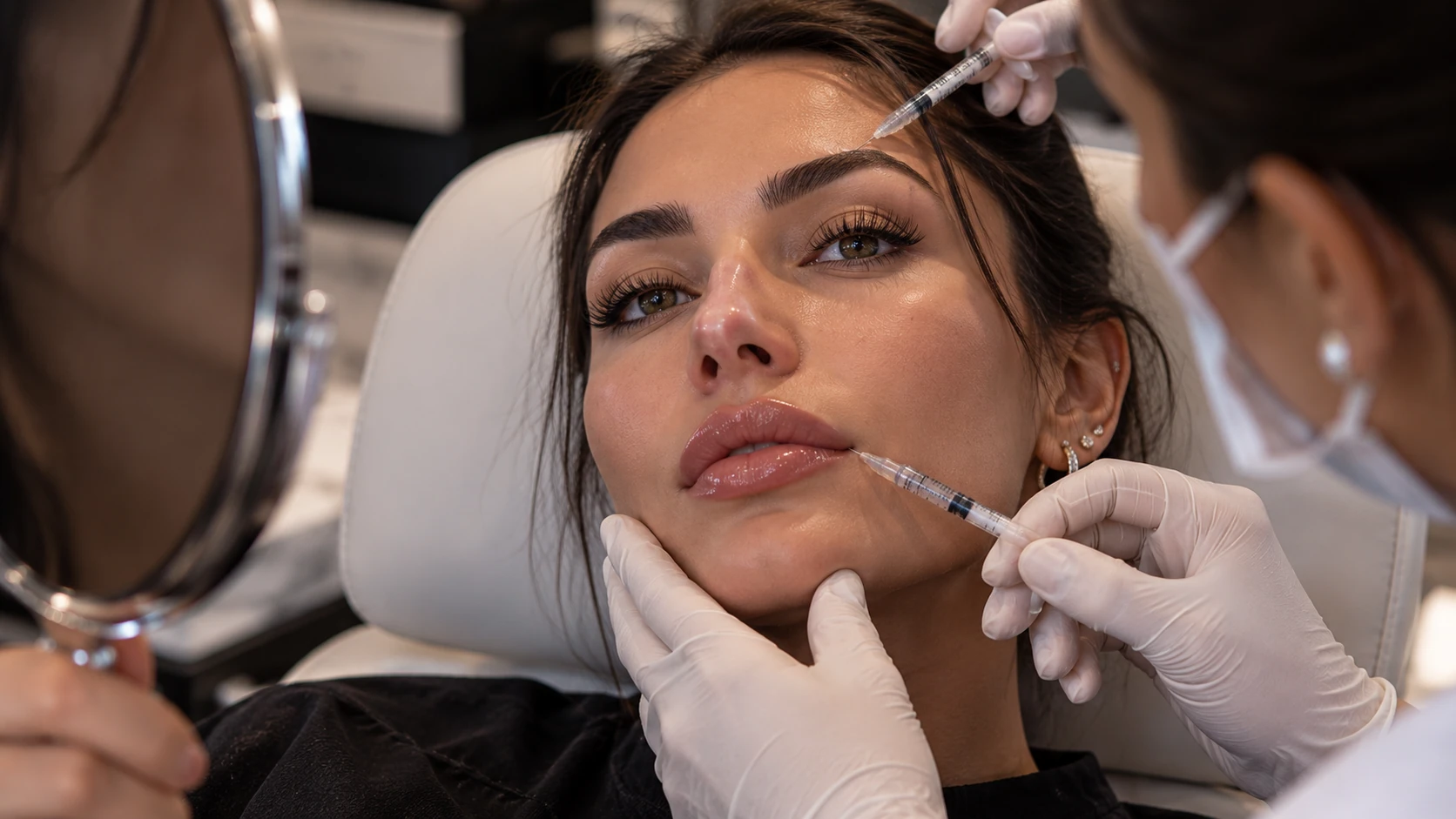
Last verified: October 10, 2026. This is general health reporting, not an individual recommendation. Expert perspectives are attributed to published research and professional guidance; no original interviews are implied. The hero is an AI-generated editorial illustration, not an actual patient photograph or a clinical technique demonstration. Source dates, study populations and survey limits are preserved so that readers can distinguish evidence from interpretation.
FAQ
Frequently Asked Questions
How many cosmetic procedures were performed in 2025?
ISAPS estimates 35,204,030 procedures performed by plastic surgeons worldwide: 17,883,610 surgical and 17,320,420 non-surgical. These are procedures, not unique patients or all providers’ activity.
Does social media cause people to have cosmetic surgery?
Studies associate appearance-focused social media use with dissatisfaction and interest in procedures. Most cannot establish that exposure itself causes surgery; existing concerns and other influences also matter.
Are fillers safer than surgery?
They avoid a surgical incision and often have less downtime, but accidental vascular injection can cause tissue death, blindness or stroke. Risks depend on the product, injection site and practitioner, so there is no universal safety ranking.
Can cosmetic surgery treat body dysmorphic disorder?
Cosmetic treatment should not be presented as a cure for BDD. Distressing preoccupation warrants professional assessment and appropriate mental health care, rather than a diagnosis inferred from photographs.
Is cosmetic surgery abroad always unsafe?
No country is uniformly safe or unsafe. Verify the clinician, facility, emergency arrangements and follow-up. Travel, infection-control differences and fragmented aftercare can add risks.
What should a good consultation include?
A specific goal, alternatives including no treatment, realistic outcomes, procedure-specific risks, full costs, recovery, device details and an aftercare plan, with time to decide without sales pressure.
PRESDA Dispatch
Stay Informed. Stay Aware.
A sharp briefing across AI, gaming, sport, business, world affairs, paparazzi, and lifestyle.