THE WORLD'S OLDEST TORTOISE: WHAT 194 YEARS CAN TEACH US ABOUT AGING
Born around 1832, Jonathan still lives on Saint Helena. New DNA research offers clues to his longevity, but no proven formula for extending human life.
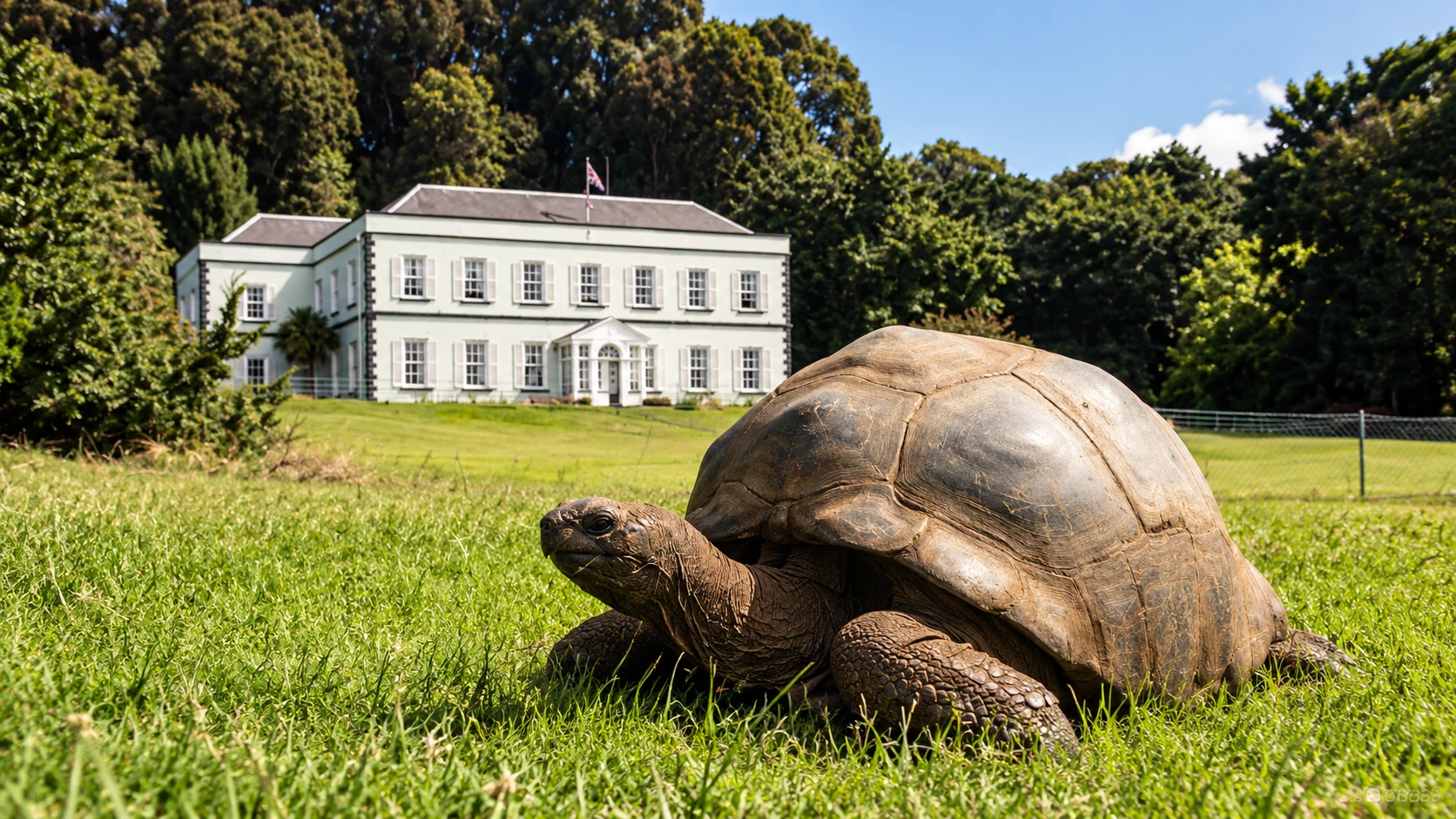
On a lawn on Saint Helena, the scale of a life becomes difficult to grasp. Jonathan, the giant tortoise brought to the South Atlantic island in 1882, is estimated to have hatched around 1832. Guinness World Records lists him as 194 in 2026 and the oldest known living terrestrial animal. Its October 7 account confirms he is still alive. Guinness World Records: age, historical photograph and record Guinness World Records: Joe Hollins interview, October 7, 2026
His story now reaches beyond a remarkable birthday. A Science Advances study published online on October 7, 2026 reports analysis of Jonathan’s own genome and DNA methylation patterns. It offers molecular clues to an exceptionally long life, while explicitly acknowledging that its observations cannot establish cause and effect. Vaisvil et al.: Jonathan’s genome and methylome, Science Advances, 2026 Original study: full text in Europe PMC
HOW DO WE KNOW HIS AGE?
There is no hatch certificate. The estimate rests on Jonathan being fully mature, and therefore thought to be at least 50, when he arrived in 1882. A photograph dated between 1882 and 1886 shows him already grown at Plantation House. Subtracting 50 from 1882 gives the conventional birth year, not a known day of birth. Guinness World Records: age, historical photograph and record
That distinction matters: 194 is an estimated age based on historical evidence and maturity, not a laboratory measurement precise to the year. He could be older. Guinness identifies him as a Seychelles giant tortoise; the new genomic study treats him as an Aldabra giant tortoise, Aldabrachelys gigantea. His precise island ancestry remains uncertain. Guinness World Records: age, historical photograph and record University of Cambridge: study announcement, October 7, 2026 Original study: full text in Europe PMC
FROM THE SEYCHELLES TO PLANTATION HOUSE
Jonathan lives in the grounds of Plantation House, the official residence of Saint Helena’s governor. His arrival from the Seychelles made him an island resident long before cars, television or internet connectivity reached Saint Helena. In June 2026, the island government welcomed his recognition as a Guinness World Records ICON. Saint Helena Government: Jonathan’s ICON recognition, June 16, 2026
The genomic analysis places Jonathan close to Aldabra tortoises but detects an unusual ancestry pattern. The researchers consider earlier removal from Aldabra or a different island origin, without conclusively resolving the question. His familiar Seychelles description should not be confused with a proven location of hatching. Original study: full text in Europe PMC
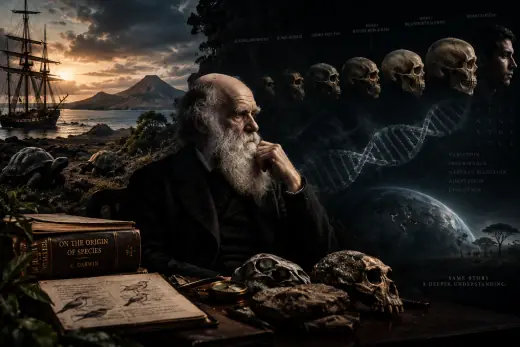
A life beginning around 1832 spans the publication of Darwin’s On the Origin of Species in 1859, both world wars and the 1969 Moon landing. These dates help readers comprehend elapsed human history. They tell us nothing about what Jonathan remembers or understands. His significance to Saint Helena is grounded in generations of care and continuity. Saint Helena Government: Jonathan’s ICON recognition, June 16, 2026
Jonathan’s hatch year is estimated. Events are listed chronologically; spacing does not represent elapsed time.
- Around 1832: conventional estimated hatch year.
- 1882: arrives on Saint Helena from the Seychelles, already mature.
- Around 2009: nutritional decline leads to veterinary intervention and hand-feeding.
- June 2026: Saint Helena welcomes Guinness ICON recognition.
- October 7, 2026: genome study published online; Guinness reports Jonathan alive. Estimated age: 194.
Sources: Guinness World Records; Saint Helena; Science Advances
PRESDA Data Graphics
A LONG LIFE STILL NEEDS CARE
Veterinarian Joe Hollins describes a period of serious decline around 2009: Jonathan was undernourished, and a soft, damaged beak left him unable to graze properly. Hand-feeding helped restore weight, activity and eventually a sharper beak. The episode is a reminder that even an unusually durable animal remains dependent on nutrition and practical veterinary care. Guinness World Records: Joe Hollins interview, October 7, 2026
Cataracts have severely impaired his vision and his sense of smell is diminished. Guinness reports that his hearing remains good; Hollins says Jonathan responds to the sound of his voice. Such observations concern his current behavior and sensory function. They are not evidence of human-like comprehension or an absence of aging. Guinness World Records: age, historical photograph and record Guinness World Records: Joe Hollins interview, October 7, 2026
The October 7 report describes a shared feeding rota, bananas among his snacks, and a redesigned paddock with a walk-in bath and ground-level trough. Hollins, now retired as a vet, remains involved alongside others. Grass and supplementary fruit and vegetables belong to a managed care routine, not a dietary prescription for human longevity. Guinness World Records: Joe Hollins interview, October 7, 2026
LONGEVITY IS NOT THE SAME AS NEVER AGING
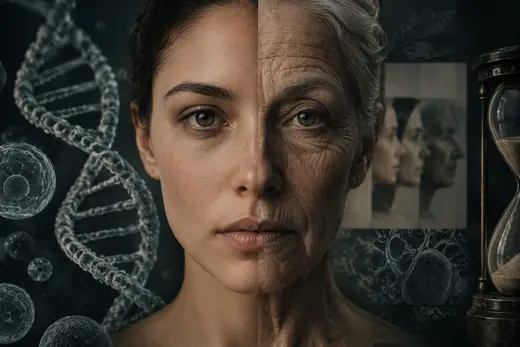
Scientists distinguish lifespan from senescence, the tendency for mortality risk or function to worsen with age. A 2022 Science study of 52 turtle and tortoise species in zoos and aquariums found slow or negligible senescence in roughly 75%. This was a comparative demographic result, not a statement that every turtle is immortal. da Silva et al.: slow and negligible senescence, Science, 2022 NIH: aging insights from reptiles and amphibians
Giant tortoises are ectotherms: their body temperature depends strongly on their surroundings. Temperature, energy use, protection from predators, reproduction and environmental conditions can all shape life histories. But the familiar explanation that a slow metabolism simply makes an animal live longer is inadequate. Comparative research does not support one universal metabolic rule. NIH: aging insights from reptiles and amphibians
“Negligible senescence” describes a pattern in mortality data over the observed ages. It does not mean an individual cannot die from infection, accident, starvation or other disease. Zoo conditions also differ from the wild. Jonathan’s cataracts and previous nutritional decline demonstrate why exceptional lifespan must not be equated with perpetual youth. da Silva et al.: slow and negligible senescence, Science, 2022
WHAT TORTOISE GENOMES HAD ALREADY REVEALED
Research published in December 2018, in Nature Ecology & Evolution, compared genomes from Lonesome George, the last known Pinta Island tortoise, and an Aldabra giant tortoise. Scientists identified changes in pathways connected with DNA repair, immune defenses, metabolism and tumor suppression. These findings concerned those animals, not Jonathan. Quesada et al.: giant tortoise genomes, Nature Ecology & Evolution
A genome can reveal candidate mechanisms: extra copies of a gene, or changes in its protein sequence, may alter how cells respond to damage. Some experimental findings can test particular effects, but neither a promising variant nor a pathway label establishes a complete explanation for extreme lifespan. Conservation genomics and aging biology benefit from the same careful comparisons. Quesada et al.: giant tortoise genomes, Nature Ecology & Evolution
JONATHAN HIMSELF HAS NOW BEEN STUDIED
The 2026 paper by Benjamin Vaisvil and colleagues involved Kallel, Igenbio, Vanderbilt researchers and international collaborators, including Cambridge’s Justin Gerlach. Researchers obtained cheek scrapes and saliva from Jonathan because blood sampling was not permitted. They used a reference genome assembled from Tank, a 36-year-old Aldabra tortoise, to analyze Jonathan’s shorter DNA reads. Vaisvil et al.: Jonathan’s genome and methylome, Science Advances, 2026 Original study: full text in Europe PMC
They identified 287 genes containing protein-changing variants unique to Jonathan within the selected comparison. “Unique” here means relative to the genomes examined, not every tortoise on Earth. Candidate pathways included DNA repair, telomere maintenance, mitochondrial function and nutrient regulation. Predictions about protein effects are not measurements of improved repair in Jonathan’s living tissues. Original study: full text in Europe PMC
The team also compared his methylome with four other Aldabra tortoises: two young animals and two older adults whose exact ages were unknown. Methylation consists of chemical marks on DNA that can influence gene activity. Jonathan showed age-associated changes overall, but relatively low methylation disorder at certain gene-control regions linked to mitochondrial energy production and RNA processing. Original study: full text in Europe PMC
A CLUE ABOUT CELLULAR MAINTENANCE, NOT A CURE
Mitochondria supply energy that cells need for maintenance. The authors propose that stable regulation of energy production, RNA processing and DNA repair could reinforce one another. Telomeres protect chromosome ends; autophagy helps recycle cellular components. These systems connect to aging, but no single switch in this study explains 194 years. Original study: full text in Europe PMC
The limitations are substantial. This is an exceptional individual in a small comparison, with cheek tissue rather than a broad survey of organs. The researchers could evaluate only about 10% of the complete promoter set. They did not experimentally demonstrate that changing the identified variants or methylation patterns extends lifespan. Their proposed feedback loop remains a hypothesis. Original study: full text in Europe PMC
Independent scientists interviewed by Live Science welcomed the leads but questioned how far the methylation interpretation can be taken. Tissue differences and the absence of causal tests matter. A stable-looking DNA region does not mean the whole animal is biologically young, and Jonathan’s results cannot be directly converted into a treatment for people. Live Science: independent assessment of the Jonathan study
The new paper identifies associations and proposes a mechanism. It does not establish a causal chain or a human therapy.
- Observed: sequence variants and methylation patterns in Jonathan’s cheek samples.
- Interpretation: stable regulation of mitochondrial and RNA-processing genes may support cellular maintenance.
- Limits: small comparison, tissue-specific samples, approximately 10% of the promoter set assessed; causality unproven.
- Next steps: replication and functional experiments before any assessment of safe human applications.
Sources: Vaisvil et al.; Europe PMC
PRESDA Data Graphics
HOW DOES HE COMPARE WITH OTHER LONG LIVES?
The human record belongs to Jeanne Calment, whose authenticated lifespan was 122 years and 164 days. Jonathan’s approximately 194 years are estimated differently. A 2016 study estimated one Greenland shark at 392 years, with a wide interval of approximately 272 to 512 years. That is an age model based on eye-lens radiocarbon, not a documented birthday. Guinness World Records: Jeanne Calment’s authenticated human record Nielsen et al.: Greenland shark radiocarbon age estimates, Science, 2016
The comparisons below are exceptional individual ages, not average life expectancy. They use different evidence and uncertainty. A Greenland shark also shows why “oldest terrestrial animal” must not become “oldest animal on Earth”: much longer lives are possible in the ocean. Comparing records is useful only when the methods and categories remain visible. Nielsen et al.: Greenland shark radiocarbon age estimates, Science, 2016
Individual records and estimates, not average life expectancy. Bars begin at zero and share a 520-year scale. The shark’s outlined band shows the published 95.4% probability interval.
Jeanne Calment: authenticated human record
122 years + 164 days
Jonathan: historically estimated tortoise age in 2026
About 194 years
Greenland shark: modeled age of one specimen
392 years; interval 272–512
Years
Jonathan’s uncertainty is not quantified as a statistical interval. His bar must not be read as an exact age. The shark estimate is not a documented birth date.
Sources: Guinness / Calment; Guinness / Jonathan; Nielsen et al.
PRESDA Data Graphics
WHAT CAN THIS TEACH US ABOUT HUMAN AGING?
The realistic opportunity is to identify protective mechanisms, test them in cells and suitable models, and eventually ask whether they can safely benefit humans. Shared pathways make comparative biology valuable. Different physiology, environments and evolutionary histories make direct extrapolation risky. A mechanism that works in a reptile need not produce the same effect in a mammal. Original study: full text in Europe PMC
Nothing in the new study establishes an anti-aging drug, recommends a supplement or demonstrates that humans can live for two centuries. Lifespan and healthspan also differ: prolonging survival without preserving function is not the same objective as preventing age-related disease. Jonathan illustrates resilience and vulnerability at the same time. Original study: full text in Europe PMC
A LEGACY BIGGER THAN A RECORD
An individual’s survival does not guarantee a species’ future. Giant tortoise populations require secure habitat and sustained conservation; UNESCO recognizes Aldabra Atoll as a globally important refuge. The earlier genome research also created resources for population restoration. Protecting living populations preserves ecological relationships as well as possible scientific insights. UNESCO: Aldabra Atoll and giant tortoise conservation Quesada et al.: giant tortoise genomes, Nature Ecology & Evolution
Jonathan’s value to Saint Helena is not conditional on delivering a medical breakthrough. He is a cared-for animal and a local symbol whose long life connects generations. The April government denial of a death hoax and the October Guinness account provide dated evidence of his living status. Future reporting should verify it again rather than assume that a record page is a permanent guarantee. Guinness World Records: Joe Hollins interview, October 7, 2026 Saint Helena Government: alive and well, April 2, 2026
The hero is an AI-generated artistic reconstruction of a giant tortoise at Plantation House, not an authentic photograph of Jonathan. Continue with PRESDA’s features on human aging research and Darwin and evolution.
FAQ
Frequently Asked Questions
Is Jonathan exactly 194 years old?
His estimated birth year is about 1832, giving approximately 194 in 2026. His maturity on arrival in 1882 and a contemporary photograph support the estimate; his hatch date is unknown.
Is Jonathan still alive?
Guinness World Records’ October 7, 2026 report describes him alive at Plantation House. Saint Helena’s government also confirmed his living status in April 2026.
Has Jonathan’s DNA been studied?
Yes. A Science Advances paper published online on October 7, 2026 analyzed his genome and methylome using cheek samples. It found candidate mechanisms, not a proven cause of his longevity or a human treatment.
PRESDA Dispatch
Stay Informed. Stay Aware.
A sharp briefing across AI, gaming, sport, business, world affairs, paparazzi, and lifestyle.