How Shakira Is Transforming Lives Through Education
How Shakira’s Pies Descalzos Foundation supports education in Colombia, with documented school projects, dated activity figures and public partnerships.
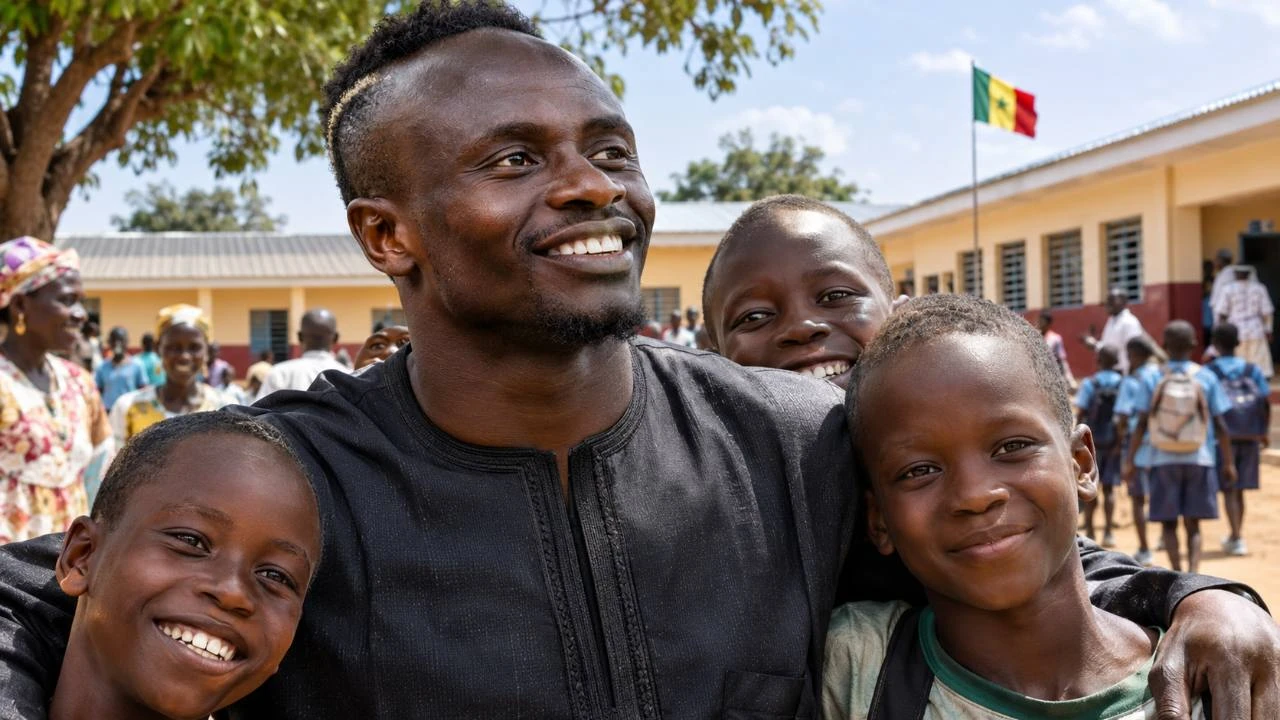
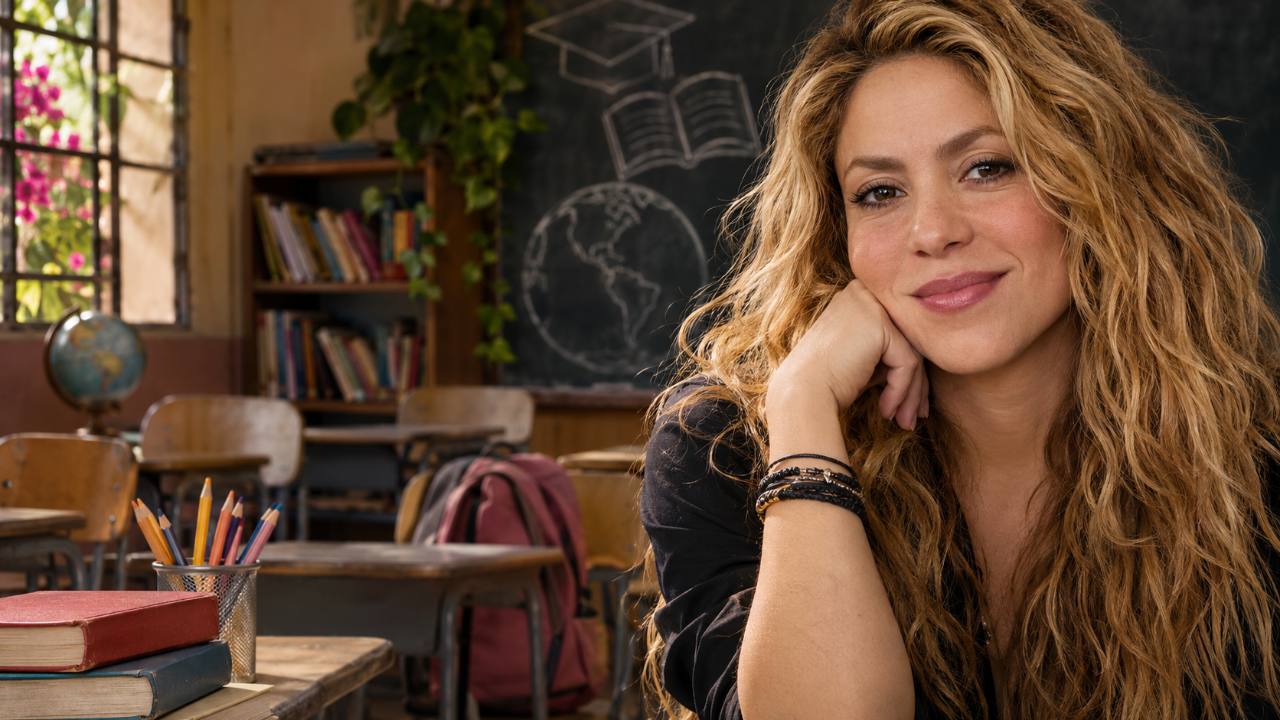
AI-generated editorial illustration supplied for PRESDA. The classroom and Shakira’s presence are imagined, not a photograph of a named school, visit or educational project.
Shakira’s educational work has a structure beyond the spotlight. Through Fundación Pies Descalzos, established in Colombia in 1997, she has helped sustain an organization that supports public-school infrastructure, access to education and the conditions that allow children to keep learning. The documented record includes named schools, agreements with public authorities and dated activity reports. It is a substantial humanitarian story, but its achievements belong to a network of educators, families, staff and partners, not to a celebrity acting alone. UNHCR, October 19, 2009: displaced children and education partnership Pies Descalzos: institutional history and mission
The clearest direct answer is that the foundation works on both places and participation: improving educational spaces while addressing the barriers that prevent children from attending or remaining in school. Shakira supplies public leadership and visibility. The daily work involves institutions and people whose contribution is less visible than a concert or inauguration, but essential to making a classroom useful after the cameras leave.
Why the foundation began in Colombia
The foundation’s institutional history places its creation in 1997, after Shakira’s first international breakthrough, with early attention to children affected by displacement and nutritional needs. UNHCR independently documented the founding year in a 2009 account of cooperation with the organization. These records locate the work in a Colombian context, rather than in an abstract claim that fame automatically translates into effective charity. UNHCR, October 19, 2009: displaced children and education partnership Pies Descalzos: institutional history and mission
| Date | Record and scope |
|---|---|
| 1997 | Shakira establishes Fundación Pies Descalzos in Colombia |
| 2003 | Becomes a UNICEF Goodwill Ambassador |
| October 2009 | UNHCR documents a cooperation agreement on displaced children’s education |
| September 2023 | Nuevo Bosque school opens in Barranquilla with multiple partners |
| May 2024 | Villas de Aranjuez public-school opening reported in Cartagena |
| 2024 activity report | 28,157 project participants across 24 municipalities; separately lists 6,700 pupils in supported foundation-named schools |
| 2024 activity report | 690 teachers participated in foundation training |
| 2025 institutional history | Foundation reports seven school deliveries in La Guajira and Tibú |
| March 2026 government report | Tibú delivery recorded, with capacity for 1,000 students in one school shift |
Displacement can disrupt much more than a school timetable. A family may lose a familiar community and face practical obstacles to enrolment and continuity. The relevance of education is therefore not limited to a building. A school can be part of a more stable daily environment, while children still need teachers, support and the ability to reach and remain in that environment.
Public education with support from outside the state
In October 2009, UNHCR described an agreement with Pies Descalzos to improve educational opportunities for displaced children. The agency’s contribution included technical support for documenting and evaluating a model of public education with private assistance. That wording matters: supporting a public system is different from a singer personally owning a chain of private schools. UNHCR, October 19, 2009: displaced children and education partnership
The institution behind the famous founder
The foundation publishes a leadership and operating-team structure, including education and infrastructure responsibilities. Its team page identifies Shakira as president. The presence of a public founder does not eliminate executive, technical or classroom work. Naming the organization and its partners is therefore part of explaining how the initiative functions, rather than a distraction from the story of the artist who created it. Pies Descalzos: leadership and operating team
The distinction also changes how donations should be reported. A contribution recorded in the foundation’s name is not automatically money paid personally by Shakira. A school bearing the foundation’s name is not automatically a privately owned asset of the artist. The available records are more interesting than those assumptions because they reveal how public bodies, philanthropy and local communities can work together.
Nuevo Bosque shows the partnership model
Nuevo Bosque opened in Barranquilla in September 2023. Contemporary reporting documented the inauguration, while the foundation’s September 21 account named partners including the city government, la Caixa Foundation, FC Barcelona Foundation and LCI’s education foundation. The school’s opening was not a one-person construction project. It was an outcome produced through several organizations, in Shakira’s home city. Pies Descalzos, September 21, 2023: Nuevo Bosque opening report El Heraldo, September 16, 2023: Nuevo Bosque inauguration
A school can serve a wider community
The foundation’s account described classrooms, laboratories, a library, dining facilities and shared spaces, along with a community role for parents and caregivers. These are concrete components, not proof on their own of every future educational outcome. Their significance is practical: a school must support learning and daily life, and can provide a point of connection for families as well as pupils. Pies Descalzos, September 21, 2023: Nuevo Bosque opening report
An opening ceremony makes a project visible, but the institution’s value continues to depend on what happens afterward. Buildings need maintenance. Learning depends on educators and students. Community participation can help an institution fit local needs. This is why a durable education story should follow the public service represented by a school, rather than ending with the photograph of a famous visitor cutting a ribbon.
Villas de Aranjuez makes the public role explicit
In its May 17, 2024 report, Pies Descalzos described the opening of Villas de Aranjuez in Cartagena as a public-school project. It named the Education Ministry, the education-infrastructure financing fund, the city, Fundación Santo Domingo and Education Above All among the partners. The report said Cartagena’s education authority would operate the school. That provides a specific answer to who carries responsibility beyond its construction. Pies Descalzos, May 17, 2024: Villas de Aranjuez public school
Capacity is not the same as an annual attendance count
The announcement described a school for around 960 students, with classrooms, laboratories and accessible spaces. That is a statement about the project’s intended scale, not a verified current register of children attending every day in 2026. Capacity, enrolment, regular attendance and completion are related but different measures. Keeping them distinct makes the real infrastructure achievement easier to assess rather than less meaningful. Pies Descalzos, May 17, 2024: Villas de Aranjuez public school
The foundation also framed its work as support for access and continuity. Those aims acknowledge that a place in a school does not automatically remove every reason a pupil might leave. Educational projects need attention to the wider conditions around learning, including the family and institutional environment. A new facility is one part of that work, not a substitute for the people and services that make education possible. Pies Descalzos: institutional history and mission
What the 2024 activity figures actually show
The foundation’s December 26, 2024 report said its educational and infrastructure projects reached 28,157 students in 24 municipalities. It separately described 6,700 pupils enrolled in supported schools carrying the foundation’s name. These are organization-reported figures with a defined year and different scopes. They should not be added to unrelated totals or presented as a lifetime count of unique children permanently lifted out of poverty. Pies Descalzos, December 26, 2024: annual activity figures
Teachers are part of the impact story
The same report recorded 690 teachers participating in training processes. That is an important reminder that the organization works through adults and institutions as well as directly with children. A teacher-training count measures participation in an activity; it does not by itself tell us how every classroom changed or how much pupils’ learning improved. Those questions require their own evidence. Pies Descalzos, December 26, 2024: annual activity figures
This is not a reason to dismiss the numbers. It is a way to use them honestly. They establish the scale of reported work in a specific period, while leaving room to ask about attendance, progression, learning and longer-term opportunities. Treating every project participant as a completed life transformation would replace useful information with a claim the available figures cannot establish.
Tibú provides a current government record
A Norte de Santander education-department report dated March 31, 2026 records delivery of the Pies Descalzos school in Tibú. On page eight, it attributes COP11.521 billion to the national government and COP9.814 billion to the foundation, and lists capacity for 1,000 students in one school shift. The amounts are Colombian pesos, not US dollars, and the foundation’s contribution is not identified as a personal cheque from Shakira. Norte de Santander, March 31, 2026 report, page 8: Tibú school and financing
Shared financing should remain visible
This is a particularly useful example because it goes beyond an artist’s social-media announcement. A departmental public document describes the project and separates contributors. It shows why claims that Shakira alone paid the whole cost would be inaccurate. Recognition for her leadership can coexist with recognition for public funding and the work of the other participants.
The foundation’s institutional timeline also reports seven school deliveries in La Guajira and Tibú during 2025. That is its own account of that year’s activity, rather than an independently reconciled current total for every school ever built or improved. Construction, refurbishment and educational accompaniment should remain distinguishable when a reader compares different announcements or tries to understand the portfolio. Pies Descalzos: institutional history and mission
Reaching children who are outside the classroom
Education Above All describes its partnership with Pies Descalzos through the All in School project. The work includes identifying children outside education, supporting access and reducing the risk of dropping out. Its published methods include enrolment drives, materials, transport or feeding support and work with teachers and local authorities. These are descriptions of the project’s approach, not an assertion that every listed service reached every child. Education Above All: All in School partnership and methods
Access is more than the absence of fees
A school can exist and still be difficult for a child to attend. Education Above All identifies barriers including poverty, violence, poor infrastructure and the cost of materials. That context explains why an education initiative may work with families and authorities rather than simply donate a building. A practical obstacle to attendance needs a practical response, not only a public message about the importance of school. Education Above All: All in School partnership and methods
The partnership page contains targets for different project phases. A target is not an achieved enrolment total, and project reach is not the same as the school’s capacity. Those distinctions are especially important in a field where different organizations may count students, families, school places and training participants. Clear definitions help a reader understand progress without inflating it.
Education also means widening what children can imagine
In April 2024, the foundation announced a partnership with Fundación She Is through its Ella Es Astronauta program, focused on girls’ learning in science, technology, engineering, arts and mathematics. The program connected education with an experience at a Houston space centre. It was an educational initiative, not a qualification as a professional astronaut or a promise of employment at NASA. Pies Descalzos, April 28, 2024: She Is education partnership
Opportunity is broader than a new building
The example broadens the story from physical access to exposure, learning and aspirations. A pupil may benefit from encountering an unfamiliar field or meeting people working in it. Such experiences can matter without guaranteeing a particular career. Responsible coverage can recognize the opportunity while leaving the student’s future open, rather than writing a completed success story before the young person has lived it.
The same principle applies to individual testimonials published by a foundation. A person’s experience can illustrate a program, but it is not a statistical evaluation of everyone who participated. Respecting that difference allows stories of hope to retain their human meaning without forcing children and families to stand for a claim about an entire population.
UNICEF gives Shakira another public platform
UNICEF identifies Shakira Mebarak as a Goodwill Ambassador since 2003 and documents her advocacy for early childhood education. That role is distinct from founding Pies Descalzos. It provides a wider platform for public attention and advocacy, but does not make every UNICEF project part of her foundation or every international donation a contribution to a Colombian school. UNICEF: Shakira Mebarak, ambassador since 2003
Celebrity can attract attention, institutions must sustain it
Her audience can make an educational issue visible to people who would not otherwise encounter it. The practical question is how that attention connects with work capable of continuing: professional teams, public responsibilities, partners and communities. The foundation’s documented projects show that connection in specific places. They do not require an exaggerated claim that one singer has solved Colombia’s education challenges.
The credit is therefore both personal and collective. Creating and publicly supporting a long-running foundation is a meaningful part of Shakira’s public life. Teaching a class, managing an educational project and keeping a public school functioning are other kinds of contribution. A complete account recognizes those roles together rather than turning the communities served into a passive background for a celebrity portrait.
A documented contribution, with the long term still in view
The strongest evidence is concrete: a foundation dating to 1997, public cooperation agreements, named schools, annual activity figures and a current government financing record. These support a substantial account of educational work. They do not establish a single verified total for every unique life changed, nor prove that every participant’s later outcome was caused by the foundation alone.
Shakira’s contribution is most convincing when described through that real structure. Her visibility helps open doors; educators, families and partner institutions keep the work grounded. A school that remains useful, a child able to continue learning and an organization willing to report what it does are less theatrical than a slogan, but they explain why education has become an enduring part of her story beyond music.
FAQ
Frequently Asked Questions
When did Shakira start Pies Descalzos?
She established Fundación Pies Descalzos in 1997. The Colombian foundation’s history and UNHCR’s reporting document its origins and its work on education, displacement and support for children.
Does Shakira personally own and operate all the schools?
No. The work includes partnerships with public authorities and other organizations. The foundation’s 2024 Villas de Aranjuez announcement specifically identifies it as a public school operated by Cartagena’s education authority.
How many children has the foundation helped?
Use a dated measure. Its 2024 activity report lists 28,157 students reached through projects in 24 municipalities and separately describes 6,700 pupils in supported schools bearing its name. These are organization-reported activity figures, not a verified lifetime count of unique people lifted out of poverty.
Did Shakira pay the full cost of the Tibú school?
A March 2026 departmental government report records COP11.521 billion from the national government and COP9.814 billion from the foundation. The foundation’s contribution should not be relabeled as a personal donation covering the whole project.
PRESDA Dispatch
Stay Informed. Stay Aware.
A sharp briefing across AI, gaming, sport, business, world affairs, paparazzi, and lifestyle.