CHINA UNVEILS LIFELIKE HUMANOID ROBOT NEWS ANCHORS
Xinhua’s Xinyan and Xinyu debuted in Beijing on November 5. Explore their claimed capabilities, earlier robot presenters and the limits of “world first” claims.
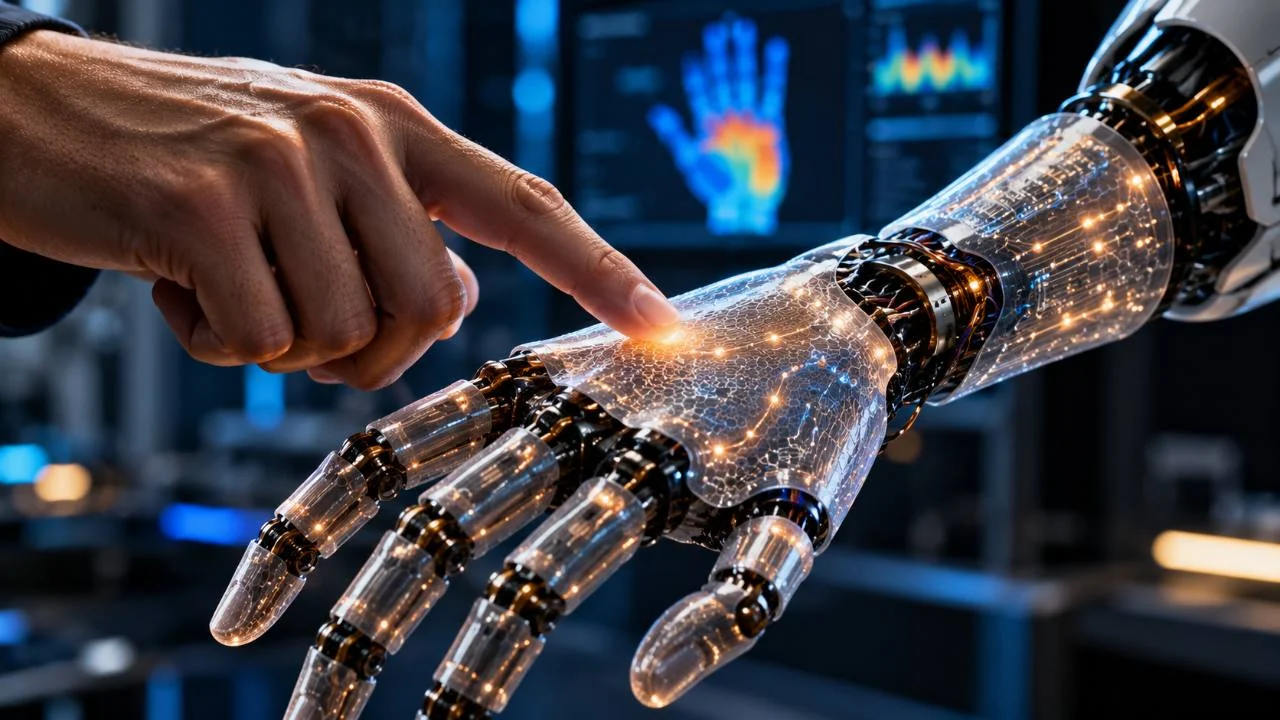
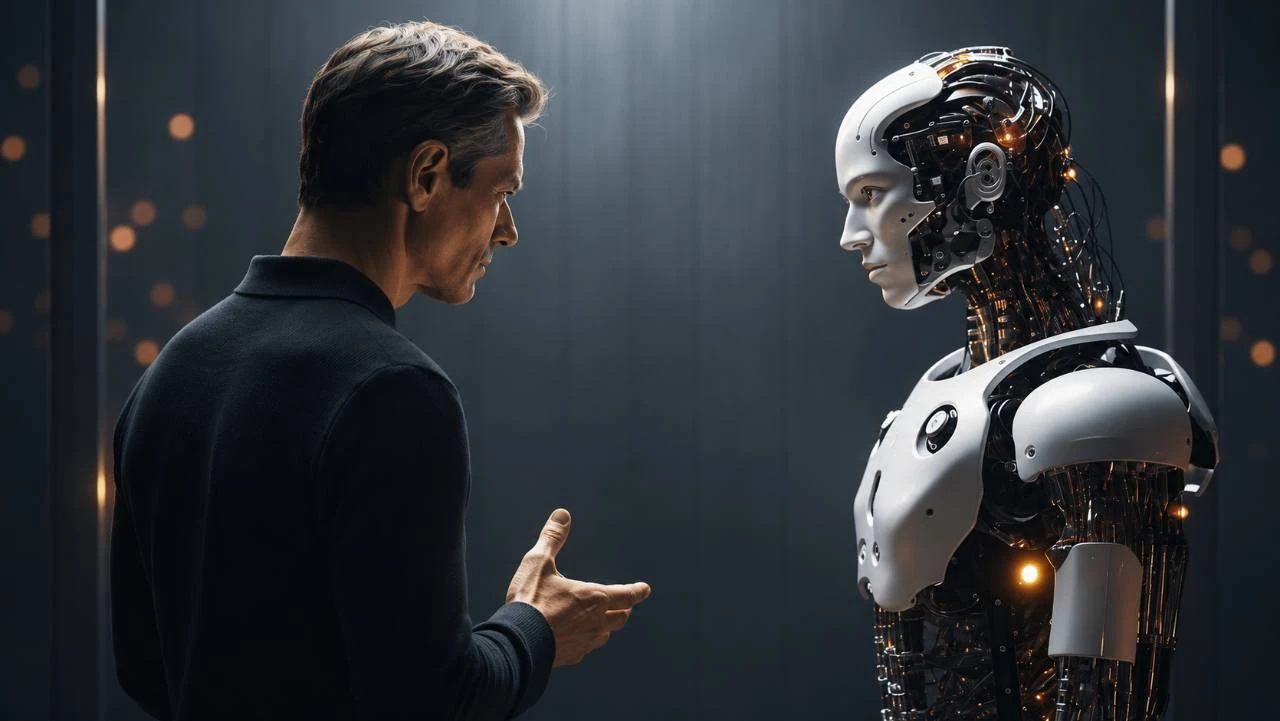
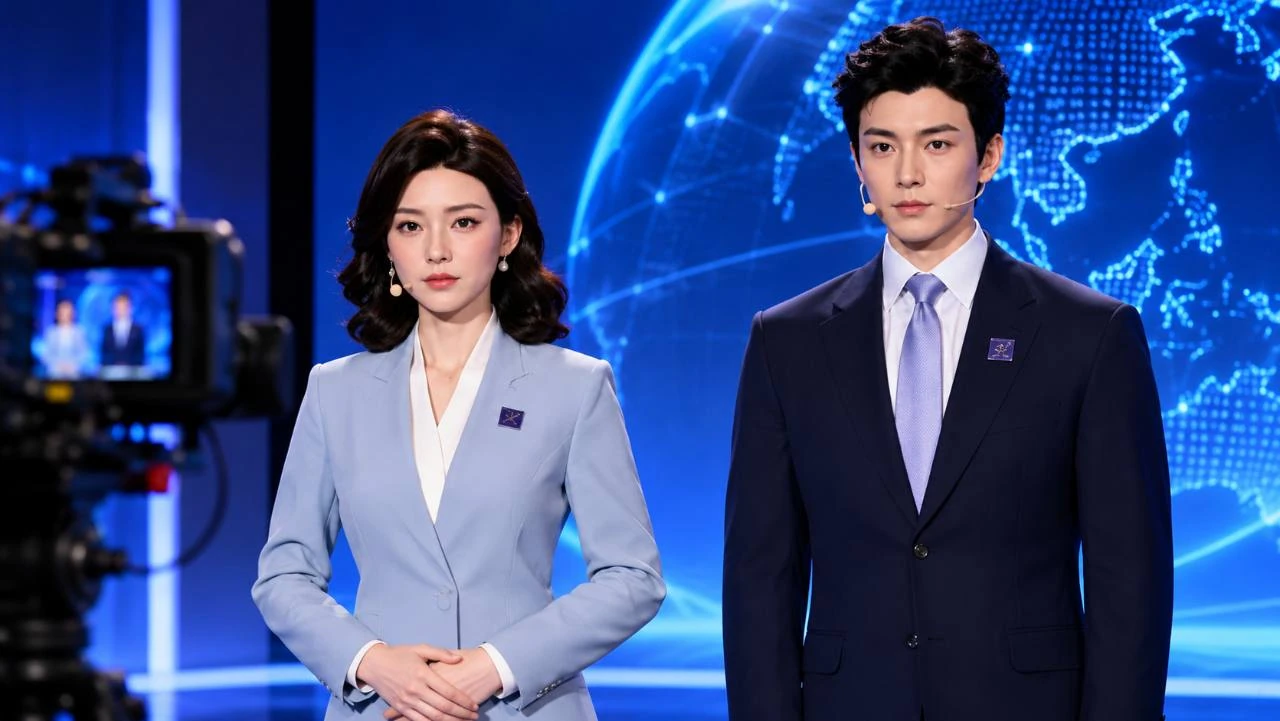
AI-generated editorial illustration supplied for PRESDA. These figures are not verified portraits of Xinyan and Xinyu or documentary images of the launch event. Editorial image supplied for PRESDA.
China’s Xinhua News Agency and UBTECH unveiled two lifelike humanoid robot news anchors in Beijing on November 5, 2026. Named Xinyan and Xinyu, they were introduced at the Seventh World Media Summit’s forum on artificial intelligence and Chinese modernisation. Xinhua describes them as a world first in bionic humanoid news anchoring. The launch is documented; the broadest interpretation of that first-place claim requires caution, because both virtual presenters and physical news-reading androids have earlier precedents. Xinhua: November 5 humanoid-anchor launch report
What was unveiled in Beijing?
Xinhua identifies Xinyu as the male-presenting anchor and Xinyan as the female-presenting anchor. The agency says the physical figures use life-size human proportions, while filmmaker Zhang Yimou led the visual character design. UBTECH’s role concerns the robotics technology; Xinhua supplies the news context and content infrastructure. Those are distinct contributions. A recognisable face and studio-ready clothing describe an interface, not proof that the machines possess a human journalist’s judgement. Xinhua: the new robot colleagues and design
Capabilities announced, and evidence still needed
According to the launch report, the robots can appear on camera at an event and connect to Xinhua Yudian, the agency’s current-affairs information system. Xinhua describes a technical chain linking information, expression and physical control. Its stated uses include news delivery, multilingual output and on-site interaction. These are the developers’ descriptions of capability and intended use, not independently published measurements of accuracy, language coverage, uptime or unscripted interview performance. Xinhua: November 5 humanoid-anchor launch report
A curated source does not eliminate editorial responsibility
Access to reviewed material can make the origin of an answer easier to trace. It does not establish that every answer is complete, current or free from error. A newsroom still needs to decide which sources belong in the system, how corrections enter it and who can approve a sensitive broadcast. The ability to deliver a sentence naturally is separate from the responsibility for deciding whether that sentence should be published.
Why “world’s first” needs a narrow definition
Xinhua was already presenting AI-generated virtual newsreaders developed with Sogou in 2018. Those screen-based presenters were modelled on human broadcasters and generated synthetic delivery. They should not be confused with the physical humanoids launched in 2026, but their existence rules out presenting the latest event as the birth of AI news anchoring itself. The medium changed; the idea of a synthetic presenter did not begin this week. VOA: Xinhua and Sogou’s virtual anchors in 2018
Physical robot newsreading has precedents too. In June 2014, Japan’s Kodomoroid android read news at a Tokyo unveiling, as documented in contemporary AFP reporting carried by SBS. That does not make every later robot identical. It does mean the unqualified claim first robot newsreader is too broad. The defensible wording is that Xinhua calls its new pair the first of its specified bionic humanoid news-anchor kind; independent global priority for that narrowly defined combination has not been established here. SBS/AFP: Japan’s physical android newsreader in 2014
What the launch says about AI journalism
The Somali National News Agency also reported the Beijing launch and the Xinhua–UBTECH partnership. The news is an institutional move toward putting a physical machine into a presentation role. It is not evidence that the machine independently gathered sources, challenged an official or investigated a disputed claim. Those are reporting functions with different requirements. A convincing studio performance can demonstrate a delivery interface without demonstrating an autonomous newsroom. Somali National News Agency: World Media Summit launch
Future applications remain plans, not deployments
Xinhua’s launch account mentions prospective uses in educational settings, city reception spaces, overseas cultural exchanges and reporting connected with deep-space exploration. These are proposed scenarios. The announcement does not establish that the robots have already been deployed in all of them. The most useful next evidence would be sustained use in a defined newsroom task, with clear correction procedures, disclosure to audiences and measured performance rather than another superlative. Xinhua: November 5 humanoid-anchor launch report
The central question is less whether a robot can look comfortable in front of a camera than whether the organisation behind it can make its work accountable. A humanlike appearance can attract attention; trust depends on sourcing, verification and correction. The Beijing debut is a documented step in embodied media technology. Its long-term journalistic value will depend on those less theatrical processes.
Related reading: Why lifelike behaviour does not settle AI consciousness.
Related reading: The engineering of electronic skin for robots.
FAQ
Frequently Asked Questions
Who developed the new anchors?
Xinhua and UBTECH jointly developed Xinyan and Xinyu. Xinhua identifies Zhang Yimou as the lead visual character designer.
When and where were they unveiled?
On November 5, 2026, at the Seventh World Media Summit’s AI and Chinese modernisation forum in Beijing.
Are they the first AI or robot newsreaders ever?
That broad claim is not supported. Xinhua had virtual anchors in 2018, and Japan demonstrated the physical Kodomoroid newsreader in 2014. Xinhua’s narrower world-first wording should be attributed to the agency.
Can they independently replace journalists?
The launch establishes presentation technology and developer-stated uses. It does not establish independent reporting, unrestricted interview competence or error-free editorial judgement.
PRESDA Dispatch
Stay Informed. Stay Aware.
A sharp briefing across AI, gaming, sport, business, world affairs, paparazzi, and lifestyle.