African Safaris: Into the Heart of the Wild
Plan an African safari with park comparisons, wildlife, seasonal trade-offs, real cost considerations, conservation and responsible travel advice.
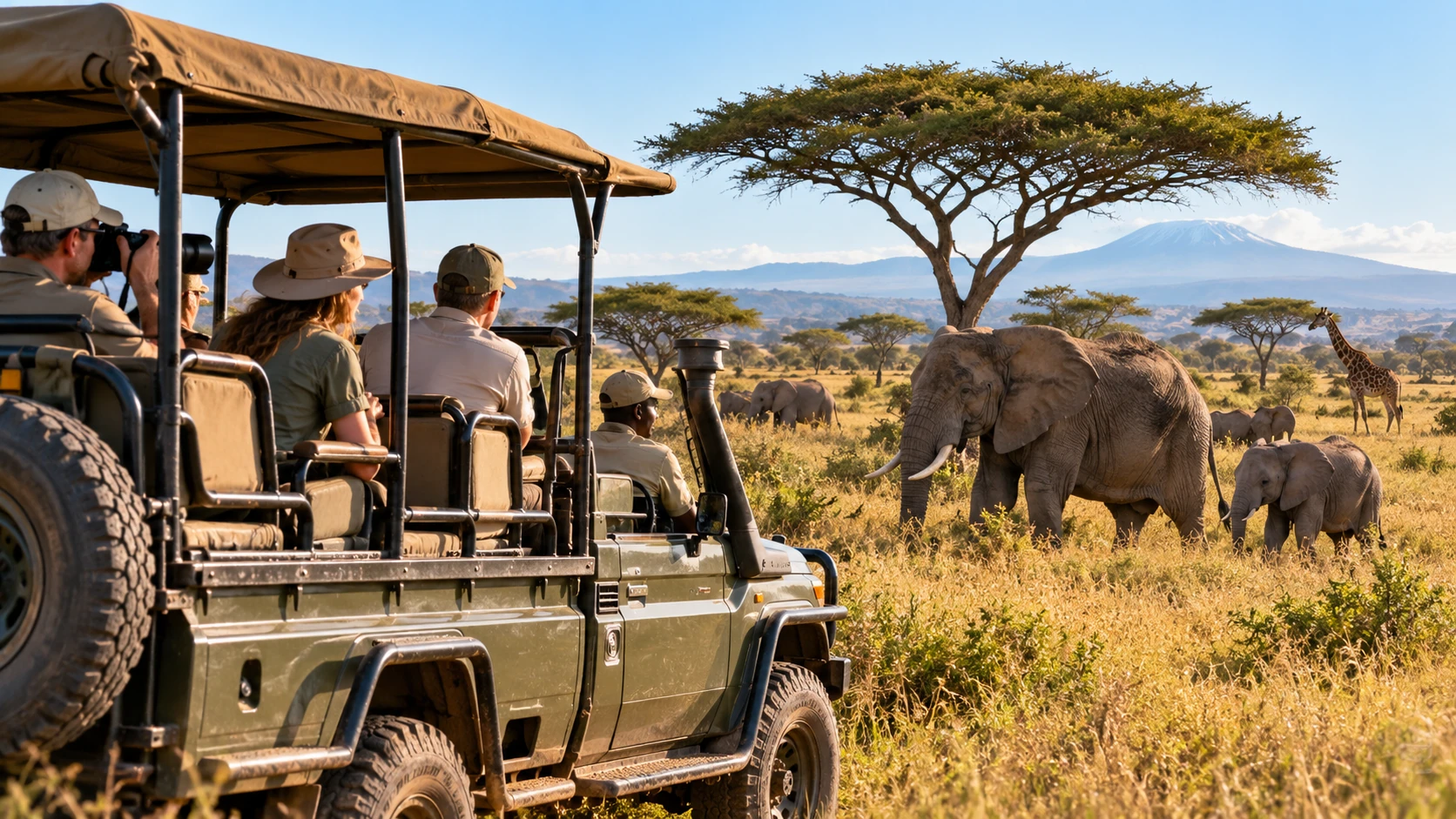
PRESDA AI-generated editorial illustration of a safari vehicle and wildlife. It does not document an operator, park or recommended viewing distance.
A safari begins with a change of attention. A distant shape becomes an elephant, a bird’s alarm redirects a guide’s gaze, and a road that seemed empty reveals tracks. The experience is not a succession of guaranteed encounters. It is time spent learning how a landscape works, with people whose knowledge makes that learning possible.
Africa offers no single safari. A public rest camp in South Africa, a mobile camp in Tanzania, a boat journey in Botswana and a guided walk in Zambia have different costs, risks and rhythms. Choosing well means matching the ecosystem, season and operator to your interests. This guide considers established destinations without pretending that one country is universally best. Practical details were reviewed on 21 October 2026; confirm current fees, entry rules and travel advice before booking.
Beyond the Big Five
Lion, leopard, elephant, rhinoceros and buffalo form the familiar Big Five. It is a tourism shorthand, not a scientific ranking of ecological importance. A journey organised entirely around ticking those names risks overlooking what sustains them: vegetation, water, insects, smaller mammals and scavengers. Kruger’s official wildlife information describes an unusually broad mammal community, which is a reason to slow down rather than demand five photographs before lunch. No responsible operator can guarantee that free-ranging animals will appear. SANParks: Kruger wildlife The Big Five
Ask a guide about a track, a termite mound or a bird call. Watching an elephant feed can reveal more than moving immediately to the next radio announcement. The best sightings are not always the closest: distance allows animals to behave without responding to a vehicle. A long lens or binoculars is preferable to pressuring a driver to crowd a resting predator. The supplied hero is an AI-generated illustration, not a photograph documenting a park, a safe viewing distance or an actual safari operator.
Kenya and Tanzania: choose a landscape, not a promised crossing
The Serengeti and Maasai Mara belong to a connected ecosystem across Tanzania and Kenya. Wildebeest movements respond to rainfall, grazing and water; river crossings cannot be booked to the hour. TANAPA identifies June to October as a dry-season migration window and January to February with calving, but the best camp location depends on conditions and the particular part of the ecosystem. Ask where a camp actually operates in your dates rather than assuming that the word “Serengeti” guarantees proximity to a herd. TANAPA: Serengeti
Kenya’s Amboseli offers a different emphasis, with elephants and a landscape associated with views of Kilimanjaro. The mountain may be hidden by cloud, and wildlife observation remains weather-dependent. Combine fewer parks with more time in each instead of filling every day with a long road transfer. Compare national-park rules with those of any neighbouring conservancy: access, walking, night drives and off-road activity are not automatically interchangeable. A photographer, a family and a birder may need very different itineraries. Kenya Wildlife Service: Amboseli
South Africa: the flexibility of Kruger
Kruger is a strong option for travellers who want to organise part of a safari themselves. Public roads and rest camps make a self-drive stay possible, subject to park rules, gate hours and reservations. This does not mean that independent travel removes the value of a guide. A guided drive can add interpretation and help visitors understand habitat and behaviour, while a self-drive day allows a slower personal rhythm. Book accommodation and check daily visitor limits rather than arriving during a busy period without a plan. SANParks: bookings and access
Compare like with like when considering a private reserve or lodge near Kruger. An inclusive lodge package may provide meals and drives that a public-camp room rate excludes. Conversely, a self-catering stay can give a family more control over spending. Location outside a park also means reaching the gate each day. Do not confuse a commercial website using “Kruger” in its name with the official park authority. Purchase the actual product you intend, with written details of its location and inclusions.
Botswana: water changes the safari
The Okavango Delta introduces a different relationship between land and water. Moremi Game Reserve protects parts of its central and eastern areas, while other experiences operate in surrounding concessions. A mokoro outing, boat trip or vehicle drive depends on the operator, location and water conditions. A photograph of a watery channel is not a promise that every camp offers water activities throughout the year. Ask exactly what is operating during your stay. Botswana Tourism: Okavango Delta Moremi Game Reserve
Chobe adds river-based wildlife viewing and road safaris, with Kasane serving as a common gateway. Fly-in arrangements reduce difficult overland travel but add cost, baggage limits and dependence on schedules. Self-driving remote sandy routes requires appropriate skills, equipment and permits; it is not equivalent to driving a surfaced park road. Compare transfers carefully, and leave a buffer before an international flight. For boat activities, ask about lifejackets, loading, weather decisions and the distance maintained from animals. Botswana Tourism: Chobe
Namibia and Zambia: two different kinds of patience
Etosha in Namibia rewards observation around waterholes and the broader landscape of its great pan. Okaukuejo’s floodlit waterhole allows viewing from a designated area without driving after dark. It is an opportunity to remain still, not permission to approach wildlife. Long road distances, fuel planning and rest-camp availability matter to the itinerary. A larger geographical circuit is not necessarily a richer holiday if most daylight disappears behind the windscreen. Namibia Wildlife Resorts: Okaukuejo
South Luangwa in Zambia is particularly associated with walking safaris. On foot, a guide can interpret tracks, plants and small signs obscured by the pace of a vehicle. This is a specialist guided activity with strict safety procedures, not independent hiking among dangerous animals. The dry season increasingly concentrates wildlife near remaining water as it progresses towards October, but late-season heat can be demanding. Confirm camp opening dates, walking requirements and minimum ages. Night drives or other activities must be permitted for the actual area visited. Zambia Tourism: South Luangwa
Seasons are trade-offs
Dry periods often make animals easier to observe around water and reduce vegetation, but can also mean dust, cold mornings, intense afternoon heat and higher demand. Wetter periods bring greener landscapes and different birding opportunities, while some roads and camps become inaccessible. East and southern Africa do not share one calendar, and altitude changes conditions within a country. Select dates around the experience you want, then confirm local access. A cheaper departure is poor value if the activity that motivated the trip is unavailable.
Build rest into the plan. Early starts, uneven roads and repeated transfers can be tiring even when accommodation is comfortable. Families should ask about age restrictions on walks and drives; travellers with reduced mobility need details about vehicle steps, bathrooms, pathways and evacuation. “Luxury” does not automatically mean accessible. Request photographs or measurements of relevant facilities and a written explanation of how assistance works in practice.
What a safari really costs
There is no reliable continent-wide daily price. A self-drive campsite, shared guided tour and private fly-in lodge are different products. Ask for an itemised quotation covering accommodation, meals, drinking water, drives, guiding, park and concession fees, transfers, taxes and cancellation terms. Clarify whether the price is per person sharing or per room, whether a single supplement applies and whether gratuities or optional activities are excluded. International flights and insurance can significantly change the total.
An official fee illustrates why dates and visitor categories matter. SANParks’ schedule for 1 November 2025 to 31 October 2026 lists Kruger’s standard daily conservation fee at R602 per adult and R300 per child. These are conservation charges, not an inclusive safari price, and that schedule is about to expire at this article’s review date. Use the tariff applicable to your visit and check citizenship or residency categories. Do not convert an old fee into a current promise. Official SANParks tariff schedule
Conservation requires more than a green label
Tourism can contribute revenue to park management, jobs and local enterprises. African Parks describes gate receipts, concessions and tourism operations as funding sources for conservation and community development. That is a mechanism, not proof that every expensive camp distributes benefits fairly. Ask who owns the operation, how local people participate, which conservation fees are included and whether environmental claims have specific evidence. An attractive sustainability paragraph should lead to concrete answers. African Parks: tourism and conservation funding
Avoid experiences centred on handling captive predators or riding elephants. In the wild, do not feed animals, block their movement, request an unauthorised off-road approach or ask a guide to ignore park rules. Respect restrictions on drones, noise and sensitive wildlife locations. Community visits should be voluntary and fairly compensated, with permission for photographs. The goal is to observe an ecosystem and meet people on agreed terms, not turn either into props. SANParks: visitor rules
Health, safety and the final booking questions
Consult a travel-health professional for the exact route. Malaria risk, vaccination advice and entry requirements vary by location and transit history. CDC notes that safari activities near water or at dusk can increase mosquito exposure. Plan suitable insurance, including medical evacuation where needed, and tell the operator about relevant mobility or medical needs. Fever during or after travel warrants prompt medical assessment with your travel history. This planning does not replace individual clinical advice. CDC Yellow Book: African safaris
Before paying, confirm the licensed operator, accommodation names, transfer arrangements, emergency procedures and refund terms. Check current country and regional advisories rather than interpreting a famous park as a guarantee for the entire route. In the park, follow the guide’s instructions and remain in the vehicle except where explicitly permitted. For a broader journey beyond wildlife circuits, explore PRESDA’s fifteen alternative African destinations. A rewarding safari is measured less by the number of sightings than by the quality of attention, and by what your visit leaves intact. Official travel advisories
FAQ
Frequently Asked Questions
What is this PRESDA article about?
Plan an African safari with park comparisons, wildlife, seasonal trade-offs, real cost considerations, conservation and responsible travel advice.
Which category does this story belong to?
This story is part of PRESDA's Travel coverage.
Who published this article?
African Safaris: Into the Heart of the Wild was published by PRESDA Editorial on PRESDA.
PRESDA Dispatch
Stay Informed. Stay Aware.
A sharp briefing across AI, gaming, sport, business, world affairs, paparazzi, and lifestyle.