ANDROID: THE DAY GOOGLE CHANGED MOBILE FOREVER
Revisit Android’s November 2007 announcement, the first handset in 2008 and the alliance that helped turn a software platform into a mobile ecosystem.
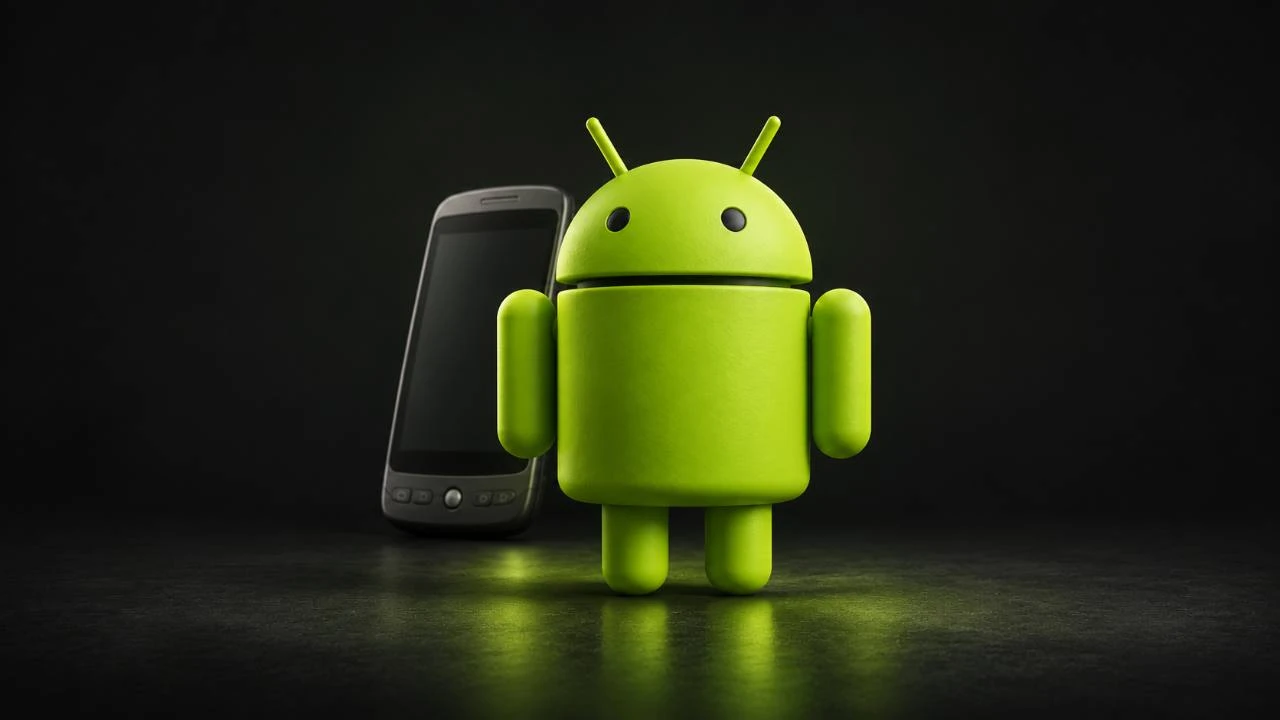
Conceptual technology illustration, not a photograph of the 2007 announcement or a verified T-Mobile G1. The mascot and handset are illustrative. Editorial image supplied for PRESDA. Original creator and reuse licence not provided.
The announcement that changed Google’s place in mobile did not unveil a phone. On 5 November 2007, the company presented Android and a coalition of partners who intended to build around it. That distinction was the point. A single handset could attract attention; a shared software platform could give many manufacturers and developers somewhere to begin. The consequences unfolded over years, but the public proposition was already clear: mobile computing could be organised around an ecosystem.
5 November 2007: a platform takes the stage
In Google’s original blog post, mobile-platforms director Andy Rubin explicitly distinguished the announcement from the much-rumoured Gphone. Android was presented as a package of operating system, interface and applications developed with industry partners. The post also cautioned readers that phones would come later. Treating this date as the first day a consumer could buy an Android handset confuses a platform announcement with a retail launch. Google: the Android announcement, 5 November 2007
The alliance behind the ambition
The Open Handset Alliance’s release named 34 founding companies, spanning manufacturers, carriers and technology suppliers. HTC, T-Mobile, Qualcomm and Motorola were among them. The strategy addressed a coordination problem: a mobile platform needed hardware, networks, software tools and applications to work together. Android’s promise of openness was also a commercial proposal, intended to reduce barriers to developing devices and services. These were the partners’ stated ambitions, not proof that every later Android product would be identical or equally open. Open Handset Alliance: the 2007 announcement
2008: the first phone becomes tangible
On 23 September 2008, Google introduced the first Android-powered phone, the T-Mobile G1, developed with HTC and T-Mobile. The announcement gave the earlier platform plan a recognisable consumer object. It also put developers and applications at the centre of the story. Android’s historical significance cannot be reduced to the appearance of that first device: the larger wager was that a common foundation could support many different phones and experiences. Google: the first Android-powered phone
The source-code milestone
A further date belongs in the timeline: 21 October 2008, when Google and the alliance announced the platform’s public source-code availability through the Android Open Source Project. Announcement, first handset and source release were separate milestones. Open-source software also does not mean that every service, commercial arrangement or application on a finished phone is part of the same open code. Keeping those distinctions clear explains the achievement more accurately than a story about one miraculous launch day. Open Handset Alliance: source-code release, October 2008
The turning point was a change in how a phone could be built and extended. A handset became an entry into a wider relationship between manufacturers, developers, network operators and users. Android did not invent the smartphone, but its shared-platform approach helped reshape the choices available around it. The day mattered because of what many people would subsequently build.
Related reading: How the QR code became an everyday interface.
FAQ
Frequently Asked Questions
When was Android announced?
Google and the Open Handset Alliance announced the platform on 5 November 2007.
Was the first Android phone released that day?
No. The first Android-powered handset, the T-Mobile G1, was announced on 23 September 2008.
When did the platform’s source code become publicly available?
Google and the alliance announced public availability through AOSP on 21 October 2008.
PRESDA Dispatch
Stay Informed. Stay Aware.
A sharp briefing across AI, gaming, sport, business, world affairs, paparazzi, and lifestyle.