CASABLANCA: THE FILM THAT BECAME A HOLLYWOOD LEGEND
How Casablanca’s November 26, 1942 New York opening became a cinema milestone, with its wartime context, Oscar history, enduring romance and production myths.
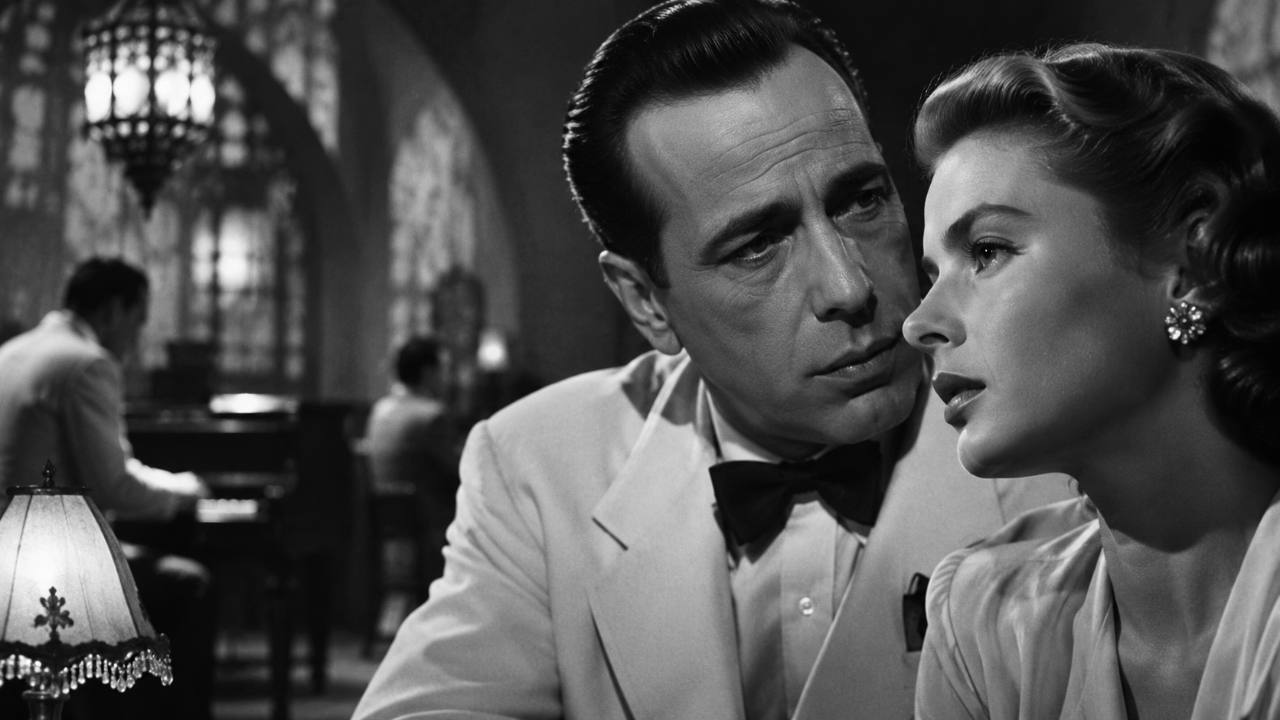
Supplied AI-generated cinema illustration, preserved unchanged. It is not an authenticated Casablanca film still, studio photograph or archival record.
Casablanca opened in New York on November 26, 1942, before its national US release on January 23, 1943. Directed by Michael Curtiz and produced by Hal B. Wallis for Warner Bros., it turned a wartime story of refugees, romance and political commitment into one of Hollywood’s most durable films. The anniversary belongs to the New York opening, not the later nationwide release. American Film Institute Catalog: Casablanca, credits and production records Library of Congress: November 26, Rick’s Place
Its survival as a classic is not simply a story of famous stars and quotable dialogue. The film places a private emotional wound inside a public emergency. Rick Blaine can keep his distance from politics only until people he knows need him to act. That tension gives the romance consequences beyond the choice of a partner.
Why November 26, 1942 mattered
The film reached New York shortly after the Allied landings in North Africa. The Library of Congress connects its reception to Operation Torch and the sudden prominence of Casablanca in wartime news. When national distribution followed in January, the actual city was again central to events through the Casablanca Conference. Release history and military history intersected, without making the fictional plot a report of those operations. Library of Congress: November 26, Rick’s Place
| Key fact | Verified detail |
|---|---|
| New York opening | November 26, 1942 |
| National US release | January 23, 1943 |
| Director and producer | Michael Curtiz; Hal B. Wallis |
| Running time | 103 minutes in the AFI Catalog |
| 1944 Academy Awards | Eight nominations and three wins |
The story had been developed and filmed before that publicity moment. Its setting offered a dramatic crossroads for people trying to escape Nazi-controlled Europe. The real news sharpened the relevance of an already constructed narrative. Saying the invasion created the entire film would reverse the production chronology. American Film Institute Catalog: Casablanca, credits and production records
A café built around people who cannot leave
Humphrey Bogart plays Rick, the American owner of a nightclub in French-controlled Morocco. Ingrid Bergman’s Ilsa arrives with her husband, Resistance figure Victor Laszlo, played by Paul Henreid. Their need to escape collides with Rick’s memories of Paris. Claude Rains’ police captain Renault makes every personal decision part of a landscape of official discretion and compromised authority. American Film Institute Catalog: Casablanca, credits and production records
The café works because it concentrates different motives in one room. A traveler needs documents; an official wants leverage; a performer continues working; a former lover wants an explanation. That architecture gives the film more range than a love triangle alone. The public room allows romance, comedy and danger to interrupt one another without feeling like separate stories.
Romance becomes a question of responsibility
Rick’s apparent detachment is tested rather than merely admired. The final choice asks what a person owes to others during a political catastrophe. The film’s continuing appeal comes partly from its refusal to make emotional fulfillment the only measure of a good decision. Sacrifice has meaning because the personal attachment is convincing. BFI programme notes: Casablanca
The craft behind the legend
The AFI Catalog credits Julius J. Epstein, Philip G. Epstein and Howard Koch with the screenplay, adapted from the unproduced play Everybody Comes to Rick’s by Murray Burnett and Joan Alison. Curtiz’s direction and Wallis’ production brought these contributions into a studio system. The result was collaborative, even when later accounts favored a single inspired author or star. American Film Institute Catalog: Casablanca, credits and production records
Arthur Edeson’s black-and-white cinematography gives faces, doorways and gathering places distinct dramatic functions. The restricted world of the café can feel intimate in one scene and threatening in the next. Lighting and framing help transform a largely studio-created setting into a place that seems to extend beyond the visible walls. This is constructed atmosphere, not evidence of documentary location shooting. American Film Institute Catalog: Casablanca, credits and production records
Music carries memory and politics
Dooley Wilson’s Sam connects the present café to Rick and Ilsa’s earlier life through As Time Goes By, written by Herman Hupfeld. The song was not newly invented for Casablanca. The film also uses the confrontation around La Marseillaise to make political allegiance audible. Music changes the meaning of the room, from private recollection to a collective declaration. American Film Institute Catalog: Casablanca, credits and production records Library of Congress: Casablanca, National Film Registry essay by Jay Carr
Wilson’s singing and screen presence should not be reduced to a famous misquotation. Sam has work, judgment and relationships within the story. Rewatching with attention to the café’s staff rather than only its romantic leads reveals how much the setting depends on people whose lives continue around Rick’s crisis.
Refugees on screen and in the production’s world
The Library of Congress essay discusses the European émigrés in the cast, including performers whose lives had been changed by fascism and exile. Their presence does not make every scene autobiographical, and not every extra can be assigned a refugee biography. It does give the production a historical context deeper than the costumes of a wartime thriller. Library of Congress: Casablanca, National Film Registry essay by Jay Carr
The real city must still be distinguished from Hollywood’s version. The film primarily follows European and American characters within a colonial setting. It is not a comprehensive account of Moroccan society or the experiences of local people. Admiring its dramatic force does not require treating the café’s perspective as the whole history of Casablanca. Library of Congress: November 26, Rick’s Place Library of Congress: Casablanca, National Film Registry essay by Jay Carr
What the Oscars actually recognized
At the March 2, 1944 Academy Awards, honoring the 1943 release season, Casablanca won three awards from eight nominations: Picture, Directing for Curtiz and Screenplay for the Epstein brothers and Koch. Bogart was nominated for Actor, and Rains for Supporting Actor, but neither won for this film. Bergman was nominated that year for For Whom the Bell Tolls, not Casablanca. Academy of Motion Picture Arts and Sciences: the 1944 Oscars
The dates explain a common puzzle. A movie associated with 1942 could win at the ceremony for the following release season because New York opening, national release and awards eligibility are not identical milestones. The Academy’s record is more reliable than labeling every date as the premiere. American Film Institute Catalog: Casablanca, credits and production records Academy of Motion Picture Arts and Sciences: the 1944 Oscars
Preservation is different from an award ranking
Casablanca entered the National Film Registry in 1989, among its inaugural selections. That designation recognizes cultural, historical or aesthetic significance and preservation value, not an objective scientific verdict that one film outranks every other. Its later revival history, including the Brattle Theatre’s long association with Bogart audiences, shows how repeated viewing helped sustain its reputation. Harvard Gazette: Bogie, Bergman and the Brattle Library of Congress: National Film Registry history of Casablanca
Myths that grew around the film
The phrase Play it again, Sam is never spoken in the film. The Library of Congress and BFI both identify the familiar wording as a misquotation. Its persistence demonstrates how cultural memory can replace dialogue with a shorter, more portable phrase. A correction need not diminish the film; it helps separate the work from the stories accumulated around it. Library of Congress: Casablanca, National Film Registry essay by Jay Carr BFI programme notes: Casablanca
Stories about a completely unknown ending also need care. AFI’s production notes point to early scripts and the original play when discussing the eventual choice. Revisions and uncertainty over how to make an ending convincing are not the same as having no intended outcome at all. Later interviews and publicity can exaggerate creative disorder into an origin myth. American Film Institute Catalog: Casablanca, credits and production records
Timeline: opening, awards and afterlife
AFI dates production to May 25–August 3, 1942. The New York opening followed on November 26, national US release on January 23, 1943, and the three Oscar wins on March 2, 1944. Selection for the National Film Registry came in 1989. Each milestone describes a different stage in the making of a classic. American Film Institute Catalog: Casablanca, credits and production records Academy of Motion Picture Arts and Sciences: the 1944 Oscars Library of Congress: National Film Registry history of Casablanca
A classic worth watching beyond its quotations
The supplied hero is an AI-generated interpretation, not an authenticated still or studio photograph. The film itself, its credits and archival production records provide evidence for its history. Keeping that distinction clear allows the image to introduce the subject without impersonating an original artifact.
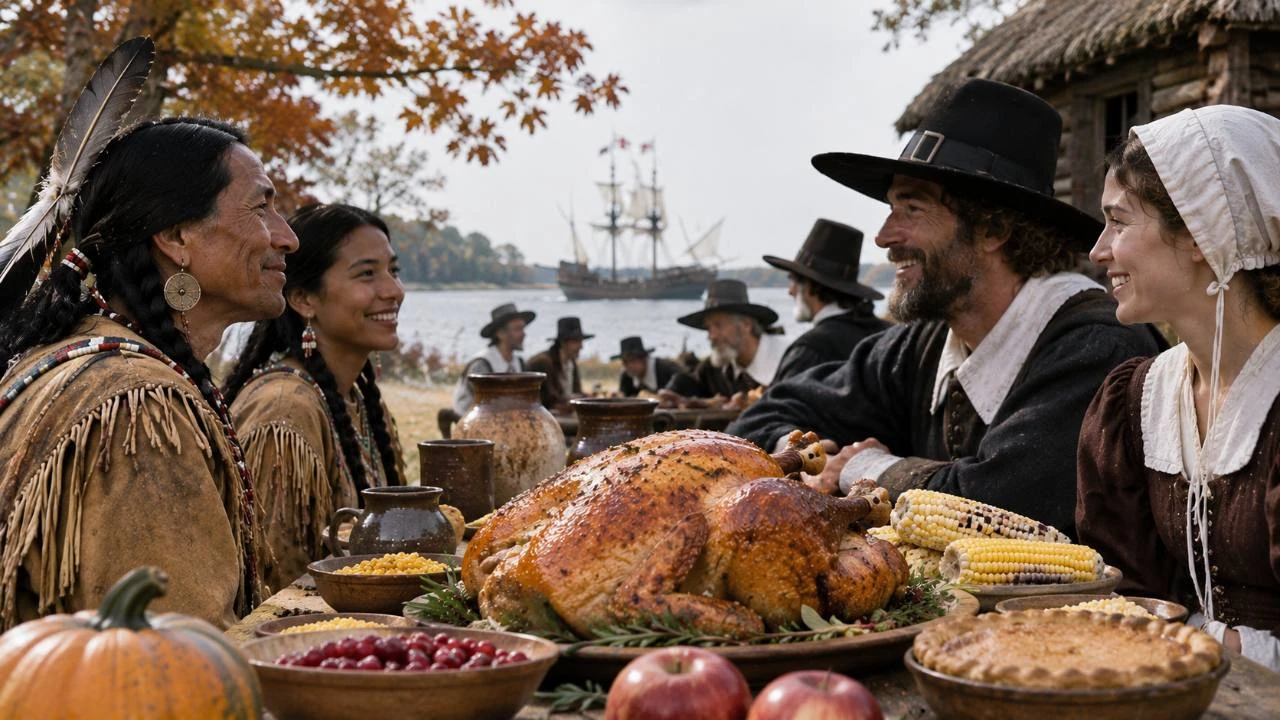
For related stories about performance and cultural memory, read PRESDA’s John Travolta feature and Carlo Collodi anniversary. Our Thanksgiving history explores another November 26 connection where popular memory and the documented record do not always coincide.
FAQ
Frequently Asked Questions
Did Casablanca open in 1942 or 1943?
It opened in New York on November 26, 1942, followed by national US release on January 23, 1943. Both dates have specific meanings.
Which Oscars did it win?
At the March 2, 1944 ceremony, it won Best Picture, Directing and Screenplay. Bogart was nominated for Actor but did not win for Casablanca.
Was it filmed in Morocco?
It was principally a Hollywood studio production. Its fictional Casablanca should not be mistaken for documentary footage of wartime Morocco.
Does anyone say Play it again, Sam?
No. That familiar phrase is a misquotation, not dialogue spoken in the film.
PRESDA Dispatch
Stay Informed. Stay Aware.
A sharp briefing across AI, gaming, sport, business, world affairs, paparazzi, and lifestyle.