THANKSGIVING: THE STORY BEHIND AMERICA’S NATIONAL HOLIDAY
From Washington’s November 26, 1789 observance to the fourth Thursday rule, explore Thanksgiving’s history, Wampanoag perspectives and enduring myths.
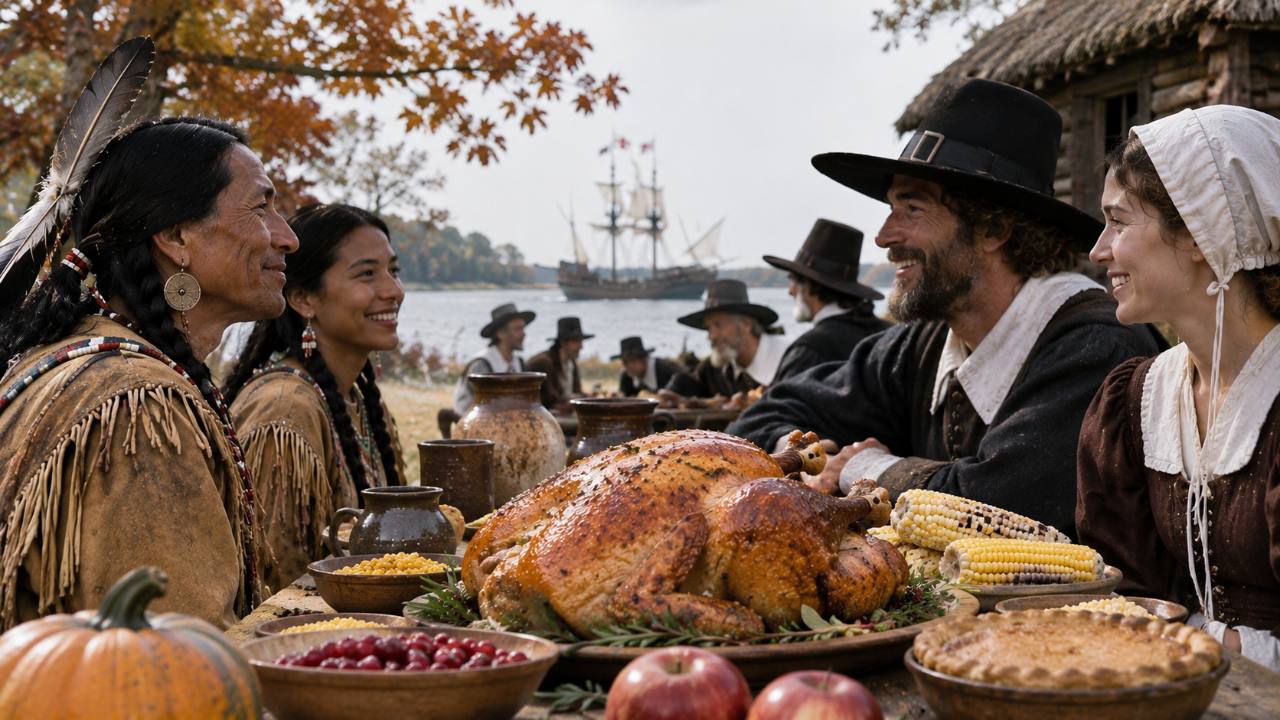
Supplied AI-generated historical illustration, preserved unchanged. It is not an archival image or evidence of the participants, clothing or menu at the 1621 gathering.
Thanksgiving became a national observance under the new United States Constitution on November 26, 1789, following a proclamation by George Washington. That date did not create today’s permanently recurring federal holiday. The familiar fourth Thursday of November was fixed by legislation in 1941, after generations of changing presidential and state observances. National Archives: Congress establishes Thanksgiving George Washington’s Mount Vernon: Thanksgiving and the 1789 proclamation
The November 26 anniversary is therefore a useful place to begin a more complicated story. Thanksgiving combines harvest traditions, public religion, national politics, family customs and Indigenous memories that do not fit a single reassuring scene. Its history becomes clearer when the 1621 gathering at Plymouth, Washington’s proclamation and the modern holiday are treated as separate events.
What happened on November 26, 1789?
Washington issued his proclamation on October 3, responding to a congressional request for a national day of thanksgiving. It recommended November 26 as a day of gratitude and prayer. The original document links that gratitude to independence, peace and the establishment of government, especially the recently adopted national Constitution. It was an act of public nation-building as well as religious expression. National Archives: Washington’s original proclamation
| Date | Historical significance |
|---|---|
| Autumn 1621 | A harvest gathering at Plymouth, not a dated federal holiday |
| November 26, 1789 | Washington’s recommended national day of thanksgiving |
| October 3, 1863 | Lincoln proclaims an observance for the last Thursday of November |
| December 26, 1941 | Legislation fixes federal Thanksgiving on the fourth Thursday |
| 1970 | The National Day of Mourning begins in Plymouth |
Its wording also asked for forgiveness of national and other transgressions and for the promotion of useful knowledge and good government. Those concerns are easily lost when the proclamation is reduced to a ceremonial endorsement of a meal. The document describes obligations and aspirations for the new republic, not a prescribed menu or a permanent annual calendar. National Archives: Washington’s original proclamation
Plymouth in 1621: a harvest gathering, not a federal holiday
More than a century and a half earlier, English colonists and Wampanoag people gathered after the Plymouth harvest. Edward Winslow’s surviving account describes three days of entertainment and food, with Ousamequin, often called Massasoit, and about ninety men. His men provided five deer; the colonists had obtained fowl. These details support a real encounter while leaving much about its organization and atmosphere unknown. Plimoth Patuxet Museums: Edward Winslow’s eyewitness account
What the evidence can and cannot tell us
Winslow did not provide the exact calendar date, a guest list covering everyone present or a complete menu. Wild turkey is plausible in that environment, but the recorded word fowl cannot establish every bird served. Modern cranberry sauce, neatly arranged place settings and pumpkin pie should not be projected backward simply because they appear in later paintings or generated images. Plimoth Patuxet Museums: Edward Winslow’s eyewitness account
The Smithsonian places the gathering in the context of an agreement between the English settlers and the Wampanoag nation. That political relationship matters. Indigenous participants were members of established communities making decisions about diplomacy and security, not supporting characters who appeared only to help create an American holiday. The English settlement occupied Patuxet, a place with a history before the colonists’ arrival. Smithsonian National Museum of the American Indian: Thanksgiving timeline
Why the first Thanksgiving label misleads
Giving thanks for food, survival or military events was not invented in Plymouth. The phrase first Thanksgiving compresses several different practices into a modern national origin story. The harvest gathering, colonial religious days of thanksgiving and the much later federal observance are related through memory, but they are not one uninterrupted institution founded at a dinner table. Smithsonian National Museum of the American Indian: Thanksgiving timeline
How an annual national tradition took shape
After Washington, presidential Thanksgiving dates were not uniform. Lincoln’s proclamation of October 3, 1863, during the Civil War, recommended the last Thursday of November. The National Archives identifies this as the beginning of a regular annual presidential practice. A holiday often presented as timeless was still being standardized while the country was fighting over its future. National Archives: Congress establishes Thanksgiving
Writer and magazine editor Sarah Josepha Hale had long advocated a shared national Thanksgiving. Her September 28, 1863 letter to Lincoln survives at the Library of Congress. It argues for a common observance across the states. The letter demonstrates an organized campaign, but the broader history should not be reduced to a lone person instantly inventing a holiday through one persuasive message. Library of Congress: Sarah Josepha Hale’s September 28, 1863 letter
The calendar controversy and the 1941 law
In 1939, November’s final Thursday fell on the thirtieth. Roosevelt moved his observance to the preceding Thursday, hoping a longer Christmas shopping season would help the economy. States divided over the change. The episode connected the holiday’s civic symbolism to retail calendars and demonstrated that presidential recommendation did not automatically produce nationwide agreement. National Archives: Congress establishes Thanksgiving
Congress eventually settled on the fourth Thursday rather than the last Thursday. Roosevelt signed the resolution on December 26, 1941. The distinction matters in a November with five Thursdays: fourth and last are not interchangeable. Nor does the law make November 26 the holiday’s fixed date. That anniversary belongs to Washington’s particular observance in 1789. National Archives: Congress establishes Thanksgiving
The Indigenous history beyond the feast
The harvest encounter did not guarantee enduring equality or peace. The Smithsonian’s chronology follows the subsequent colonial expansion and violence instead of stopping at the celebratory meal. Reading the later history alongside the 1621 account changes the meaning of the familiar picture: a moment of cooperation cannot stand as proof that the larger relationship was fair or harmless. Smithsonian National Museum of the American Indian: Thanksgiving timeline
The Wampanoag are living peoples, not a vanished population confined to an origin myth. Historical writing should name them and recognize different perspectives within and beyond their communities. It is possible to describe gratitude and family gatherings without turning a simplified colonial story into a universal account of what the day means to everyone. Smithsonian National Museum of the American Indian: Thanksgiving timeline Pilgrim Hall Museum: National Day of Mourning
The National Day of Mourning
Pilgrim Hall Museum traces the Plymouth observance to 1970. Wamsutta Frank James, an Aquinnah Wampanoag speaker, rejected an effort to control the historical message of his planned commemorative speech and spoke on Cole’s Hill instead. The annual gathering honors ancestors and draws attention to Indigenous struggles. It is part of Thanksgiving’s history, not an unrelated modern interruption. Pilgrim Hall Museum: National Day of Mourning
A short timeline of a changing holiday
Autumn 1621: a documented harvest gathering at Plymouth. November 26, 1789: Washington’s recommended national thanksgiving. October 3, 1863: Lincoln’s proclamation begins a regular annual presidential pattern. December 26, 1941: federal law establishes the fourth Thursday. In 1970, the National Day of Mourning adds an enduring public challenge to the holiday’s conventional story. National Archives: Congress establishes Thanksgiving Plimoth Patuxet Museums: Edward Winslow’s eyewitness account Pilgrim Hall Museum: National Day of Mourning
Reading Thanksgiving without confusing memory and evidence
The supplied hero is an AI-generated illustration, not an eyewitness record. Its clothing, food and people must not be used as historical proof. To examine a contemporary account, read Winslow’s text; to understand the federal holiday, read the proclamations and legislation. These sources answer different questions, and acknowledging their limits makes the story more useful rather than less engaging.
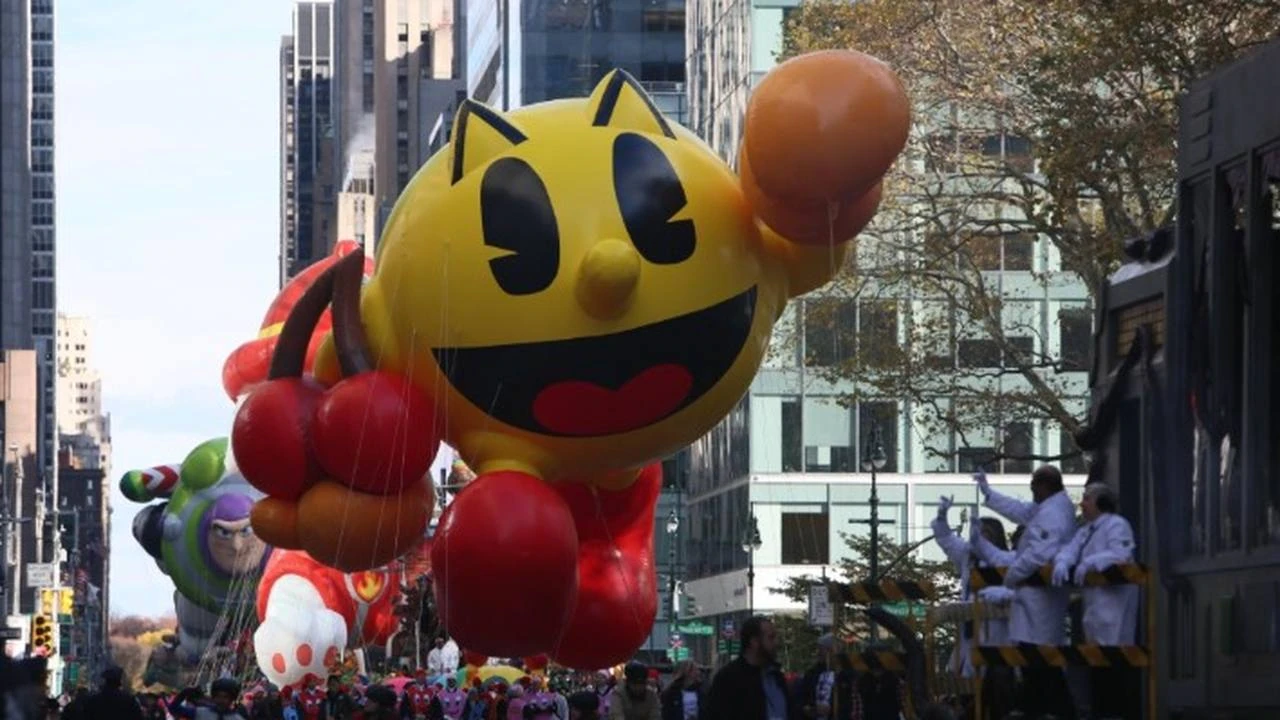
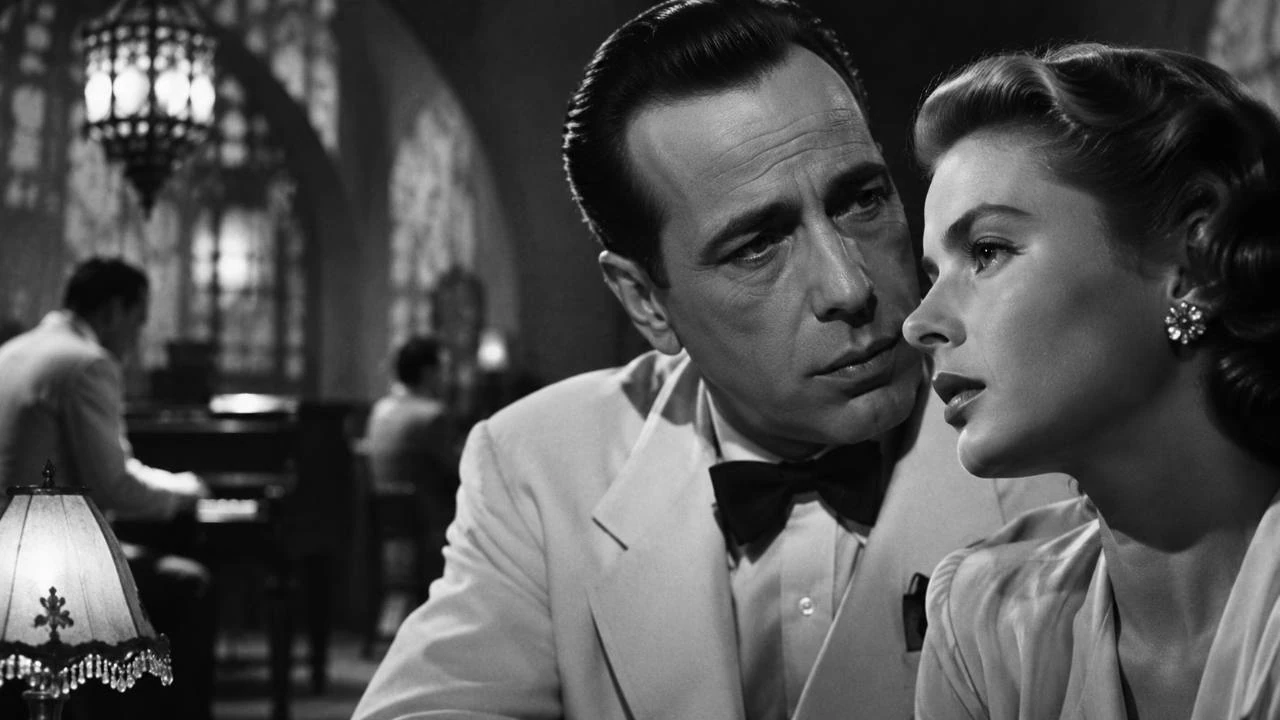
For the later transformation of the holiday into an urban spectacle, see PRESDA’s history and current report on Macy’s parade. Our Casablanca anniversary explores another November 26 cultural milestone. Thanksgiving itself endures because people continue to give it meaning, even as the historical record resists a single uncomplicated origin.
FAQ
Frequently Asked Questions
Is Thanksgiving always on November 26?
No. Federal Thanksgiving falls on the fourth Thursday in November. Washington’s 1789 observance was November 26, which is why the date matters historically.
Was the 1621 gathering America’s first national Thanksgiving?
No. It was a harvest celebration in a colonial setting. Its later status as a national origin story should not be confused with federal holiday legislation.
Is the modern menu documented in 1621?
Not as a complete menu. Winslow records fowl and five deer, but does not establish today’s turkey, cranberry sauce and pie meal.
Why do some people observe a National Day of Mourning?
The Plymouth observance, begun in 1970, honors Indigenous ancestors and challenges narratives that omit dispossession, violence and continuing Native life.
PRESDA Dispatch
Stay Informed. Stay Aware.
A sharp briefing across AI, gaming, sport, business, world affairs, paparazzi, and lifestyle.