Diamonds: The Marketing Story Behind a Precious Gem
How diamonds became symbols of love: De Beers, advertising, pricing, natural and lab-grown stones, ethical sourcing and the industry's changing economics.
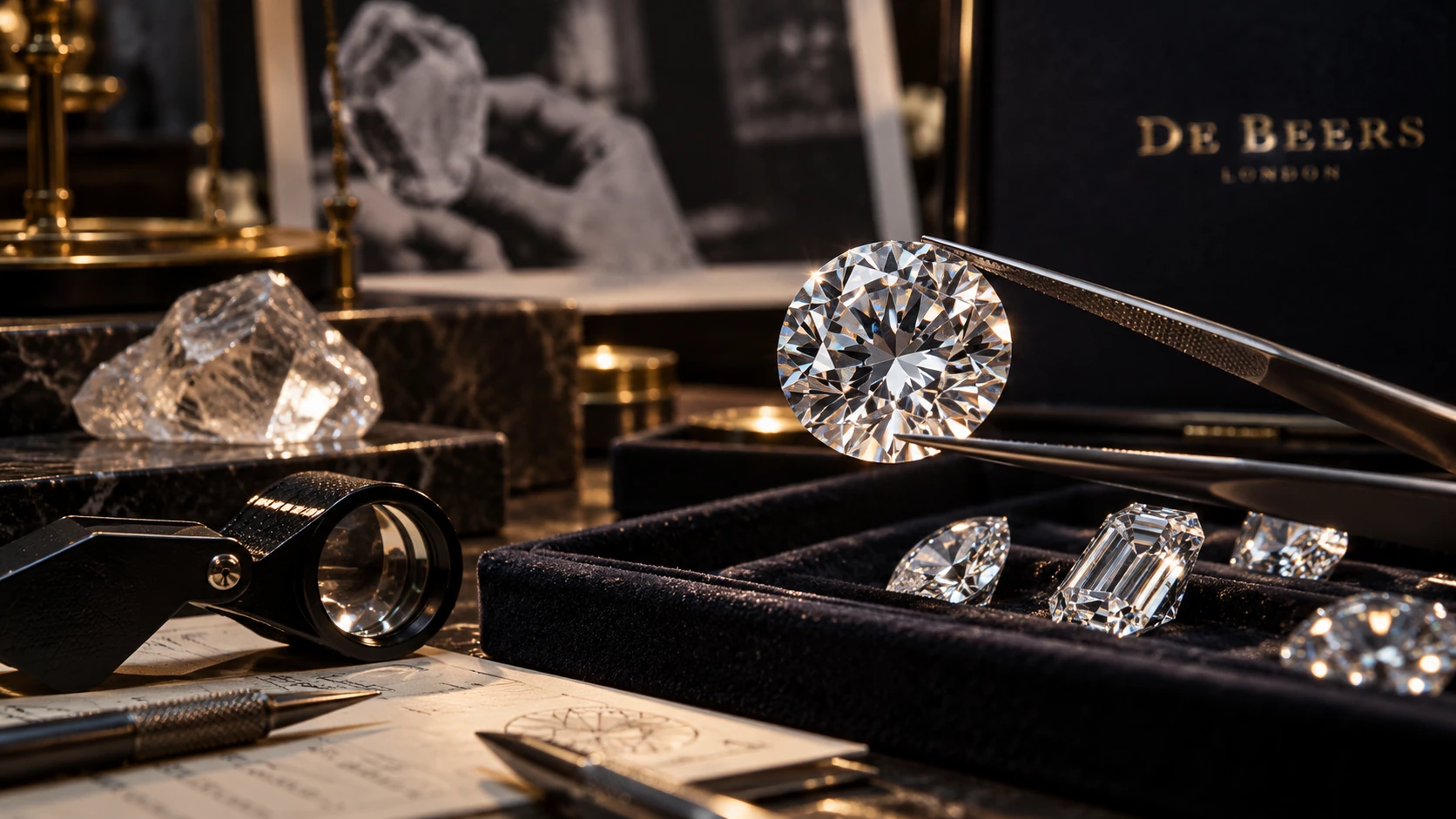
PRESDA editorial illustration, supplied and approved for this feature. Imagined diamond atelier; not an official De Beers photograph or endorsement.
A diamond can be examined in two lights. Under a jeweller's lamp, its facets, inclusions and colour reveal a material object. Under the light of advertising, it becomes a promise: commitment made visible, affection given a durable form. The modern diamond business grew by connecting those two experiences so closely that a purchasing convention could feel like an ancient obligation.
The stone is real. So are the mining, cutting, craftsmanship and human relationships around it. But its price and meaning are not dictated by geology alone. Supply arrangements, branding, social expectations and changing technology all matter. The useful question is not whether diamonds are a fraud, but how a naturally occurring material became one of the world's most persuasive commercial symbols.
Before advertising: an older history of desire
Diamonds were valued long before modern engagement campaigns. India supplied stones to early trade networks; Brazil became a major source in the eighteenth century. South African discoveries in the nineteenth century then transformed production. GIA's historical account traces a market that moved from elite adornment toward a broader consumer audience. De Beers Consolidated Mines was established in 1888, within that industrial expansion. GIA: diamond history and lore
This chronology matters because marketing did not invent beauty, gift-giving or the desire for rare things. It reorganized existing desires into a repeatable commercial ritual. Nor should the polished gem erase the conditions of extraction. The southern African diamond industry developed within colonial systems of land, labour and power. Its later advertising offered an intimate story while the production system remained global and unequal.
How De Beers shaped supply
For much of the twentieth century, De Beers' influence extended beyond the output of its own mines. Purchasing arrangements, stockholding and centralized selling helped regulate how rough diamonds reached buyers. Controlling the timing and channels of supply could support prices even as production expanded. The history of the diamond cartel concerns market organization, not a magical ability to make every stone equally rare. Indiana University law review: the diamond cartel
That history should not be repeated as a present-day claim that De Beers owns every diamond or fixes every retail price. The market has changed, with competing producers, different sales channels and laboratory-grown supply. A separate, specific legal fact is documented by the US Justice Department: in 2004, De Beers Centenary AG pleaded guilty to industrial-diamond price fixing and received a $10 million criminal fine. The case concerned industrial diamonds, not a finding about every engagement ring. US Justice Department: 2004 plea
Four words that linked a stone to a lifetime
Copywriter Frances Gerety developed “A Diamond Is Forever” for the N. W. Ayer agency in 1947. The phrase associated physical endurance with emotional permanence. De Beers' history and advertising-industry accounts identify it as a defining campaign. Its power was conceptual: instead of asking people to buy a mineral, it presented the purchase as an expression of a relationship that should outlast ordinary consumption. De Beers: company history WARC: campaign history
The emotional logic also discourages treating the stone as something to resell. If it embodies an enduring bond, disposal can feel like rejecting the bond itself. That is an interpretation of the campaign's message, not evidence that every buyer thinks alike. Engagement customs vary across societies and generations. There is no universal moral or financial rule requiring a diamond, a particular size or a fixed number of months' salary.
Advertising psychology without the conspiracy shortcut
A strong commercial convention gives buyers a script. The object tells a recognisable story, other people understand it, and refusing the script may require explanation. Size, brand and presentation can become signals of commitment or status even though spending does not measure affection. The mechanism resembles other luxury markets: social meaning can increase willingness to pay beyond an object's practical function.
Calling this persuasion does not make the buyer's feelings false. An inherited ring may carry memories no advertisement created. The distinction is between the authenticity of a relationship and the commercial system that offers a standard way to express it. PRESDA's feature on the psychology of brands explores a similar separation between material characteristics and the stories attached to them.
Why diamonds with the same weight cost different amounts
GIA's familiar four Cs are colour, clarity, cut and carat weight. One carat equals 0.20 grams. Weight alone does not determine appearance or value: cutting affects how a stone handles light, while inclusions and colour influence grading. Two stones of equal weight can therefore have different prices. A grading report describes characteristics; it is not a promise of future appreciation or a universal resale quotation. GIA: diamond buyer's guide
Retail prices also include labour, settings, branding, distribution and the seller's margin. The amount a customer pays for a finished ring is not what a dealer will necessarily pay for its stone later. A rare natural diamond may have a specialist resale market, but an ordinary purchase should not be presented as guaranteed wealth preservation. Emotional permanence and financial liquidity are different promises.
Natural and laboratory-grown: both diamond, different origins
Laboratory-grown diamonds have essentially the same chemical composition, crystal structure and physical and optical properties as natural diamonds. They are not the same thing as glass, cubic zirconia or moissanite simulants. The difference is origin. High-pressure, high-temperature growth and chemical vapour deposition are the principal manufacturing routes. Specialist laboratories use growth characteristics and analytical tools to identify that origin. GIA: laboratory-grown diamonds
Natural stones carry a geological history that manufactured ones do not, but that distinction does not make the laboratory material fake diamond. Equally, chemical similarity does not require identical prices. Manufacturing can expand supply in ways mining cannot quickly match. Buyers may pay a premium for natural origin, choose laboratory-grown material for its price, or prefer another stone entirely. Clear disclosure makes those choices meaningful.
A market under pressure in 2026
De Beers' first-half 2026 report illustrates why one headline price cannot describe the whole business. Its consolidated average realised rough-diamond price fell to $105 per carat from $155 a year earlier, a 32% decline. The company attributed the movement to both a lower-value sales mix and a 16% decline in its average rough-diamond price index. These are company-level rough-market measures, not a 32% fall in every retail ring. De Beers: interim financial results 2026
The distinction between mix and price is essential. Selling more inexpensive material lowers an average even without an identical decline in each category. Inventories, consumer budgets and competition from laboratory-grown products interact. The report is also a producer's account, with a commercial interest in natural diamonds. Its forecasts should not be confused with an independent guarantee of a recovery, and first-half data are not full-year results.
The global industry is more than a jewellery counter
Mining, sorting, cutting, polishing, trading and retail are different stages, with different workers and sources of value. A stone can cross borders several times before becoming a ring. That makes origin harder to explain than the address of the shop selling it. India is central to cutting and polishing, while producing countries include Botswana, Russia, Canada and South Africa. GIA describes the geographically dispersed development of modern supply. GIA: diamond origin
Botswana also demonstrates why a story focused only on advertising is incomplete. Debswana is owned equally by the Botswana government and De Beers. The arrangement links diamond demand to a producing country's economic choices, not just a luxury company's brand. The existence of this partnership does not remove questions about dependence, environmental effects or how benefits are distributed. It does make simplistic claims that all value stays with a foreign retailer inadequate. Debswana: shareholders
What conflict-free certification does and does not establish
The Kimberley Process addresses rough diamonds used by rebel movements or their allies to finance conflict against legitimate governments. Its certification scheme is a specific trade-control mechanism. It is not a comprehensive guarantee about every worker's conditions, every environmental impact or every human-rights concern throughout a jewellery supply chain. The scope of the definition matters as much as the presence of a certificate. Kimberley Process: definition and purpose
Human Rights Watch has documented shortcomings in jewellery supply-chain due diligence and urged companies to investigate and disclose sourcing more rigorously. That research does not establish that every mined diamond is abusive. It does show why a reassuring label should prompt further questions: who mined and cut the stone, what evidence follows it, and how does the seller respond when a risk is identified? Human Rights Watch: The Hidden Cost of Jewelry
Laboratory-grown does not automatically mean impact-free
Mining and laboratory production have different environmental burdens. A comparison must consider energy sources, manufacturing efficiency, extraction, land disturbance and the boundaries of the assessment. A broad claim such as environmentally friendly tells a buyer little without evidence. In 2019, FTC correspondence to a laboratory-diamond seller raised concerns about origin disclosures and broad environmental-benefit claims. It was a warning about marketing, not a scientific finding that all production methods are equally harmful. FTC: diamond advertising warning letter
Second-hand jewellery offers another option, though resetting, transport and refurbishment still have impacts. The sensible comparison is between documented supply chains, not between an automatically virtuous category and an automatically guilty one. Buyers can ask for origin disclosure, independent identification, clear return terms and substantiated environmental information. A seller's refusal to distinguish evidence from a slogan is itself useful information.
The future of a precious symbol
The industry now faces a challenge its most famous campaign could not settle: if visually similar diamonds become easier to manufacture, what exactly commands a premium? Natural origin, craftsmanship, provenance and brand may remain important, but their future value is uncertain. The outcome need not be the disappearance of natural diamonds or the universal triumph of laboratory production. Different buyers can support different markets.
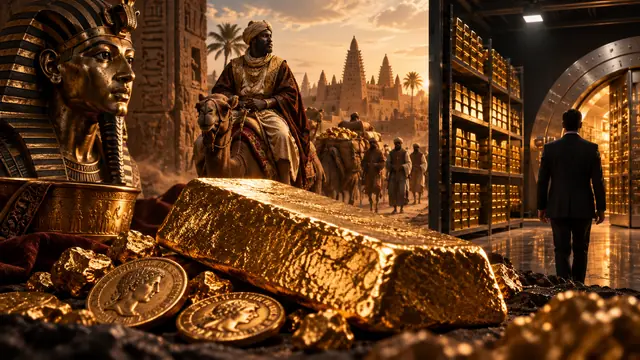
PRESDA's histories of gold and money provide related perspectives on how materials acquire economic meaning. A diamond can be beautiful, emotionally important and commercially marketed at the same time. Understanding the machinery behind that meaning does not forbid enjoyment. It gives the buyer more freedom to decide which part of the story is worth paying for.
FAQ
Frequently Asked Questions
What is this PRESDA article about?
How diamonds became symbols of love: De Beers, advertising, pricing, natural and lab-grown stones, ethical sourcing and the industry's changing economics.
Which category does this story belong to?
This story is part of PRESDA's Business coverage.
Who published this article?
Diamonds: The Marketing Story Behind a Precious Gem was published by PRESDA Editorial on PRESDA.
PRESDA Dispatch
Stay Informed. Stay Aware.
A sharp briefing across AI, gaming, sport, business, world affairs, paparazzi, and lifestyle.