Dubai Future City 2026: Smart Projects, Architecture And Urban Growth
Dubai's future city strategy is not only skyline spectacle. It is a coordinated push around Dubai 2040, D33, smart services, transport, AI, clean energy and livability.
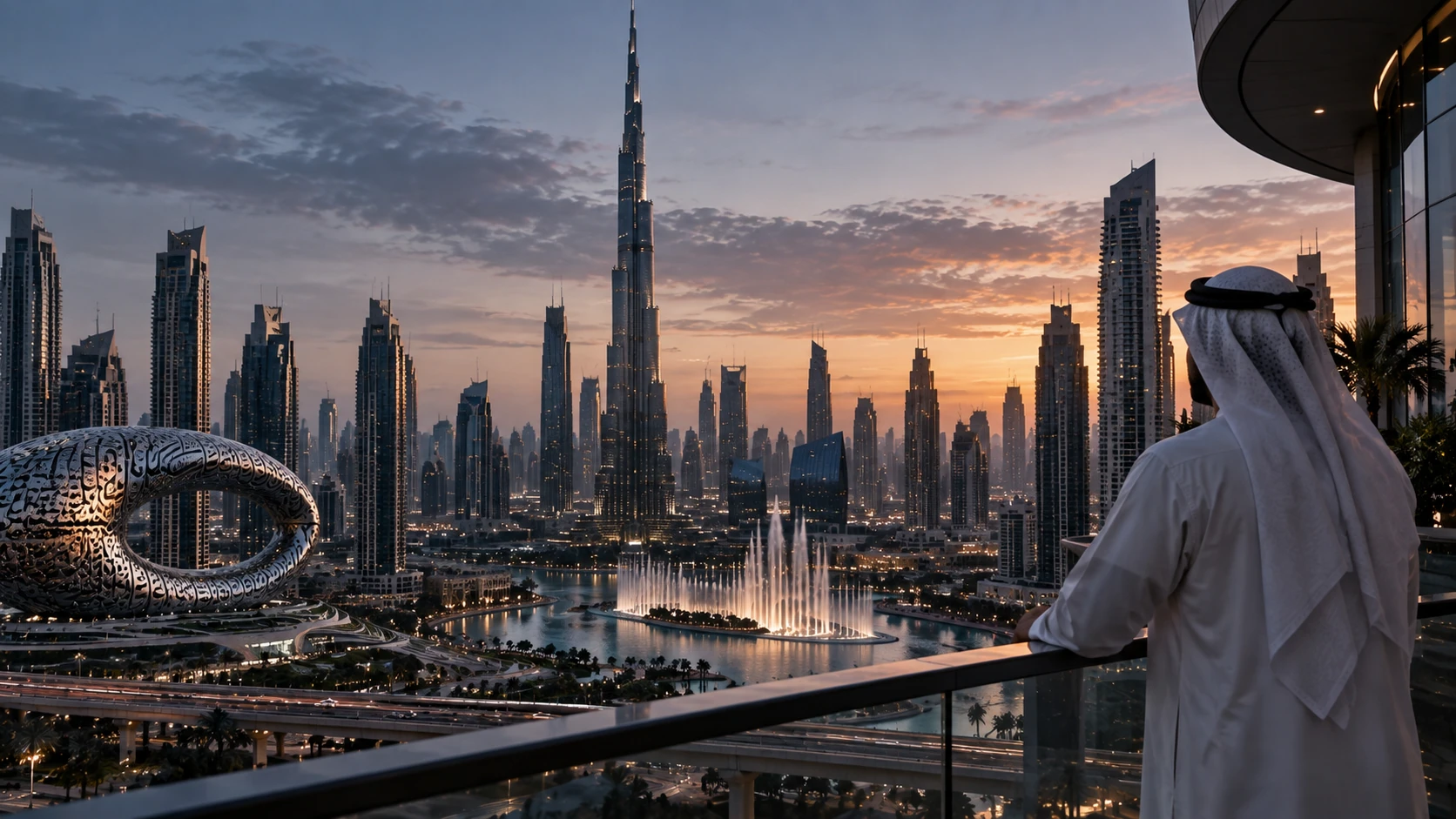
Dubai's future city story is often told through towers, islands and cinematic skyline images. But in 2026, the more useful way to understand Dubai urban development is through the official plans underneath the spectacle: Dubai 2040 Urban Master Plan, Dubai Economic Agenda D33, Digital Dubai, Metro Blue Line, clean energy targets, autonomous transport strategy and artificial intelligence policy.
That makes the future of Dubai more than a visual brand. It is a test of whether a fast-growing global city can connect architecture, mobility, public services, climate strategy and economic ambition into daily life that works for residents, visitors and businesses.
Dubai Future City: What The Strategy Really Means
A Dubai future city is not a single district or one megaproject. It is a layered strategy. Dubai wants to remain a global hub for tourism, trade, finance, aviation, technology and real estate while improving quality of life and managing population growth.
The Dubai 2040 Urban Master Plan is the most important planning frame. The UAE government's official portal describes it as a plan for sustainable urban development, with five urban centers, expanded green and recreational spaces, and nature reserves and rural natural areas forming 60 percent of the emirate's total area. The plan also aims to accommodate a resident population of about 5.8 million by 2040.
Dubai 2040 Urban Master Plan
Dubai 2040 shifts the conversation from one-off landmarks toward city structure. It organizes growth around centers, services, housing, mobility and access to public facilities. That matters because a city cannot rely on skyline drama alone; it needs neighborhoods, transport links, green space and public services that feel coherent.
The plan's emphasis on green and recreational space is especially important in a desert climate. Heat, water, energy use and outdoor comfort are not side issues for Dubai architecture 2026. They are central to whether the city can remain attractive as it grows.
Dubai Future Projects And D33
Dubai future projects also sit inside the Dubai Economic Agenda D33. Invest in Dubai describes D33 as an agenda designed to double Dubai's economy by 2033 through more than 100 projects focused on innovation, infrastructure and sustainable growth. The UAE government portal similarly frames D33 as a plan to consolidate Dubai's position among the world's leading cities for business and investment.
That economic layer explains why Dubai megaprojects often combine real estate, hospitality, mobility, events and technology. They are not only buildings. They are tools for attracting companies, capital, talent, tourists and global attention.
Dubai Smart City And Digital Government
Dubai smart city strategy is most visible in digital government. Digital Dubai describes services and initiatives such as DubaiNow, DubaiPay, UAE PASS, data platforms and paperless government. These systems are less cinematic than a tower, but they shape how the city functions.
The point of a smart city is not to make everything look futuristic. It is to reduce friction. Residents and businesses judge digital infrastructure by whether a service is faster, simpler and more reliable. For Dubai, digital government is a competitiveness tool as much as a convenience tool.
AI, Data And The Future Of Dubai
Artificial intelligence is part of Dubai's future city agenda, but it should be described precisely. The UAE Cabinet's National Artificial Intelligence Strategy 2031 aims to position the UAE as a global leader in AI and develop an integrated system using AI in vital areas. UAE government AI policy pages also emphasize public services, competitiveness, talent, research and infrastructure.
That does not mean every Dubai project is automatically an AI project. A responsible reading separates confirmed policy from marketing language. AI can support government services, mobility planning, customer experience, energy management and data analysis, but successful deployment depends on governance, data quality, cybersecurity and public trust.
Dubai Metro Blue Line And Mobility
Transport is one of the clearest places where Dubai's future projects become real. Dubai's Roads and Transport Authority says the Metro Blue Line spans 30 kilometers, includes 14 stations and is scheduled to begin operations in September 2029. The project is designed to connect high-density and future-growth areas including Dubai Creek Harbour, Dubai Festival City, International City, Dubai Silicon Oasis and Dubai Academic City.
Mobility matters because Dubai's urban form is spread across major districts, highways, waterfronts and business zones. A future city needs more than roads. It needs public transport, walkable connections, last-mile options and systems that reduce pressure on daily movement.
Autonomous Transport And Smart Mobility
Dubai's Autonomous Transportation Strategy adds another layer. The UAE government portal says the strategy aims to transform 25 percent of total transportation in Dubai to autonomous mode by 2030. Dubai Future Foundation's summary also connects the strategy to potential economic savings and smart mobility.
This should not be confused with a completed driverless city. It is a target and policy direction. The practical challenge is integration: autonomous systems must work with existing roads, public transport, safety rules, weather conditions, insurance, cybersecurity and public confidence.
Sustainability, Clean Energy And Climate Pressure
Dubai's future-city credibility depends heavily on sustainability. The original Clean Energy Strategy used a 75 percent target for 2050; DEWA's subsequent strategy statement sets a target of 100 percent clean energy production capacity by 2050. This is a long-term capacity goal, not a claim that today's electricity supply is already entirely clean or that all transport and industrial energy use has been decarbonized.
For Dubai architecture and urban planning, this matters because growth is energy-intensive. Towers, cooling, transport, water systems, airports and hospitality all demand resources. The city can build quickly, but the stronger test is whether growth can become more efficient, resilient and climate-aware.
Architecture, Megaprojects And The Risk Of Overstatement
Dubai megaprojects attract attention because the city understands visual impact. Waterfront districts, cultural venues, towers, branded residences, transport stations and mixed-use developments all become signals to investors and visitors.
But not every announced concept should be treated as a completed project. Some architecture proposals remain private concepts, phased developments or long-term visions. A serious Dubai architecture 2026 article should distinguish between official government plans, projects under construction, completed infrastructure and speculative renderings.
What Makes Dubai's Urban Development Different
Dubai's advantage is speed and coordination. Government strategy, real estate development, tourism branding, transport investment and digital services often move in the same direction. That creates a sense of momentum few cities can match.
The challenge is balance. Future-city success will not be measured only by landmark architecture. It will be measured by livability, affordability, mobility, environmental performance, public services, urban shade, neighborhood quality and whether growth benefits more than visitors and investors.
Dubai's future will be judged less by how high it builds than by how well the city connects.
Final Word
The future of Dubai is not one flying-car image or one skyline render. It is a practical urban project built from official plans, transport links, clean energy targets, digital government and economic strategy. Dubai's strongest claim in 2026 is not that it has solved the future, but that it is trying to make the future visible, investable and usable.
For more PRESDA context, read our coverage of OpenAI next generation models, World's most valuable companies in 2026 and wider World coverage.
FAQ
Frequently Asked Questions
What is Dubai's future city plan?
Dubai's future city plan is shaped by several official strategies, especially Dubai 2040 Urban Master Plan, Dubai Economic Agenda D33, Digital Dubai initiatives, clean energy targets and transport projects such as the Metro Blue Line.
What are the main Dubai future projects in 2026?
Major confirmed areas include Dubai 2040 urban planning, D33 economic projects, digital government services, Dubai Metro Blue Line, clean energy strategy, autonomous transport targets and AI policy. Some private architecture concepts should be treated separately from official projects.
Is Dubai a smart city?
Dubai has a major smart city and digital government agenda through Digital Dubai, including public-service apps, digital payments, data initiatives and paperless government programs.
When will Dubai Metro Blue Line open?
Dubai's Roads and Transport Authority says the Dubai Metro Blue Line is scheduled to begin operations in September 2029. The project spans 30 kilometers and includes 14 stations.
What is the Dubai 2040 Urban Master Plan?
Dubai 2040 is the emirate's long-term urban development plan. It focuses on sustainable growth, five urban centers, expanded green and recreational spaces, improved accessibility and planning for population growth.
PRESDA Dispatch
Stay Informed. Stay Aware.
A sharp briefing across AI, gaming, sport, business, world affairs, paparazzi, and lifestyle.