Donald Trump And World Cup 2026: Politics, FIFA And The U.S. Role
After the 2026 World Cup finished, Donald Trump's role is best understood through the White House task force, U.S. host-city coordination, FIFA diplomacy and the final ceremony.
The FIFA World Cup 2026 has now finished, which changes the way Donald Trump's role should be understood. Before the tournament, the question was how Trump and U.S. politics might shape the event. After the final, the clearer story is how the White House task force, federal agencies, FIFA, host cities and three national governments managed a tournament that became both a football spectacle and a political stage.
Searches for Donald Trump World Cup 2026, Trump FIFA World Cup and US politics World Cup 2026 usually point to the same issue: what did the U.S. president actually control, and what belonged to FIFA? The answer is important. FIFA ran the competition. The U.S. government helped coordinate the American host environment around security, visas, federal support, diplomacy and national presentation.
Why Donald Trump Was Connected To World Cup 2026
Trump's formal connection to the tournament began before the opening match. On March 7, 2025, the White House issued an executive order establishing the White House Task Force on the FIFA World Cup 2026. The order said the United States was a host nation for the tournament and that the administration would support preparations through a coordinated government effort.
GovInfo's official record identifies the same action as Executive Order 14234. The order made the President chair of the task force and the Vice President its vice chair, with participation from cabinet-level departments including State, Treasury, Defense, Justice, Commerce, Transportation and Homeland Security.
What The White House Task Force Did
The task force was designed to coordinate across federal agencies and support planning for both the 2025 FIFA Club World Cup and the 2026 FIFA World Cup. That did not mean the White House controlled match results, team operations or FIFA's sporting decisions. It meant the administration had a formal structure for the government-facing parts of hosting.
Those responsibilities mattered because the tournament was spread across Canada, Mexico and the United States, with 11 U.S. host areas listed by the White House: Atlanta, Boston, Dallas, Houston, Kansas City, Los Angeles, Miami, New York New Jersey, Philadelphia, San Francisco Bay Area and Seattle.
A Retrospective On The Tournament Itself
FIFA described World Cup 2026 as the first edition with 48 teams and three host countries: Canada, Mexico and the United States. The tournament ran from June 11 to July 19, 2026, across 16 host cities. FIFA's official final report says Spain were crowned champions at New York New Jersey Stadium after the final against Argentina.
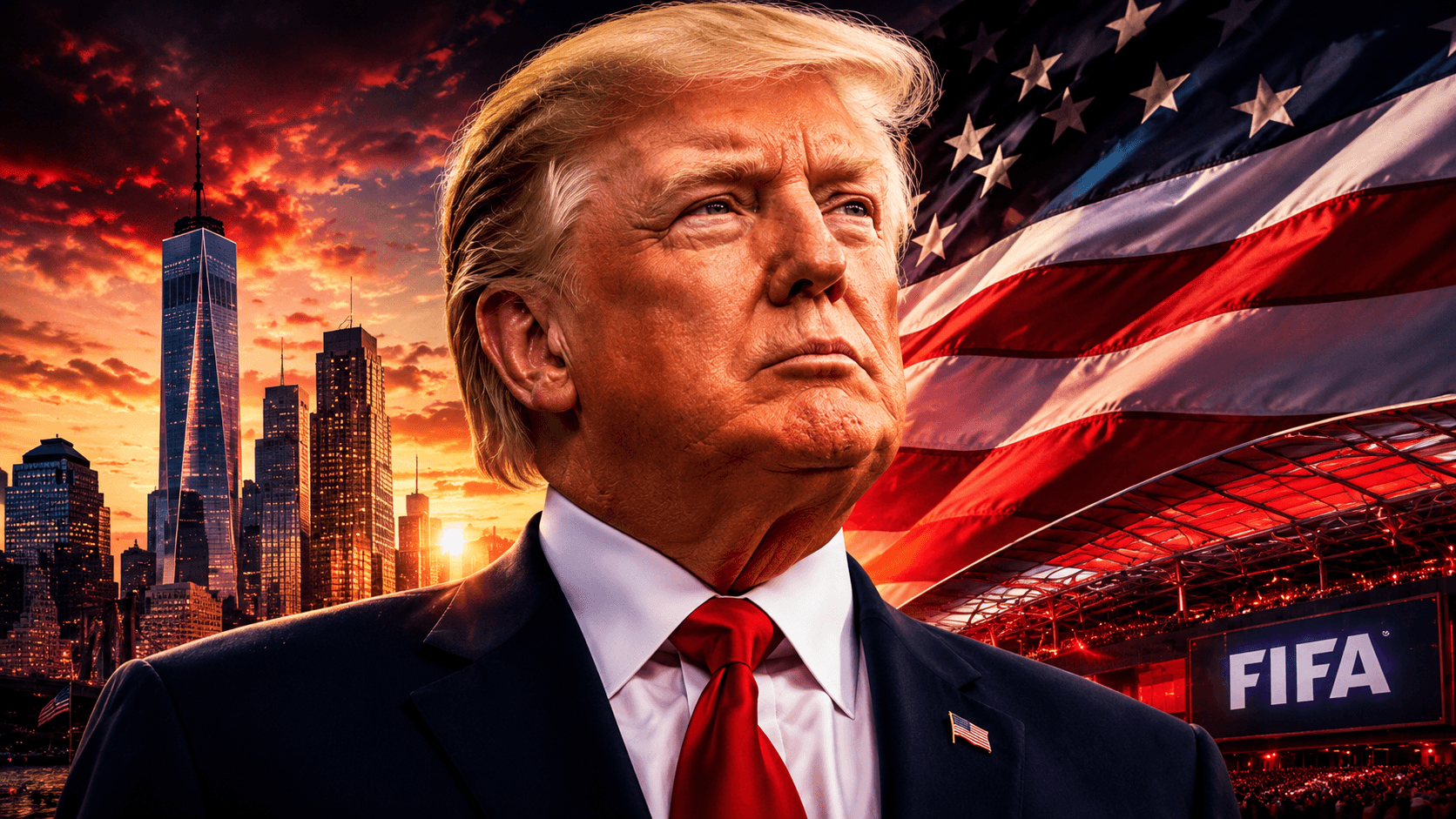
The final also placed Trump visibly inside the closing image of the tournament. FIFA reported that the leaders of the three host countries, including U.S. President Donald Trump, joined FIFA President Gianni Infantino to hand out medals before the trophy was presented to Spain captain Rodri.
Trump, FIFA And The Final Ceremony
The trophy ceremony became the strongest single image connecting Trump and the FIFA World Cup. AP's post-final coverage reported that Trump stood alongside Spain after their 1-0 victory over Argentina and later framed the event as a success for the United States as host.
That moment mattered because major sporting events are never only operational. They are also symbolic. The World Cup final allowed the U.S. presidency to appear beside FIFA, the winning team, other host-country leaders and the most watched football event on the planet.
Security, Visas And Federal Coordination
Security and mobility were the most obvious government responsibilities around the U.S. portion of the tournament. A global event with fans, teams, media, sponsors and dignitaries requires coordination among federal agencies, local authorities, FIFA, stadium operators and international delegations.
The State Department's July 17, 2026 foreign press briefing described World Cup preparation through consular services, passports, visas and American-citizen services. Earlier, FIFA announced a priority U.S. visa appointment initiative for World Cup ticket holders, led by the U.S. Department of State and connected to the FIFA Priority Appointment Scheduling System.
Those systems became part of the political story because visitor movement, border processing and event security sit directly inside national policy. For international fans, the tournament experience was not only about matches; it was also about whether travel, entry, transport and safety felt workable.
US Politics And World Cup 2026
US politics shaped the atmosphere around World Cup 2026 because the tournament overlapped with the United States' 250th anniversary year and arrived during Trump's presidency. The White House executive order explicitly framed the event as an opportunity to showcase national pride, hospitality, economic growth and tourism through sport.
That framing was political but not unusual for a mega-event. Host governments often use global sport to project competence, welcome visitors and connect national identity to international attention. What made 2026 different was the scale: three countries, 48 teams, 104 matches and a large U.S. share of the event footprint.
What Trump Did Not Control
It is equally important to be clear about the limits of the political role. FIFA controlled the competition format, match operations, sporting regulations, commercial rights and tournament governance. National and local governments supported hosting conditions, but they did not determine who won, how teams played or how referees judged matches.
That distinction protects the article from overclaiming. Trump and the U.S. government mattered to World Cup 2026 because hosting required federal coordination. They did not own the World Cup. The event belonged to FIFA, the three host countries, the host cities, the teams and the supporters.
Why The Story Still Matters After The Final
Now that the tournament is over, the Trump World Cup 2026 story is useful as a case study in sport and power. It shows how modern football depends on government coordination even when the game itself is run by sporting institutions.
It also points forward. The United States is scheduled to host more major events, including the Los Angeles 2028 Olympic and Paralympic Games. The World Cup task force model, the visa systems, the security planning and the political messaging around 2026 will likely be studied as part of that wider mega-event cycle.
World Cup 2026 was a football tournament, but it also became a test of hosting power.
Final Word
Donald Trump's World Cup 2026 role was not about tactics, goals or the champion. It was about the state machinery around a global sports event: task forces, agencies, border systems, security coordination, city readiness and diplomatic ceremony.
For more PRESDA context, read our guide to World Cup 2026 sponsors, the World Cup 2026 hub and wider World coverage.
FAQ
Frequently Asked Questions
What was Donald Trump's role in World Cup 2026?
Trump chaired the White House Task Force on the FIFA World Cup 2026, which coordinated federal support for the U.S. hosting role. FIFA controlled the competition itself.
Did Trump present the World Cup trophy in 2026?
FIFA reported that the leaders of the three host countries, including President Donald Trump, joined FIFA President Gianni Infantino to hand out medals before the trophy was presented to Spain captain Rodri.
Who won the 2026 FIFA World Cup?
Spain won the 2026 FIFA World Cup, with FIFA's official final report describing Spain as champions after the final at New York New Jersey Stadium.
How did U.S. politics affect World Cup 2026?
U.S. politics affected the hosting environment through federal coordination, security planning, visa processing, public messaging and the tournament's connection to the United States' 250th anniversary year.
Did the U.S. government control World Cup 2026?
No. FIFA governed the tournament and sporting operations. The U.S. government supported hosting conditions in the American host cities through federal agency coordination.
PRESDA Dispatch
Stay Informed. Stay Aware.
A sharp briefing across AI, gaming, sport, business, world affairs, paparazzi, and lifestyle.