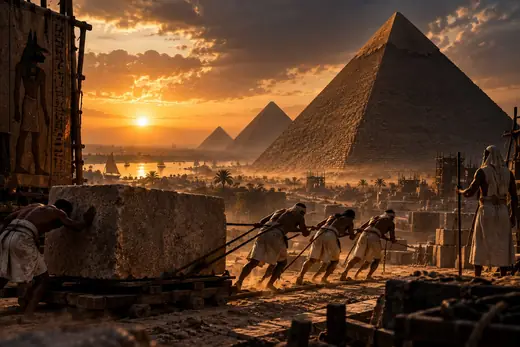
HUNDREDS OF ANCIENT COFFINS DISCOVERED IN EGYPT
What Egypt’s May 2022 announcement established about 250 painted coffins at Saqqara, their Late Period context and the research still needed.
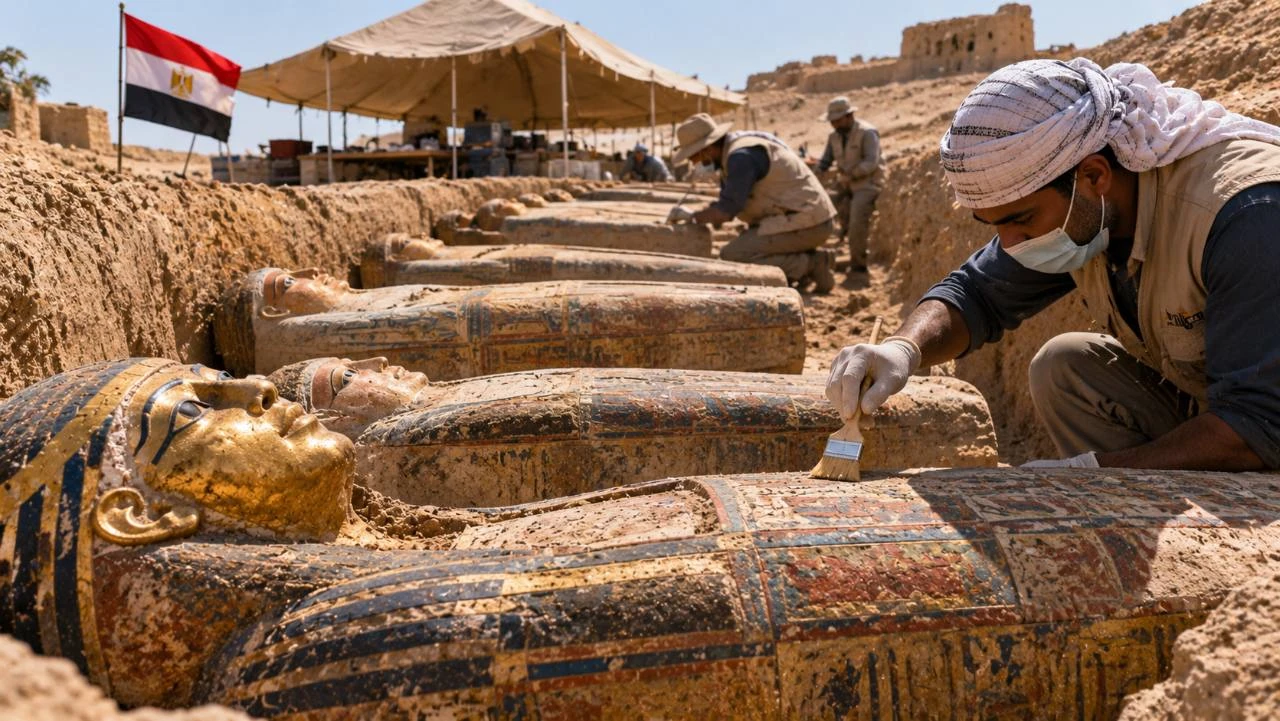
Editorial illustration supplied for PRESDA.
The discovery behind this headline is a documented Saqqara announcement from May 30, 2022. Egyptian authorities reported 250 closed, painted wooden coffins containing mummified people, together with 150 bronze statues. The finds were attributed to the Late Period, roughly 2,500 years ago. Their importance lies in the information they preserve about burial, belief and craftsmanship. This article revisits that verified discovery; it does not present the 2022 announcement as a new excavation report from 2026. Egyptian antiquities ministry: 250 coffins and 150 bronze statues Egypt State Information Service: May 30, 2022 discovery record
What was actually discovered?
| Evidence | What the record establishes |
|---|---|
| Announcement | May 30, 2022, at Saqqara |
| Coffins | 250 closed painted wooden coffins |
| Other principal group | 150 bronze statues |
| Chronology | Late Period, approximately 2,500 years ago |
The Egyptian mission working in the Bubastion area of Saqqara uncovered burial shafts containing the coffins. The ministry described surviving colours and mummies in good condition, while the State Information Service supplied the announcement date and a fuller inventory. These are official preliminary descriptions. “Good condition” indicates preservation as reported at discovery, rather than a completed scientific assessment of every body, inscription and object. The collection required documentation and conservation beyond its first public display. Egyptian antiquities ministry: 250 coffins and 150 bronze statues Egypt State Information Service: May 30, 2022 discovery record
The accompanying bronze figures represented deities including Osiris, Isis, Anubis and Bastet. Authorities also reported ritual objects, amulets, wooden figures and decorated boxes. Together they place the burials within a much wider religious environment. The headline’s hundreds refers specifically to 250 coffins in this announcement. It should not be confused with the separate total of 150 bronze statues or turned into a cumulative total assembled from unrelated discoveries elsewhere in Egypt. Egyptian antiquities ministry: 250 coffins and 150 bronze statues Egypt State Information Service: May 30, 2022 discovery record
Where is Saqqara, and why are there so many burials?
Saqqara formed part of the cemetery landscape of ancient Memphis. Its monuments and tombs span a long chronology, so excavators can encounter material from very different periods within the same wider site. The antiquities ministry describes burials from almost every period of Egyptian history. The famous Step Pyramid belongs to a much earlier era than the Late Period coffins. Their shared location demonstrates the continuing importance of this sacred landscape over many centuries. Egyptian antiquities ministry: Saqqara’s long chronology
A sacred place used repeatedly
A long-used cemetery accumulates relationships between older monuments, later burial shafts and changing religious practices. Its layers preserve decisions made by successive generations. Finding a coffin near a famous pyramid does not establish that both were made for the same ruler or at the same time. Archaeologists need the shaft, chamber, objects and inscriptions to establish context. PRESDA’s account of Egypt’s pyramids explains the earlier monumental tradition within this much longer funerary history.
What does “2,500 years old” mean?
The ministry assigned the discovery to the Late Period, and the State Information Service placed it around 500 BCE. These are broad historical descriptions, not a claim that every coffin was made in one particular year. Egypt’s Late Period included political change and continued investment in temples and burial traditions. A date in this period also means the coffins are far later than the great Old Kingdom pyramids, even though they belong to the same civilisation’s extended history. Egypt State Information Service: May 30, 2022 discovery record Egyptian antiquities ministry: Late Period history
Dating a group begins with its archaeological relationships and the evidence on the objects themselves. Coffin form, inscriptions and associated finds can help establish a period. Individual study may refine that assignment or reveal reuse. The public announcement does not supply a complete catalogue demonstrating one exact date for every item. Until such evidence is available, the responsible description retains the reported period and approximate age. That is enough to explain the find without adding unsupported precision.
Why were the coffins painted?
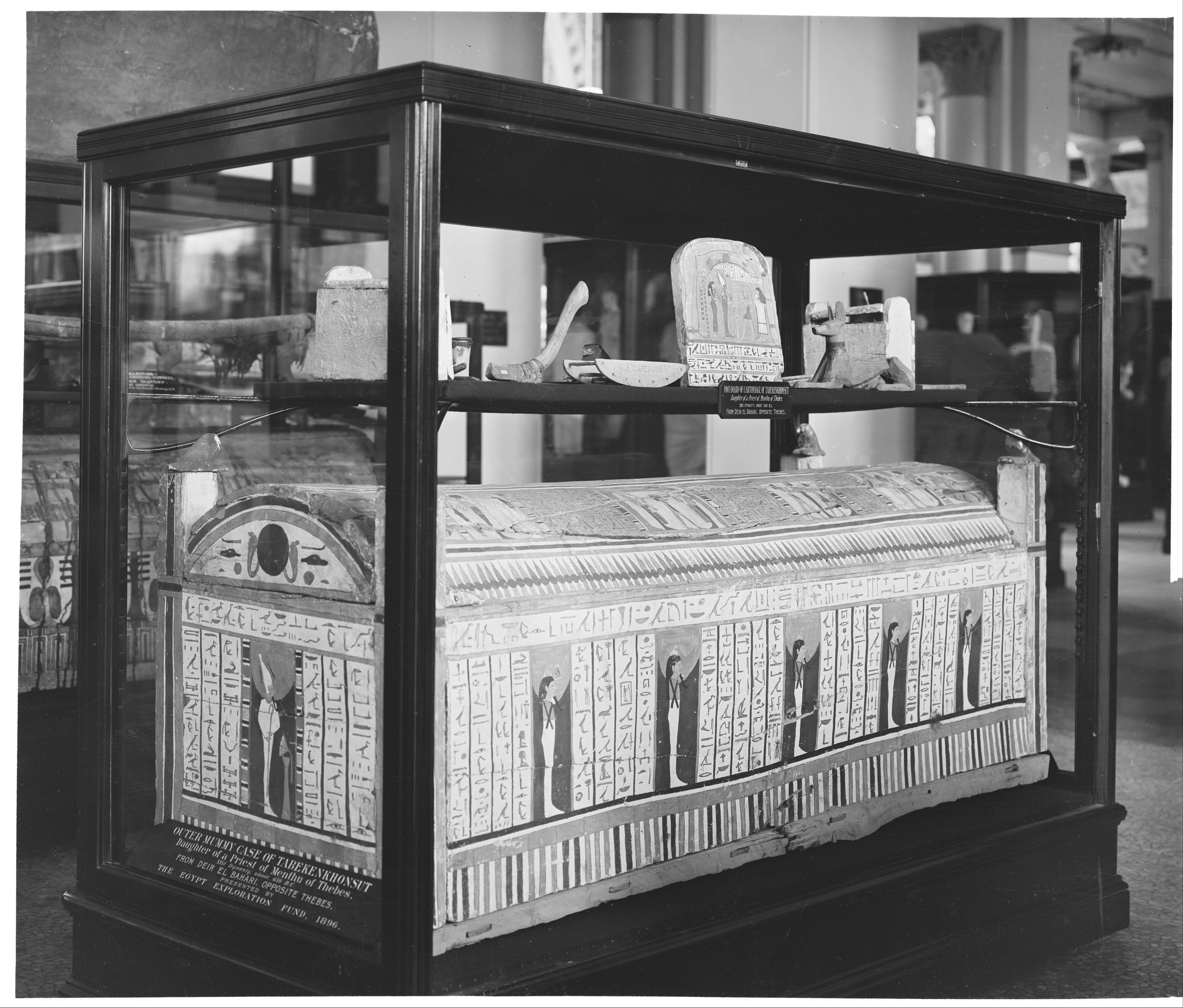
The outer coffin of Tabakenkhonsu, about 680–670 BCE, in the Metropolitan Museum of Art. This comparative object is not one of the 250 coffins announced at Saqqara in 2022.
The Metropolitan Museum of Art, 96.4.1a, b / Wikimedia Commons · CC0
Ancient Egyptian funerary equipment helped provide a protected identity and an enduring place for the deceased. Written names, divine figures and religious imagery could connect the person with beliefs about renewed life. Painted surfaces therefore carry information as well as decoration. Their arrangement, workmanship and inscriptions can help scholars investigate traditions followed by coffin makers and the people commissioning their work. The British Museum’s research describes the study of woods, pigments, textiles and construction within coffin conservation. British Museum: coffin materials and scientific conservation
Different materials age differently. Wood can split or weaken, layers carrying colour can detach, and textiles may become fragile. An object that looks remarkably complete in a photograph may still be vulnerable to handling. Conservators assess these relationships before deciding how it can be moved, cleaned or supported. Scientific analysis can identify materials and reveal construction details that are difficult to see on the surface. Such work turns an impressive group of finds into a body of usable evidence. British Museum: coffin materials and scientific conservation
What was the reported papyrus?
Authorities reported a papyrus inside one coffin containing passages from the Book of the Dead. That name describes a tradition of funerary spells and images, rather than one universally fixed book. Individuals could receive different selections. The British Museum explains how these texts were commissioned to assist the deceased. Identifying a papyrus requires close reading and conservation, so its presence should not be treated as proof that every coffin contained the same text or equipment. Egyptian antiquities ministry: 250 coffins and 150 bronze statues British Museum: Book of the Dead and hieroglyphs guide
What can researchers learn about the people?
Inscriptions can preserve names, titles and family connections when they survive and can be read. Coffins can also reveal choices made by workshops and patrons. The published discovery announcement, however, does not establish a complete set of identities, occupations or biographies for all 250 individuals. Claims that the entire group consisted of royalty or one profession would need additional evidence. A decorated coffin speaks to funerary investment; the person’s wider life remains a research question.
The bodies themselves deserve care as human remains. Imaging and other investigations can help assess preservation and, where appropriate, health or burial practice. The British Museum’s guidance stresses that treatment must consider associated coffins, wrappings and objects as well as the remains. A CT scan can provide information without conventional unwrapping, but it still needs expert interpretation. The fact that such methods exist does not mean they have already been applied to every person from this discovery. British Museum: research and care of human remains
Why does excavation context matter?
The relationship between a coffin, its shaft and nearby material can tell a story that disappears if objects are separated without records. Documentation preserves where finds were located and which associations were observed. A museum display can explain a result, but the excavation record makes that result open to examination. This is why the scientific value of the discovery extends beyond a count. Hundreds of objects create opportunities to compare practices across a group, provided their contexts remain traceable.
Large numbers also create practical demands. Each object needs an identifier, condition record, safe support and appropriate storage. Fragile painted surfaces may require attention before detailed study can proceed. Work can continue long after a press conference, and a preliminary announcement may leave important questions unanswered. For the broader political and religious chronology, PRESDA’s history of ancient Egypt places Saqqara within the civilisation’s long development.
What do the images establish?
The supplied hero is an editorial illustration of excavation and conservation. It is not documentary proof of the precise arrangement of the 2022 coffins or of any identified worker. Supporting images are separately labelled by subject and date. Keeping that distinction visible allows readers to appreciate the scene while following the documentary evidence for the actual discovery. No illustrative detail is used here to establish an inscription, burial identity or excavation result.
Why the discovery still matters
Saqqara’s coffins show how a familiar ancient site can continue to produce substantial evidence about later periods of its use. They bring together religious texts, skilled manufacture, burial organisation and human lives. The strongest account keeps the discovery date, reported totals and remaining uncertainties together. The result is a major archaeological story whose significance survives the original news cycle, without needing to be relabelled as a fresh find. Egyptian antiquities ministry: 250 coffins and 150 bronze statues Egypt State Information Service: May 30, 2022 discovery record
FAQ
Frequently Asked Questions
Was this discovery announced in 2026?
No. The verified announcement discussed here dates to May 30, 2022. The article is a current explanation of that documented find, with its original date made explicit. A newly circulated photograph or headline does not establish a new excavation date.
How many coffins were reported?
Egyptian authorities reported 250 closed painted wooden coffins containing mummies. They separately reported 150 bronze statues. The two quantities describe different categories and should not be merged into a larger coffin count.
Were the coffins found inside the Step Pyramid?
The announcement identifies burial shafts in the Bubastion area of Saqqara. It does not describe 250 coffins found inside Djoser’s Step Pyramid. The pyramid and these Late Period burials belong to different phases of the site’s long history.
Were all the people pharaohs?
The official discovery announcement does not establish that. Names, titles, family relationships and social positions require individual study. Elaborate funerary decoration alone is insufficient evidence to describe every person in the group as royalty.
What remains to be learned?
Detailed inscriptions, construction, materials, individual dates and burial relationships can refine the picture. The initial announcement is not a complete scientific catalogue. Conservation and careful documentation are essential to making future research reliable and respectful.
PRESDA Dispatch
Stay Informed. Stay Aware.
A sharp briefing across AI, gaming, sport, business, world affairs, paparazzi, and lifestyle.