GTA VI: Why The Biggest Game Of A Generation Became A Cultural Phenomenon
GTA 6 is no longer just a sequel. It is a verified business, culture and technology event built on GTA V's 230M-plus sold-in legacy.
GTA 6 is not arriving like a normal video game. It is moving through culture like a blockbuster film, a financial event, a music moment, a meme engine and a technology benchmark at the same time. Before players have touched the final release, Grand Theft Auto VI has already become one of the most closely watched entertainment launches of the decade.
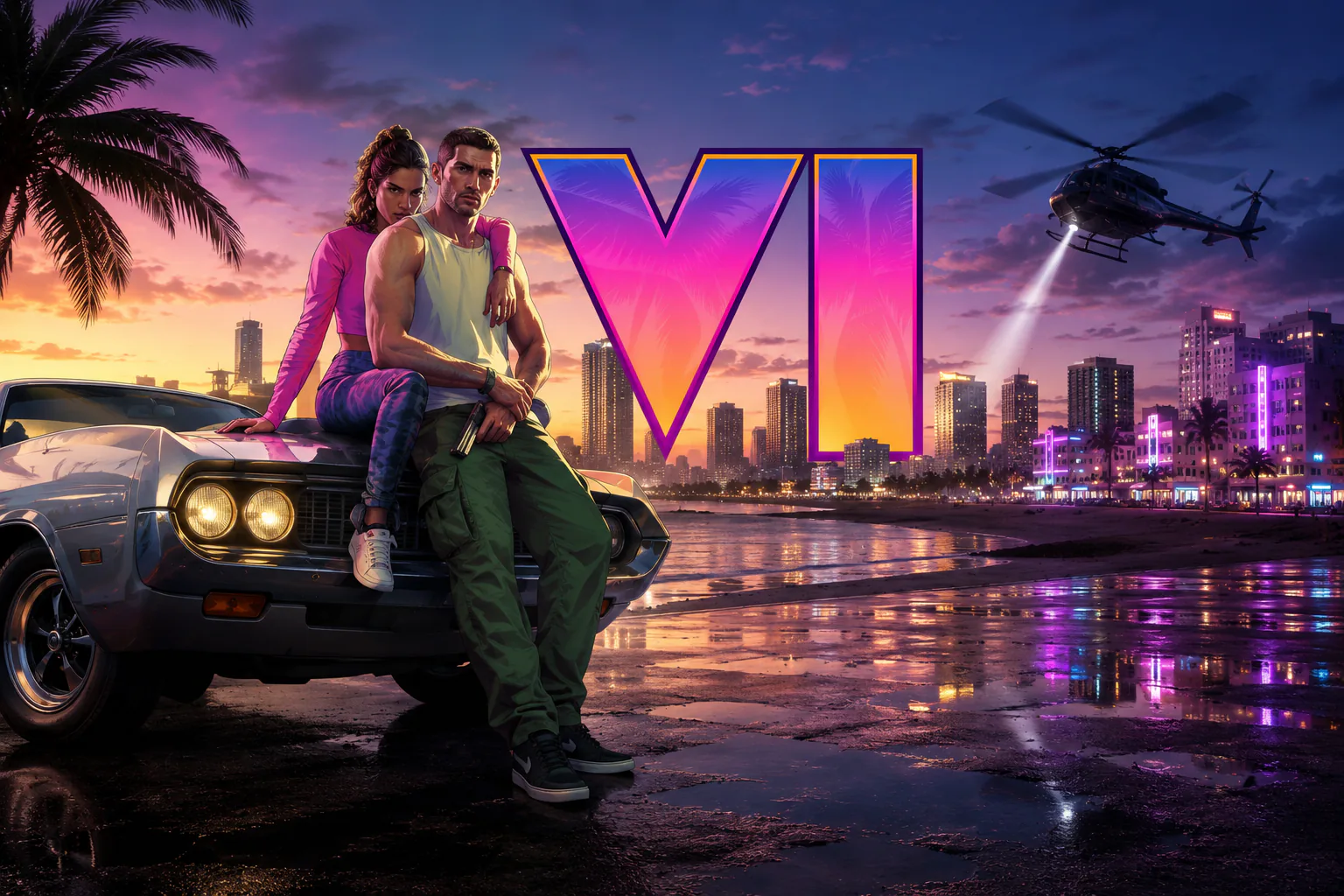
The confirmed facts explain part of the scale. Rockstar Games lists Grand Theft Auto VI as coming on November 19, 2026 for PlayStation 5 and Xbox Series X|S. The game returns to Vice City and expands across Leonida, Rockstar's fictional Florida-inspired state. Its story centers on Jason Duval and Lucia Caminos, a criminal pair forced deeper into trouble after an easy score goes wrong.
But GTA 6 is bigger than its release date. It is the next chapter after GTA V, a game Take-Two says has sold-in more than 230 million units worldwide as of its latest fiscal 2027 update. That longevity changed the economics of the franchise through GTA Online, recurrent consumer spending, GTA+ and years of player-made culture.
This article separates verified GTA 6 facts from expectation. The release date, platforms, Trailer 1 Guinness record, Trailer 2 reach, Vice City/Leonida setting and GTA V sales are supported by official or authoritative sources. Rumored development budgets and launch revenue forecasts are not the same thing as confirmed results. For wider entertainment and business context, read PRESDA's Business coverage and Lifestyle coverage.
GTA VI Key Facts
The most important GTA 6 facts are now clear enough to separate from speculation. Rockstar has confirmed the date, platforms, setting and central character pairing. Storefront and preorder coverage have established the U.S. Standard Edition launch price at $79.99.
| Fact | Confirmed Detail | Source Context |
|---|---|---|
| Release date | November 19, 2026 | Confirmed by Rockstar Games and Take-Two |
| Platforms | PlayStation 5, Xbox Series X|S | No official PC release date announced as of September 2, 2026 |
| Standard Edition price | $79.99 in the U.S. | Confirmed through official preorder coverage and storefront reporting |
| Setting | Vice City and Leonida | Rockstar's fictional Florida-inspired state |
| Main protagonists | Jason Duval and Lucia Caminos | Rockstar's official Trailer 2 description centers the pair |
| Publisher / developer | Rockstar Games / Rockstar Games | Published under Take-Two Interactive |
| Latest Take-Two fiscal guide | $8.0B to $8.2B FY2027 net bookings | Company guidance, not a GTA VI sales forecast |
The absence of a confirmed PC date matters. Rockstar has historically released some major games on console before PC, but history is not a release schedule. As of September 2, 2026, the verified launch platforms are PlayStation 5 and Xbox Series X|S.
Release Date, Delay And Development Timeline
Grand Theft Auto VI has lived in public imagination for years. Rockstar officially revealed Trailer 1 in December 2023 after a long period of speculation, leaks and fan analysis. In May 2025, Rockstar announced the game was set for May 26, 2026, then later moved the launch to November 19, 2026.
Delays in blockbuster games are not unusual. The scale of GTA 6 makes polish unusually important because the product will be judged on world density, animation quality, writing, driving, physics, mission design, online plans and technical stability. A delay can frustrate players, but a broken launch would be far more damaging to a franchise this visible.
The development timeline also reflects the modern AAA production problem. Open-world games now require huge teams, advanced capture work, dense art pipelines, online infrastructure, localization, platform certification, accessibility work, security planning and long-term content strategy. GTA 6 is expected to be both a story release and the foundation for years of ecosystem attention.
Vice City, Leonida, Jason And Lucia
Rockstar's official GTA VI page frames the game around Vice City and the state of Leonida. Vice City is one of the most famous settings in the Grand Theft Auto series because the 2002 game turned it into a neon-soaked cultural object: music, fashion, cars, nightlife and satire working together as a playable city.
GTA VI returns to that symbolic geography with a modern lens. Leonida lets Rockstar broaden the setting beyond a single city into beaches, highways, suburbs, wetlands, clubs, convenience stores, social media scenes and criminal networks. The promotional material suggests a world shaped by phones, spectacle, surveillance, livestreams and the performative absurdity of modern life.
Jason and Lucia matter because they change the emotional frame. Rockstar's Trailer 2 description presents them as a pair who must rely on each other when a score goes wrong. Lucia is also historically significant because she is the first female protagonist placed at the center of a mainline 3D Grand Theft Auto marketing campaign.
Trailer 1 And Trailer 2: Records, Reach And Hype
GTA 6's first trailer became a cultural event in its own right. Guinness World Records reported that Trailer 1 reached 90,421,491 YouTube views in its first 24 hours and broke multiple YouTube records for a videogame reveal.
Trailer 2 used a different kind of scale. Rockstar reported more than 475 million views across platforms in 24 hours. That cross-platform number should not be compared casually with the Guinness YouTube-only record because the measurement methods are different. Still, it shows how GTA 6 operates across YouTube, X, TikTok, Instagram, gaming media, creators and mainstream entertainment coverage at once.
| Release | Date | Verified Figure | How To Read It |
|---|---|---|---|
| Trailer 1 | December 2023 | 90,421,491 YouTube views in 24 hours | Guinness World Records recognized it as the most viewed videogame trailer on YouTube in 24 hours |
| Trailer 1 | December 2023 | Most viewed non-music YouTube video in 24 hours at the time | Guinness recorded GTA VI's first-look trailer across multiple YouTube categories |
| Trailer 2 | May 2025 | More than 475M views across platforms in 24 hours | Rockstar reported the cross-platform figure; this is not the same methodology as the YouTube-only Guinness record |
| Trailer 2 | May 2025 | Jason and Lucia story focus | Rockstar's official copy framed the trailer around the pair after an easy score goes wrong |
The trailers also show why GTA can move outside gaming. Fans dissected locations, cars, character expressions, radio clues, wildlife, interiors, police details, social-media parodies and background jokes. A GTA trailer is not just advertising. It becomes raw material for analysis, remixing and community storytelling.
GTA V, GTA Online And The Sales Machine Behind GTA VI
GTA VI is launching in the shadow of one of the most durable products in entertainment history. Take-Two's latest fiscal 2027 materials report that GTA V has sold-in more than 230 million units worldwide. That number refers to sold-in units, not necessarily the exact number of unique people who own the game.
GTA V's longevity came from three forces. First, the base game reached multiple console generations. Second, GTA Online created a persistent social economy inside the franchise. Third, the game became a streaming, modding, roleplay and clip-sharing platform for online culture.
Take-Two has repeatedly pointed to recurrent consumer spending as a major part of the franchise's performance. GTA Online kept the world financially active long after the 2013 launch. That changed how investors look at GTA VI: not only as a launch-week game, but as a platform that could generate revenue for years if players stay engaged.
| Year | Milestone | Why It Matters |
|---|---|---|
| 1997 | Grand Theft Auto begins | The original top-down crime sandbox established the brand's open-city identity |
| 2001 | GTA III | Helped define the 3D open-world template for console gaming |
| 2002 | Vice City | Turned the series into a pop-cultural period piece with a major soundtrack identity |
| 2004 | San Andreas | Expanded the scale of GTA's cities, characters, systems and music culture |
| 2008 | GTA IV | Moved the series into the HD era with a denser Liberty City |
| 2013 | GTA V | Became one of the most durable entertainment releases in modern gaming |
| 2026 | GTA V sold-in | Take-Two reported more than 230M GTA V units sold-in worldwide |
| 2026 | GTA franchise | Take-Two materials and investor updates place the franchise in the high hundreds of millions of units sold-in |
The History And Sales Growth Of Grand Theft Auto
Grand Theft Auto did not begin as the hyper-detailed 3D blockbuster people now imagine. The original 1997 game used a top-down view and a provocative crime-sandbox structure. GTA III transformed the industry in 2001 by making the open city feel like a place, not just a level.
Vice City added pop-cultural authorship. San Andreas expanded scale and systems. GTA IV made the series denser and more cinematic. GTA V fused Los Santos, multiple protagonists, heist structure and an online future into a single commercial machine.
That growth explains why Grand Theft Auto became Take-Two's most important franchise. The series moved from controversial cult hit to mainstream cultural institution. Each entry did more than sell software; it widened expectations for what an open-world game could simulate.
How Much Did GTA VI Cost?
There is no official Rockstar or Take-Two confirmation that GTA VI is the most expensive game ever made. Claims about a $1 billion or $2 billion budget circulate widely online, but they should be treated as estimates or rumors unless the company discloses a confirmed figure.
What is confirmed is broader: GTA VI is a major AAA production from one of the most expensive development environments in gaming. It likely involves long production cycles, large teams, motion capture, writing, art, engineering, world simulation, online planning, music licensing, marketing, localization, platform testing and security.
That is not the same as a verified budget. A responsible article should not turn internet estimates into fact. The better answer is: GTA VI is almost certainly one of the most expensive games ever attempted, but the exact development cost, marketing cost and total budget remain unknown unless Rockstar or Take-Two publishes them.
Forecasts Are Not Actual Sales
The same caution applies to sales predictions. Analysts and financial media have discussed very large first-year or launch-period revenue possibilities for GTA VI. Those are forecasts, not results. The game has not completed its commercial launch cycle as of September 2, 2026.
Verified facts can support the expectation: GTA V's 230M-plus sold-in total, the GTA franchise's enormous lifetime base, Trailer 1's Guinness record, Trailer 2's cross-platform reach and Take-Two's fiscal 2027 guidance. But none of that proves a specific GTA VI day-one revenue number.
The safest framing is that GTA VI is economically important because it may influence Take-Two's revenue, console engagement, digital storefront traffic, release calendars, creator content, music streams and online spending. Actual sales will need to be measured after release through Take-Two reports, platform charts and audited market data.
Why GTA Became A Cultural Phenomenon
GTA became global because it turned the city into entertainment. Players did not only complete missions. They drove, explored, listened to radio stations, watched fictional ads, caused chaos, memorized jokes, discovered neighborhoods and created their own stories between the official ones.
The series also understood satire. It exaggerated consumer culture, politics, celebrity, media panic, police power, influencer behavior and the absurdity of modern cities. At its best, GTA works because the world feels funny, violent, ugly, alive and recognizable all at once.
Music has been central to that identity. GTA radio stations taught players songs, genres and moods. A mission might be remembered partly for a car, a road, a sunset and the track playing in the background. That is why GTA can influence music discovery as well as gaming discourse.
Internet culture gave the franchise another engine. Memes, roleplay servers, livestreams, clip channels, stunt videos and modded scenes kept GTA V visible for more than a decade. GTA VI arrives into a media environment built for exactly that kind of circulation.
Rockstar's Influence On Open-World Games
Rockstar's influence is not just about map size. Many studios can build large maps. GTA's deeper influence is density: the feeling that streets, pedestrians, vehicles, interiors, sound design, writing and random details all support the illusion of a functioning society.
Open-world games after GTA have been judged by how alive they feel. Can players move naturally? Does traffic behave believably? Do characters react? Is the world worth exploring outside the mission marker? Can a place become memorable without a cutscene forcing the emotion?
That standard is powerful and sometimes unfair. Not every game should be GTA. But the franchise has shaped player expectations for systemic detail, freedom, satire and cinematic presentation.
Controversies And Criticism
Grand Theft Auto has always attracted controversy. Violence, crime, police chases, sexual content, stereotypes, satire and youth access have made the series a recurring target in debates about media effects and cultural responsibility.
A balanced view should avoid two easy answers. GTA is not simply a corrupting object, and it is not immune from criticism because it is satire. Satire can be sharp, but it can also flatten people into jokes. A game built around criminal fantasy can be artistically expressive and socially uncomfortable at the same time.
GTA VI will face a newer layer of scrutiny. Players will examine gender representation, violence, labor conditions, online monetization, privacy, moderation, creator economies and how Rockstar portrays a contemporary social-media world. Its scale makes criticism unavoidable.
Economic Importance To Take-Two
GTA VI is strategically important to Take-Two because the franchise is one of the company's strongest assets. Take-Two's fiscal 2027 outlook calls for $8.0 billion to $8.2 billion in net bookings, and the timing of GTA VI sits at the center of investor attention.
The upside is obvious: a successful GTA VI could drive premium game sales, special editions, console engagement, digital spending and a long online tail. The risk is equally visible: any delay, technical problem or disappointing monetization strategy would be magnified because expectations are so high.
This is why GTA VI is not only entertainment news. It is also market news. Few games are large enough to affect investor sentiment, release calendars and platform strategy. GTA VI is one of them.
What GTA VI Could Change
If GTA VI succeeds creatively and technically, it could reset expectations for open-world games in the late 2020s. Competitors may rethink city density, animation systems, social media integration, character writing, console performance targets and online persistence.
It could also influence pricing. The $79.99 Standard Edition matters because the industry has been testing whether major releases can move above the long-standing $69.99 premium-game standard. GTA VI is one of the few titles with enough demand to normalize that shift if players accept it.
The cultural question is larger. GTA VI may show whether a traditional premium blockbuster can still dominate in an era of live-service games, mobile scale, creator platforms and short-form attention. If the answer is yes, it will be because Rockstar built not only a product, but a place.
Final Word
GTA 6 became a cultural phenomenon before launch because it carries three decades of franchise memory and more than a decade of GTA V momentum. It has verified records, confirmed release plans, proven commercial lineage and a level of public attention most entertainment brands never reach.
The responsible way to cover it is with excitement and discipline. The release date is confirmed. The platforms are confirmed. The Trailer 1 Guinness record is confirmed. GTA V's 230M-plus sold-in figure is confirmed. But the budget, launch revenue and long-term sales remain open questions until Rockstar, Take-Two or audited market sources verify them.
That tension is what makes GTA VI fascinating. It is already a spectacle. Now it has to become a game.
FAQ
Frequently Asked Questions
What is the GTA 6 release date?
Rockstar Games lists Grand Theft Auto VI as coming on November 19, 2026.
What platforms is GTA 6 launching on?
The confirmed launch platforms are PlayStation 5 and Xbox Series X|S. No official PC release date had been announced as of September 2, 2026.
How much does GTA 6 cost?
The U.S. Standard Edition launch price is $79.99, based on official preorder/storefront coverage. Pricing can vary by region, edition and retailer.
Where is GTA 6 set?
GTA 6 is set in Vice City and the state of Leonida, Rockstar's fictional Florida-inspired setting.
Who are Jason and Lucia in GTA 6?
Jason Duval and Lucia Caminos are the central characters Rockstar has highlighted in GTA VI's official story material and Trailer 2.
Did GTA 6 Trailer 1 break records?
Yes. Guinness World Records reported that GTA VI Trailer 1 reached 90,421,491 YouTube views in its first 24 hours and broke multiple YouTube records.
How many copies has GTA V sold?
Take-Two reported that GTA V had sold-in more than 230 million units worldwide as of its latest fiscal 2027 update.
Is GTA 6 the most expensive game ever made?
That has not been officially confirmed. Rockstar and Take-Two have not disclosed a verified GTA VI development budget, so claims about $1B or $2B costs should be treated as estimates or rumors.
PRESDA Dispatch
Stay Informed. Stay Aware.
A sharp briefing across AI, gaming, sport, business, world affairs, paparazzi, and lifestyle.