Halloween: The Origins of the World's Spookiest Night
How Samhain, Christian calendars, migration and modern commerce shaped Halloween. Explore costumes, lanterns and the traditions behind October 31.
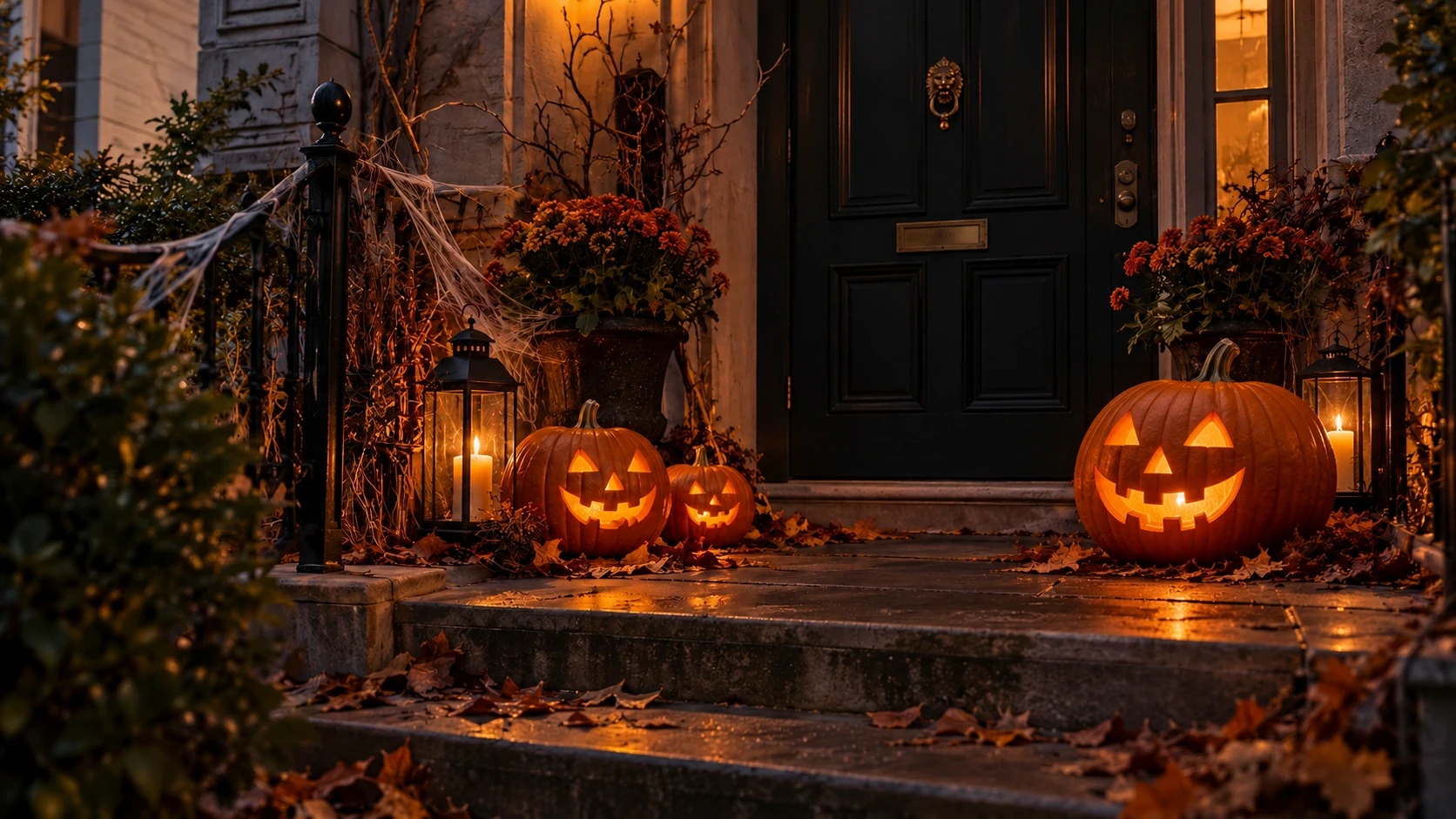
PRESDA editorial illustration generated with AI. An imagined Halloween doorway, not a photograph of an identified home or event.
A pumpkin lantern is a small domestic transformation: an ordinary doorstep becomes a stage, and the person who answers the door agrees to enter a stranger's story. That mixture of hospitality and unease helps explain Halloween's durability. On Saturday, October 31, 2026, the familiar costumes and sweets will return, carrying traces of older seasonal gatherings, Christian commemorations and migrant traditions, as well as the inventions of modern entertainment.
Halloween has no single inventor and no tidy moment of creation. Its name comes from All Hallows' Eve, the evening before All Saints' Day on November 1. Its customs developed through overlapping histories. Recognizing those layers makes the festival more interesting than either of the two convenient extremes: an ancient ceremony preserved intact or a holiday invented by candy companies. Library of Congress: Halloween traditions
Samhain and the turning of the year
In Irish tradition, Samhain marked the beginning of winter. The seasonal threshold mattered in communities whose work, food supplies and social calendar followed the agricultural year. Stories associated this time with encounters between the everyday world and supernatural beings. The National Museum of Ireland's folklife collections describe Halloween customs involving gatherings, special food, games and predictions about the future. These records are valuable evidence of lived traditions, rather than proof that every modern Halloween practice existed in antiquity. National Museum of Ireland: Samhain customs
The distinction matters. A nineteenth- or twentieth-century account can show what a family remembered or a community practiced; it cannot automatically reconstruct a prehistoric ritual. Samhain supplies an important Gaelic context, but reducing Halloween to a universal ancient Celtic religion blurs differences across places and centuries. Modern celebrations also belong to people with no religious connection to Samhain.
The Christian calendar behind the name
All Saints' Day commemorates saints, while All Souls' Day on November 2 is associated with remembrance and prayer for the dead in traditions that observe it. Halloween sits on the eve of this cluster of Christian commemorations. The calendar therefore gives the night both its name and another route through which mortality, memory and community entered its customs.
Folklore does not move like a relay baton, handed from one religion to the next without alteration. Practices can coexist, acquire new explanations or survive as games after their religious significance changes. It is more accurate to speak of interaction between seasonal and Christian traditions than to suggest a single decree transformed one complete festival into another.
Before pumpkins, there were turnips
The orange pumpkin looks inseparable from Halloween today, yet Irish lantern-making also used root vegetables. The National Museum of Ireland documents a ghost turnip received in 1943 from a teacher working near Fintown in County Donegal. Its frightening face helps recover a domestic craft that predates the contemporary supermarket pumpkin display. National Museum of Ireland: ghost turnip
Irish and Scottish migration helped carry Halloween customs across the Atlantic. In North America, the pumpkin became an especially visible lantern material. The change is a useful example of how traditions travel: the idea of a carved, illuminated face can remain recognizable while the plant, scale and surrounding celebration change. A modern jack-o'-lantern is both inherited custom and adaptation.
Food, fortune and the social game
Halloween's older repertoire was not exclusively about frightening children. It also made room for curiosity about marriage, luck and the coming year. Irish barmbrack, a fruit loaf associated with the festival, could conceal objects interpreted as signs of the recipient's future. The ring remains a familiar example. Ireland's official cultural resources present the practice as a form of festive fortune-telling, not a method of prediction. Ireland.ie: barmbrack tradition
Such games turn private hopes into shared conversation. A slice of bread becomes an excuse to discuss who might marry, travel or prosper, without the seriousness of a direct question. That social function is easy to miss when Halloween history is told only through ghosts. Anyone recreating the tradition should make hidden objects explicit to guests and keep small objects away from young children; the historical custom need not dictate an unsafe modern meal.
How visiting houses became trick-or-treating
Costumed visiting has several historical relatives, including guising, in which a visitor might sing, recite or perform, and souling associated with Christian remembrance. The Library of Congress identifies multiple proposed influences on American trick-or-treating. Its account is a useful corrective to confident claims that one old practice explains every detail of the modern exchange.
The contemporary formula is remarkably efficient. A costume introduces a character, a short phrase announces the visit, and a small gift completes the encounter. Neighborhood familiarity is part of the mechanism: adults recognize a shared occasion and children briefly gain permission to approach doors they would ordinarily pass. The ritual can be playful even when nobody seriously fears the threatened trick.
North America and the commercial expansion
Trick-or-treating grew in popularity in the United States during the mid-twentieth century. Individually wrapped sweets suited household distribution, while commercial costumes and decorations made participation easier to reproduce. Retail did not create the entire holiday, but it helped standardize its objects and extend the selling season. The same doorway could now be decorated with products recognizable far beyond one town.
Film, television and popular characters gave costumes another vocabulary. A monster could come from folklore, a cinema screen or a game console; dressing up no longer required a supernatural subject. This flexibility helps explain Halloween's international circulation. The recognizable package is portable, while communities decide how much of it to adopt, alter or reject.
Why Halloween is not Day of the Dead
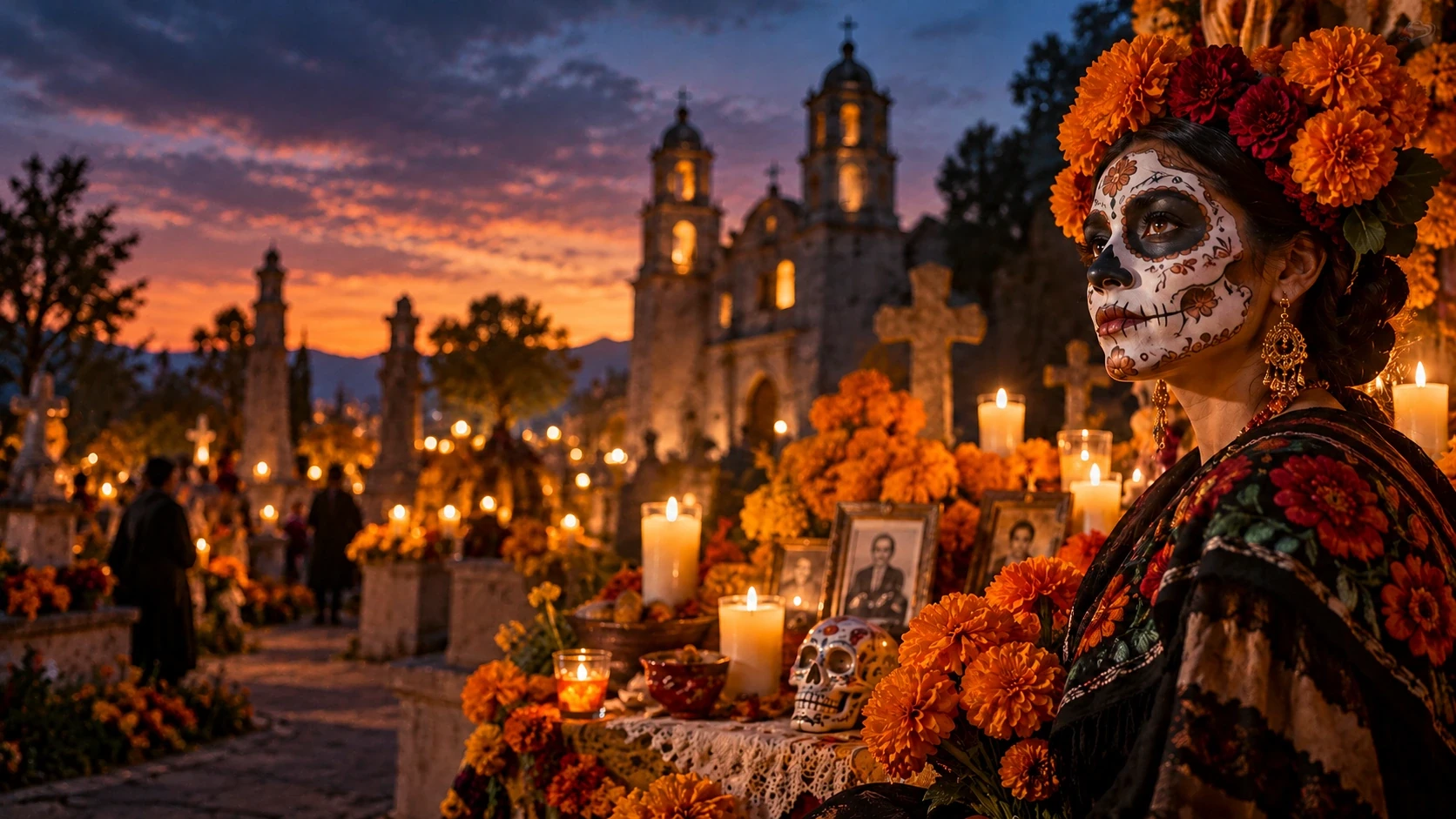
The proximity of dates and shared imagery of skeletons can be misleading. Mexico's Día de Muertos has its own Indigenous and Catholic histories, family offerings and regional practices of remembrance. Halloween and Day of the Dead can coexist in the same city or household without becoming interchangeable. A skull is not enough to identify the meaning of a ceremony. Our guide to Mexico's Day of the Dead explores that distinction.
Comparing festivals is most useful when it preserves their differences. Halloween often permits playful encounters with fear and disguise; a family's memorial offering addresses particular people who have died. Neither description covers every participant, but the contrast warns against treating all late-autumn celebrations as one global costume party.
Celebrating in 2026 without losing the neighborhood
October 31 falls on a Saturday in 2026. Public parades, school events and commercial attractions may use other dates, so their schedules should be checked directly. A household celebration needs less infrastructure: a clear entrance, comfortable costumes, visible walking routes and an agreement about which homes welcome visitors can matter more than elaborate props.
Battery-powered lights avoid placing flames inside decorations near fabric or dry leaves. Reusing costumes, repairing props and keeping edible pumpkin preparation separate from painted display pumpkins can reduce waste. Food choices should account for allergies and the needs of younger visitors. These are practical ways to preserve the pleasure of participation rather than turning the evening into a contest of spending.
An old festival that keeps changing
Halloween survives partly because it is open to reinterpretation. Its histories include agricultural seasons, religious remembrance, courtship games, migration and mass retail. None needs to erase the others. The glowing face outside a door is a compact record of that process: a recognizable form, remade with the materials and expectations of each generation.
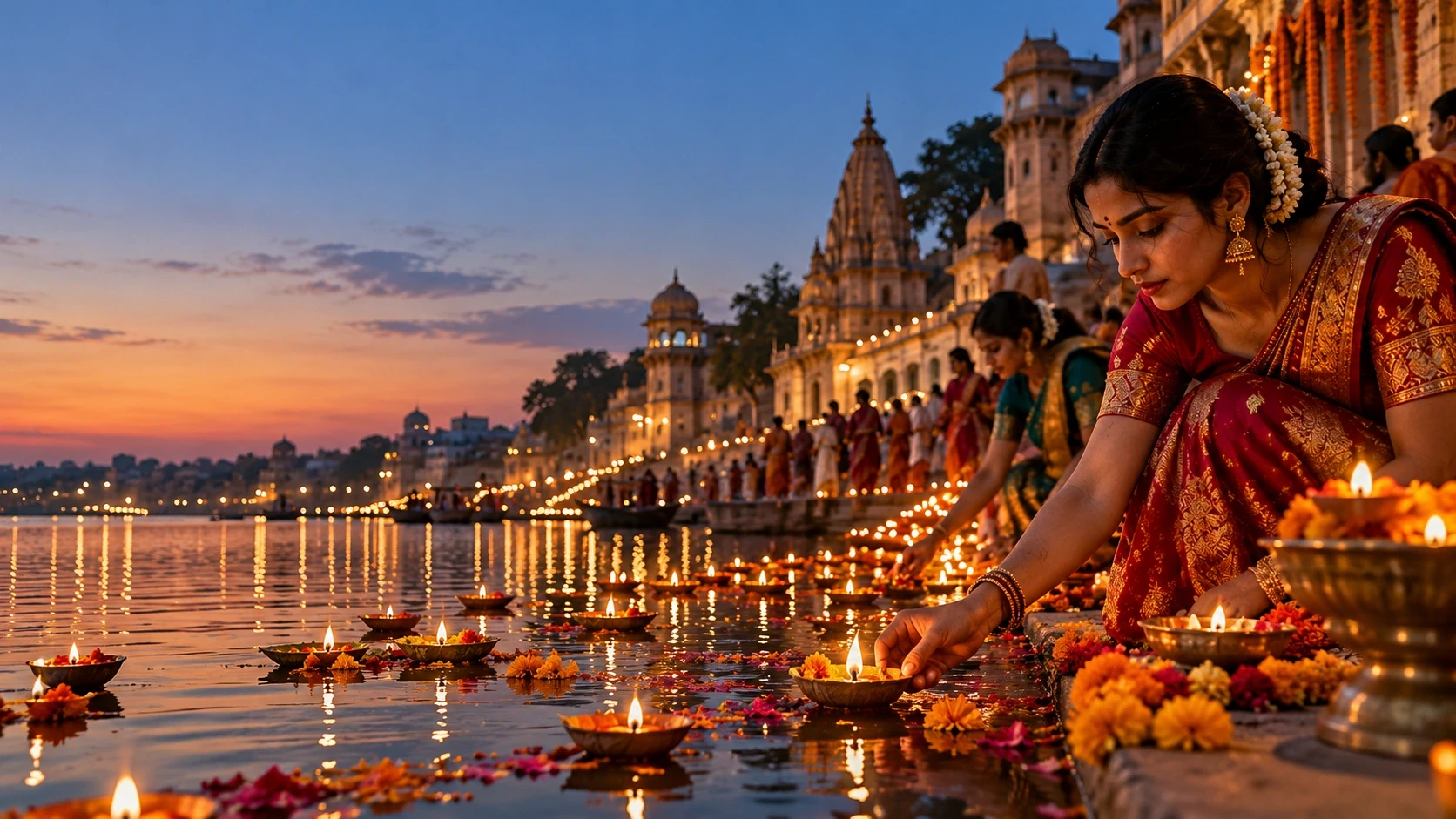
Looking beyond the costume also changes how we read other celebrations. Diwali's lamps carry distinct religious and family meanings, just as Halloween's lanterns belong to their own histories. Light, food and gathering recur across cultures; understanding what communities do with them is more revealing than assuming they all tell the same story.
FAQ
Frequently Asked Questions
What is this PRESDA article about?
How Samhain, Christian calendars, migration and modern commerce shaped Halloween. Explore costumes, lanterns and the traditions behind October 31.
Which category does this story belong to?
This story is part of PRESDA's Lifestyle coverage.
Who published this article?
Halloween: The Origins of the World's Spookiest Night was published by PRESDA Editorial on PRESDA.
PRESDA Dispatch
Stay Informed. Stay Aware.
A sharp briefing across AI, gaming, sport, business, world affairs, paparazzi, and lifestyle.