THE WORLD'S HIGHEST-PAID ATHLETES IN 2026 - AND WHY THEY EARN SO MUCH
The world's biggest athletes now earn far more than salaries and prize money. Contracts, sponsorships, social media, businesses and global audiences have turned sports superstars into commercial empires.
Forbes estimates that the world's 10 highest-paid athletes earned approximately $1.4 billion combined during the 12 months measured for its 2026 ranking.
That number is not net worth. It is annual earnings, and the distinction matters.
Modern athletes are no longer paid only to play. Their income can include salary, bonuses, prize money, fight purses, endorsements, licensing, appearances, social media, business ventures, equity, memorabilia and commercial partnerships.
The central question is simple: why can one athlete be worth more than $100 million per year?
The answer is not only performance. It is attention.
Elite performance creates fame. Fame creates audiences. Audiences create commercial value. The world's highest-paid athletes are therefore competitors and businesses at the same time.
Who Is The Highest-Paid Athlete In 2026?
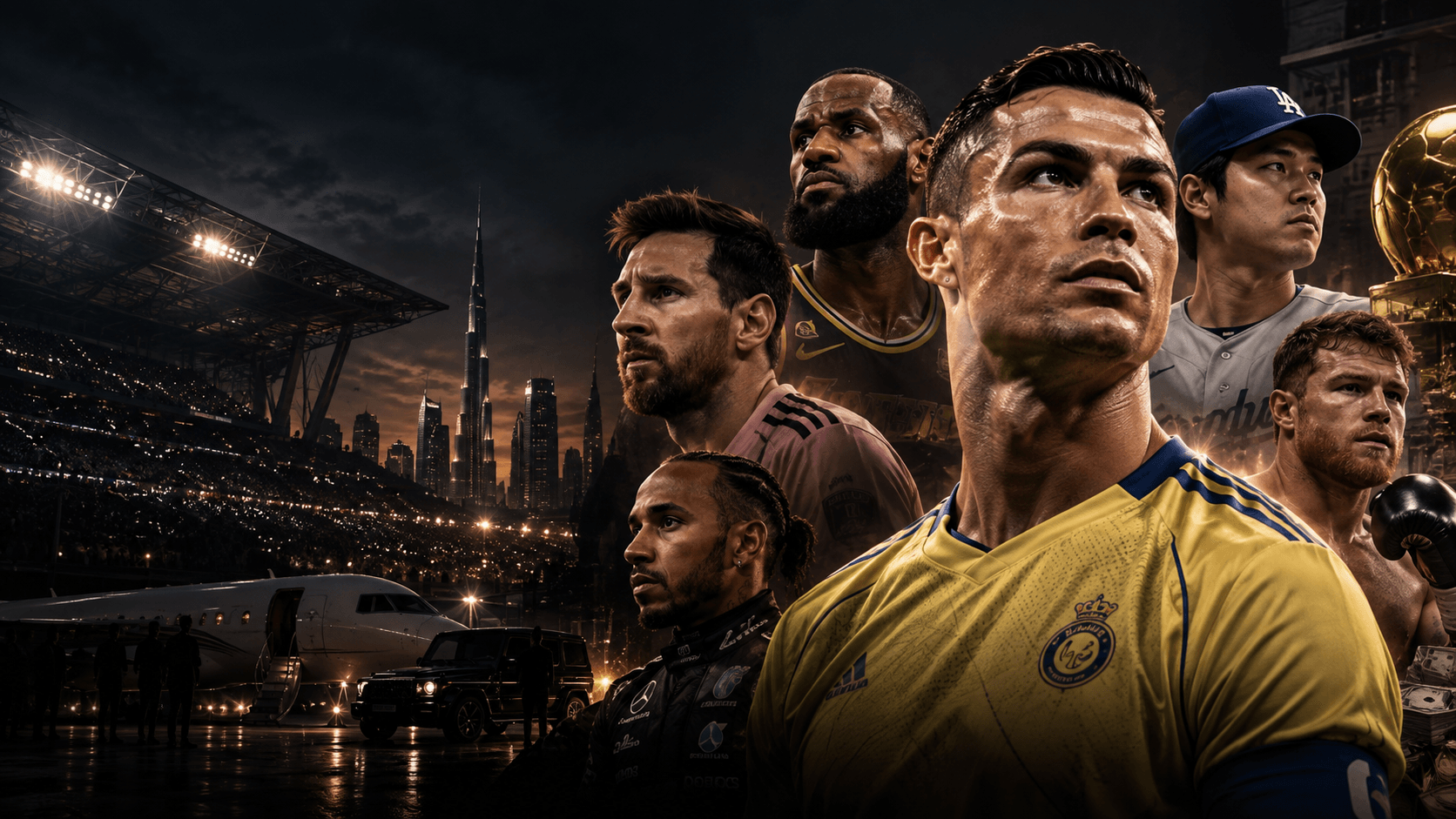
According to Forbes' 2026 ranking, Cristiano Ronaldo is the world's highest-paid athlete.
Forbes estimated Ronaldo's total earnings at $300 million for the measured period, made up of about $235 million on the field and $65 million off the field.
That places him far ahead of the rest of the list and shows how far athlete economics have moved beyond ordinary salary comparisons.
Ronaldo's number is an annual earnings estimate, not an audited financial statement and not a net-worth figure. Forbes generally counts income before taxes and agent fees, measured between May 1, 2025 and May 1, 2026.
Top 10 Highest-Paid Athletes In The World
Forbes' 2026 top 10 is a map of modern sports money.
1. Cristiano Ronaldo, football: $300 million total, including $235 million on-field and $65 million off-field.
2. Canelo Alvarez, boxing: $170 million total, including $160 million on-field and $10 million off-field.
3. Lionel Messi, football: $140 million total, including $70 million on-field and $70 million off-field.
4. LeBron James, basketball: $137.8 million total, including $52.8 million on-field and $85 million off-field.
5. Shohei Ohtani, baseball: $127.6 million total, including $2.6 million on-field and $125 million off-field.
6. Stephen Curry, basketball: $124.7 million total, with NBA salary and off-court business led by Under Armour and Curry Brand.
7. Jon Rahm, golf: $107 million total, driven by golf prize money, bonuses and LIV-related economics.
8. Karim Benzema, football: $104 million total, led by Saudi Pro League compensation and commercial income.
9. Kevin Durant, basketball: $103.8 million total, combining NBA earnings, endorsements and investment activity.
10. Lewis Hamilton, Formula 1: $100 million total, combining racing compensation, endorsements and the global-brand effect around his Ferrari move.
The exact totals are estimates. The pattern is the real story: several athletes now earn more off the field than from competition itself.
Forbes Methodology
Forbes' 2026 ranking measures earnings over a defined 12-month period: May 1, 2025 to May 1, 2026.
On-field income generally includes salaries, bonuses, prize money and fight purses. Off-field income includes endorsements, licensing, appearances, memorabilia, media work, business ventures and similar commercial activity.
Forbes says its figures are generally before taxes and agent fees.
That means a $100 million estimate should not be read as take-home pay. Athletes pay taxes. They pay agents, managers, lawyers, trainers, business staff and other costs. Some income may be deferred, structured through companies or tied to contracts with complicated timing.
The list is best understood as an annual-earnings estimate, not a bank statement.
Why Does Cristiano Ronaldo Earn So Much?
Cristiano Ronaldo is not only a footballer. He is one of the largest personal media platforms in world sport.
His Al-Nassr compensation is the foundation of the 2026 number. Forbes estimated his on-field earnings at $235 million, an extraordinary figure even in a global football economy inflated by Saudi Pro League spending.
But Ronaldo's value does not stop at goals.
He brings an enormous global audience, especially through social media. Clubs and sponsors value that visibility because Ronaldo can move attention across countries, languages and platforms. Nike and other commercial relationships sit beside his CR7 licensing and business ecosystem.
A club pays for performance, but also for global reach: shirts, subscriptions, media coverage, sponsor exposure, tourism, matchday attention and the prestige of association with a recognizable name.
Ronaldo's $300 million estimate is annual earnings. It should not be confused with net worth.
Canelo Alvarez: Why One Fight Can Be Worth A Fortune
Canelo Alvarez shows why boxing economics differ from salaried team sports.
A top boxer can earn a huge amount from one major event because the economics are concentrated around the individual: purse guarantees, broadcast rights, streaming deals, sponsorships, ticket sales, international promotion and pay-per-view-style event logic.
Forbes estimated Canelo's 2026 earnings at $170 million, with $160 million on-field and $10 million off-field.
That structure looks nothing like an NBA or MLB season. A basketball player earns through a season-long contract. A fighter can earn an enormous guarantee around a small number of events.
Canelo's relationship with Riyadh Season and major-event promotion is part of a wider change in combat sports, where sovereign-backed entertainment spending and global streaming economics can lift fight purses to extraordinary levels.
He also has businesses outside the ring, but the 2026 Forbes estimate is overwhelmingly fight-driven.
Lionel Messi: Half Sport, Half Commercial Empire
Lionel Messi's 2026 Forbes estimate is perfectly balanced: $140 million total, split into $70 million on-field and $70 million off-field.
Inter Miami compensation is one part of the story. Messi's value also comes from Adidas, global endorsements, licensing, appearances and verified commercial arrangements connected to his move to Major League Soccer.
Messi's presence did more than help one team. It changed attention around MLS, Apple broadcasts, Inter Miami merchandise, ticket demand and U.S. football culture ahead of a World Cup cycle.
That is why Messi's value extends beyond match performance.
He is a player, but he is also a signal. When Messi joins a league, sponsors, broadcasters and fans pay attention.
LeBron James: Athlete Plus Investor
LeBron James has been one of sport's most important business athletes for two decades.
Forbes estimated his 2026 earnings at $137.8 million, with $52.8 million on-field and $85 million off-field.
The NBA salary is large, but the bigger story is commercial longevity. LeBron has endorsements, media interests, investment activity, production work, partnerships and a global identity that extends far beyond the Los Angeles Lakers.
He is valuable because he combines performance, narrative and business infrastructure.
LeBron's career also shows how age no longer automatically collapses earnings for a superstar. Even as athletic peak and commercial peak are not always the same thing, brand equity can keep growing.
Shohei Ohtani: The Most Interesting Business Case
Shohei Ohtani may be the most revealing name on the 2026 list.
Forbes estimated his total earnings at $127.6 million, with only about $2.6 million on-field and an astonishing $125 million off-field.
That split reflects the structure of Ohtani's Dodgers contract. His 10-year, $700 million deal is famous for massive salary deferrals, meaning the nominal contract value and current-year cash flow are very different things.
Ohtani's commercial power is enormous because he is a once-in-a-generation baseball talent with huge appeal in both Japan and the United States. His sponsorship base reportedly includes more than 20 relationships, spanning sportswear, consumer brands, financial companies and global advertisers.
Ohtani demonstrates that an athlete's commercial value can exceed current salary dramatically.
He is not merely paid for baseball production. He is paid for what his presence unlocks: Japanese and American audiences, Dodgers visibility, brand trust, merchandise, media attention and cultural crossover.
Stephen Curry
Stephen Curry ranked sixth on Forbes' 2026 list at $124.7 million.
His model combines NBA salary with an unusually strong off-court brand. Curry changed basketball aesthetics through shooting range and movement, but he also built a commercial platform around Under Armour and Curry Brand.
Curry's appeal is not only championships. It is style, approachability, family-friendly marketability, youth basketball influence and a playing identity that made millions of fans imagine shooting differently.
That kind of identity is valuable to sponsors because it reaches beyond a team's local market.
Jon Rahm
Jon Rahm's $107 million Forbes estimate reflects the changing economics of golf.
Golf is an individual sport where prize money, bonuses, appearance incentives and league structure can matter enormously. LIV Golf added a new layer by using large guarantees and team-style formats to compete for elite talent.
Rahm's number should be read carefully because golf money can involve prize earnings, bonuses and contract structures that are not identical to a normal team-sport salary.
The larger point is clear: golf can now produce nine-figure annual earnings when talent, tournament economics and rival league investment converge.
Karim Benzema
Karim Benzema ranked eighth at $104 million.
His presence on the list is tied closely to Saudi Pro League compensation. Like Ronaldo, Benzema illustrates how Saudi football investment changed the global salary market for established stars.
Benzema also has a commercial profile built through years at Real Madrid, Champions League success and Ballon d'Or-level recognition.
But his 2026 ranking is mainly a story of salary power in a league willing to pay for global names.
Kevin Durant
Kevin Durant ranked ninth at $103.8 million.
Durant's profile blends NBA salary, endorsements and serious business activity. He has long been associated with Nike and has built investment and media interests outside basketball.
Durant is valuable because his basketball identity is globally recognizable: elite scoring, longevity, championships, Olympic success and a distinctive personal brand.
Like LeBron and Curry, he shows how NBA stars can become business portfolios.
Lewis Hamilton
Lewis Hamilton ranked tenth at $100 million.
Formula 1 is a global sport with a luxury-sponsor ecosystem, international race calendar and enormous brand value. Hamilton brings seven world championships, fashion visibility, activism, celebrity reach and one of the most recognizable names in motorsport.
Forbes described Hamilton's 2026 estimate as a record level for an F1 driver in its ranking.
His Ferrari move amplified the commercial story because Ferrari is not only a team. It is one of the world's strongest sports and luxury brands.
Hamilton's earnings show how Formula 1 money is tied to performance, team prestige, endorsements and global lifestyle marketing.
On-Field Vs Off-Field Money
On-field money includes salary, bonuses, prize money and fight purses.
Off-field money includes endorsements, licensing, business ventures, appearances, memorabilia, media, investments and commercial partnerships.
The 2026 list shows several business models at once.
Ronaldo is led by club compensation, but still earns tens of millions commercially. Messi is almost evenly split. LeBron earns more off the court than on it. Ohtani is the extreme case: the current Forbes estimate is overwhelmingly off-field because his Dodgers salary is heavily deferred while his sponsorship value is immediate.
Comparison table: Ronaldo $235M on-field / $65M off-field; Canelo $160M / $10M; Messi $70M / $70M; LeBron $52.8M / $85M; Ohtani $2.6M / $125M; Curry about $54.7M / $70M; Rahm about $102M / $5M; Benzema about $100M / $4M; Durant about $53.8M / $50M; Hamilton about $60M / $40M.
This is why the phrase highest-paid athletes 2026 is more complicated than a salary list.
Why Are Athletes Paid So Much?
Teams and sponsors are not paying only for athletic performance.
They are buying access to attention.
A superstar can generate value through TV rights, streaming subscriptions, ticket demand, merchandise, sponsorships, tourism, shirt sales, social media reach and global brand exposure.
If hundreds of millions of fans recognize one person, that person becomes a media platform.
A goal, knockout, home run, three-pointer or Grand Prix finish creates the first layer of value. The commercial system around it creates the second layer: ads, sponsors, broadcasters, apps, shirts, highlights, documentaries, appearances and branded products.
The athlete becomes both performer and distribution channel.
The $100 Million Club
A $100 million sports year used to feel almost impossible.
In Forbes' 2026 ranking, every athlete in the top 10 reached at least $100 million for the third consecutive year.
That is a remarkable threshold because it shows that nine-figure athlete earnings are no longer limited to one-off boxing events or rare contract spikes.
The modern $100 million club includes footballers, boxers, basketball players, a baseball star, a golfer and a Formula 1 driver.
The old question was which sport paid the most. The new question is which athletes can combine competition income with global commercial reach.
The Saudi Money Effect
Saudi investment has changed sports economics, but the details should not be blurred together.
Cristiano Ronaldo and Karim Benzema are tied to Saudi Pro League compensation. Jon Rahm's place on the list reflects LIV Golf economics, connected to Saudi Arabia's Public Investment Fund. Canelo Alvarez's 2026 number is tied partly to major-event boxing and Riyadh Season.
Saudi government, Public Investment Fund, individual leagues, Riyadh Season and private commercial arrangements are not the same thing, even when they overlap in the broader sports-investment landscape.
The practical effect is clear: major Saudi-linked spending has raised the price of elite sports talent and helped create new markets for events, leagues and star-driven entertainment.
This article is not making a political judgment. It is describing a business effect.
Why Football Does Not Own The Whole List
Football is the world's most popular sport, but it does not own the entire highest-paid list.
Boxing can create huge purses around single events. Basketball combines large league salaries with sneaker culture and global endorsements. Baseball can produce extraordinary contracts and, in Ohtani's case, unusual cross-border sponsorship value. Golf can generate huge prize money, bonuses and league guarantees. Formula 1 connects elite driving with luxury sponsors and global television.
Different sports pay differently because their economics are different.
A footballer may be paid by a club and sponsors. A boxer may earn around specific fights. A golfer may earn through prize money and bonuses. A basketball player may build value through salary, shoes, media and investments. A Formula 1 driver may combine team salary, sponsors and luxury-brand association.
Highest-paid does not mean one sport is best. It means one athlete sits at a powerful intersection of money, attention and structure.
Where Are The Highest-Paid Female Athletes?
Forbes' 2026 top 50 highest-paid athlete ranking contained no women.
That does not mean female athletes are less skilled or less valuable as competitors. It reflects structural differences in league revenue, broadcast deals, sponsorship markets, salary systems, historical investment and commercial scale.
In many women's sports, endorsement income can be more important than salary. Tennis has long been a stronger platform for female athlete earnings because global tournaments, individual branding and prize money create a different commercial structure than many team leagues.
Recent Forbes female-athlete rankings have highlighted names such as Coco Gauff, Iga Swiatek, Eileen Gu and others, with endorsements often playing a major role.
The gap is not a simple question of talent. It is a question of sports economics built over decades: media rights, investment, infrastructure, scheduling, marketing and sponsor confidence.
The more those systems grow, the more athlete earnings can grow with them.
Do Athletes Actually Keep All This Money?
No.
Forbes figures are generally gross estimates before taxes and agent fees. Athletes may also pay managers, lawyers, trainers, security, accountants, publicists, business staff, travel costs and investment expenses.
Some earnings are deferred. Some are routed through companies. Some are tied to equity or long-term arrangements. Some estimates depend on contracts and market information that are not fully public.
That is why it would be irresponsible to estimate take-home pay without reliable documentation.
The ranking tells us who earned the most in a defined period. It does not tell us exactly what landed in a personal checking account.
Highest-Paid Vs Richest Athlete: What Is The Difference?
Highest-paid is about annual earnings during a defined period.
Richest is about net worth: estimated assets minus liabilities accumulated over time.
The two ideas are related, but they are not the same.
An athlete can rank extremely high in annual earnings because of a contract, fight purse or endorsement year without being the richest athlete overall. Another athlete may be retired, earn less annually and still have a much larger net worth because of ownership, investments or long-term brand equity.
That is why this article avoids using richest and highest-paid as interchangeable factual concepts.
Why Age Is No Longer Killing Athlete Earnings
Ronaldo, Messi, LeBron and Hamilton are all examples of commercial longevity.
Sports science, recovery, nutrition, travel management and training knowledge can help some athletes extend elite careers. But money can last even longer than performance peak because brand equity keeps working.
A superstar's name, social media audience, signature style and sponsor relationships can remain valuable after speed, minutes or podiums begin to decline.
This does not guarantee longer careers. Injuries, competition and age still matter.
But the business of being a superstar can outlast the narrow physical prime.
Can An Athlete Become More Valuable After Retirement?
Yes, in some cases.
Michael Jordan is the classic example of a playing career becoming the foundation for a much longer business career. His ongoing Jordan Brand economics, licensing and ownership history show how fame created on the court can become a durable commercial machine.
Retirement can open new income sources: lifetime sponsorships, brands, ownership, media companies, documentaries, appearances, speaking, collectibles, investments and licensing.
Not every athlete becomes Jordan. But the principle is important.
A playing career can create the audience. The business career can monetize that audience for decades.
Myth Vs Reality
Myth: The highest-paid athlete is automatically the richest athlete.
Reality: Annual earnings and net worth are different.
Myth: Athletes make almost all their money from salaries.
Reality: For stars such as Ohtani and LeBron, off-field income can exceed playing income.
Myth: Sponsors pay only because someone is good at sport.
Reality: Performance matters, but audience, reputation, geography and commercial reach can be enormously valuable.
Myth: A $100 million earnings estimate means the athlete puts $100 million into their bank account.
Reality: Published estimates are generally gross figures before taxes, fees and many expenses.
The Big Question
Are athletes paid for what they do, or for how many people are willing to watch them do it?
Both.
Elite performance creates attention. Attention creates audiences. Audiences create commercial value.
Modern superstar athletes are therefore simultaneously competitors, entertainers, media properties, influencers and global businesses.
The world's highest-paid athletes are not earning nine figures simply because they can score goals, win fights or break records. They sit at the center of an enormous economy built around human attention. The game creates the fame - but increasingly, the fame becomes a business of its own.
The game creates the fame - but increasingly, the fame becomes a business of its own.
FAQ
Frequently Asked Questions
Who is the highest-paid athlete in 2026?
Forbes estimates Cristiano Ronaldo is the highest-paid athlete in 2026, with about $300 million in annual earnings during the measured period.
Are highest-paid athletes the same as richest athletes?
No. Highest-paid refers to annual earnings during a defined period. Richest usually refers to net worth, or accumulated assets minus liabilities.
How did Shohei Ohtani make so much off the field?
Forbes estimated Ohtani's 2026 off-field earnings at about $125 million, reflecting his huge sponsorship appeal in Japan and the United States, while his Dodgers salary is heavily deferred.
Why do sponsors pay athletes so much?
Sponsors pay for performance, reputation and access to attention. A global athlete can connect brands to millions of fans across broadcasts, social platforms, merchandise and events.
Do athletes keep all of the money in Forbes estimates?
No. Forbes figures are generally gross estimates before taxes and agent fees, and athletes can also have managers, lawyers, trainers, business expenses and other costs.
PRESDA Dispatch
Stay Informed. Stay Aware.
A sharp briefing across AI, gaming, sport, business, world affairs, paparazzi, and lifestyle.