LACOSTE: HOW A TENNIS PLAYER’S NICKNAME BECAME A GLOBAL LOGO
How René Lacoste’s nickname became a crocodile emblem, why it appeared on his clothes and what the 1933 partnership with André Gillier changed.
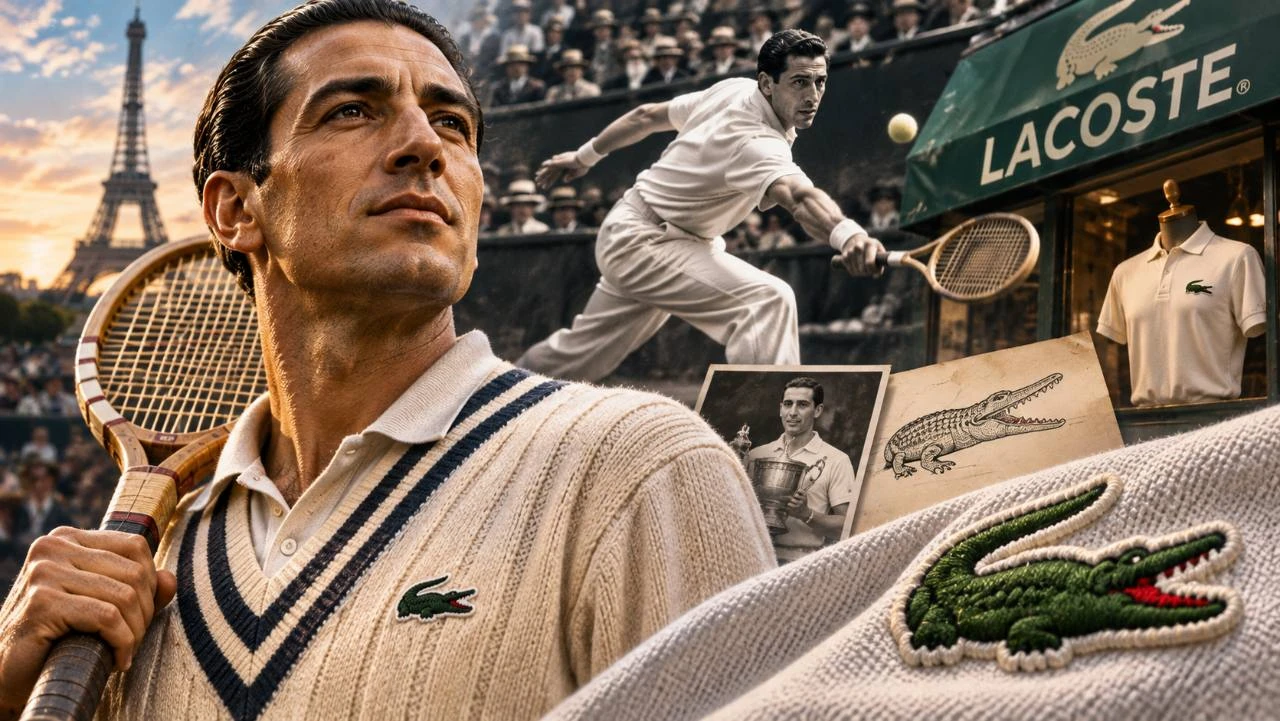
AI-generated editorial montage. The scenes, portrait and apparent archival photograph are imagined elements.
The crocodile was on René Lacoste’s clothes before it was a company logo. The French tennis champion had a nickname, a friend who could turn it into an image and a highly visible place to wear it. When Lacoste and knitwear manufacturer André Gillier started their company in 1933, they could put an established personal symbol on a shirt made for customers. Lacoste corporate archives: company history
Where the crocodile nickname came from
Lacoste’s archive places the story in Boston in 1923. According to the company, his team captain promised him a crocodile-skin suitcase he had admired if he won an upcoming match. He lost, but the story reached the press and the animal became associated with his tenacity. Accounts in English also use alligator. The suitcase anecdote comes from the brand’s history, while the later embroidered emblem and advertisements provide a material record of what the nickname became. Lacoste archives: Robert George and the crocodile
Who drew the crocodile?
Lacoste credits Robert George with drawing the crocodile in 1927. René had it embroidered on the blazers he wore to the court. Placing the motif on the outside changed who could see it. A spectator could recognize the animal without reading the player’s name. The motif already carried a story by the time it moved from the blazer to the polo. Lacoste archives: Robert George and the crocodile
What the shirt added to the business
The 1933 partnership paired an athlete’s ideas with the capacity to manufacture knitwear. The short sleeves, collar and textured cotton piqué made the shirt suitable for movement while retaining a dressed appearance. The crocodile stayed visible on the chest, turning the product itself into a place to recognize the brand. The company claims priority for putting a visible logo on clothing. That sweeping claim depends on what counts as a clothing logo and is harder to establish than the date of the partnership. Lacoste corporate archives: company history
The company’s later history follows the polo into settings far from competitive tennis, from American preppy fashion to French rap. Each audience could wear the same emblem with a different meaning. That was a commercial advantage: a symbol born on one player’s jacket could survive changes in the people, clothes and places associated with it. Lacoste: the brand beyond tennis
Why the player mattered to the logo
Lacoste won seven major singles titles. With Jacques Brugnon, Henri Cochet and Jean Borotra, he belonged to the French group known as the Four Musketeers. The International Tennis Hall of Fame records the group’s role in France’s Davis Cup success. That record matters to the business story. The emblem had already circulated in a sport with international audiences, so the new company could attach a recognizable identity to a practical garment. International Tennis Hall of Fame: René Lacoste
Related reading · Adidas and Puma’s origins · Kia’s tribute to Rafael Nadal
FAQ
Frequently Asked Questions
Why is the Lacoste logo a crocodile?
It comes from René Lacoste’s nickname, which the company traces to a 1923 suitcase story and his tenacity on court.
Who designed the Lacoste emblem?
The brand credits Robert George with the 1927 drawing.
When was Lacoste founded?
René Lacoste and André Gillier founded the company in 1933.
PRESDA Dispatch
Stay Informed. Stay Aware.
A sharp briefing across AI, gaming, sport, business, world affairs, paparazzi, and lifestyle.