
Reuters at 175: From carrier pigeons to a global news agency
Paul Julius Reuter linked markets through pigeons and telegraph cables. A global newsroom and electronic market services grew out of that early business.
Editorial illustration supplied to PRESDA.
On November 13, 1851, Paul Julius Reuter sent his first message along the new undersea cable linking Dover and Calais. In November 2026, Reuters marked 175 years from that transmission. The cable mattered to people who needed prices from another market before the opportunity to act had passed. That commercial problem helped create an international news service. Reuters 175th anniversary
Why the pigeons came first
In 1850 Reuter operated from Aachen, then in Prussia. Homing pigeons bridged a gap in telegraph service between Aachen and Brussels and carried financial information. In London the next year, he used the cable connection to serve customers on both sides of the Channel. His advantage depended on how quickly he could carry useful information between two places. Thomson Reuters company timeline
From market prices to international reporting
The business expanded beyond prices to news for newspapers. As the network reached outside Europe, correspondents and access to transmission lines mattered as much as proximity to financial exchanges. The commercial value was in gathering information in one place and distributing it to many subscribers, each of whom could reach an audience of their own. Thomson Reuters company timeline
What Paul Julius Reuter was selling in 1851
Reuter had worked in publishing in Berlin and spent time in Paris before returning to London in 1851. His office at the Royal Exchange offered a service whose value depended on a narrow margin of time: a market price is more valuable when it arrives before it has spread to competitors. A network of customers also let the agency sell information repeatedly. That was the business problem the telegraph helped solve. The portrait below, taken by Nadar around 1860, shows Reuter in the first decade of the London agency. Source · Science Museum Group, Paul Julius Reuter Source · Reuters at 175
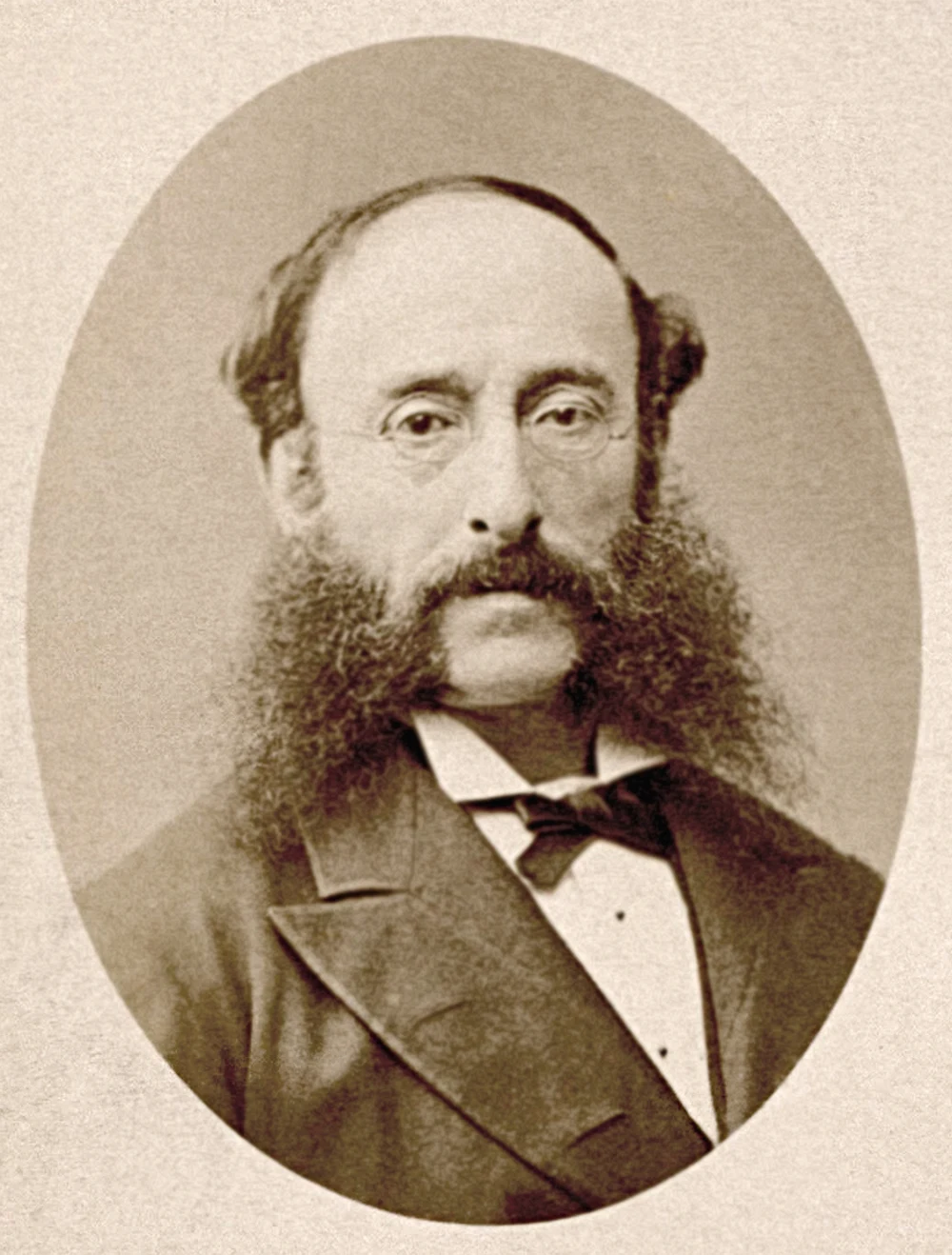
Paul Julius Reuter, photographed by Nadar ca. 1860. Bibliothèque nationale de France, public domain.
Image recordHow overseas news became an agency business
The Science Museum Group records that in 1870 Reuters, Havas and Wolff formed an international news-agency arrangement. A subscriber could obtain information from beyond the reach of its own newsroom, while agencies gained an incentive to maintain networks rather than depend on isolated reports. Such arrangements also concentrated power over which dispatches circulated. A wire’s reach has always depended on who gathers the information, who transmits it and who buys the result. The route is part of the business story, alongside the technology that made messages faster. Source · Science Museum Group, Paul Julius Reuter
What the Trust Principles protect
Reuters adopted its Trust Principles in 1941. The commitments cover integrity, independence and freedom from bias. Thomson Reuters says the arrangements for safeguarding them were reinforced in 1984, when Reuters became publicly traded and the Founders Share Company was established. The share mechanism is a governance measure. The daily work of reporting still requires verification, attribution, correction and judgment about what a dispatch can say. A reader can trace the principles separately from any individual editorial decision and see how the owners describe the agency’s obligations. Source · Thomson Reuters, Trust Principles
Why the shift from the cable to the terminal matters
Reuters’ Stockmaster sent market data electronically in the 1960s. For a financial customer, that changed how information arrived and made it an ongoing service. For an editor, the similar change from a fixed wire feed to digital distribution meant that a report could be updated and accompanied by pictures, video or other material for several outputs. Both businesses sell timely information, but their customers use it for different tasks. The difference between transmitting a message and building a service around it also shows up in PRESDA’s history of the first text message. Source · Reuters at 175
The rules behind the wire
Reuters adopted its Trust Principles in 1941 amid wartime concern for the agency’s independence. They require integrity, independence and freedom from bias. The principles are governance commitments that outlasted changes in ownership. Their purpose is to protect the credibility of the service that customers rely on. Thomson Reuters Trust Principles
When the screen became part of the business
The Reuters Monitor brought electronic access to financial information in the 1970s. Later, Monitor Dealing let foreign-exchange dealers transact through video terminals. The company moved from delivering information toward helping customers use it while working. In news, digital delivery likewise let customers receive text, photographs and video through a connected service. Thomson Reuters company timeline
Thomson acquired Reuters Group in April 2008, creating Thomson Reuters. The Reuters name still identifies the international news agency within that wider group. Across 175 years, the means of delivery changed repeatedly. The business continued to depend on readers and clients trusting information gathered far from their own desks. Thomson Reuters 2008 annual report
How an agency reports across borders
A wire story can start with a single dispatch and grow as journalists in several cities confirm events and gather reactions. Reuters’ anniversary archive illustrates that process with the 1974 Turkish invasion of Cyprus. Its first alert came from Ankara, and teams in Nicosia, Athens, Washington and New York helped build the broader report. The episode shows how Reuters turned its geographic spread into a reporting advantage. An alert could reach subscribers quickly while a second version explained what the news meant elsewhere. Source · reutersagency.com
Why Reuters sold news and data together
Stockmaster, introduced in 1964, sent market prices over transatlantic cables. Its importance was commercial as well as technical: Reuters could supply customers directly instead of depending entirely on intermediaries. The company’s later history traces the same demand for fast, usable information into electronic dealing and distribution. When Thomson acquired Reuters in 2008, the Trust Principles remained the published framework for protecting editorial independence. The combination brought news into a larger information business whose customers also needed financial, legal and other professional data. Source · reutersagency.com Source · thomsonreuters.com Source · thomsonreuters.com
FAQ
Frequently Asked Questions
When was Reuters founded?
Its London origins date to 1851. The agency marks November 13 as the date of Reuter’s first transmission over the Dover–Calais cable.
Why did Reuter use pigeons?
They carried financial messages across a gap in the telegraph network between Aachen and Brussels.
PRESDA Dispatch
Stay Informed. Stay Aware.
A sharp briefing across AI, gaming, sport, business, world affairs, paparazzi, and lifestyle.