SAMSUNG EXPANDS BEYOND CHIPS TO BUILD AN AI DATA CENTER EMPIRE
Samsung SDS is building a GPU-ready data center in Gumi, while six Samsung affiliates are investing $1 billion in KKR-backed Helix.
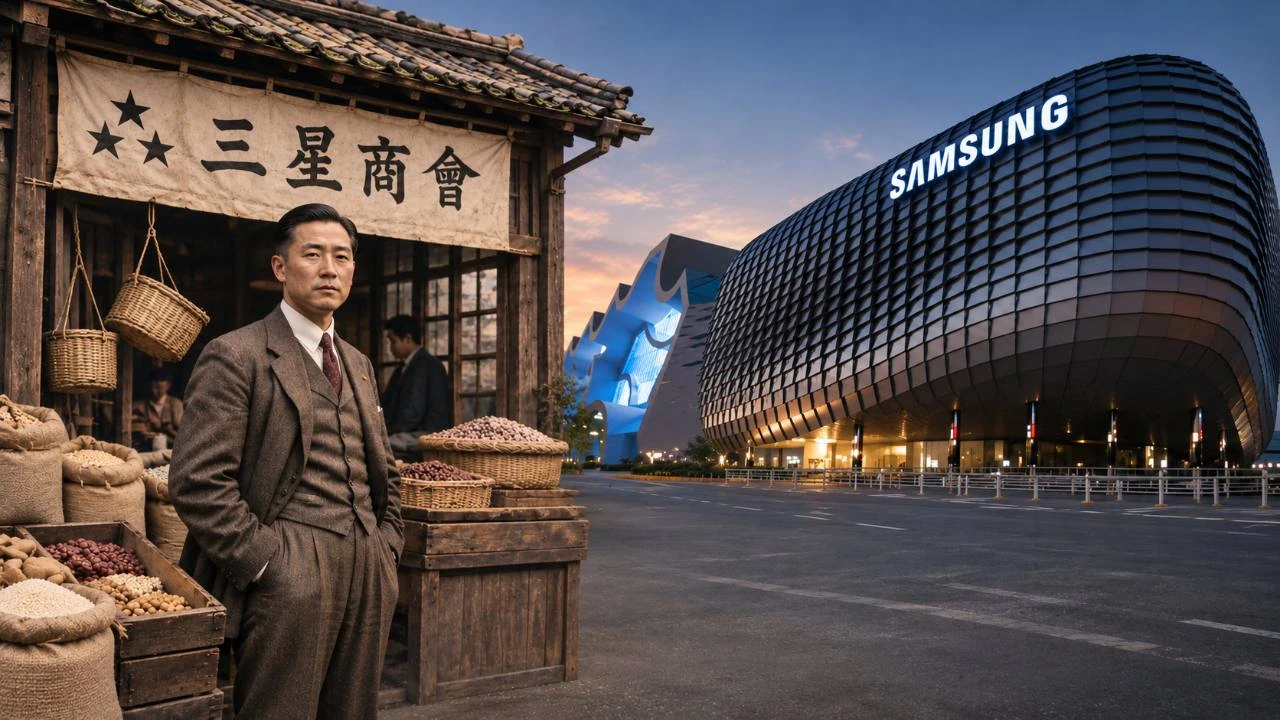
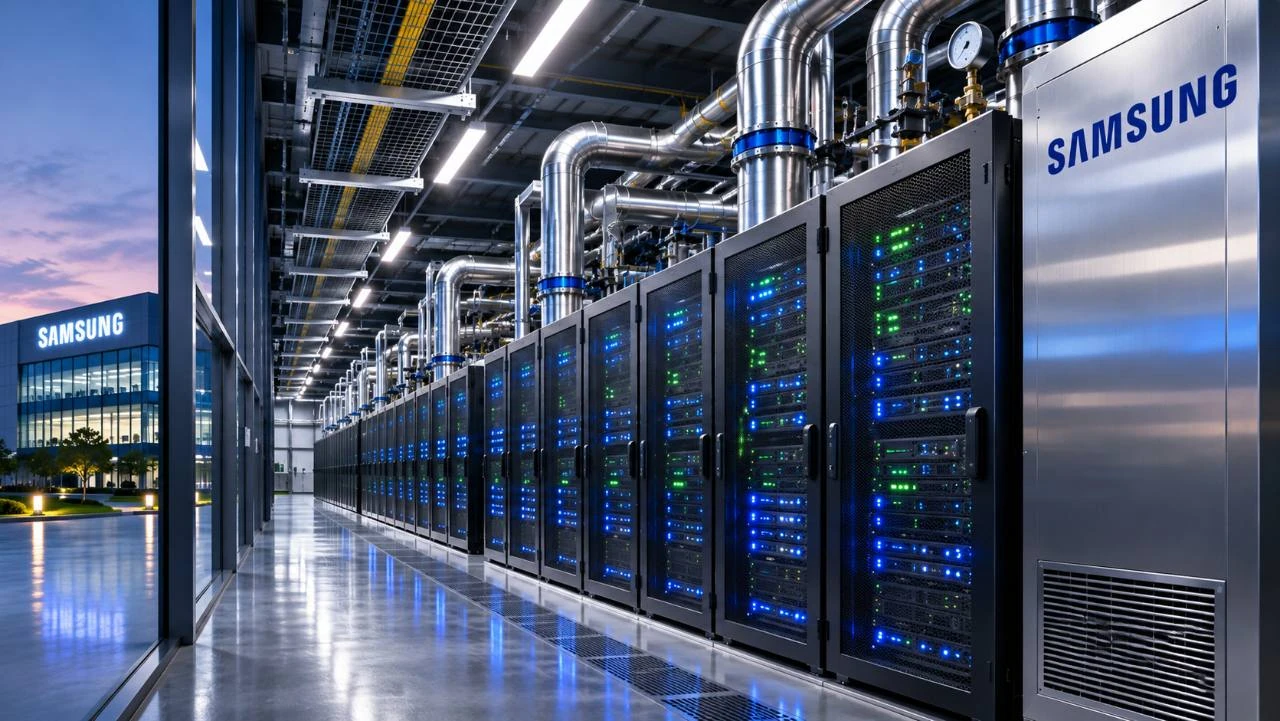
Editorial illustration supplied for PRESDA. It does not depict the Gumi site.
A Samsung chip can sit inside an AI server for years. Samsung also wants a role in the building that feeds that server power, carries away its heat and keeps it available to customers. The clearest example is in Gumi, South Korea, where Samsung SDS announced groundbreaking on November 2. A separate $1 billion commitment by six Samsung affiliates to Helix Digital Infrastructure extends the plan to projects outside Korea. Samsung SDS Samsung Global Newsroom
What Samsung SDS is building in Gumi
The project occupies a site of about 46,000 square metres in Gongdan-dong. Samsung SDS lists 60 megawatts of initial power capacity and a phased design that could reach 120 MW. Construction is scheduled for completion by the end of 2028. These are project specifications, so the capacity figure cannot tell us how many accelerators customers will install, how much power the site will draw in practice or when a tenant can begin training a model. Samsung SDS
Three investment figures, three different commitments
Samsung SDS disclosed ₩427.3 billion for the Gumi project. Samsung’s roughly ₩60 trillion plan covers a broader set of investments in southeastern Korea, including robotics, batteries and components. The separate $1 billion Helix commitment comes from six affiliates combined. Treating those numbers as three estimates for the same site would badly misstate the scale of the construction project. Samsung SDS Samsung Global Newsroom
| Commitment | Scope |
|---|---|
| ₩427.3 billion | Gumi construction project |
| About ₩60 trillion | Broader investment in southeastern Korea |
| US$1 billion | Combined investment by six affiliates in Helix |
Why a GPU data center needs different cooling
A rack packed with high-performance graphics processing units concentrates heat. Samsung SDS plans liquid cooling in dense GPU areas and air cooling in parts of the building housing network and storage equipment. The distinction matters because a data center holds many different kinds of hardware. Designing each room for a different power density leaves room to deploy new systems later. Backup power and redundant equipment are part of the design because an interruption can stop a costly computing run. Samsung SDS
Samsung SDS wants two kinds of customer
Some customers will use computing capacity on GPUs that Samsung SDS owns and runs. Others will rent space and install their own accelerators through colocation. Renting computing capacity shifts more infrastructure work to the provider. Colocation gives clients more say over the machines they use, while the operator remains responsible for the facility. Samsung also expects affiliated manufacturers to use Gumi for workloads such as training robots for precision tasks. Its investor briefing describes related work supplying GPU capacity to the public sector. Samsung SDS Samsung SDS investor briefing
What the Helix deal adds
What customers will need to compare
Facility power is a useful measure when comparing buildings, but a buyer budgeting an AI project needs a different set of numbers. The accelerator model, network between servers and available memory all affect which workloads fit. A model distributed across multiple machines can also spend time exchanging data rather than computing. The Gumi announcement leaves the GPU vendor open, so the 60 MW starting figure is best read as a design reference. Detailed service offers will tell buyers more about the capacity they can rent. Samsung SDS
Helix is an infrastructure company created by KKR and led by former Amazon Web Services chief Adam Selipsky. Its remit includes construction and operation, power generation and transmission, and fibre networks. Samsung C&T brings engineering and construction expertise, Samsung SDI brings backup battery systems and Samsung Electronics has cooling specialist FläktGroup, which it acquired in 2025. The affiliates’ investment creates opportunities to supply projects. Actual contracts and operating capacity will show how much business follows. Samsung Global Newsroom
The two projects place Samsung on different sides of the same market. At Gumi it plans to run the facility and sell capacity. Through Helix it is investing alongside other companies in an infrastructure developer. Watch for completion of construction, tenant commitments and operating capacity as separate milestones. The ability to build on several sides of a market has a precedent in Samsung’s evolution from food trading to global technology.
FAQ
Frequently Asked Questions
When is Gumi expected to open?
Samsung SDS targets construction completion by the end of 2028. The company’s announcement did not give a date for customer service to begin.
How large is the Gumi project?
The design starts at 60 MW of power capacity and could expand in phases to 120 MW.
Does the $1 billion fund Gumi?
It is a separate commitment by six Samsung affiliates to Helix Digital Infrastructure.
PRESDA Dispatch
Stay Informed. Stay Aware.
A sharp briefing across AI, gaming, sport, business, world affairs, paparazzi, and lifestyle.