LeBron James: The Science Behind Basketball Longevity
LeBron's 24th NBA season and Philadelphia move, with career milestones and the evidence on sleep, strength, nutrition and recovery separated from speculation.
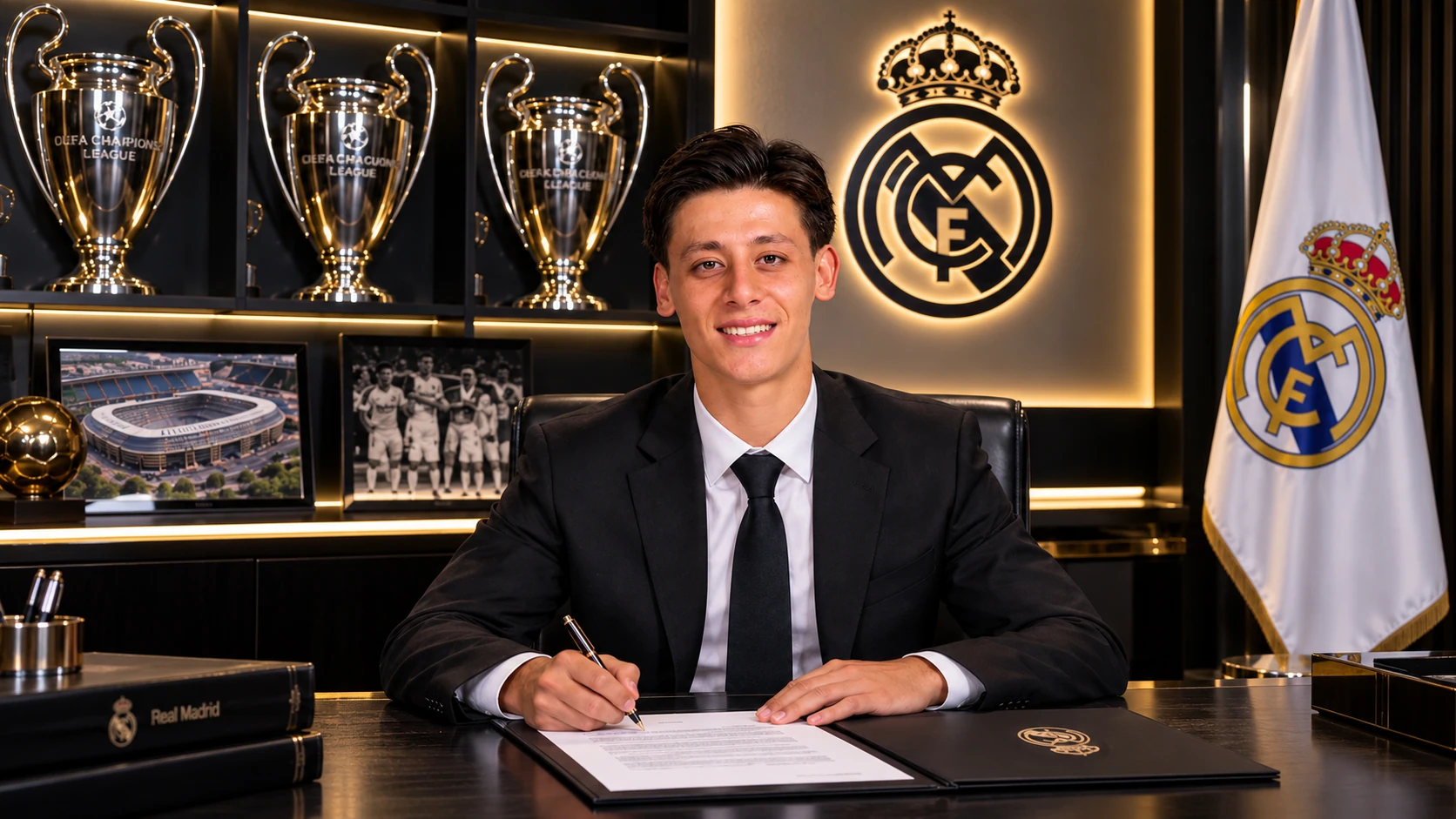
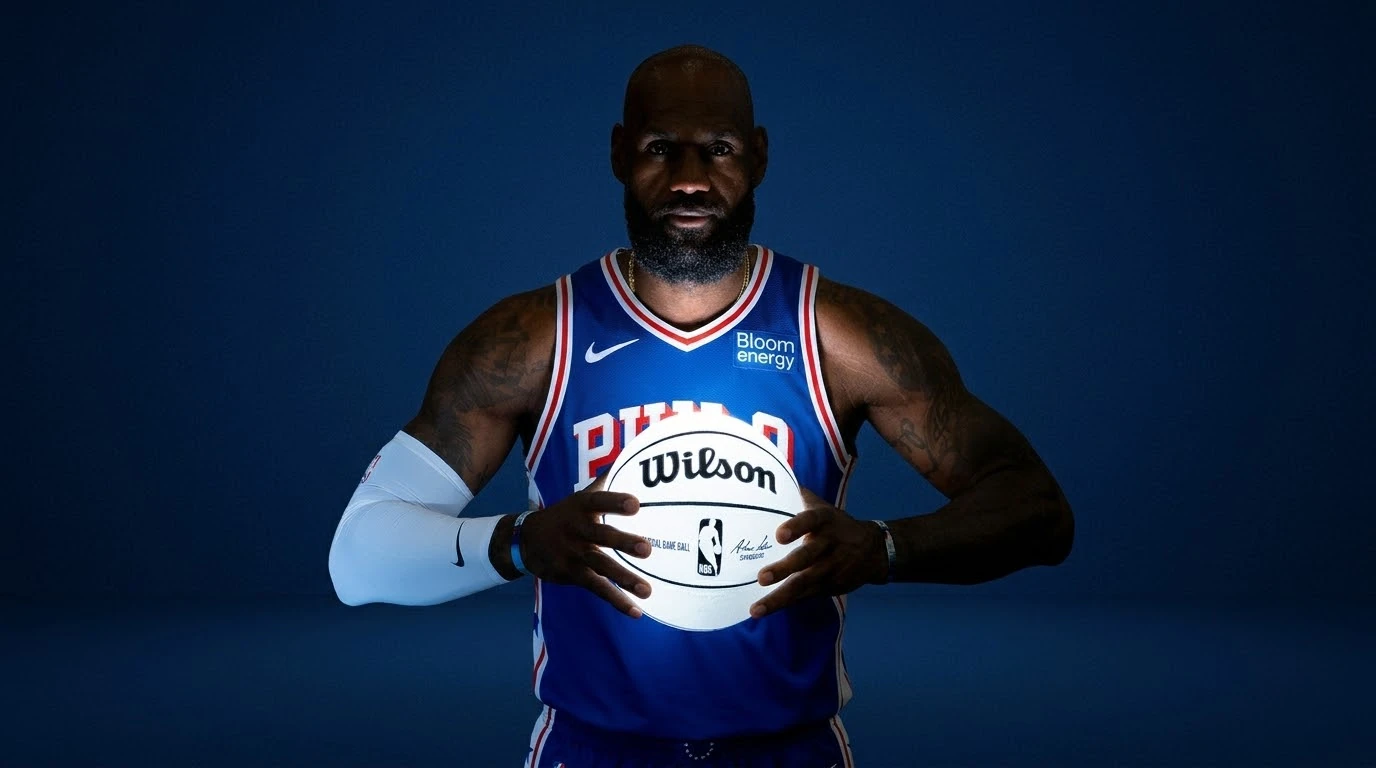
PRESDA editorial illustration generated with AI. Embedded metadata in the supplied image identifies generative-AI creation. This is not an official 76ers portrait or a photograph of a signing ceremony.
LeBron James entered a record 24th NBA season in 2026, extending a career that has outlasted several basketball eras. NBA's season milestone The scientific question is not whether his longevity is unusual. It is how to explain it without turning a remarkable individual into an advertisement for an unproven recovery treatment.
The strongest answer combines what can be documented about his career, what he and his trainer have publicly described, and what research can establish about training and recovery. Those are three different kinds of evidence. A player interview can tell us what someone says he does; a trial can test an intervention in a particular population. Neither gives outside observers complete access to James's physiology, medical history or current daily programme.
Philadelphia is a confirmed move, not a jersey rumor
The Philadelphia 76ers announced James's signing on July 27, 2026. Official 76ers announcement That confirmation establishes the move independently of the supplied portrait. The image used here contains embedded metadata identifying generative-AI creation. It is labeled as an editorial illustration, not an official team portrait, a signing photograph or evidence of a particular event.
The Associated Press reported that James left the Lakers after eight seasons, following earlier spells with Cleveland and Miami. His 2025-26 regular-season averages were 20.9 points, 6.1 rebounds and 7.2 assists. Those figures describe the completed Lakers season, not his new Philadelphia campaign or a prediction of what he will contribute there. AP's report on the move
The change of team adds a new test to an old achievement. Staying valuable is not identical to repeating the same role indefinitely. In basketball terms, a veteran can influence possessions through passing, positioning and choosing when to attack, alongside physical output. That is an analytical framework for understanding longevity, not a claim that public statistics reveal the precise reason James has remained effective.
What the career records actually measure
James passed Kareem Abdul-Jabbar for the NBA's regular-season scoring record on February 7, 2023, then reached 40,000 regular-season points on March 2, 2024. These are distinct milestones within one statistical category. Regular-season points must not be silently combined with playoff points to produce a more dramatic total. NBA's record of milestone baskets
His versatility also has a documented numerical basis: in 2022 he reached the combination of 30,000 points, 10,000 rebounds and 10,000 assists. NBA's account of the milestone That achievement captures several kinds of contribution over time. It does not measure tendon health, sleep quality or the effectiveness of any supplement. Basketball records are outcomes to explain, not laboratory measurements of their causes.
The league lists his birth date as December 30, 1984, making him 41 on this article's October 25, 2026 reporting date. NBA player profile Entering a 24th season means beginning that campaign after 23 previous ones. It does not mean he has completed 24 full seasons, played every scheduled game or avoided injury throughout that period. Those distinctions keep the scale of the achievement accurate.
What James and Mike Mancias have actually described
In a 2018 interview with Tim Ferriss, James and longtime athletic trainer Mike Mancias discussed recovery as a continuous responsibility. They emphasized sleep and described measures such as a dark, comfortable room and fewer electronic distractions before bed. That is a dated firsthand account, not a verified inventory of his 2026 routine. Original interview transcript
Public descriptions should be read with two limits in mind. First, a routine can change with age, travel, injury and the season. Second, practices presented together cannot be separated into individual causes simply because the athlete succeeds. A training staff may use several tools for different purposes. Without a controlled comparison, we cannot calculate how many additional seasons any one tool gave James, or assign a percentage of his performance to it.
Sleep: a foundation, with limits to the evidence
A 2021 expert consensus in the British Journal of Sports Medicine supports protecting athletes' sleep and tailoring interventions to individual needs. It also highlights weaknesses in research design and warns against assuming a universal optimal duration. Sleep and the athlete: consensus review The defensible message is consistency and adequate opportunity for recovery, not a claim that copying a star's reported number of hours guarantees a comparable result.
Travel and late competition complicate the practical problem. Time allocated to sleep is not identical to sleep obtained, and a favorable wearable score does not answer every question about readiness. For a professional team, a useful intervention must fit the real schedule and the individual. For readers, the transferable lesson is to take recurring sleep problems seriously rather than treating fatigue as something that can always be purchased away with another device.
Strength and conditioning are about capacity, not appearances
The National Strength and Conditioning Association's position statement on older adults supports resistance training as a means of maintaining or improving muscle strength and function. Its population is not the same as a 41-year-old NBA player. NSCA position statement The research provides context for why strength remains trainable with age; it does not disclose James's programme or validate a celebrity workout copied from a short video.
Basketball asks a body to accelerate, brake, land, change direction and withstand contact. From a performance perspective, useful conditioning has to serve those tasks and leave enough capacity to practice and compete. More exhaustion is not automatically better preparation. A spectacular gym clip can show one exercise but cannot reveal the loads, progression, rest periods or clinical decisions that make a full programme appropriate for a particular athlete.
The difference between an exercise and a programme matters. Two people can perform the same movement with very different histories and tolerances. A professional athlete's supervised workload is not a template for an inexperienced reader. Nor does visible muscularity establish how well someone will tolerate repeated games. This article explains principles; it does not prescribe James's unverified training schedule or promise that a particular circuit reproduces his durability.
Nutrition: support the work before selling the supplement
The joint sports-nutrition position statement by Thomas, Erdman and Burke treats food, fluid and timing as parts of preparation and recovery. Nutrition and Athletic Performance In practical terms, the question is whether intake supports the activity being performed and the recovery required afterward. That is different from announcing a universal menu for longevity. PRESDA has not verified James's current calorie intake, full diet or individualized nutrition plan.
The International Olympic Committee's expert discussion is equally clear that supplements do not compensate for an inadequate diet and that product quality and contamination can matter. IOC statement on supplements A product associated with an athlete is not automatically the cause of his success. Commercial visibility, biological plausibility and demonstrated benefit are separate questions, and the answer to one does not settle the others.
The same caution applies to hydration claims. A large professional athlete's reported fluid intake should not be converted into a target for every reader, regardless of body size, climate or exercise. The meaningful question is individual need and context. Similarly, an account of a meal on one day cannot establish a consistent diet across years. Detailed numbers can make a story sound scientific while actually giving a false impression of precision.
Recovery tools: feeling better is not the same as adapting better
A randomized study by Roberts and colleagues, published in 2015, found that repeated cold-water immersion after resistance exercise could attenuate aspects of muscle adaptation compared with active recovery. Original cold-water study That does not prove every use of cold is harmful or establish an effect on James. It demonstrates why the timing, purpose and outcome of a recovery intervention matter.
An athlete trying to feel ready for another game soon may face a different decision from someone trying to maximize adaptation across a training block. Soreness, comfort, strength gains and competitive performance are not interchangeable endpoints. Claims about compression, cold, heat or other equipment should specify which outcome was measured, in whom and over what period. A device can be part of a routine without being established as the explanation for a record-breaking career.
Managing work is more complicated than taking days off
The IOC's consensus on training load and injury risk treats load as a combination of sporting and non-sporting stresses, with attention to monitoring and individual responses. IOC consensus on load and injury It does not supply a formula that guarantees an injury-free season. Training can build capacity, while poorly matched demands can create problems; the decision requires context rather than a slogan about either constant work or constant rest.
For James, outside observers cannot reconstruct the full decision-making process from a public minutes total. Game intensity, practice, travel and the player's condition are not identical from one week to another. A missed game does not, on its own, identify a medical mechanism, and a productive game does not prove a treatment worked. Explaining longevity responsibly means accepting those limits while still recognizing the organizational effort required to sustain elite performance.
The missing experiment: another LeBron
There is no identical James who spent the same career without the same support system. That missing comparison matters. Exceptional initial ability, learned skill, resources, opportunities, motivation and chance can all be relevant explanations, but this article cannot assign their relative weights. Selecting an extraordinary survivor and then crediting his most marketable habit would confuse a compelling narrative with a causal finding.
The useful lesson is less glamorous and more demanding: durable performance requires repeated decisions, adjusted to the person and the task. James's Philadelphia chapter supplies another opportunity to observe the result, not permission to invent private medical data. For a different view of how elite sport builds sustained competitiveness around players and institutions, read our examination of PSG's transformation under QSI. Longevity remains an achievement to study carefully, not a secret recipe to sell.
FAQ
Frequently Asked Questions
What is this PRESDA article about?
LeBron's 24th NBA season and Philadelphia move, with career milestones and the evidence on sleep, strength, nutrition and recovery separated from speculation.
Which category does this story belong to?
This story is part of PRESDA's Sport coverage.
Who published this article?
LeBron James: The Science Behind Basketball Longevity was published by PRESDA Editorial on PRESDA.
PRESDA Dispatch
Stay Informed. Stay Aware.
A sharp briefing across AI, gaming, sport, business, world affairs, paparazzi, and lifestyle.