THE TERRACOTTA ARMY: WHY CHINA BURIED THOUSANDS OF SOLDIERS
Why Qin Shi Huang’s burial complex contained thousands of clay soldiers. The 1974 discovery, ancient craftsmanship and myths archaeology can test.
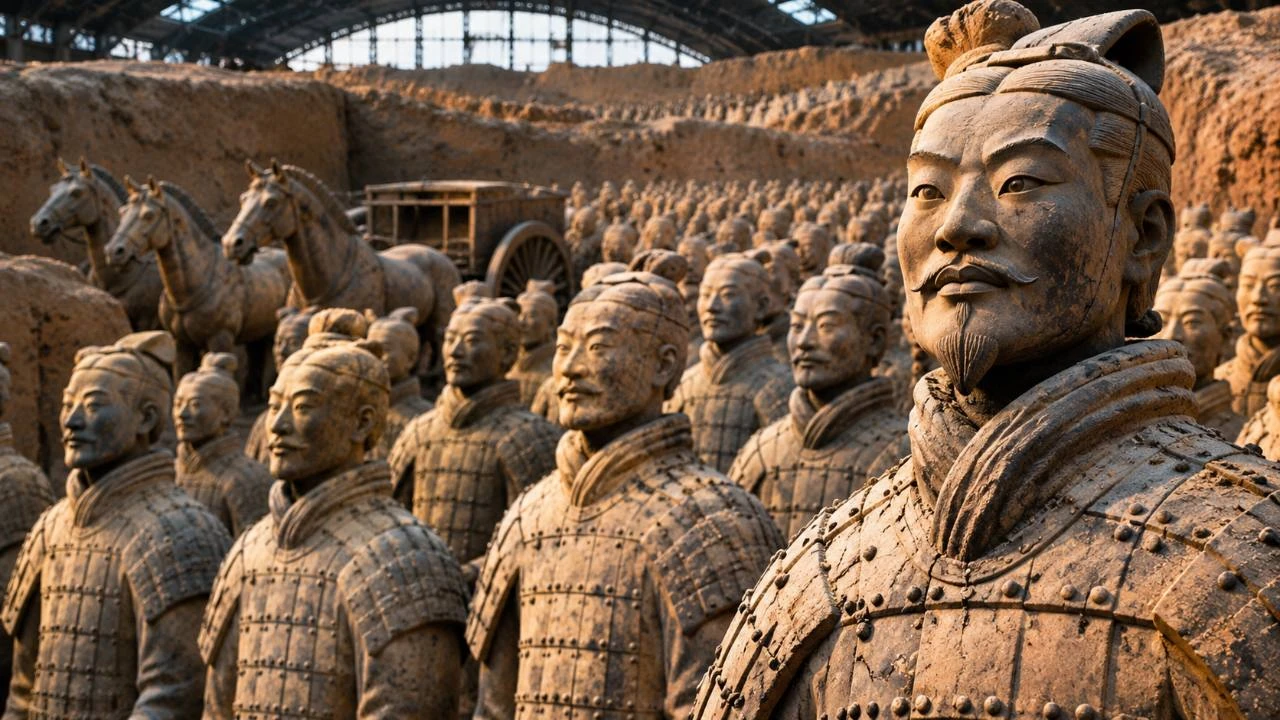
AI-generated historical illustration supplied for PRESDA. The arrangement, faces, horses and hall are a visual reconstruction, not an archaeological photograph or a record of a specific excavated formation. Editorial image supplied for PRESDA.
The soldiers were made of clay, but the power they represented was real. Thousands of life-size figures formed part of the burial landscape of Qin Shi Huang, the ruler who established China’s first unified empire in 221 BCE. The Terracotta Army was intended to extend imperial order into the world of the dead. It is a funerary army of sculptures, not evidence that thousands of living soldiers were buried standing in its ranks. UNESCO: Mausoleum of the First Qin Emperor
1974: farmers uncover an imperial project
In March 1974, local farmers digging a well near Xi’an in Shaanxi province encountered fragments of terracotta figures. The site museum identifies that discovery as the beginning of the army’s modern excavation. What looked like broken clay led to organised pits containing warriors, horses and traces of military equipment. The familiar museum halls belong to the modern effort to protect and explain those remains. Emperor Qinshihuang’s Mausoleum Site Museum: discovery and army
Who was Qin Shi Huang?
The Qin ruler conquered rival states and proclaimed himself First Emperor. His government standardised important systems, including writing, currency and measurements, while expanding central administration. Those achievements accompanied coercive power and immense demands on labour. The army should therefore be read as more than a display of artistic ambition: it materialised the resources and hierarchy of a state capable of organising production on a vast scale. Metropolitan Museum of Art: Qin dynasty and the imperial tomb
Why bury an army of statues?
The figures belonged to a funerary vision in which the ruler retained the personnel and structures of power after death. Infantry, archers, cavalry and chariots made military order visible underground. This is the strongest interpretation of their purpose, grounded in their setting and arrangement. It does not give historians access to every private thought of the emperor or justify treating a supernatural protective role as a proven effect. Asian Art Museum: the underground army
The army was only part of the burial landscape
UNESCO describes a mausoleum complex covering 56.25 square kilometres, with hundreds of associated sites. The imperial mound and the warrior pits are related, but they are not the same chamber. That distinction prevents a common misunderstanding: finding the army did not mean archaeologists had opened every part of the emperor’s tomb. The site’s scale also explains why conservation is a long-term undertaking. UNESCO: Mausoleum of the First Qin Emperor
Thousands of figures, not thousands of proven portraits
Different faces, hairstyles, armour and poses make the ranks feel individual. Yet visual variety alone cannot establish that every figure copied a named living soldier. Archaeologists compare objects, production traces and context rather than reading identities from expressions. It is reasonable to admire the individuality of the sculptures while leaving the portrait claim open where evidence cannot identify a specific model.
The army was once brightly painted
The earthy appearance familiar today is not the whole ancient design. Conservators have studied pigments laid over lacquer on the figures. Changes after excavation can destabilise those layers, making paint preservation technically difficult. Work described by the Technical University of Munich shows why uncovering an object is only the beginning: controlling how its materials respond to a new environment is part of keeping the evidence intact. Technical University of Munich: preserving the paint layers
A famous weapons myth meets laboratory evidence
Well-preserved bronze weapons encouraged a story that Qin craftsmen invented deliberate chromium anti-rust treatment. A 2019 study in Scientific Reports found no association between surface chromium and preservation. The researchers instead linked much of the chromium to nearby lacquer and identified soil conditions as an important explanation. The revision does not diminish Qin skill. It replaces a memorable technological claim with a better-supported account. Scientific Reports: chromium and bronze weapon preservation
What the buried soldiers still reveal
The Terracotta Army is compelling because it joins intimate detail to institutional scale. A face invites attention; the ranks ask how so much labour was organised and why power demanded such a monument. Its value is not that every mystery has been solved. It is that material evidence allows particular claims to be tested, corrected and sometimes left unresolved without losing the wonder of the discovery.
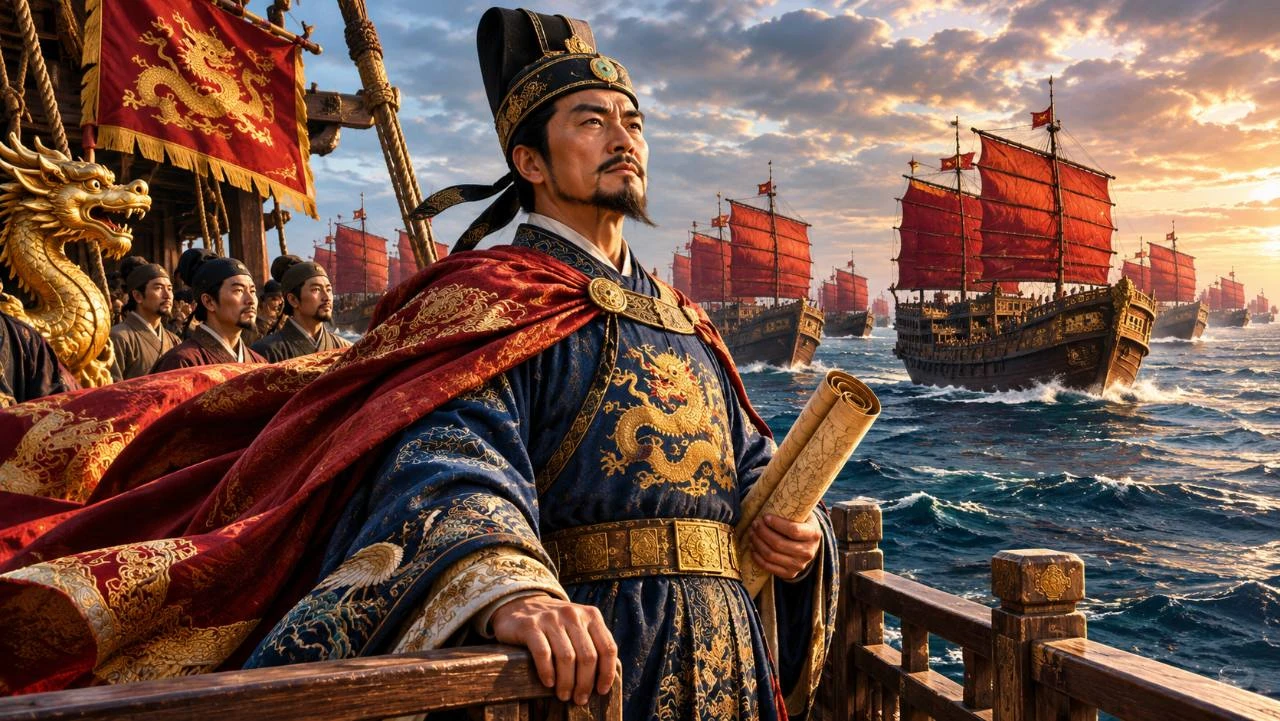
Related reading: Zheng He and a very different projection of Chinese power.
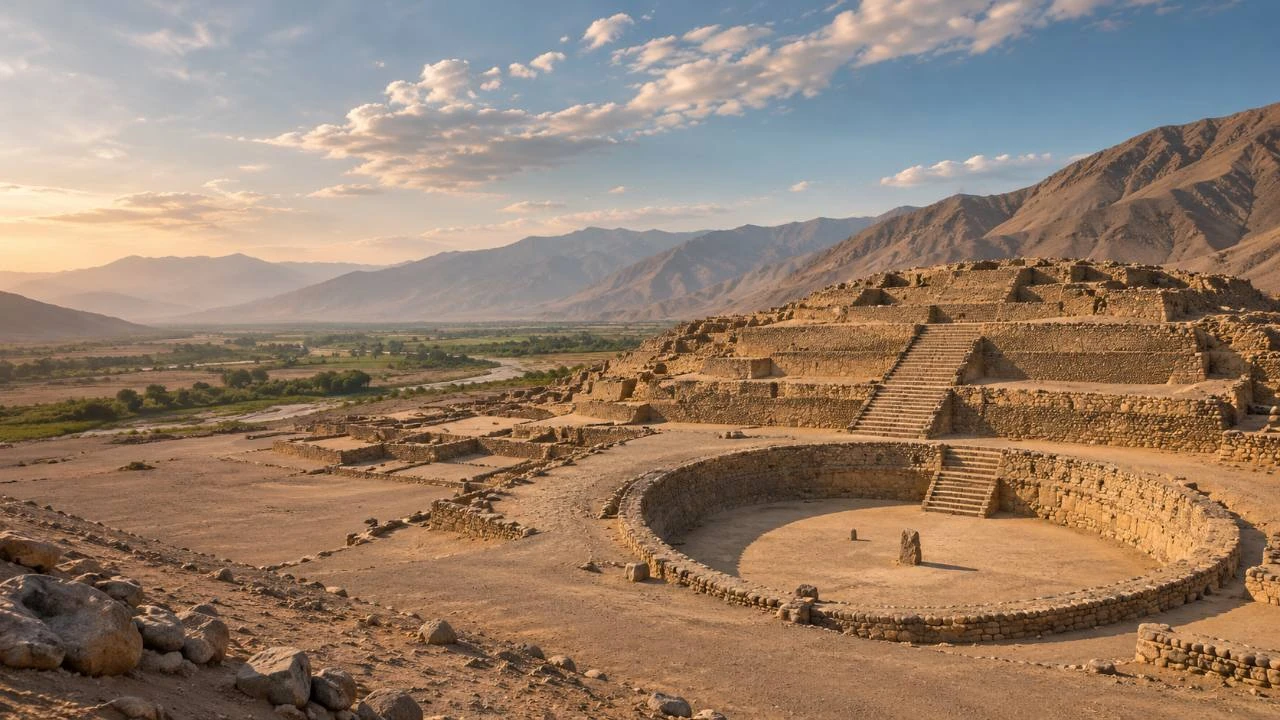
Related reading: Caral and the evidence behind an ancient city.
FAQ
Frequently Asked Questions
When was the Terracotta Army discovered?
Local farmers found fragments while digging a well in March 1974 near Xi’an, in China’s Shaanxi province.
Why were the warriors buried?
They formed part of Qin Shi Huang’s funerary complex, representing military protection and imperial order in the afterlife. The warriors are clay sculptures.
Were the statues originally painted?
Yes. Pigments were applied over lacquer. Preserving surviving paint is difficult because the layers can deteriorate after excavation.
PRESDA Dispatch
Stay Informed. Stay Aware.
A sharp briefing across AI, gaming, sport, business, world affairs, paparazzi, and lifestyle.