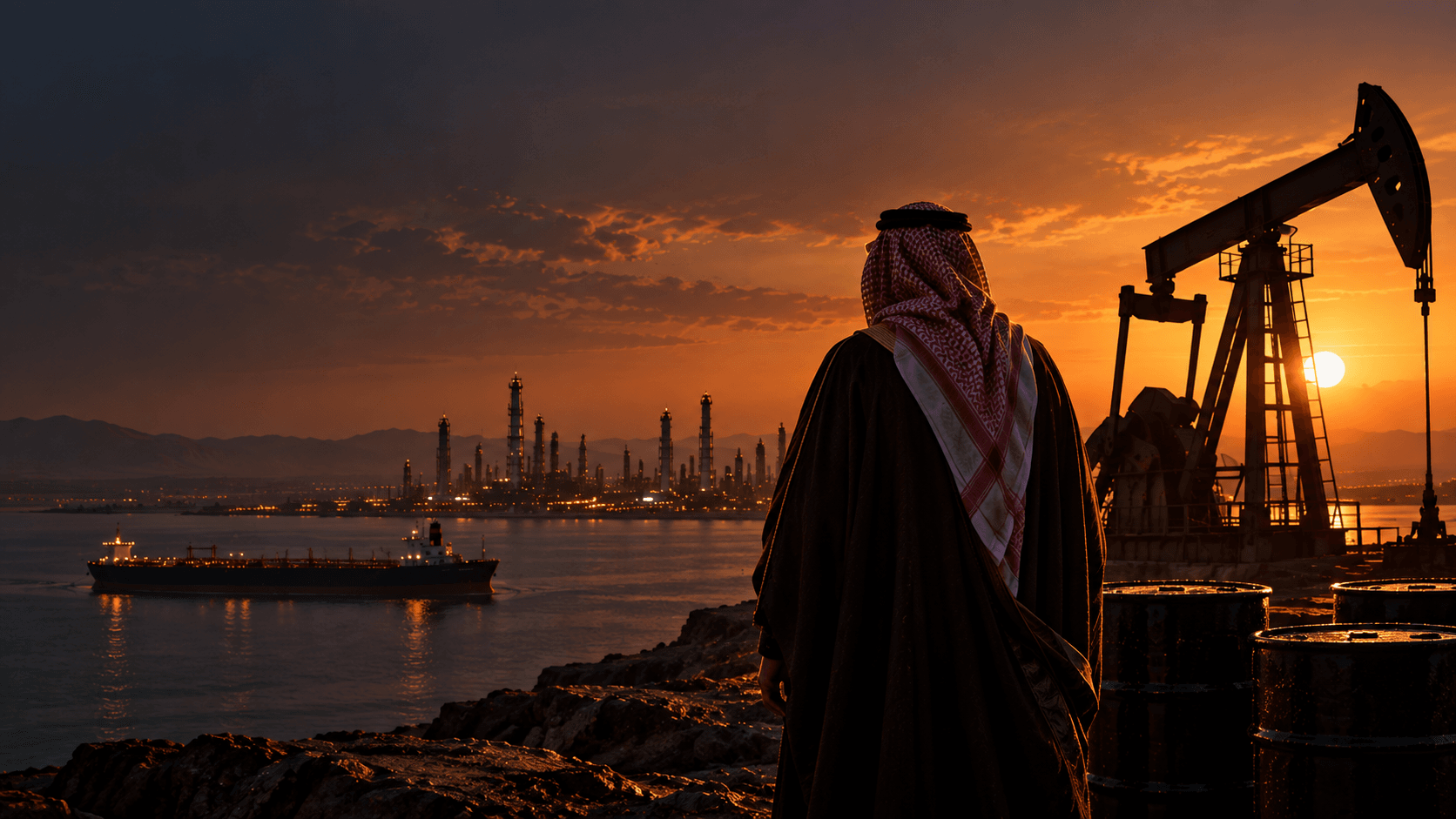
WHO CONTROLS THE WORLD'S OIL? MONEY, POWER AND THE MIDDLE EAST
Oil still moves economies, armies and global markets. But control is not one thing: reserves, production, exports, spare capacity, refining, shipping and price influence all tell different stories.
Oil is not just fuel. It is revenue, logistics, shipping, aviation, petrochemicals, military mobility, inflation risk and diplomatic leverage.
That is why the question who controls the world's oil still matters in 2026, even as electric vehicles, solar power, batteries and efficiency reshape energy markets.
The answer is not one country, one company or one cartel. Oil control is divided across geology, production capacity, exports, spare capacity, refining, shipping routes, trading markets and consumer demand.
Saudi Arabia has exceptional influence. OPEC+ can coordinate a major share of supply. The United States is the world's production giant. Russia remains a major exporter. China has enormous power as a buyer. National oil companies control much of the resource base.
The real oil market is a network of competing powers, not a single throne.
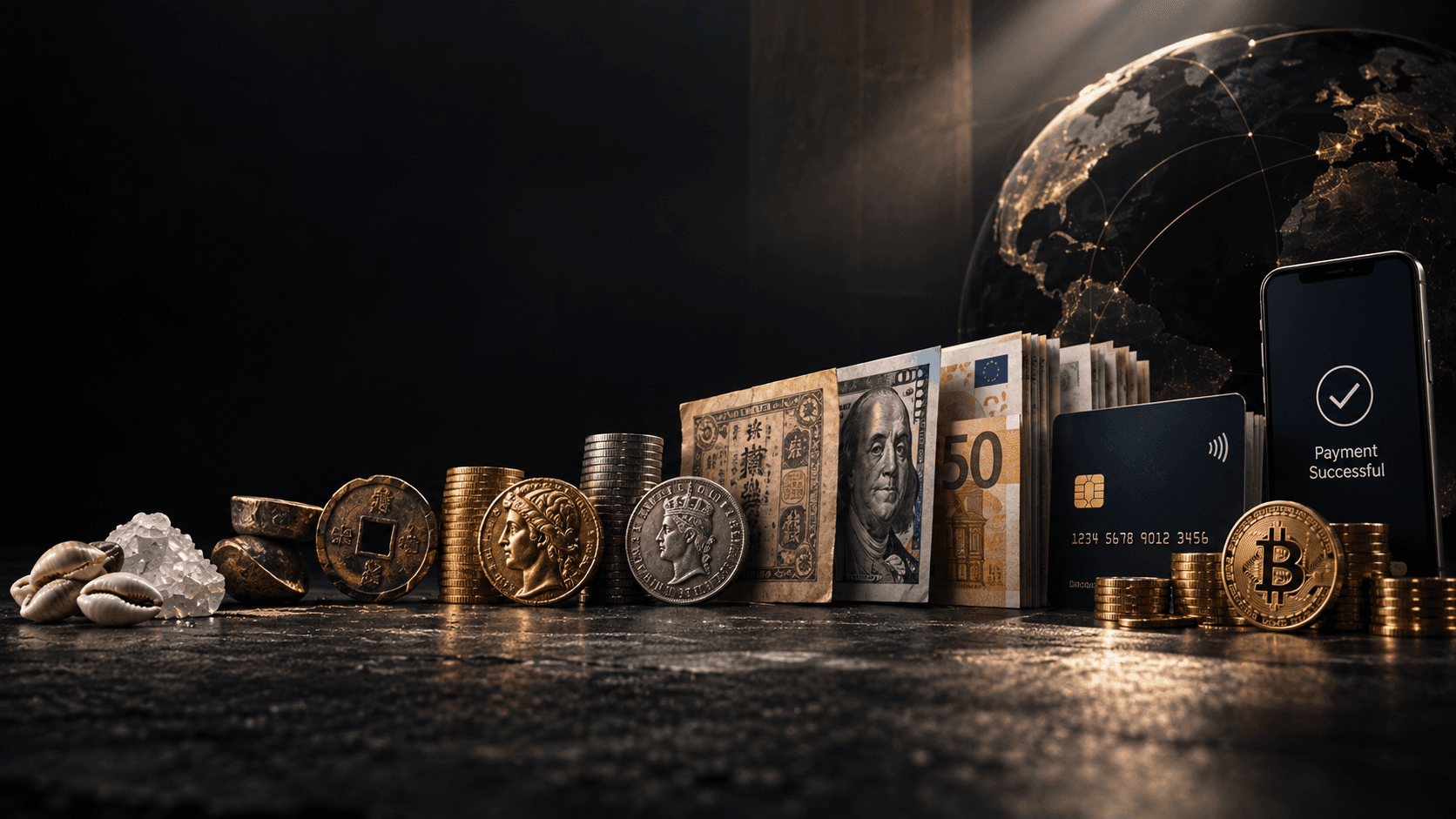
For more PRESDA context on finance and energy power, read Money: How Paper, Gold and Numbers Came to Rule the World and PRESDA's wider Business coverage.
Who Controls The World's Oil?
No single country controls the world's oil. Control depends on which part of the system you mean.
Reserves measure oil that is believed to be recoverable under current definitions, economics and technology. Production measures how much oil or petroleum liquids are actually brought to market. Exports measure who supplies other countries. Spare capacity measures who can add barrels quickly. Refining determines who can turn crude into usable products. Shipping routes decide whether barrels can move safely.
Price influence is different again. It comes from supply, demand, inventories, OPEC+ decisions, wars, sanctions, interest rates, currency movements, refinery demand, futures markets and expectations.
So the most accurate answer is layered: the Middle East controls a very large share of low-cost conventional reserves and exports, the United States controls enormous production and technology, OPEC+ coordinates supply influence, and global markets set prices through constant negotiation between fear, demand and barrels.
Why Oil Still Rules The World
Oil remains strategically important because much of the global economy still runs on liquid fuels.
Cars are changing, but aviation, shipping, heavy trucking, petrochemicals, farming, mining, construction, military logistics and many industrial processes still rely heavily on oil products. Jet fuel is hard to replace. Ships still move global trade. Petrochemicals become plastics, fertilizers, solvents, synthetic materials and medical products.
Renewables are growing quickly, and electric vehicles are reducing oil growth in some transport markets. But lower growth is not disappearance.
Oil remains powerful because the world consumes it every day at enormous scale. Even small disruptions can affect prices, inflation and political stability.
Why Does The Middle East Have So Much Oil?
The Middle East's oil wealth is geological, not mystical.
Large parts of the region were once covered by ancient seas where organic material accumulated in sediment. Over geological time, heat and pressure transformed that organic material into hydrocarbons. Porous reservoir rocks stored oil and gas, while impermeable rocks trapped them underground.
Saudi Arabia, Iran, Iraq, Kuwait, the UAE and neighboring areas sit above some of the world's most productive conventional petroleum systems. The combination of source rocks, reservoir rocks, traps and preservation created extraordinary accumulations.
This was not simply luck in a shallow sense. It was geology, time, basin structure and later human capacity to discover, finance and produce the resource.
Who Has The Most Oil Reserves?
Proved reserves rankings vary by source and definition, but current international datasets consistently place Venezuela, Saudi Arabia, Iran, Canada, Iraq, the UAE, Kuwait, Russia and the United States among the major holders.
Venezuela is often listed with the world's largest proved reserves, much of it extra-heavy crude. Saudi Arabia holds enormous conventional reserves. Canada has vast oil sands resources. Iran and Iraq have very large Middle Eastern reserve bases. Kuwait and the UAE hold major Gulf resources. Russia and the United States remain huge petroleum powers.
But reserve numbers require caution. Proved reserves depend on geology, technology, economics, political reporting, sanctions, investment and definitions. Some datasets include crude oil and condensate; others discuss petroleum liquids or broader resources.
Most important: having the most reserves does not automatically mean producing the most oil.
Who Produces The Most Oil?
The United States has been the world's largest producer of petroleum liquids in recent EIA datasets and the largest crude oil producer in current market reporting.
Saudi Arabia and Russia remain the other giants. Canada, China, Iraq, the UAE, Brazil and Iran are also major producers, depending on whether the metric is crude oil, crude plus condensate or total petroleum liquids.
This creates the central paradox of modern oil: the United States can produce more than anyone while the Middle East still has enormous market influence.
Why? Because Middle Eastern producers, especially Saudi Arabia and some Gulf states, hold large low-cost reserves, export huge volumes and in Saudi Arabia's case maintain spare capacity that can matter during crises.
Saudi Arabia: The Oil Superpower
Saudi Arabia is an oil superpower because it combines huge reserves, low-cost production, major exports, Saudi Aramco's operating scale and unusual spare capacity.
Spare capacity is crucial. A country with barrels it can add quickly has more short-term market influence than a country with reserves locked underground for years.
Saudi Arabia also plays a central role inside OPEC and OPEC+. It can support production cuts, increase supply under some conditions, or shape market expectations through signals.
That does not mean Saudi Arabia controls oil prices. It means Saudi decisions can strongly influence supply and sentiment in a market where many other forces also matter.
Aramco: The Company Built On Oil
Saudi Aramco is one of the most important companies in the world because it sits at the center of Saudi petroleum power.
Its history runs from foreign concession origins to national control and eventual partial stock-market listing. Today it operates enormous upstream assets, refining and downstream businesses, and exports that are central to Saudi state revenue.
Aramco's scale is difficult to compare with ordinary private oil majors because it is deeply tied to the Saudi state and manages one of the world's largest low-cost petroleum resource bases.
That scale does not make the company immune to oil prices. Aramco's profits still rise and fall with global markets, production policy and demand.
What Is OPEC?
OPEC, the Organization of the Petroleum Exporting Countries, was founded in 1960 by Iran, Iraq, Kuwait, Saudi Arabia and Venezuela.
Its purpose was to coordinate petroleum policy among oil-exporting countries and give producers more influence over a market long shaped by Western oil companies.
OPEC became globally famous during the 1970s oil shocks, but its membership, influence and market environment have changed over time.
The biggest misconception is that OPEC simply chooses the exact global oil price. It does not. OPEC can influence supply and expectations, but prices emerge from global markets.
What Is OPEC+?
OPEC+ is the wider coordination framework that includes OPEC members plus non-OPEC producers, most importantly Russia.
Russia changed the equation because it brought one of the world's largest producers into a supply-management conversation with Saudi Arabia and other OPEC states.
OPEC+ works through production targets, voluntary cuts, market signals and negotiations over compliance. Some members overproduce, some underproduce, and market expectations can move before any physical barrel changes hands.
Saudi-Russian cooperation matters, but they are also competitors. Both want revenue, influence and market share.
Does OPEC Have A Monopoly?
No. OPEC does not have a simple textbook monopoly over world oil.
Large volumes are produced outside OPEC and OPEC+: the United States, Canada, Brazil, Guyana, Norway and others all matter. US shale made the non-OPEC supply response much more powerful than it was decades ago.
The better term is market power. OPEC+ can coordinate a major share of global supply, and some members have low-cost barrels and export influence.
But it does not control every barrel, every refinery, every tanker, every buyer or every futures trade.
America's Shale Revolution
The US shale revolution changed global oil geopolitics.
Horizontal drilling and hydraulic fracturing unlocked tight oil formations, especially in places such as the Permian Basin. Production could respond faster than many traditional megaprojects, because shale wells have shorter investment cycles.
This made the United States less dependent on imported crude in volume terms and gave global markets a new flexible supply source.
Shale is not magic. It depends on prices, drilling productivity, capital discipline, pipeline capacity, water, labor and geology. But it broke the old assumption that oil power belonged mainly to traditional exporters.
Why America Still Cares About The Middle East
If America produces so much oil, why does it still care about the Middle East?
Because oil is globally traded. A disruption in the Persian Gulf can affect Brent, WTI, refined-product prices, inflation expectations and the economies of US allies even if the United States imports less from the region than it once did.
Crude grades also differ. Refineries are built for particular blends of light, heavy, sweet or sour crude. Replacing one barrel with another is not always simple.
The Middle East also matters because of allies, shipping routes, military commitments, global economic stability and the risk that regional conflict can move prices before barrels are lost.
Russia: Oil As Economic And Political Power
Russia remains one of the world's largest oil producers and exporters. Oil and gas revenues are central to government finance and foreign policy leverage.
After the full-scale invasion of Ukraine, sanctions, price caps and shifts in trade flows pushed more Russian barrels toward Asian buyers, especially China and India.
Russia's role in OPEC+ gives it another channel of market influence, even as sanctions complicate shipping, insurance, finance and investment.
Russian oil power is therefore both physical and political: barrels, revenue, discounted trade, sanctions evasion debates and coordination with other producers.
Iran: Huge Reserves Under Sanctions
Iran has enormous oil and gas resources, but sanctions and geopolitical constraints limit how easily those resources translate into global supply power.
Physical oil underground is not the same as commercially accessible supply. Investment, technology, shipping insurance, buyers, banking channels and diplomatic conditions all matter.
When sanctions enforcement loosens or buyers take risks, Iranian exports can rise. When pressure increases, exports become more constrained.
Iran shows why reserves alone do not equal control.
Iraq: Oil Wealth And Political Fragility
Iraq is one of the world's most important oil countries, with enormous reserves and major export capacity.
Oil revenues are central to the Iraqi state. That creates opportunity and vulnerability: public budgets, salaries, infrastructure and politics are tied to crude exports.
Iraq's constraints include infrastructure bottlenecks, water management, investment needs, federal-regional disputes, security issues and political fragmentation.
The country is not a stereotype of instability. It is a major petroleum power whose potential is shaped by institutions and infrastructure as much as geology.
UAE, Kuwait And Qatar
The UAE and Kuwait are major Gulf oil producers with large reserves, national oil companies and export influence.
The UAE has invested heavily in ADNOC, refining, petrochemicals, logistics, finance, tourism and renewable energy. Kuwait holds a major reserve base and remains deeply tied to oil revenue.
Qatar is different. Its strategic energy importance is especially associated with natural gas and LNG, not simply crude oil. Qatar's North Field makes it a giant in global gas markets.
That distinction matters because oil and gas overlap geopolitically but serve different markets, infrastructure and pricing systems.
Venezuela: Enormous Reserves, Limited Output
Venezuela is the classic example of why reserves do not equal production.
It holds vast resources, including extra-heavy crude in the Orinoco Belt. But extra-heavy oil requires investment, upgrading, blending, technology and stable operations.
Years of political crisis, underinvestment, infrastructure deterioration, sanctions and operational challenges sharply limited output compared with the size of the resource.
A country can own huge reserves and still lack the capacity to turn them into reliable barrels.
The Strait Of Hormuz
The Strait of Hormuz is one of the world's most important energy chokepoints.
It sits between the Persian Gulf and the Gulf of Oman. Oil and LNG from Saudi Arabia, Iraq, Kuwait, Qatar, the UAE and Iran depend heavily on nearby routes, although some pipeline alternatives exist.
EIA data in recent years has described roughly one-fifth of global petroleum liquids consumption moving through Hormuz, making it central to world energy security.
A serious disruption would not need to stop all flows to move prices. Insurance costs, tanker delays, military risk and market fear could all raise the cost of energy quickly.
Other Chokepoints That Keep Oil Moving
Hormuz is not the only chokepoint.
The Strait of Malacca connects Middle Eastern energy to East Asian consumers. The Suez Canal and SUMED pipeline link the Red Sea and Mediterranean. Bab el-Mandeb connects the Red Sea to the Gulf of Aden. The Turkish Straits matter for Black Sea energy flows.
Geography creates strategic power because oil is physical. It must move through ports, canals, pipelines, straits, terminals and tankers.
Markets can be digital. Barrels are not.
Who Sets Oil Prices?
No single king, president, company or cartel simply sets the world oil price.
Prices reflect supply, demand, inventories, OPEC+ decisions, wars, sanctions, economic growth, interest rates, currencies, refinery demand, shipping constraints, futures markets and expectations.
Brent is the main international benchmark. WTI is the key US benchmark. Both are market prices connected to physical crude streams and futures trading.
A Saudi production decision can move prices. So can a US inventory report, a Chinese demand surprise, a refinery outage, a war scare or a recession forecast.
Why War Moves Oil Prices Before Barrels Are Lost
Oil markets price risk before physical disruption happens.
If traders believe a conflict could threaten Hormuz, Russian exports, pipelines, refineries or shipping insurance, prices can rise immediately. That is the risk premium.
Markets are forward-looking. They do not wait for barrels to disappear if the probability of disruption changes.
This is why Middle East tensions can move oil prices even when production remains stable.
The Companies Behind The Barrels
Much of the world's oil resource base is controlled by states and national oil companies, not Western private majors.
Saudi Aramco, ADNOC, Kuwait Petroleum Corporation, the National Iranian Oil Company, Iraq's state sector and other NOCs sit close to the resource base.
International oil majors such as ExxonMobil, Chevron, Shell, BP and TotalEnergies remain important in technology, capital, deepwater projects, LNG, refining, trading and global operations.
But the era when Western majors directly controlled most Middle Eastern oil is long gone.
How Oil Created Enormous Wealth
Oil revenues transformed Gulf states and other producers by financing infrastructure, cities, ports, airports, education, health systems, defense spending and sovereign wealth funds.
Saudi Arabia, the UAE, Kuwait and Qatar used hydrocarbon revenues to build state capacity and invest globally.
But oil wealth is volatile. A government built around petroleum revenue must manage boom-and-bust cycles, population expectations and long-term transition risks.
Oil can build a city. It can also build dependence.
The Resource Curse
The resource curse is the idea that natural-resource wealth can produce weak diversification, corruption risk, currency distortions, price vulnerability and governance problems.
It is not automatic. Oil does not mechanically cause authoritarianism or corruption. Institutions, history, leadership, population size, external pressure and economic strategy matter.
Some producers turn resource wealth into investment and stability. Others become trapped by dependence on one commodity.
The curse is not geology. It is political economy.
Why Gulf Countries Are Diversifying
Gulf countries are trying to diversify because oil wealth is powerful but uncertain.
Saudi Vision 2030, UAE diversification strategies and related plans focus on tourism, finance, logistics, technology, manufacturing, mining, entertainment, sports, renewable energy and global investment.
The logic is simple: the resource that made them rich may not grow forever at the same pace, and future generations need income beyond crude exports.
Diversification is difficult because oil revenue is so large that replacing it requires more than slogans. It requires jobs, productivity, private-sector depth and global competitiveness.
Petrodollars: What The Word Actually Means
Petrodollars are not a secret system forcing every country on earth to buy all oil exclusively in US dollars.
The term generally refers to dollars earned by oil-exporting countries through dollar-denominated oil sales and then recycled into global financial assets, imports, reserves or investment.
Oil trade historically reinforced the dollar because major commodities are often priced in dollars and because US financial markets are deep and liquid.
But dollar dominance has many causes beyond oil: financial markets, Treasury securities, trade invoicing, rule of law, military power, network effects and central-bank reserves.
Oil And The US Dollar
Oil helped strengthen the dollar's role in global trade, but it did not create dollar dominance by itself.
For a deeper explanation of why money has value and why the dollar remains powerful, read PRESDA's history of money.
The dollar's oil role matters because energy importers and exporters often need dollar liquidity. Oil exporters also invest revenues in dollar assets, sovereign wealth funds and global markets.
Still, the dollar is not protected by one magic oil agreement. It is protected by an ecosystem of finance, trust and liquidity.
Can China Change The Oil System?
China is one of the world's most important oil importers, so it has enormous buyer power.
Beijing has experimented with yuan settlement, built relationships with Gulf producers, bought discounted Russian barrels and maintained energy ties with Iran under complex sanctions conditions.
These moves can reduce dollar dependence at the margins. They do not yet replace the dollar-centered oil system at global scale.
Changing oil settlement is not only about political desire. It requires liquidity, trust, convertibility, financial depth, hedging markets and willingness by exporters to hold the currency.
Oil: Myth Vs Reality
MYTH: The Middle East owns almost all the world's oil.
REALITY: It holds a very large share of conventional reserves, but major resources and producers exist elsewhere.
MYTH: Saudi Arabia sets the global oil price.
REALITY: Saudi decisions can strongly influence supply, but global prices emerge from international markets.
MYTH: OPEC controls every barrel.
REALITY: Large volumes are produced outside OPEC and OPEC+.
MYTH: The country with the largest reserves produces the most.
REALITY: Reserves and production are different.
MYTH: America is independent from Middle Eastern oil prices because it produces huge amounts domestically.
REALITY: US consumers remain exposed to global oil-market prices.
MYTH: Western oil companies own most Middle Eastern oil.
REALITY: National oil companies and governments control much of the region's petroleum resources.
What Happens When The World Uses Less Oil?
Oil demand forecasts differ sharply.
The IEA, OPEC and EIA do not always agree on the timing of peak demand, the speed of electric-vehicle adoption, petrochemical growth, aviation demand or developing-economy consumption.
EVs and efficiency can reduce gasoline demand growth. Renewables can displace oil in some power markets where oil is still used. But petrochemicals, aviation, shipping and heavy industry are harder to replace quickly.
A world that uses less oil may still use a lot of oil.
Will Oil Ever Disappear?
Oil is unlikely to disappear quickly.
Its market share may decline in transport as EVs grow. Demand may peak or plateau depending on policy, technology and economic growth. But petrochemicals, aviation, shipping and industrial uses can keep oil relevant for decades.
Declining dominance is not the same as disappearance.
The political question is whether oil-producing states can adapt before demand, prices or climate policy erode the foundations of their economic model.
Who Really Controls The World's Oil?
No one owns the world oil market.
Saudi Arabia has exceptional influence through reserves, exports and spare capacity. OPEC+ can coordinate a major share of global supply. The United States is a production giant. Russia remains a major exporter. China has enormous power as a buyer.
National oil companies control much of the resource base. Traders, refiners, shipping routes, consumers, sanctions, technology and financial markets all shape the system.
Oil power comes from a combination of geology, production capacity, spare capacity, shipping geography, finance and politics.
No one owns the world's oil market. But some countries can move it more than others, and as long as the global economy still runs on millions of barrels every day, that influence will remain one of the most powerful forces in geopolitics.
FAQ
Frequently Asked Questions
Who controls the world's oil?
No single country controls the world's oil. Saudi Arabia, OPEC+, the United States, Russia, China, national oil companies, traders, refiners, shipping routes and consumers all influence different parts of the system.
Does Saudi Arabia control oil prices?
Saudi Arabia can strongly influence oil supply and expectations, especially through spare capacity and OPEC+, but global prices are set by international markets.
Who has the most oil reserves?
Venezuela, Saudi Arabia, Iran, Canada, Iraq, the UAE, Kuwait, Russia and the United States are among the major reserve holders, but rankings depend on definitions and data sources.
Who produces the most oil?
The United States has been the world's largest producer of petroleum liquids and crude oil in recent EIA and market data, while Saudi Arabia and Russia remain other leading producers.
Why is the Strait of Hormuz important?
The Strait of Hormuz is a critical route for Persian Gulf oil and LNG exports. A serious disruption could raise global energy prices even before all physical flows stopped.
PRESDA Dispatch
Stay Informed. Stay Aware.
A sharp briefing across AI, gaming, sport, business, world affairs, paparazzi, and lifestyle.