THE 1925 SERUM RUN: THE SLED DOGS THAT HELPED SAVE AN ALASKAN TOWN
How mushers and sled dogs carried diphtheria antitoxin to Nome in 1925. The documented relay, Balto and Togo, beyond the single-dog legend.
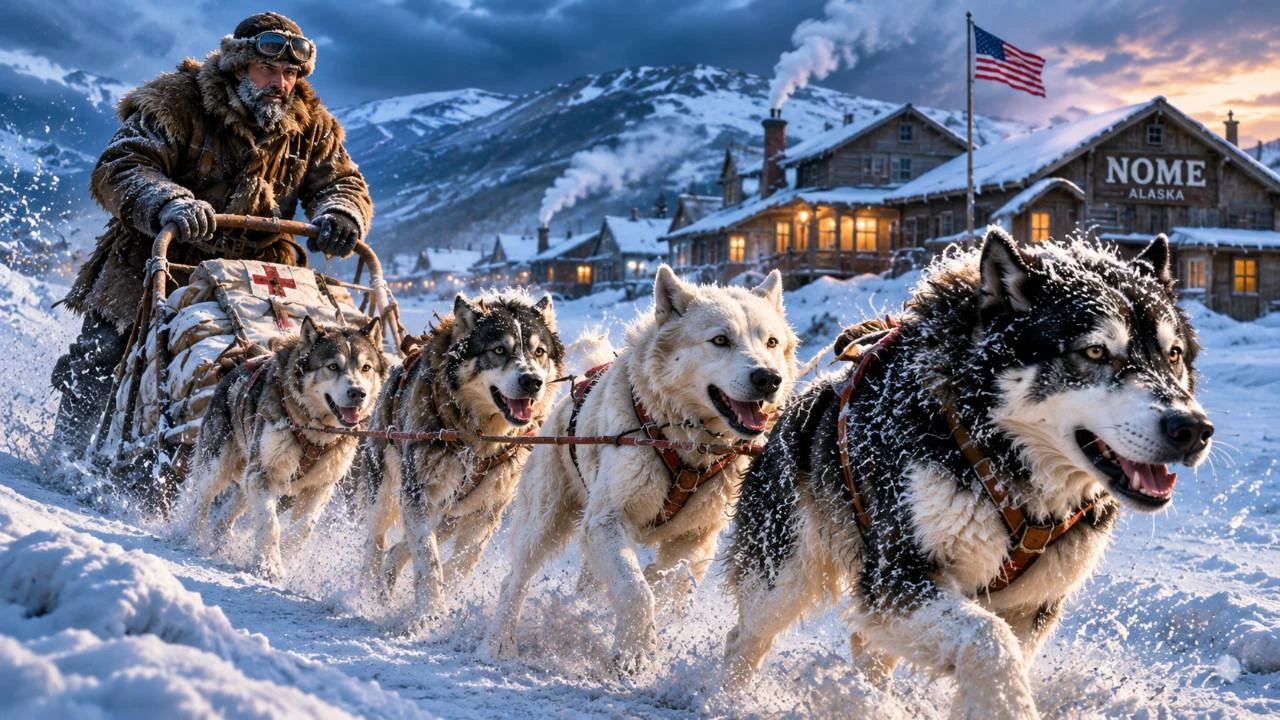
AI-generated historical reconstruction supplied for PRESDA. The musher, dogs, buildings and landscape are illustrative, not an archival photograph or verified portraits of Balto, Togo or a named participant. Editorial image supplied for PRESDA.
In the winter of 1925, Nome needed a medicine that could not arrive by an ordinary journey. Diphtheria threatened the Alaskan town, and the supply of antitoxin lay beyond frozen waterways and hundreds of miles of winter trail. The solution was a relay of dog teams. The Alaska State Archives records a 674-mile journey from Nenana to Nome completed in 127.5 hours. Its success belonged to a chain of people and animals, not one miraculous dog. Alaska State Archives: the serum relay and primary correspondence
Why Nome could not wait
Diphtheria is a bacterial infection that can cause severe breathing problems and other complications. The distinction between antitoxin and vaccine matters to this story. Antitoxin is used in treating toxin-producing respiratory diphtheria; vaccination builds protection against disease. The 1925 cargo was antitoxin, commonly called serum, not a shipment of modern antibiotics or a vaccine campaign that instantly ended every risk. CDC: diphtheria and treatment
Nome’s doctor, Curtis Welch, sought help as cases appeared. A rail connection could move the medicine from Anchorage to Nenana, but no railway continued to Nome. Winter flying in Alaska was still young and unreliable for such an emergency. Dog drivers already carried mail and supplies along the region’s trails. They were not an eccentric last-minute invention: they formed a working transport network. University of Alaska Fairbanks: the relay’s departure
January 27: the relay begins
On January 27, 1925, the first musher, William “Wild Bill” Shannon, received the package at Nenana. Teams handed it onward across the trail instead of asking one exhausted driver to cover the whole distance. This division of labour made speed possible: each exchange transferred the medicine to people and dogs able to keep moving through the next section. University of Alaska Fairbanks: the relay’s departure
About 20 mushers and more than 150 dogs took part, according to Associated Press’s centenary reporting. Many drivers were Alaska Native people whose expertise sustained the relay but received less enduring attention than its canine celebrities. Restoring that collective contribution changes the story: the emergency was met by local knowledge, established routes and cooperation, as well as extraordinary animal endurance. Associated Press: the serum run’s centenary and participants
Togo and Balto did different jobs
Leonhard Seppala and his lead dog Togo are associated with a particularly demanding part of the journey, including the dangerous Norton Sound crossing. Gunnar Kaasen and his team, led by Balto, completed the final approach to Nome. Treating these roles as a competition for one “real hero” misses the relay’s design. Finishing a delivery and sustaining its earlier stages were both essential. Iditarod: race history and the 1925 serum run
Why distances can be confusing
A musher’s total travel is not necessarily the distance travelled while carrying serum. Some teams first travelled outward to meet the relay and then returned with the cargo. Popular comparisons can mix those two measurements. The safest account identifies what each distance measures rather than placing every large number beside a dog’s name as though all figures describe the same task.
February 2: medicine reaches Nome
Kaasen’s team reached Nome on February 2, 1925. Balto’s place at the finish helped make him the best-known face of the rescue. Yet the arrival was the outcome of repeated handovers and care for a fragile medical cargo. The serum helped the response to the outbreak; it does not justify an exact claim about how many deaths one dog personally prevented. University of Alaska Fairbanks: Balto’s history and genetics
A famous dog, not a fictional wolf
Later entertainment reshaped Balto into a partly fictional character. A 2023 genetic study discussed by the University of Alaska Fairbanks found no wolf in his recent ancestry. The historical dog’s legacy is remarkable without that embellishment. His preserved body in Cleveland also became scientific evidence, allowing researchers to investigate working-dog ancestry long after the relay itself. University of Alaska Fairbanks: Balto’s history and genetics
What the relay asks us to remember
A rescue story is easier to remember when it has one face. Nome’s history is more revealing when it retains the network behind that face: medical urgency, rail workers, village connections, experienced mushers and dogs capable of working in brutal conditions. The relay is an example of coordination under pressure. Its drama comes from shared dependence, not from the idea that one hero could do everything.
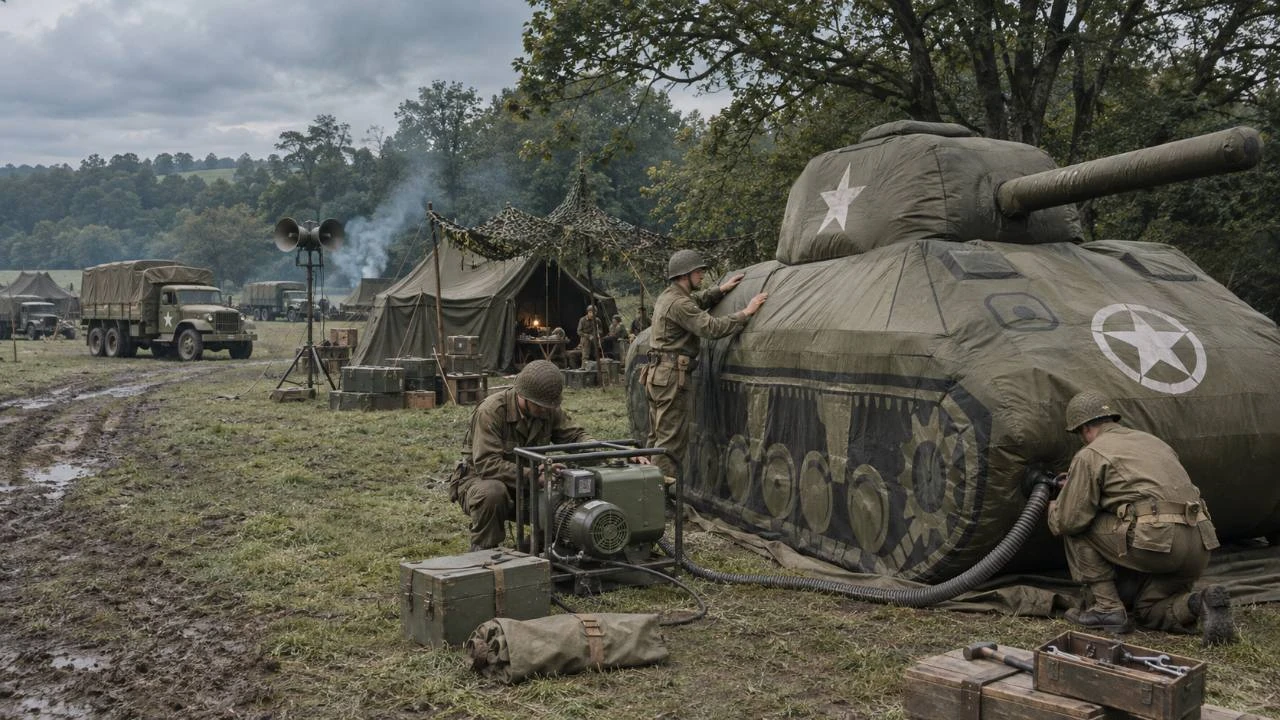
Related reading: The coordinated work behind the Ghost Army’s wartime deceptions.
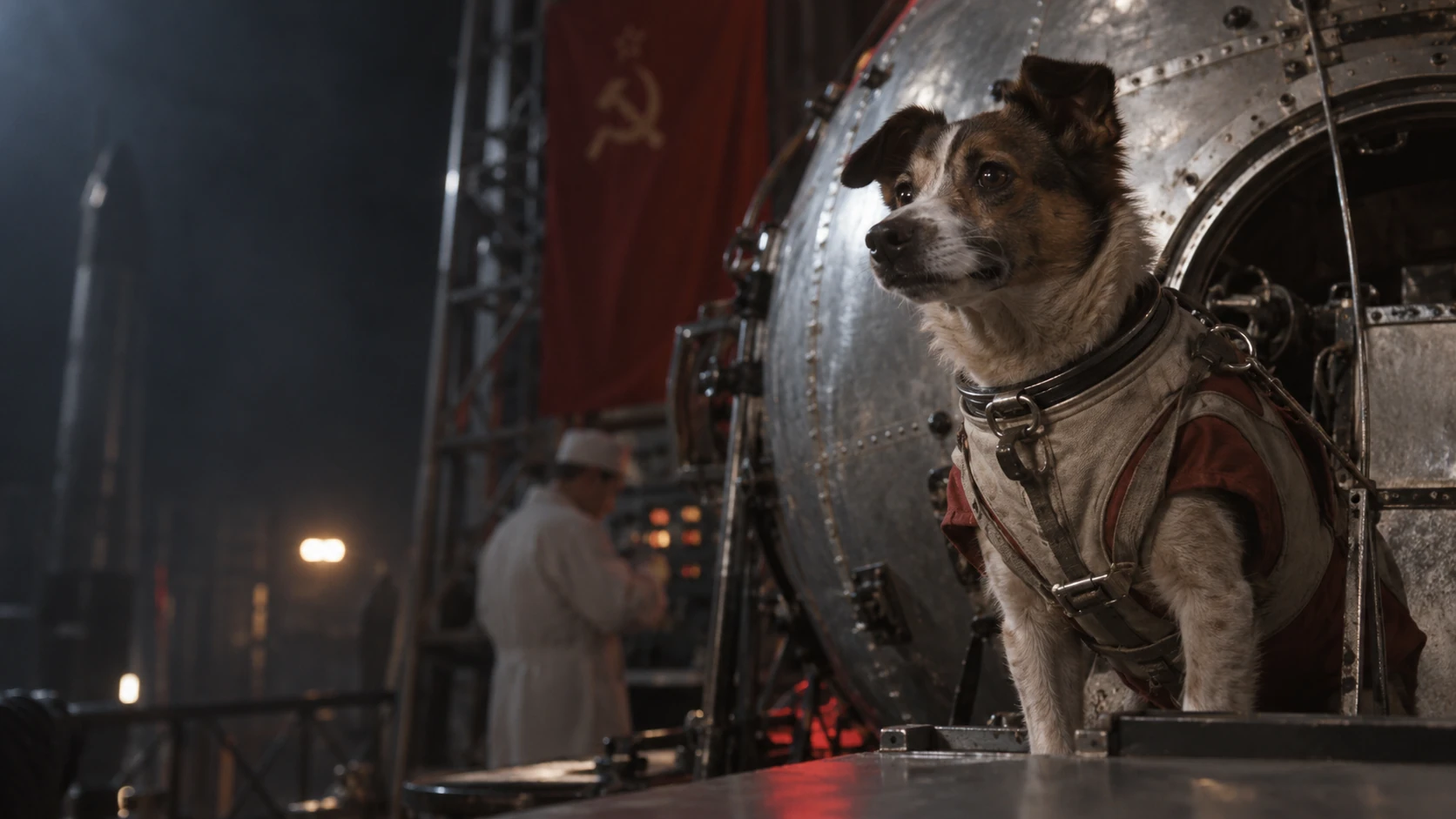
Related reading: Laika and the difficult history of animals in human missions.
FAQ
Frequently Asked Questions
When did the 1925 serum run happen?
The dog relay began at Nenana on January 27, 1925 and reached Nome on February 2. Alaska’s archives record 674 miles in 127.5 hours.
Did Balto save Nome alone?
No. Balto led the final team with Gunnar Kaasen. Togo, Leonhard Seppala and many other mushers and dogs were essential to the relay.
Was the cargo a vaccine?
It was diphtheria antitoxin, commonly called serum. Antitoxin treatment and preventive vaccination are different.
PRESDA Dispatch
Stay Informed. Stay Aware.
A sharp briefing across AI, gaming, sport, business, world affairs, paparazzi, and lifestyle.