72 DAYS IN THE ANDES: THE IMPOSSIBLE SURVIVAL
The true story of Uruguayan Air Force Flight 571, the October 1972 crash, the avalanche, the trek for help and the December rescue of 16 survivors.
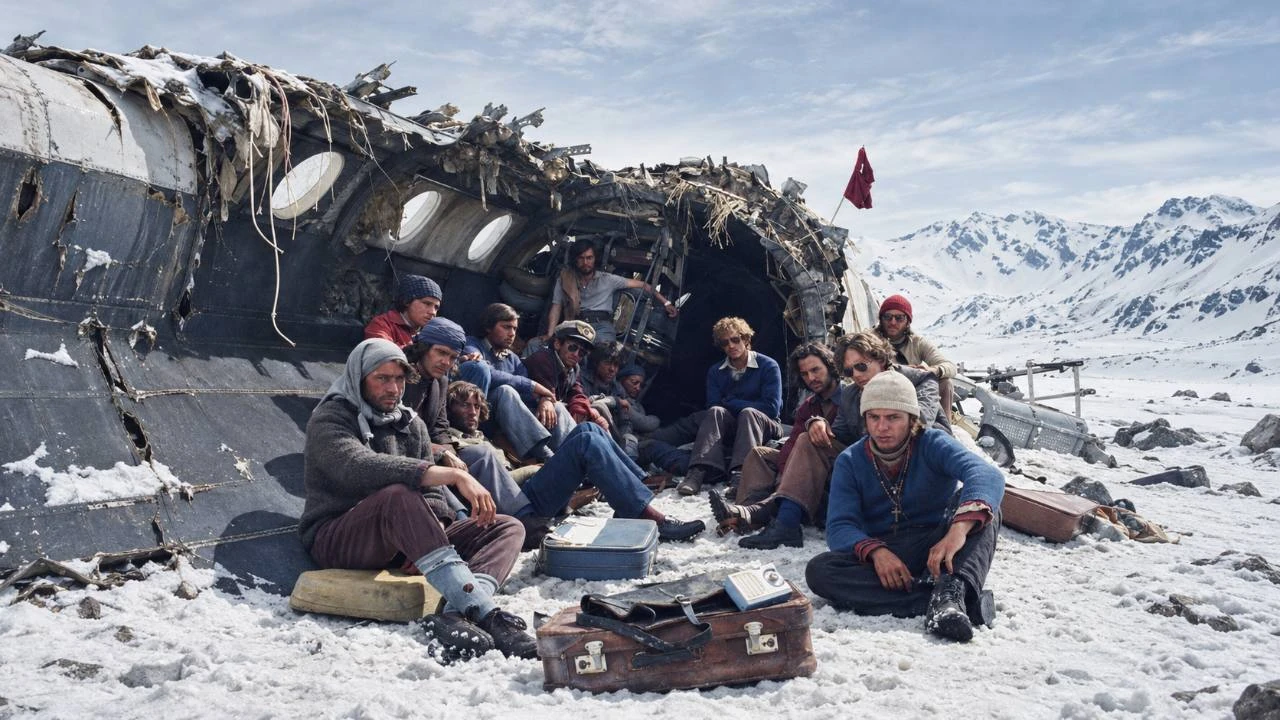
Editorial illustration supplied for PRESDA.
The last people taken off the mountain on December 23, 1972, had survived more than two months in the wreckage of a plane. The Uruguayan Air Force aircraft had been carrying 45 people when it crashed on October 13 in the Andes. Sixteen survived. The number usually associated with the episode, 72 days, counts the ordeal through the final day of rescue. The helicopters had begun taking people out a day earlier. For the families waiting far below, the rescue overturned weeks of uncertainty and loss. Museo Andes 1972, Uruguay Chile’s National Aeronautical and Space Museum
The story is often told through the two men who emerged from the mountains on foot. Their crossing was decisive. It also depended on the people who kept one another alive at the crash site, a muleteer who recognised the urgency of their request, and crews who could return to a place that had defeated the initial search. Museo Andes 1972, Uruguay Chile’s National Aeronautical and Space Museum
| Date | Event |
|---|---|
| October 13, 1972 | Flight 571 crashes in the Andes with 45 aboard |
| October 29, 1972 | An avalanche hits the fuselage, killing eight more people |
| December 22–23, 1972 | Chilean crews rescue survivors in stages |
Why Flight 571 was in the Andes
The aircraft was a Fairchild FH-227D flying a charter for a group that included members of Uruguay’s Old Christians rugby club, relatives and friends. They were travelling from Montevideo to Chile. The trip included a stop in Mendoza, Argentina, and the flight resumed on October 13. That geography explains why the dispatch airport, destination and crash region appear as different places in accounts of the same event. The destination was Santiago. The wreck lay high in the Andes on the Argentine side, and help eventually arrived through Chile. Museo Andes 1972, Uruguay Chile’s National Aeronautical and Space Museum TIME interview with survivor Roberto Canessa
Why the wreck was difficult to spot
The fuselage came to rest amid snow and mountains. From below, the valley was remote and difficult to reach. From above, the wreck was inconspicuous against the surrounding terrain. Visibility also depends on where searchers are able to fly and where they believe the aircraft should be. Knowing after the fact that a group was sheltering in a particular part of a white valley is very different from seeing that group from a search aircraft. Museo Andes 1972, Uruguay TIME interview with survivor Roberto Canessa
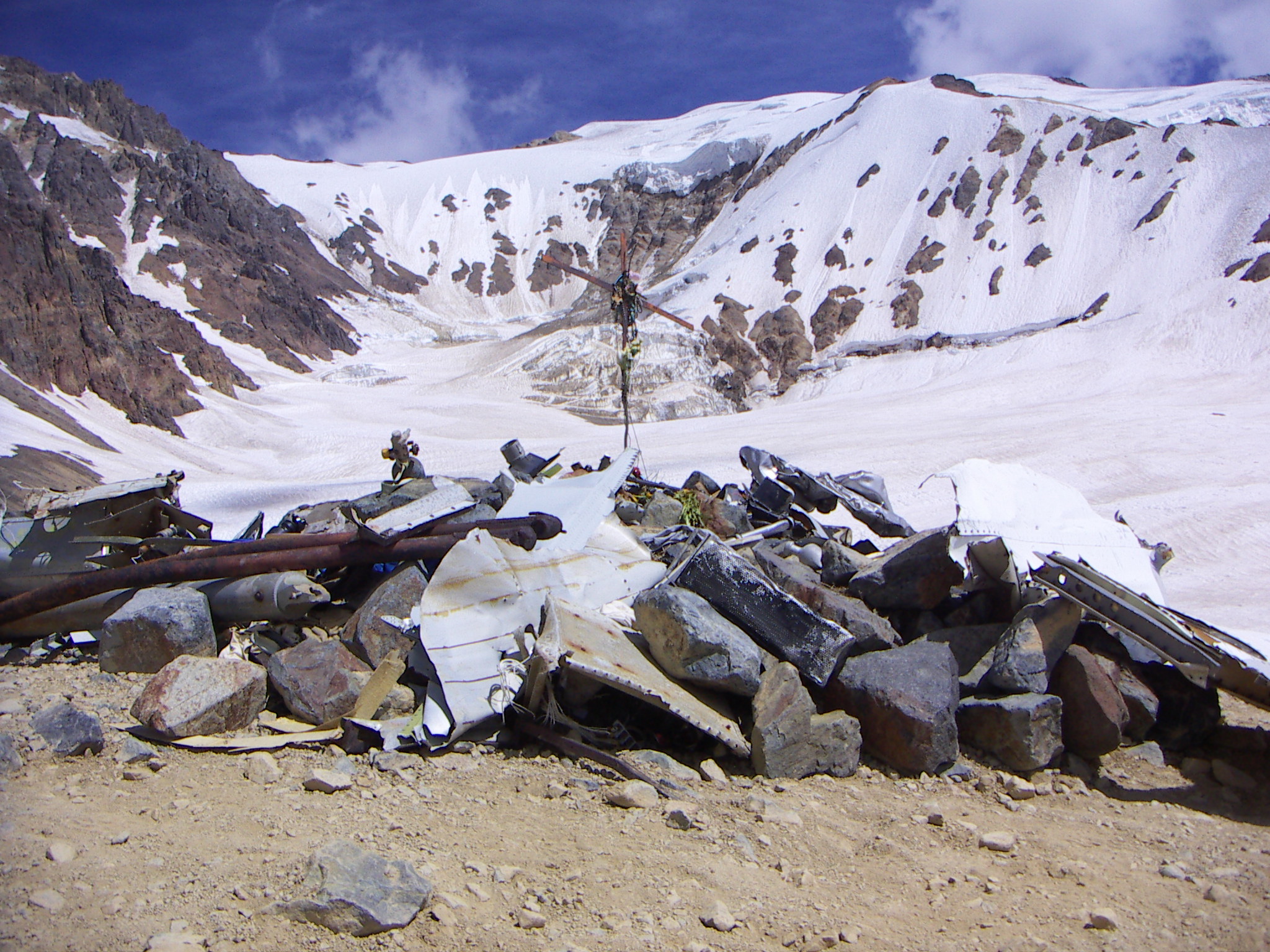
The memorial at the Flight 571 crash site, photographed in 2006 with the Andes in the background.
What people did inside the fuselage
Those who lived through the crash faced injuries, bitter nights and a rapidly dwindling supply of food. The cabin was the largest shelter available. People rearranged what they found, closed off part of the opening as best they could and cared for those who could not move easily. Clothing and materials brought for a short trip acquired new uses. A small radio receiver recovered from luggage let the group hear outside broadcasts. On the tenth day, according to the museum, they heard that the official search had been suspended. The information changed what they could reasonably expect from waiting. Museo Andes 1972, Uruguay TIME interview with survivor Roberto Canessa
Small tasks mattered as much as major decisions
Someone had to help the wounded, organise scarce supplies and keep the shelter usable. Those tasks were repeated, even on days when little appeared to change. Injuries meant that people could not all do the same work. Exhaustion made that division of labour more important over time. Accounts of the rescue can make it sound as though the group’s choices began with a long trek. Their ability to attempt one depended on weeks of work at the fuselage. Museo Andes 1972, Uruguay TIME interview with survivor Roberto Canessa
The avalanche and the decision about food
An avalanche swept over the wreck on October 29, sixteen days after the crash. Eight more people died. The sudden loss made a shelter the survivors depended on temporarily inaccessible from outside. The accident itself had already made food critically scarce. To remain alive, members of the group ate from the bodies of people who had died. It was a decision taken amid starvation and grief. Survivor accounts are the appropriate record for what it meant to them, and they need to be read in the context of the dead and their families. Museo Andes 1972, Uruguay TIME interview with survivor Roberto Canessa
The same people could mourn someone, depend on the other survivors and struggle with what survival had come to require. Retellings that reduce the group to a single decision omit the relationships that continued through those weeks. The museum documents both the deaths and the successive attempts to get off the mountain. Its chronology gives each event a place in a story that otherwise tends to compress many weeks into a few familiar images. Museo Andes 1972, Uruguay
The walk into Chile
Nando Parrado and Roberto Canessa reached the Chilean side after walking out from the wreck. Antonio Vizintín had begun the final expedition with them and returned to the fuselage so the others could continue with the available supplies. Conditions and unfamiliar terrain made every estimate of distance uncertain. The men first had to climb away from the crash site. High ground showed further ridges rather than the clear route to a settlement that they had hoped to find. Museo Andes 1972, Uruguay TIME interview with survivor Roberto Canessa
Why the crossing did not end at the river
The trekkers reached an area where they could see Sergio Catalán, a Chilean muleteer, across a river. The water was loud enough to frustrate a shouted conversation. Communication across the river made it possible for Catalán to understand that other survivors were still waiting and that help had to reach them quickly. He carried word to the authorities. A sighting by itself would have accomplished little if no one could pass the information onward. Museo Andes 1972, Uruguay Chile’s National Aeronautical and Space Museum
How the rescue unfolded
Chile’s National Aeronautical and Space Museum records rescue operations on December 22 and 23. Helicopters had to reach a high, exposed site and remove the survivors in stages. For people still at the wreck, the first visit confirmed that the walk had succeeded. The crews evacuated survivors in stages. The December 23 evacuation completed the rescue. That sequence explains why some accounts date the end to December 22 while others give December 23. They are describing different points of an operation that spanned both dates. Museo Andes 1972, Uruguay Chile’s National Aeronautical and Space Museum
How to read “72 days”
From October 13 through December 23 inclusive there are 72 calendar days. The people evacuated first left sooner. Parrado and Canessa had already reached help on foot. The number describes the span of the disaster and rescue. It does not assign exactly the same time, route or experience to each survivor. Likewise, the 45 people aboard included crew as well as passengers. Starting the story with 45 and closing it with 16 makes the human cost visible without making each person’s experience interchangeable. Museo Andes 1972, Uruguay Chile’s National Aeronautical and Space Museum
What later accounts can tell us
The Museo Andes 1972 in Uruguay records the names and events at the centre of the tragedy. Canessa’s later interviews offer a survivor’s view of events. Film adaptations can bring readers to the underlying history, but screenplays compress time, combine explanations and choose which character to follow. A museum chronology and an interview also do different jobs. The chronology anchors claims about dates and people. An interview offers an individual’s memory and account of what it felt like to live through those dates. Museo Andes 1972, Uruguay TIME interview with survivor Roberto Canessa
It is possible to recognise extraordinary determination and cooperation while remembering that the story started with 45 people expecting an ordinary trip. It involved people caring for one another, a long crossing, a stranger taking a message seriously and a rescue crew prepared to act. For a separate look at Uruguay today, see PRESDA’s feature on the country’s electricity transition.
How individuals and institutions preserve different memories
An account told decades later can describe what one person saw or thought at a particular moment. There may be other people who were present, understood it differently or did not know the news until later. For the people still in the fuselage, the walk was weeks of anticipation ending in a helicopter. For the rescue crews, the relevant problems were finding where to land, travelling safely and returning for the next group. For relatives, the questions began before the search and continued after the rescue. The aeronautical museum’s account of the participants helps document one part of that memory. The Montevideo museum and survivor interviews preserve others. Together they make it possible to recognise the work of people who do not appear as often in a dramatisation. Museo Andes 1972, Uruguay Chile’s National Aeronautical and Space Museum TIME interview with survivor Roberto Canessa
FAQ
Frequently Asked Questions
How many people survived Flight 571?
Sixteen of the 45 people aboard survived.
Who found help?
Nando Parrado and Roberto Canessa crossed the mountains. Chilean muleteer Sergio Catalán met them and alerted authorities.
Why do accounts give two rescue dates?
Helicopters began evacuating survivors on December 22 and completed the rescue on December 23, 1972.
PRESDA Dispatch
Stay Informed. Stay Aware.
A sharp briefing across AI, gaming, sport, business, world affairs, paparazzi, and lifestyle.