THE REPUBLIC OF BOU REGREG: MOROCCO'S LEGENDARY CORSAIRS OF SALÉ
Morisco exile, maritime raids and diplomacy shaped a seventeenth-century polity at the river mouth between Rabat and Salé.
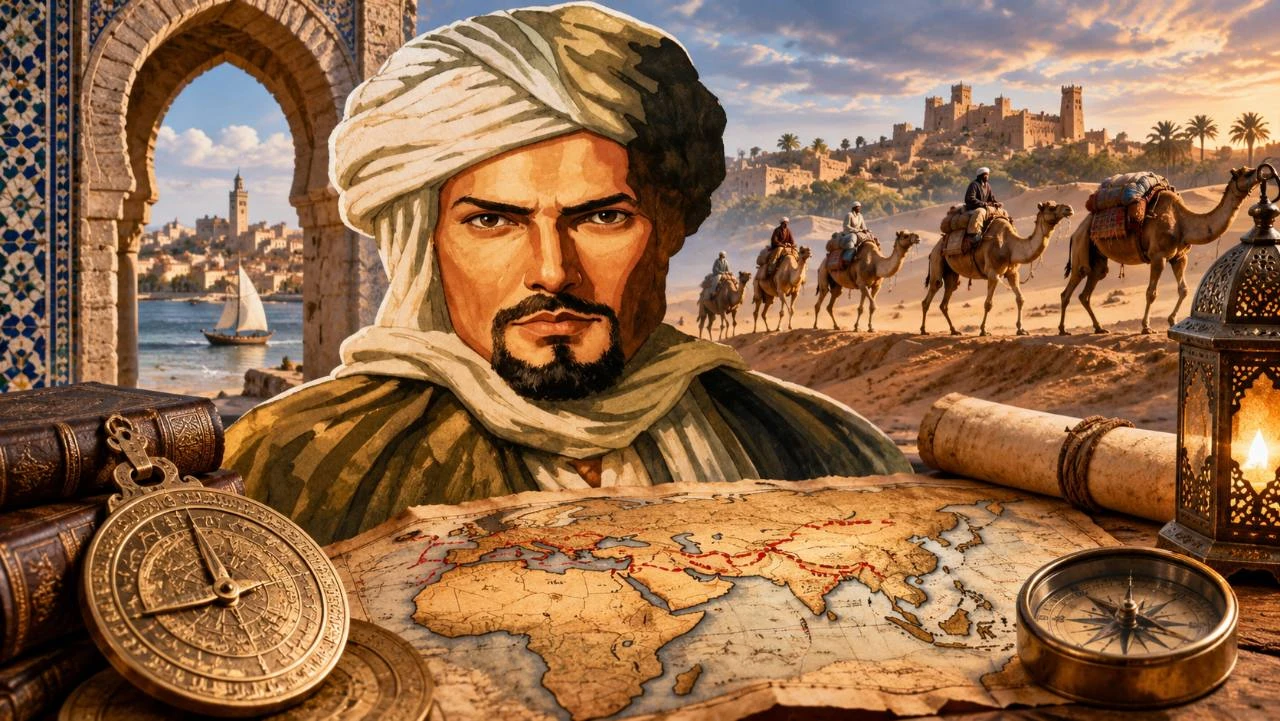
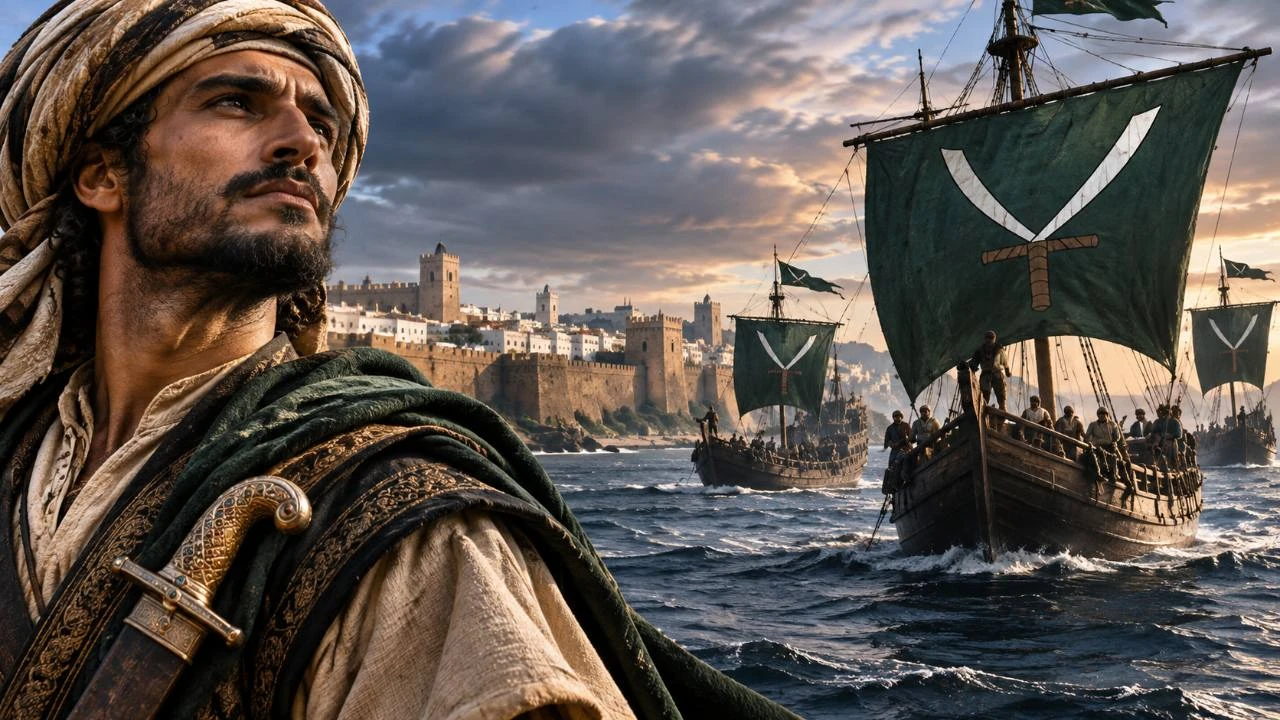
Editorial reconstruction. The people, ships and flags are imagined.
At the mouth of Morocco’s Bou Regreg, the river put two towns within sight of one another and gave them access to the Atlantic. In 1627, a government centered on the kasbah at present-day Rabat asserted autonomy as Saadian power fractured. Europeans often called the port Salé, even when discussing activity on the Rabat bank. The resulting maritime polity drew its strength from migration, commerce and armed expeditions. Brill: the Hornacheros and the republic
How Morisco exile shaped the port
The expulsion ordered by Spain from 1609 drove Moriscos, descendants of Muslims converted to Christianity, across the Mediterranean and toward Atlantic Morocco. A group from Hornachos in Extremadura established itself in the kasbah. Other Andalusi newcomers settled in the town below. Their political interests were sometimes shared and sometimes sharply opposed. Control of customs and the proceeds of captures gave rival groups material reasons to contest authority. Brill: the Hornacheros and the republic
A council at the kasbah
A council, or diwan, exercised local authority. Its history involved shifting alliances between the kasbah, the lower town and old Salé across the river. Disputes in the early 1630s show the difficulty of sharing power and revenues. The name republic is useful for describing this period of autonomy, as long as the shifting balance among communities and outside powers remains in view. ICOMOS: Salé heritage guide
Raids, captives and European negotiations
The corsairs pursued merchant vessels along Atlantic routes, including in waters near Britain. Captured cargo could be sold, while people faced captivity, enslavement or ransom. Diplomacy grew alongside this violence. English envoy John Harrison dealt with Morisco leaders, and a surviving 1627 letter refers to a peace agreement. Later conflict and an English blockade show how fragile such arrangements could be. The National Archives: Rabat–Salé
How autonomy ended and the port endured
Powers based outside the estuary intervened repeatedly before the Alaouite consolidation of the 1660s brought the ports under royal control. Autonomous government and corsairing therefore have different timelines. Historian Leïla Maziane follows the activity from 1666 to 1727, showing how it persisted within the sultanate’s political and commercial system. Leïla Maziane: Salé et ses corsaires
Rabat’s World Heritage listing includes the Kasbah of the Oudayas and recognizes the city’s different layers. The surviving urban fabric gives the story an anchor on land. Its significance reaches beyond the adventures of ship captains to the consequences of exile, negotiation and rivalry in a port shared by communities on both banks. UNESCO: Rabat
A letter from Salé to Charles I
Britain’s National Archives preserves a document dated 17 May 1627 under catalogue reference SP 102/2. It purports to come from an Andalusi Morisco and offers service to England’s Charles I. The letter refers to peace with the Andalusian inhabitants of the fortress. English agent John Harrison sent it home while trying to extend English influence. Read together, the transcription and translation show how different parties found different uses for the same agreement. The letter records what a correspondent wanted a king to hear, while the archive explains why Harrison thought it worth sending. Source · nationalarchives.gov.uk
Shipping and diplomacy met at the port
The archive also describes an English captain’s encounter in 1631 with a Rabat vessel off southern Portugal whose crew included Moriscos and European renegades. Corsairing depended on such mixed networks. An account from a merchant or captain reveals who was aboard a particular ship. It cannot establish the composition of the fleet as a whole. Source · nationalarchives.gov.uk
One river mouth, several centres of power
A map clarifies the naming problem. Modern Salé stands on the northern bank of the Bou Regreg; the Kasbah of the Udayas and the historic core of Rabat are on the southern bank. European records use names such as New Salé for settlements on the Rabat side. Reading those names as though they were modern municipal boundaries can put an episode on the wrong bank. Source · ICOMOS: Salé heritage guide Source · The National Archives: Rabat–Salé Source · UNESCO: Rabat
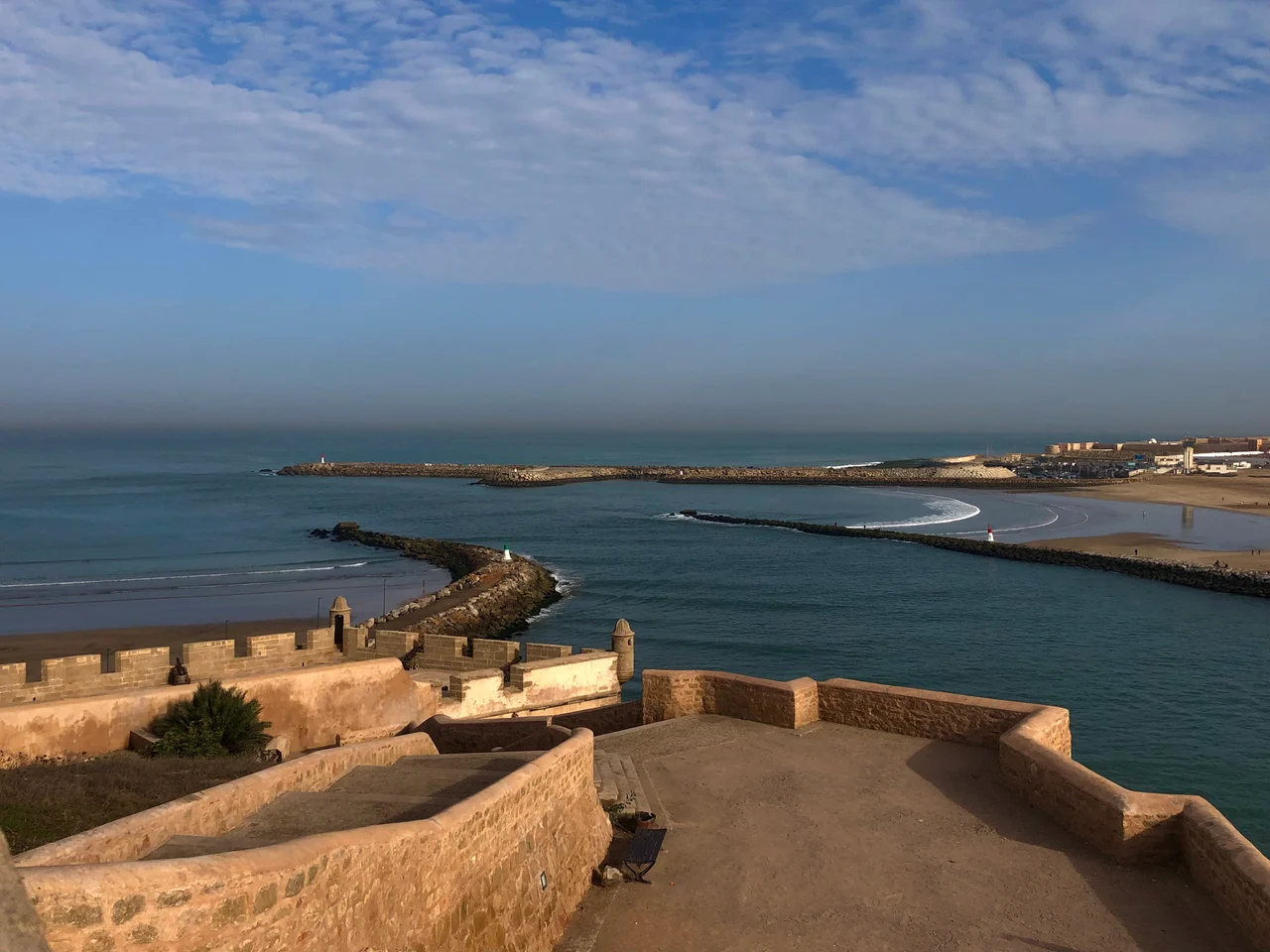
The Bou Regreg estuary from the Udayas Kasbah in 2026, with Rabat left and Salé right.
Aemazy / Wikimedia Commons · CC BY-SA 4.0 · Resized
The archive reveals both sides of the ransom economy
English correspondence documents captives and negotiations because officials and families wanted people released. Those files illuminate prices and intermediaries when they record them, but their priorities also shape what survives. They are much less direct evidence about the captives’ daily lives or the views of people who never dealt with English envoys. Reading that evidence alongside studies of the Moroccan port helps explain the same episode from more than one shore. Source · The National Archives: Rabat–Salé Source · Leïla Maziane: Salé et ses corsaires
| Modern location | Geographic reference |
|---|---|
| Salé | North bank of the Bou Regreg |
| Kasbah of the Udayas | Rabat side, at the estuary |
| Historic centre of Rabat | South side of the river |
The ports in PRESDA’s feature on Istanbul and Constantinople offer another example of how a historical place name can refer to a different political landscape from the one on a modern map.
FAQ
Frequently Asked Questions
When did the Republic of Bou Regreg begin?
1627 is the conventional date for the assertion of local autonomy.
Did corsairing end when the republic lost autonomy?
The activity continued under the Alaouite sultans into the eighteenth century.
PRESDA Dispatch
Stay Informed. Stay Aware.
A sharp briefing across AI, gaming, sport, business, world affairs, paparazzi, and lifestyle.