ANCIENT PROTEINS REVEAL NEW CLUES ABOUT THE MYSTERIOUS DENISOVANS
New protein studies identify Denisovan fossils and illuminate their anatomy. Explore the 2026 evidence and why an imagined face remains a reconstruction.
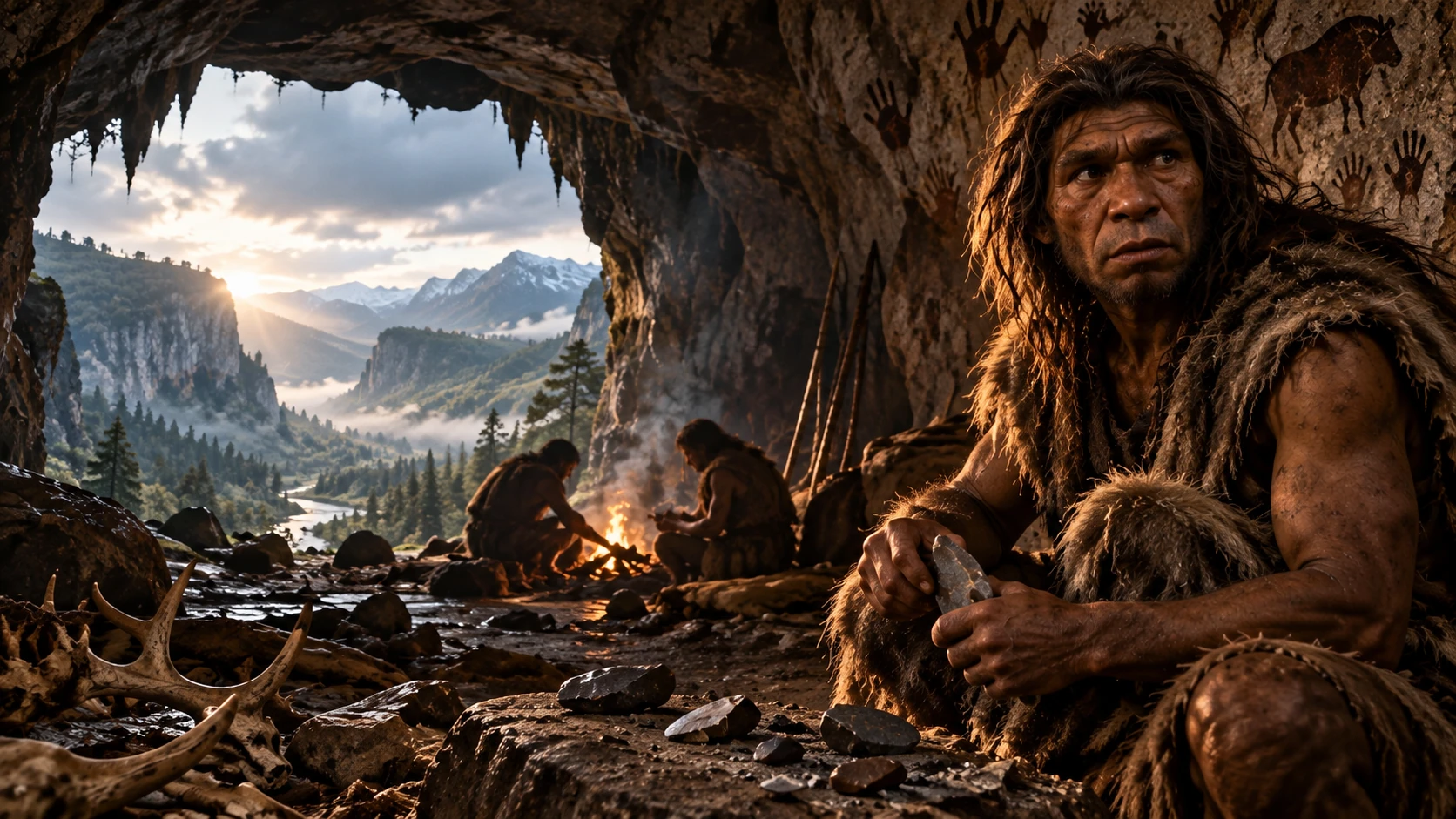
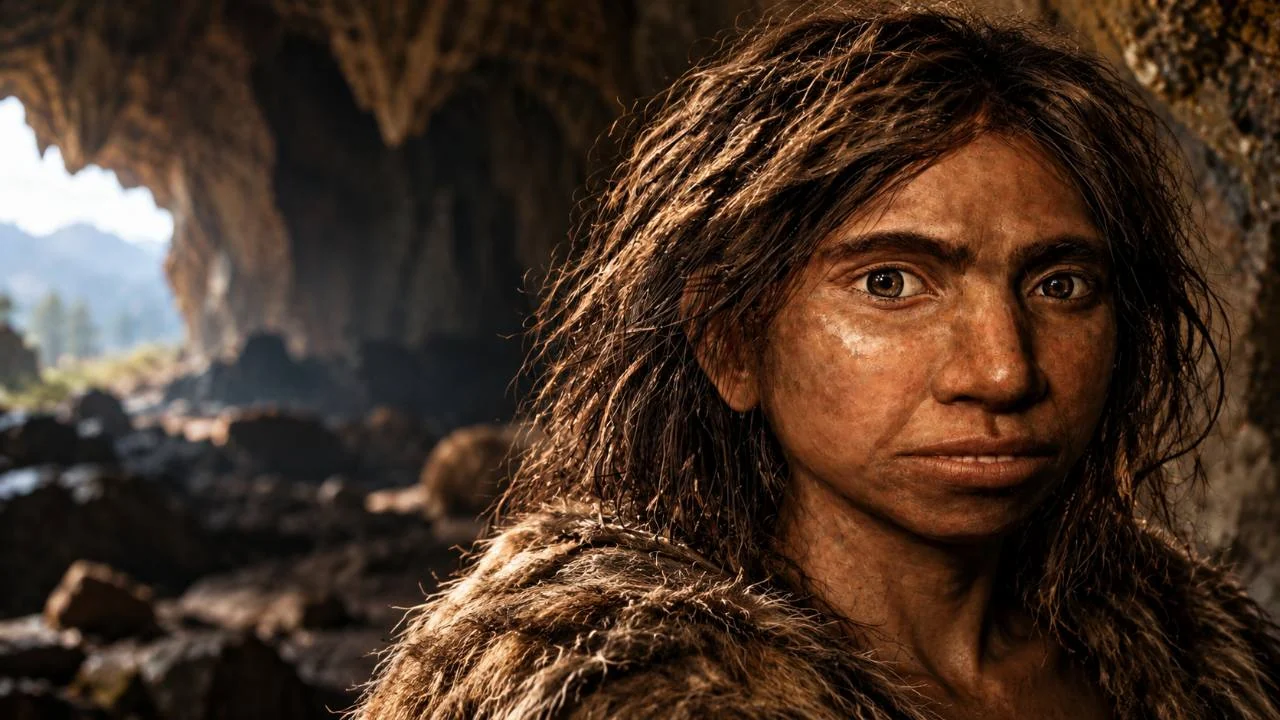
Imagined Denisovan reconstruction, not a verified fossil portrait. Protein evidence does not establish this face, hair, skin, clothing or sex. AI-generated editorial illustration supplied for PRESDA
A fragment of bone can preserve a molecular clue long after its owner has vanished. For Denisovans, an extinct human group first recognised through genetic evidence, that clue is helping connect names to actual skeletons. New studies of ancient proteins are expanding the fossil record. They reveal ancestry and anatomy more securely than they reveal the face of a particular individual.
What can an ancient protein tell us?
Palaeoproteomics examines surviving protein fragments, including the order of their amino acids. Certain sequence differences can help distinguish evolutionary lineages when researchers compare them with suitable reference data. Proteins do not provide an entire genome. Their value is that identifiable fragments can sometimes persist where recoverable ancient DNA is scarce. European Research Council, protein identification of Penghu 1 (2025)
This makes the method a bridge between molecular biology and the fossil drawer. A bone may look broadly human yet remain difficult to assign. A diagnostic protein variant can sharpen that assignment. The strongest interpretation combines several strands of evidence, including preservation, laboratory controls, geological context and comparisons with other specimens.
Five identified remains from Bianfu Cave
A Nature study published in September 2026 assigned two teeth, two skull fragments and a partial radius from Bianfu Cave in Yunnan to Denisovans. The radius is a forearm bone, making it especially valuable beyond the better-known teeth and skulls. Five remains should not be mistaken for five independently identified people. Rao et al., Nature (9 September 2026)
The Chinese Academy of Sciences reports a mixture of anatomical characteristics in the radius rather than a simple copy of either a Neanderthal or a modern human arm. That is an important shift in the story. Denisovans become a group whose physical variation can be investigated, rather than a genetic label attached to a handful of familiar fragments. Chinese Academy of Sciences, Bianfu research account (2026)
Xujiayao adds a clearer view of the skull
An October 2026 Nature paper analysed proteins from two Xujiayao specimens and compared the assemblage’s anatomy with other ancient humans. Molecular evidence supported Denisovan affiliation. The study then described a combination of cranial, facial and dental features, providing a stronger basis for comparing fossils previously assigned uncertain evolutionary positions. Xing et al., Nature (21 October 2026)
A molecularly identified fossil and a second fossil that resembles it are not the same strength of evidence. Anatomical similarity can support a wider hypothesis, but it should not silently turn every proposed relative into a DNA-confirmed individual. The emerging picture is richer precisely because researchers can now compare independent clues rather than force every specimen into one familiar category.
What the imagined face cannot establish
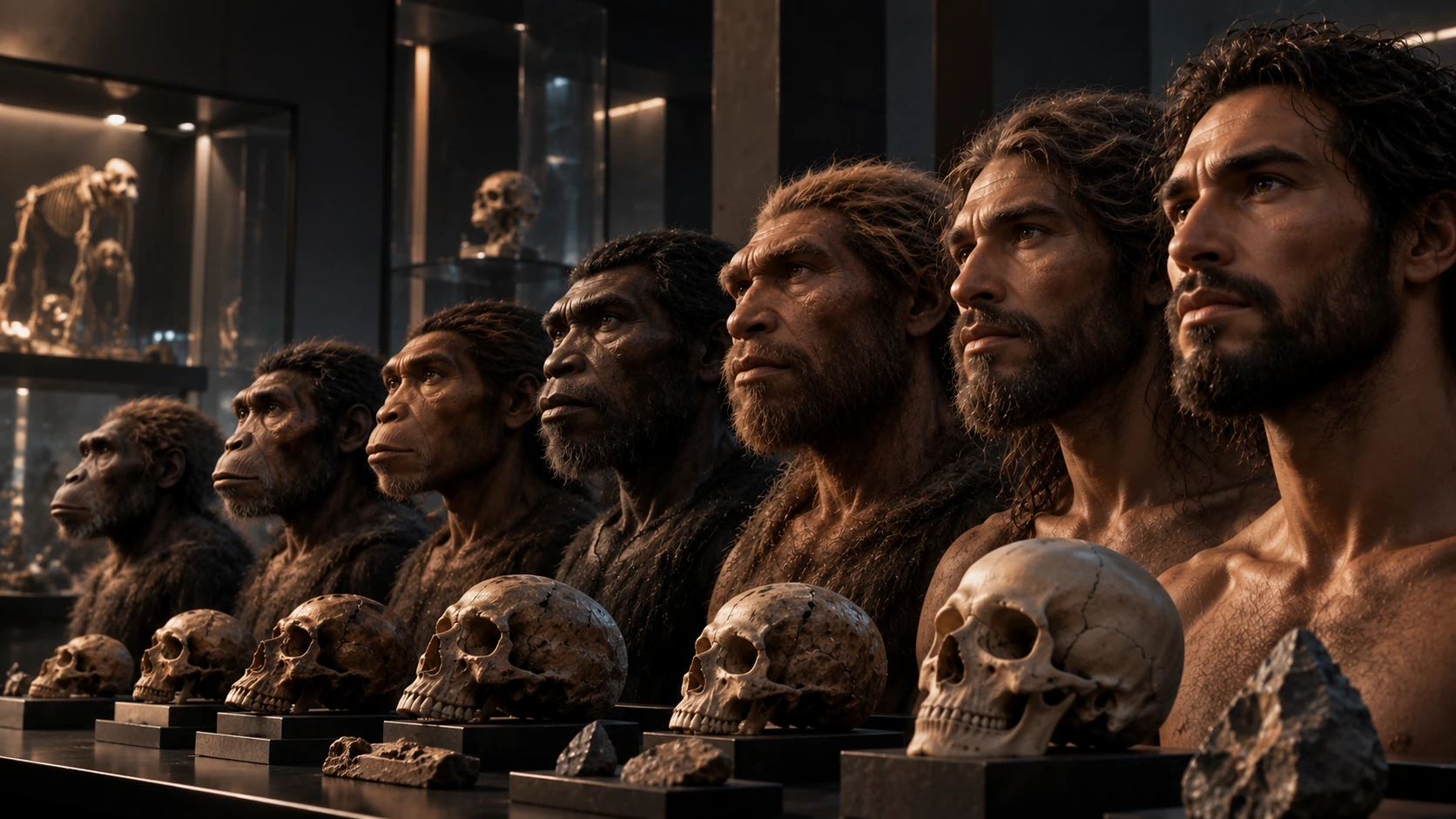
The hero is an AI conceptual portrait. Its hair, skin, expression, clothing and cave setting are artistic choices, not findings from these protein studies. A skull can constrain some reconstruction decisions while leaving many soft-tissue details uncertain. Our earlier Denisovan DNA explainer provides the genetic background; the new protein work adds fossils to that wider history.
Related reading: Denisovans and the DNA they left behind.
FAQ
Frequently Asked Questions
What is palaeoproteomics?
It is the study of ancient surviving proteins. Sequence differences can help identify biological lineages when compared with reliable reference data.
Were five Denisovan people identified at Bianfu?
The study identified five Denisovan remains: two teeth, two skull fragments and a partial radius. That does not establish five separate individuals.
Does the image show a verified Denisovan face?
No. It is an AI conceptual illustration. These protein studies do not establish the depicted individual’s exact appearance.
PRESDA Dispatch
Stay Informed. Stay Aware.
A sharp briefing across AI, gaming, sport, business, world affairs, paparazzi, and lifestyle.