THE DENISOVANS: THE LOST HUMANS WHO STILL LIVE IN OUR DNA
Known first from little more than a fragment of bone and ancient DNA, the Denisovans were a mysterious human population that once lived across Asia. They disappeared thousands of years ago - but part of them survives inside the genomes of people alive today.
The Denisovans entered science almost backwards.
They were not introduced by a complete skeleton, a dramatic skull or a museum case filled with named fossils. They were first recognized from a small finger-bone fragment found in Denisova Cave in southern Siberia and from the ancient DNA preserved inside it.
That DNA changed the human story.
It showed that Neanderthals were not the only close relatives our species met. It revealed another archaic human population, one that had separated from Neanderthals, mixed with them, met Homo sapiens and left genetic traces across parts of Asia and Oceania.
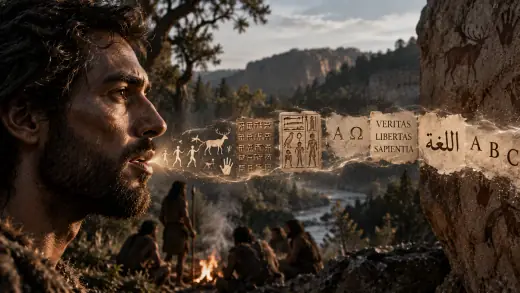
The Denisovans are often described as lost humans. That phrase is useful only if it does not mean simple, primitive or gone without a trace.
They were a real human population with deep ancestry, regional histories and adaptive legacies. They disappeared as a distinct group, but Denisovan DNA still survives inside people alive today.
The Discovery From A Finger Bone
In 2008, archaeologists working in Denisova Cave recovered a tiny fragment of a young individual's finger bone.
The fossil was not visually spectacular. By shape alone, it could not have announced a new human population. Its importance came from molecular evidence.
In 2010, researchers published mitochondrial DNA from the bone and showed that it did not match modern humans or known Neanderthals. Later that year, nuclear DNA revealed a sister group to Neanderthals: an archaic population now called Denisovans.
This was a turning point in paleoanthropology. A human group had been identified first through ancient DNA rather than through a classic fossil type specimen.
The discovery also changed how scientists think about the fossil record. A small fragment, if it preserves molecules, can carry an evolutionary story larger than its size.
Who Were The Denisovans?
Denisovans were an extinct archaic human population closely related to Neanderthals.
They were not Homo sapiens, but they were not a separate world from us either. They belonged to the wider human family, part of a braided evolutionary history in which populations split, moved, overlapped and sometimes interbred.
Researchers often describe Denisovans as a sister lineage to Neanderthals. Genetic evidence indicates that the ancestors of Neanderthals and Denisovans separated from the lineage leading to modern humans, and later Neanderthals and Denisovans diverged from one another.
The term Denisovan is therefore partly genetic. It names a population recognized through DNA and, increasingly, through protein and anatomical evidence tied to that genetic signal.
That matters because not every mysterious Asian archaic fossil should automatically be called Denisovan. Responsible science requires evidence: ancient DNA, paleoproteomics, secure morphology linked to molecular results or a carefully argued archaeological context.
A Human Family, Not A Ladder
For a long time, popular accounts of human evolution sounded like a ladder: one species replaces another, progress moves forward, and modern humans stand at the top.
The Denisovan discovery helped break that picture.
Human evolution looks more like a branching, reconnecting landscape. Neanderthals, Denisovans, Homo sapiens and other archaic populations were not rungs in a neat sequence. They were relatives living through changing climates, migrations and local experiments in survival.
That is why the Denisovan story belongs beside PRESDA's broader coverage of Charles Darwin and evolution. Evolution is not a straight road toward us. It is descent with modification, shaped by geography, selection, chance and contact.
The Denisovans remind us that humanity's past was crowded.
Denisova Cave
Denisova Cave sits in the Altai Mountains of southern Siberia.
The site is extraordinary because it preserves evidence for multiple kinds of humans across time. Neanderthals used the cave. Denisovans used the cave. Modern humans may also have moved through the wider region.
Its sediments and fragments have yielded genetic evidence that would have been impossible to read a generation ago.
Denisova Cave is not just a backdrop. It is a molecular archive. Teeth, bone fragments and sediment can preserve traces of people who otherwise left only faint archaeological signatures.
The cave also shows that human relatives overlapped geographically and chronologically more than older models assumed.
Denny: A Child Of Two Human Worlds
One of the most striking finds from Denisova Cave is Denisova 11, nicknamed Denny.
Published in 2018, Denny's genome showed that she had a Neanderthal mother and a Denisovan father.
That result is astonishing because it is not only evidence of ancient interbreeding in the abstract. It is evidence in one individual: a first-generation child of two archaic human populations.
Denny also makes the story more human. Interbreeding was not a statistical event floating above history. It happened through encounters between people whose lives, movements and communities intersected.
The Denisovan father also had Neanderthal ancestry deeper in his family tree, suggesting that contacts between Neanderthals and Denisovans were not isolated accidents.
What Did Denisovans Look Like?
We do not know exactly what Denisovans looked like.
This is one of the most important cautions in the entire subject.
Early Denisovan evidence was too fragmentary to support a confident full-body reconstruction. Some anatomical clues have emerged from teeth, jaw material and other fossils, and genetic studies have attempted to infer traits from DNA methylation patterns. But those approaches do not produce a secure portrait in the way a complete skeleton might.
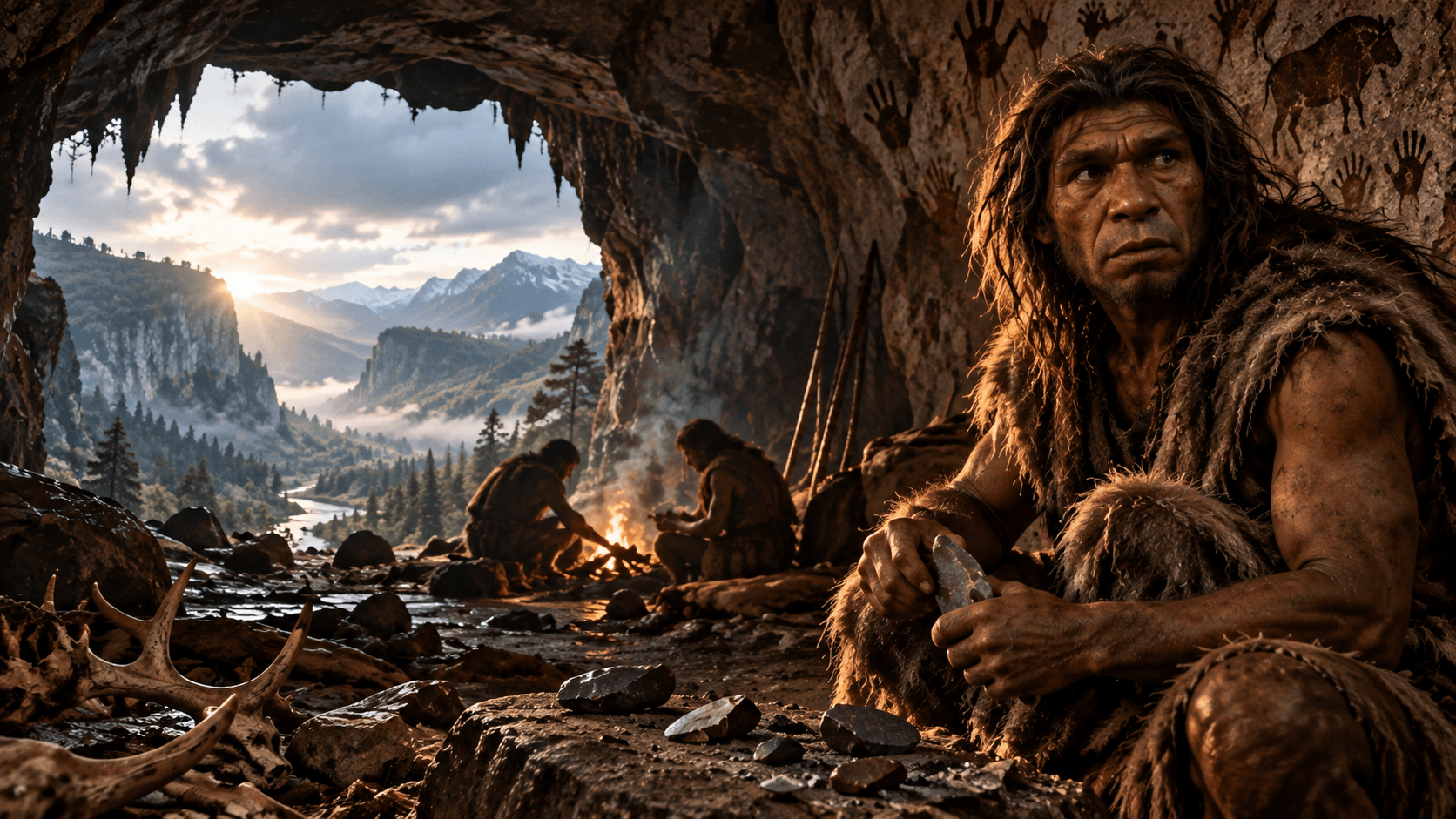
The hero image for this article is therefore an editorial reconstruction, not an authentic image of Denisovan appearance.
Denisovans may have shared some robust traits with other archaic humans, but it would be misleading to present a single face, skin tone, hair pattern or body form as settled fact.
Good science is sometimes an act of restraint: saying what the evidence allows, then stopping before imagination pretends to be data.
The Xiahe Mandible
For years, Denisovans were known mostly from Denisova Cave.
Then the geographic picture widened.
In 2019, researchers reported that a mandible from Baishiya Karst Cave on the Tibetan Plateau belonged to a Denisovan-related individual. The fossil, often called the Xiahe mandible, was dated to at least about 160,000 years ago.
The key evidence came through paleoproteomics: the analysis of ancient proteins preserved in the fossil.
That was a major development because ancient DNA does not survive equally well everywhere. Cold cave environments can preserve DNA better than many warmer or more exposed settings. Proteins can sometimes last where DNA does not.
The Xiahe mandible placed Denisovans, or Denisovan-related people, on the Tibetan Plateau long before present-day highland populations.
High Altitude And EPAS1
One reason Denisovans matter today is that some of their genetic legacy appears to have helped modern humans adapt.
The best-known example involves EPAS1, a gene region associated with high-altitude adaptation in Tibetan populations.
A 2014 Nature study argued that a Denisovan-like DNA variant contributed to Tibetan adaptation to low-oxygen environments at high elevation.
This does not mean Denisovans were simply a source of useful genes. It means that when Homo sapiens expanded into new environments, introgressed DNA from archaic relatives sometimes became part of local adaptation.
A fragment of Denisovan ancestry may have helped later human populations live where oxygen is thin.
That is an extraordinary form of survival.
New 2026 Evidence From Bianfu Cave In China
In September 2026, the Denisovan map expanded again.
A Nature paper reported Denisovan evidence from Bianfu Cave in Yunnan Province, southwestern China. The study identified hominin fossils dated to about 167,000 to 134,000 years ago, within a cultural sequence spanning about 190,000 to 70,000 years ago.
The paper reports four teeth, two cranial fragments and a radius among the new hominin fossils. The Denisovan affiliation was supported by enamel-dentine junction morphology and paleoproteomic analyses.
The site matters because it places Denisovan-related evidence in southwestern China and connects fossils to ecological and behavioral context.
According to the study, the environmental record points to conifer-dominated forest or forest-steppe conditions across Marine Isotope Stages 6 to 4. The researchers also describe specialized hunting of medium- to large-bodied prey, expedient core reduction for stone tools and pervasive use of unmodified bones.
This is not a picture of cartoon cave life. It is a picture of adaptable archaic humans moving through complex environments with tools, subsistence strategies and regional histories.
One Denisovan Population Or Many?
The name Denisovan can make the group sound like a single, uniform people.
The evidence points toward something messier.
Genetic studies suggest that Denisovan-related ancestry in modern populations may derive from more than one deeply divergent Denisovan lineage. In plain language, Denisovans may have been a broad set of related populations spread across parts of Asia, not a single small group living only near Denisova Cave.
That helps explain why the fossil and genetic record feels patchy.
A tooth in Siberia, a mandible on the Tibetan Plateau, new evidence from Yunnan and traces in modern genomes may all belong to a larger, regionally varied Denisovan world.
Scientists are still working out how many Denisovan populations existed, where they lived and how they interacted with Neanderthals, Homo sapiens and other archaic groups.
Interbreeding With Homo Sapiens
Modern humans did not expand into an empty world.
As Homo sapiens moved beyond Africa, they encountered other human populations. Some of those encounters included interbreeding.
Neanderthal DNA survives in many people today. Denisovan DNA also survives, especially in some populations in Oceania and parts of Asia.
This does not mean every person has the same amount of Denisovan ancestry. The pattern is uneven because ancient contacts happened in particular places, at particular times, among populations whose descendants later moved, mixed and changed.
The result is a genetic map of encounters that no artifact alone could fully reveal.
Modern Denisovan DNA
Some present-day populations in Papua New Guinea, Aboriginal Australia and other parts of Near Oceania have among the highest known levels of Denisovan ancestry, often discussed in the range of several percent depending on the population and method.
Lower levels of Denisovan-derived ancestry appear in many Asian populations.
The details remain an active research area. Different studies use different reference genomes, sampling strategies and statistical models, so the exact percentages should be read carefully.
The basic point is secure: Denisovan ancestry is not just ancient trivia. It remains detectable in living people.
A lost population still has descendants, though not as a separate people with a continuous Denisovan identity. It survives as inherited fragments woven into modern genomes.
Inherited Traits
Not every inherited Denisovan segment has a clear function.
Some DNA persists neutrally. Some may have been harmful and reduced by selection. Some may have been useful in particular environments.
Researchers have investigated Denisovan-linked variants connected to high-altitude adaptation, immune responses, metabolism and other traits, but the strength of evidence varies by case.
That caution matters. It is tempting to turn Denisovan DNA into a list of exotic powers. Science does not support that kind of storytelling.
A better view is that introgressed DNA gave Homo sapiens additional genetic variation. Natural selection then acted on that variation differently in different environments.
Language, Intelligence And Culture
Did Denisovans have language?
No one can answer that directly.
Language does not fossilize. Genes, hyoid bones, tools and symbolic objects can offer clues about capacities and behavior, but they cannot record a conversation.
Because Denisovans were close relatives of Neanderthals and Homo sapiens, it is reasonable to think they had complex communication. But responsible wording stops short of claiming a fully modern language system without direct evidence.
For a wider look at what can and cannot be known about speech origins, see PRESDA's explainer on how humans learned to speak.
The same caution applies to intelligence. Denisovans were not a stereotype. Their survival across varied environments suggests knowledge, learning and social transmission. But we should not force them into either extreme: neither brutish caricature nor modern human clone.
Diet And Daily Survival
Denisovan diet probably varied by place and time.
A group living near Siberian steppe and forest margins would not face exactly the same resources as a group using high-altitude landscapes or southwestern Chinese environments.
The 2026 Bianfu Cave study gives unusually valuable ecological context. Its authors describe evidence consistent with hunting medium- to large-bodied animals in a forest or forest-steppe setting.
That kind of evidence shifts attention away from single fossils and toward lifeways: food, climate, tools, mobility and repeated choices made over generations.
The Denisovans were not simply people in caves. Caves are where evidence sometimes survives.
Tools, Bones And Fossils
The Denisovan record also shows why archaeology depends on preservation.
Stone tools can survive for vast spans of time. Bones preserve under some conditions and vanish under others. DNA is even more fragile. Proteins sit somewhere between those categories, sometimes opening sites that DNA cannot.
This is why a place like Bianfu Cave is so important. It links fossils, proteins, tool evidence and environmental reconstruction.
For comparison with a very different fossil story, PRESDA's article on dinosaurs, fossils and extinction shows how fragmentary evidence can still build large histories when it is interpreted carefully.
The same principle applies here. The record is incomplete, but not silent.
Why Did Denisovans Disappear?
Denisovans disappeared as a distinct population, but the reason is not known.
Their disappearance may have involved climate change, demographic pressure, competition, absorption into expanding Homo sapiens populations, local extinctions or some combination of those forces.
It is possible that some Denisovan groups did not vanish abruptly. They may have been gradually absorbed into other populations through interbreeding.
That is why the word extinction is complicated. As a distinct lineage, Denisovans are gone. As genetic ancestry, they remain.
Human history contains both endings and continuities.
Introgression: When Ancient DNA Crosses A Boundary
Introgression is the movement of genetic material from one population into another through interbreeding and repeated backcrossing.
In the Denisovan story, introgression explains how DNA from an archaic population became part of modern human genomes.
This is not the same as saying modern people are Denisovans. A person with Denisovan-derived DNA is a modern human whose ancestry includes ancient genetic contributions from Denisovan-related populations.
The distinction matters because ancestry is not identity in a simple one-to-one sense.
Genomes are archives of many past meetings.
Ancient DNA Methods
Ancient DNA work is technically demanding.
Researchers must prevent contamination from modern DNA, recover tiny degraded fragments, sequence them and compare them with other genomes using statistical models.
In Denisova Cave, those methods allowed scientists to identify a population from material too fragmentary for traditional anatomy to classify confidently.
Ancient DNA also allows scientists to detect interbreeding. Without genomes, Denny might have remained just another fragment. With DNA, she became evidence of direct Neanderthal-Denisovan parentage.
The method has transformed human origins research, but it has limits. DNA preservation depends heavily on temperature, chemistry and time.
Paleoproteomics
Paleoproteomics studies ancient proteins.
Proteins can sometimes survive in fossils where DNA has degraded. They do not usually provide as much information as a genome, but they can identify evolutionary relationships when the right molecules are preserved.
The Xiahe mandible and the 2026 Bianfu Cave research show why this method matters.
A fossil that cannot yield DNA may still preserve protein evidence strong enough to connect it to Denisovan-related humans.
This expands the map of possible Denisovan evidence beyond cold Siberian caves.
Ghost Populations
Geneticists sometimes use the phrase ghost population for a group inferred through DNA even when its fossil record is sparse or unidentified.
Denisovans began almost as a ghost population: visible through genetic difference before they were visible through a rich anatomical record.
They are less ghostly now. Teeth, jaws, cranial fragments, a radius and sediment evidence are widening the picture.
Still, many gaps remain. There may have been Denisovan-related groups whose fossils have not yet been found, whose fossils were found but not recognized, or whose remains did not preserve molecular evidence.
The shadow in the genome is often wider than the museum drawer.
Myth Vs Reality
Myth: Denisovans were just cavemen.
Reality: Denisovans were archaic humans known through genetic, protein, fossil and archaeological evidence. The word cavemen flattens their history and mistakes preservation sites for a lifestyle.
Myth: We know exactly what Denisovans looked like.
Reality: We have clues, but not a secure complete portrait. Any lifelike image should be treated as an editorial reconstruction.
Myth: Every unusual archaic fossil in Asia is Denisovan.
Reality: A Denisovan identification needs evidence. Molecular data, proteomics or well-supported anatomical context matter.
Myth: Denisovans are completely gone.
Reality: Denisovans are gone as a distinct population, but Denisovan-derived DNA survives in many living people.
The New Picture Of Human Evolution
The Denisovan story changes the emotional shape of human origins.
It makes the past feel less lonely.
Our species did not walk through a silent planet populated only by animals and landscapes. Homo sapiens moved through a world with other humans: Neanderthals, Denisovans and probably other groups still partly hidden from us.
Some encounters left tools. Some left bones. Some left children.
The human family was never a single clean line. It was a network of populations that separated, adapted and met again.
That is the real force of the Denisovan discovery. It does not make us less human. It makes humanity deeper.
Why Denisovans Still Matter
Denisovans matter because they remind science to stay humble.
A tiny finger bone revealed a population. A hybrid child's genome revealed direct contact between human relatives. A jaw from the Tibetan Plateau and new evidence from southwestern China expanded the map. Modern genomes showed that disappearance is not always total.
Every new method changes what the past can say.
Ancient DNA, paleoproteomics and careful archaeology are not only adding facts. They are changing the questions: Who counts as human? How many human populations shared the world? What did we inherit from relatives we never knew by name?
The Denisovans were lost to history for tens of thousands of years.
Then a fragment of bone began to speak.
And inside living DNA, part of their story never stopped speaking.
The Denisovans are gone as a distinct population, but their story did not end. It crossed into us.
FAQ
Frequently Asked Questions
Who were the Denisovans?
Denisovans were an extinct archaic human population closely related to Neanderthals. They are known from ancient DNA, fossils, proteins and archaeological evidence across parts of Asia.
How were Denisovans discovered?
Denisovans were first identified from DNA recovered from a small finger-bone fragment found in Denisova Cave in Siberia. In 2010, genetic studies showed that the bone belonged to an unknown archaic human population.
Did Denisovans interbreed with modern humans?
Yes. Genetic evidence shows that Denisovan-related populations interbred with Homo sapiens. Denisovan-derived DNA survives today, especially in some populations in Oceania and Asia.
What did Denisovans look like?
Scientists do not know exactly what Denisovans looked like. Fossils and genetic studies provide clues, but lifelike images should be treated as editorial reconstructions rather than proven portraits.
Why is the 2026 Bianfu Cave discovery important?
The 2026 Nature study reported Denisovan evidence from Bianfu Cave in Yunnan, China, including fossils dated about 167,000 to 134,000 years ago and a longer cultural sequence. It expands the known Denisovan record in eastern Asia.
PRESDA Dispatch
Stay Informed. Stay Aware.
A sharp briefing across AI, gaming, sport, business, world affairs, paparazzi, and lifestyle.