Asian elephants’ social bonds fractured in a long-term Sri Lankan study
Researchers followed wild female Asian elephants for 12 years and found smaller, less connected groups after years of individual losses.
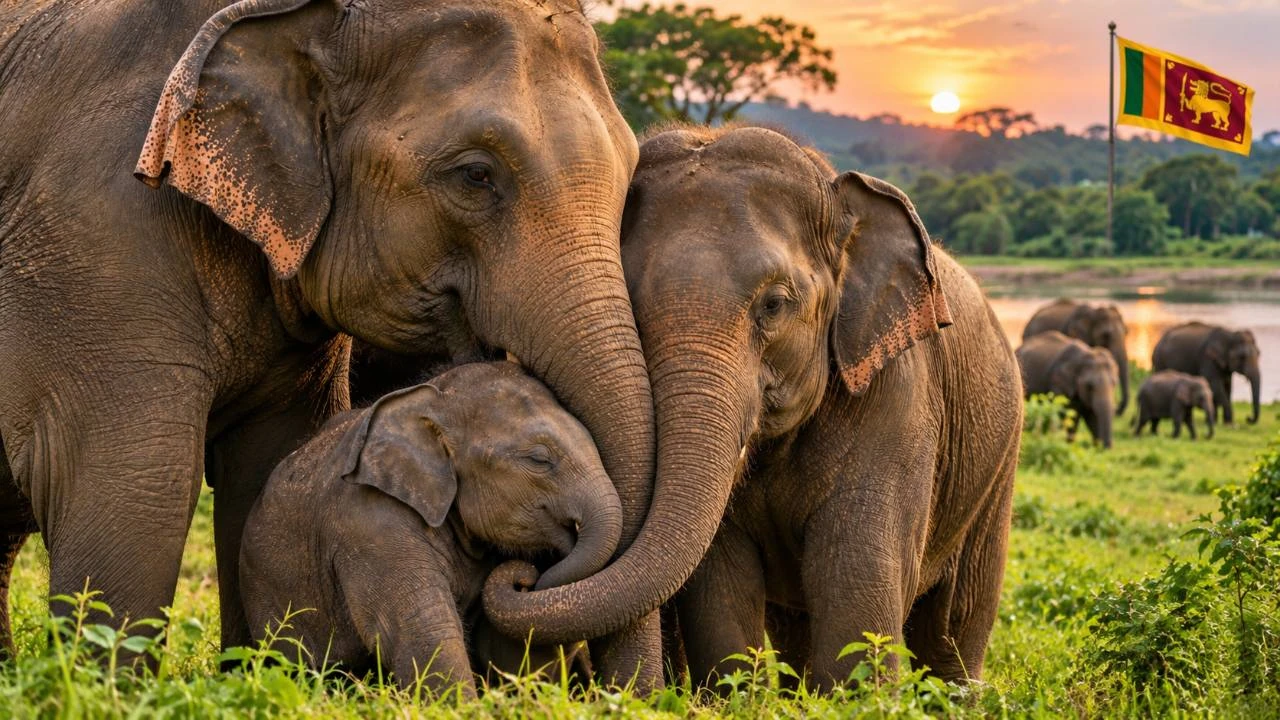
AI-generated editorial illustration supplied for PRESDA. The scene is imagined.
For more than a decade, researchers recorded which wild female Asian elephants spent time together in Sri Lanka’s Udawalawe National Park. Over time, larger communities gave way to smaller groups with fewer links between them. The study, published in Science in November 2026, traced the change to a period when losses accumulated faster than new individuals joined the observed population. Science: Madsen and colleagues
How the study tracked elephant relationships
The analysis followed 443 females over 12 years, from 2007 through 2018. A social network represents the individuals and their observed associations. Researchers can compare repeated associations over time to see whether familiar partners remain connected and whether ties still link different groups. Dryad: Annual network data and code
Why weak links can matter
A pair that rarely meets can still connect two otherwise separate groups. When many such connections disappear, animals can continue to associate with close partners while the larger community fragments. The team also detected changes among females present throughout the study. The network shifted even among elephants that remained under observation. Science: Madsen and colleagues
What one park can tell us about conservation
A disappearance from the study could reflect death or permanent departure. The authors discuss several possible pressures, including conflict with people and reduced habitat connectivity. The study describes one population of females and cannot establish that all Asian elephant populations are changing in the same way. Its conservation implication is to follow how elephants are connected alongside how many remain. UC San Diego: Study findings and context
Related coverage
how researchers observed sleeping sperm whales
FAQ
Frequently Asked Questions
Where did the study take place?
At Udawalawe National Park in Sri Lanka.
Did all elephant social bonds disappear?
No. The study found smaller, more isolated communities. Some close associations persisted.
PRESDA Dispatch
Stay Informed. Stay Aware.
A sharp briefing across AI, gaming, sport, business, world affairs, paparazzi, and lifestyle.