ASSYRIAN EMPIRE: THE WAR MACHINE THAT TERRIFIED THE ANCIENT WORLD
Behind the terrifying reputation: how armies, engineers, officials and scholars built an empire, and why its greatest cities fell.
The Assyrian Empire made power visible. Palace walls showed armies closing around cities, prisoners marching away and kings presiding over victory. These images were meant to leave little room for doubt about what resistance could cost. Yet the stone scenes show only one face of a society that also produced merchants, engineers, administrators and scholars.
Ancient Assyria began around Ashur on the Tigris, in what is now northern Iraq. Its greatest expansion came under the Neo-Assyrian kings of the first millennium BCE. Understanding their empire requires following both the armies that conquered territory and the institutions that turned conquest into enduring rule. British Museum: Introducing the Assyrians
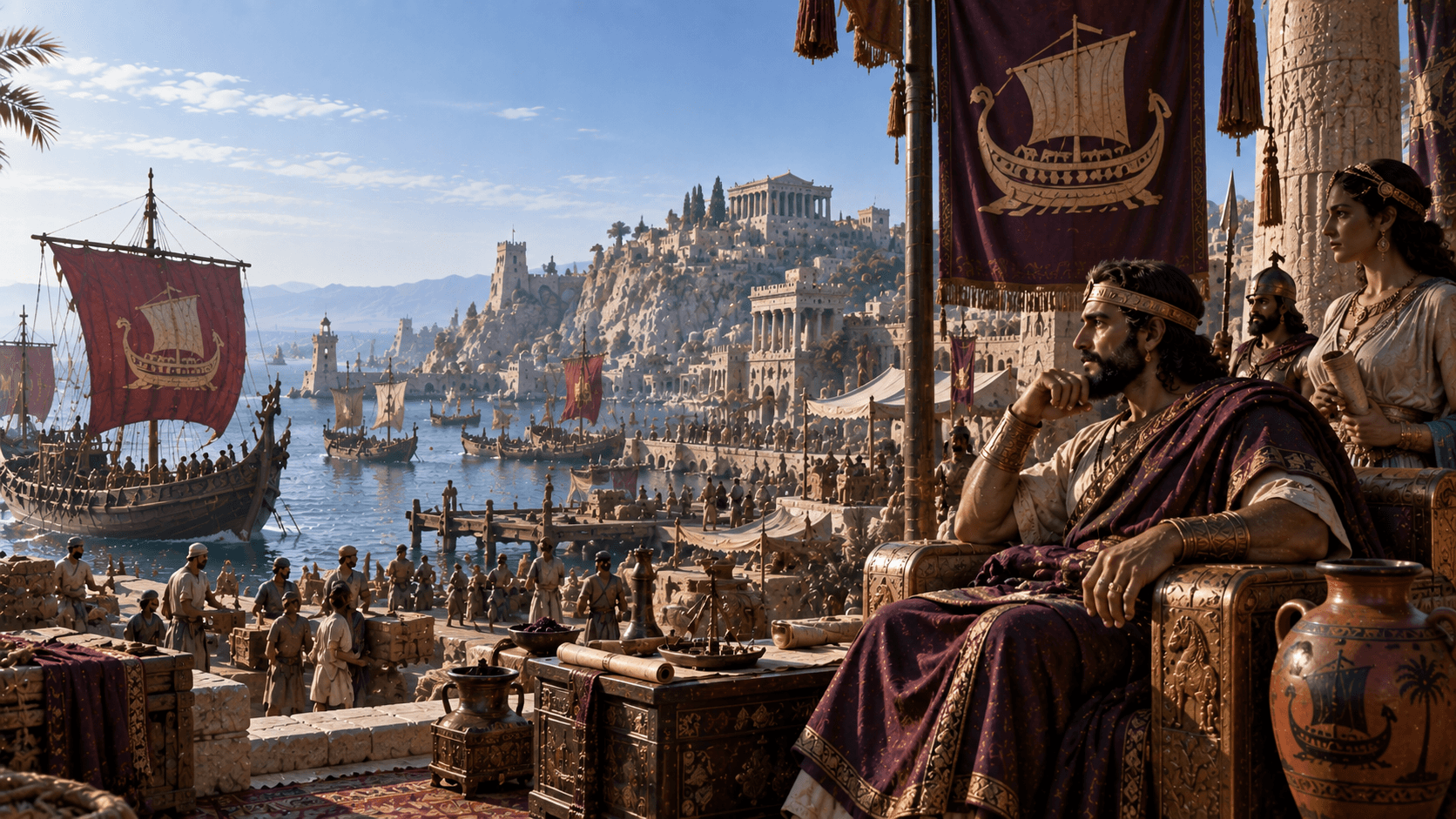
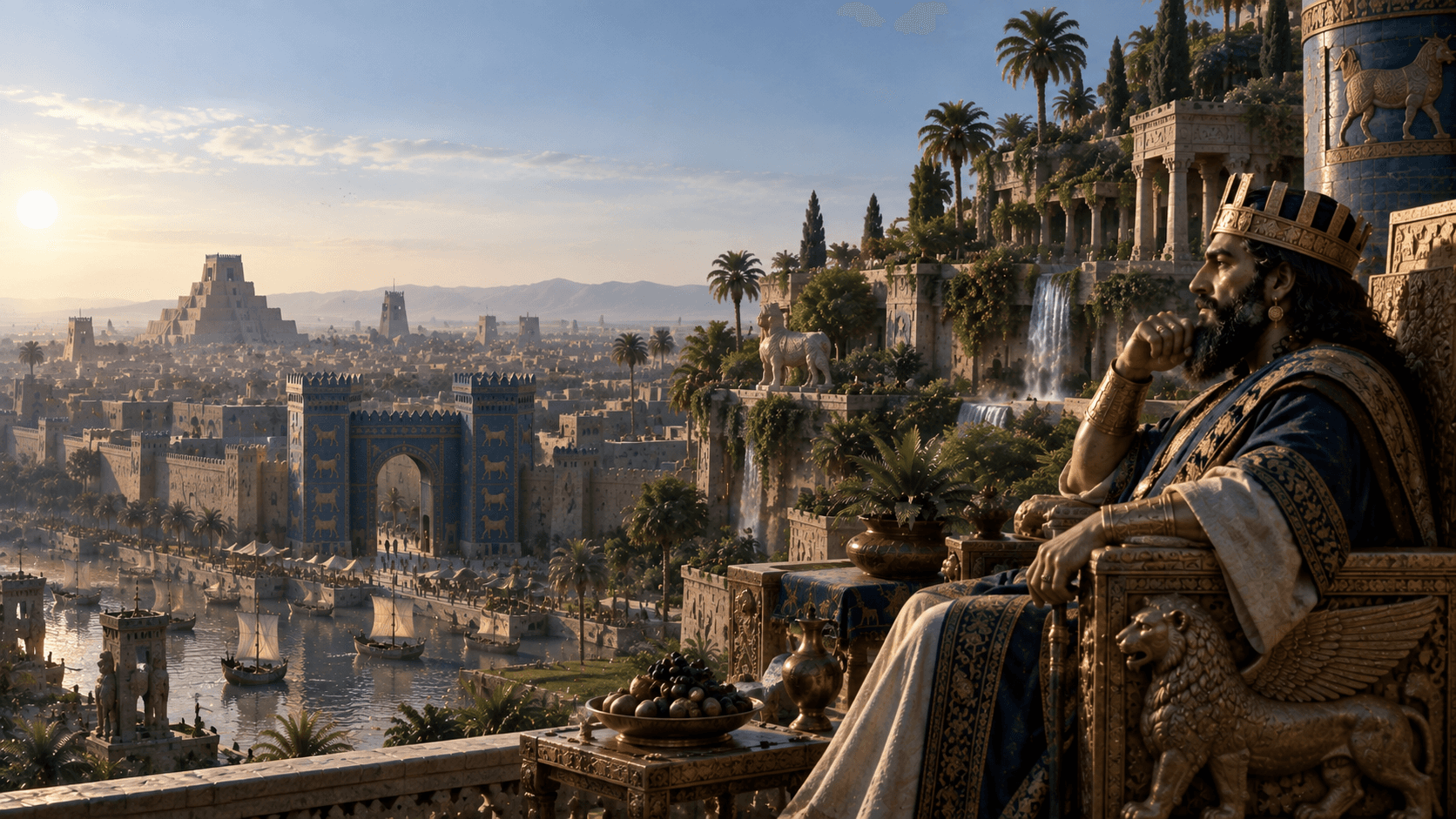
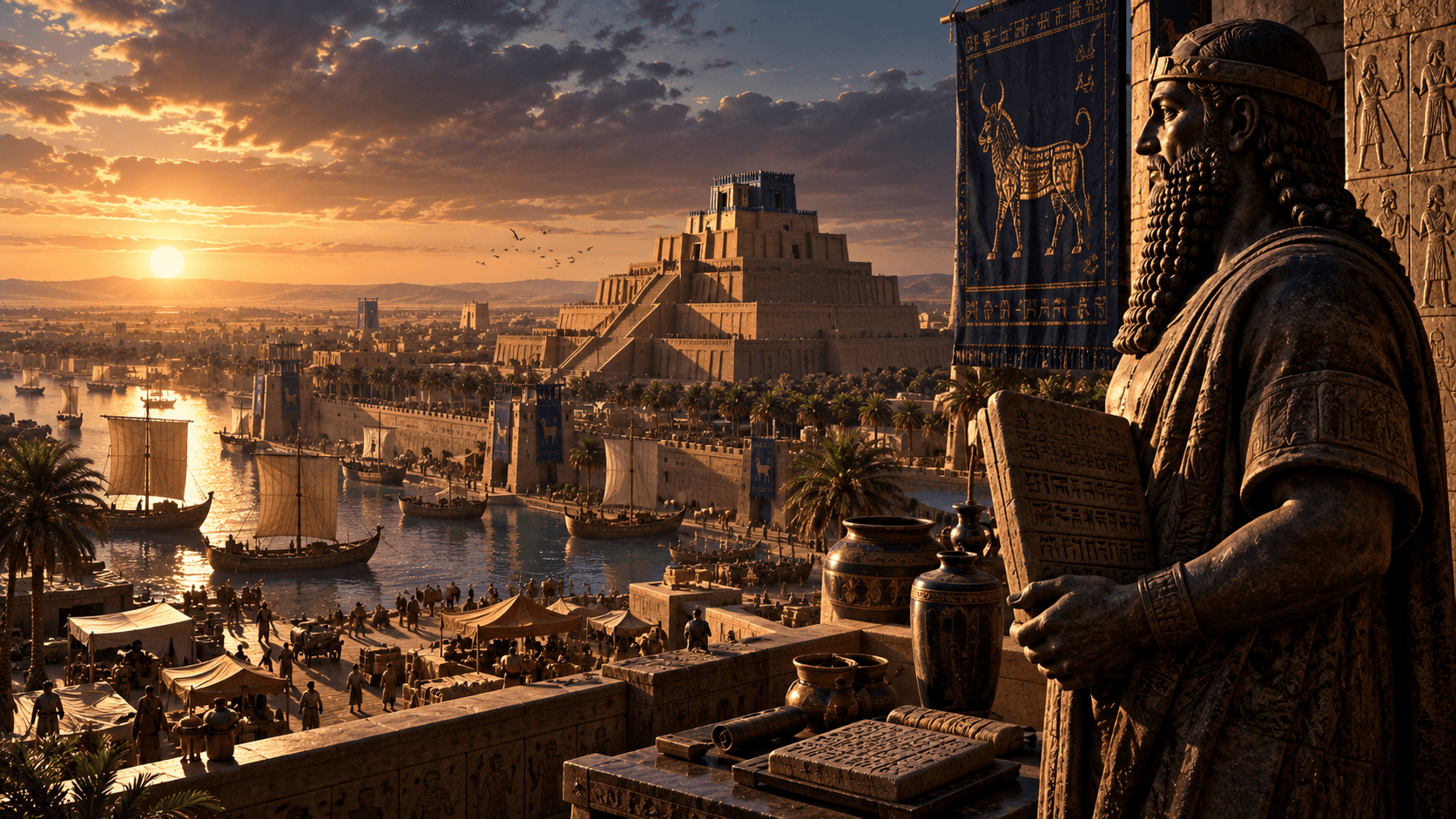
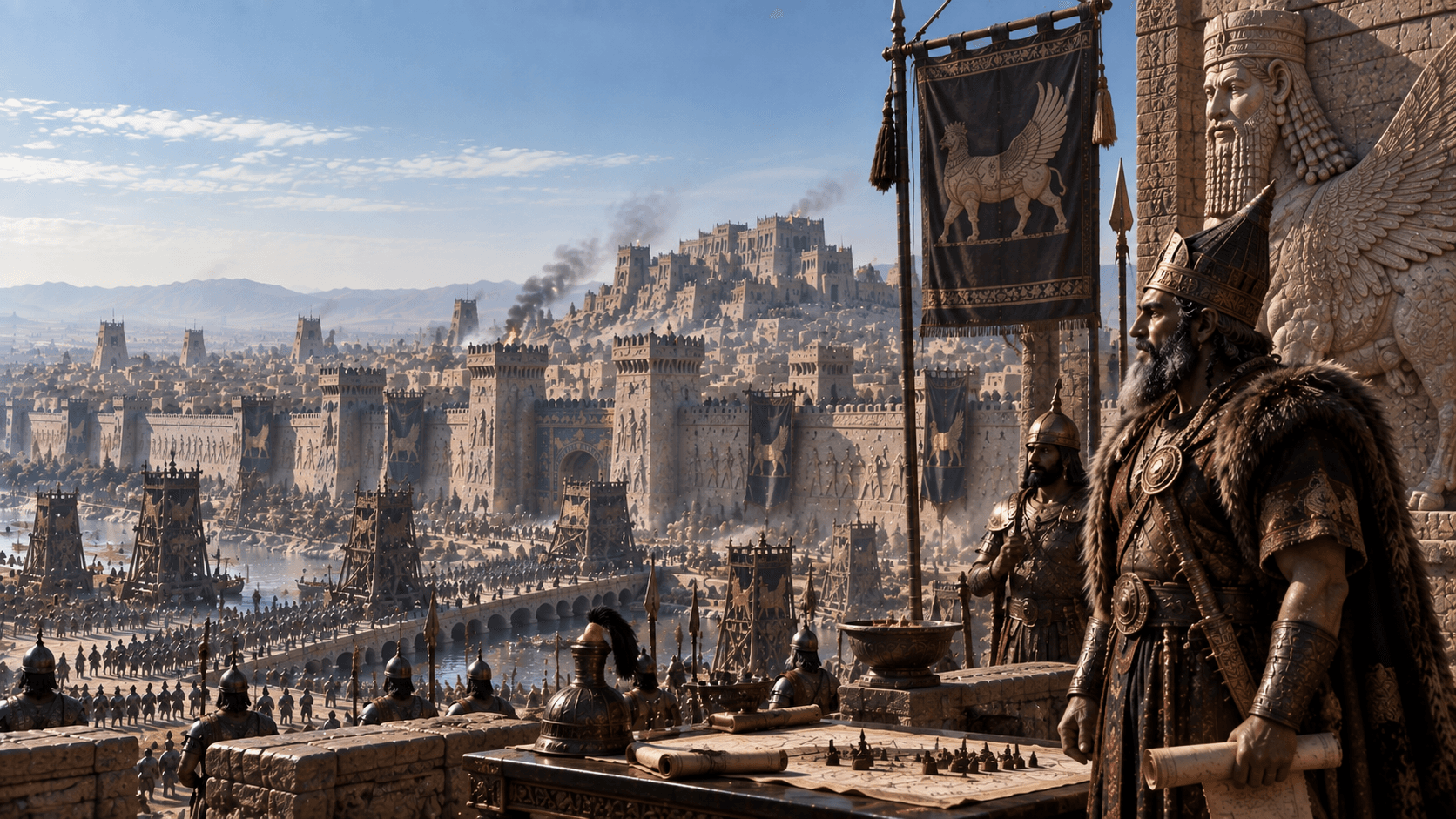
This is also a story about evidence. Royal inscriptions present the ruler’s preferred version of events. Letters reveal practical problems. Excavated cities preserve traces of construction and destruction. None supplies a complete history alone. The supplied hero is an imaginative editorial reconstruction, not a documented view of an identifiable Assyrian city or campaign.
WHERE WAS ASSYRIA, AND WHO WERE THE ASSYRIANS?
Assyria’s heartland lay in northern Mesopotamia, around cities including Ashur, Nineveh and Arbela. At its height, the empire extended far beyond that core into the Levant, Anatolia and western Iran, while its kings also campaigned in and briefly dominated Egypt. A map of its greatest reach should not be mistaken for a territory held uniformly throughout its history. ORACC: Assyrian royal correspondence project The Met: Assyria, 1365–609 BCE
“Assyrian” could refer to political membership, attachment to the land and god Ashur, or cultural and linguistic traditions. Those connections changed over time. Jonathan Valk’s study of ancient Assyrian identity treats that development as a historical question, rather than assuming a modern national identity existed unchanged in the Bronze Age. Jonathan Valk: Ancient Assyrians, introduction
Assyria and Babylonia shared much of Mesopotamia’s written and religious inheritance, but they were not the same state. Babylon lay farther south. Their relationship included war, political domination and intellectual exchange. Our history of Babylon and its successive empires follows the southern side of that relationship.
ASHUR BEFORE THE GREAT CONQUESTS
Ashur was a city before Assyria became a vast empire. UNESCO records occupation reaching back to the third millennium BCE and emphasizes the unusually close relationship between the city, the land and the god of the same name. Even when kings established magnificent residences elsewhere, Ashur retained its religious importance. UNESCO: Ashur (Qal’at Sherqat)
The early second millennium BCE reveals an Assyria that is easy to miss in stories dominated by warfare. Merchants connected Ashur with trading communities in Anatolia, especially Kanesh at modern Kültepe. Their surviving clay tablets record business, loans, legal disputes and family relationships. Textiles and tin travelled through commercial networks in which negotiation mattered as much as physical movement. The Met: The Old Assyrian Period, by Nancy Highcock
Early rulers shared authority with civic institutions, including a city assembly. Their titles could emphasize service to the god Ashur rather than unlimited personal kingship. In the eighteenth century BCE, Shamshi-Adad I incorporated Ashur into a larger northern kingdom. These changing arrangements caution against imagining one unbroken form of imperial government from the beginning. The Met: The Old Assyrian Period, by Nancy Highcock
Assyria inherited a world already shaped by urban administration and writing. The longer background belongs to the Sumerian cities and the development of cuneiform. Assyrian scribes worked within that evolving inheritance rather than inventing Mesopotamian literacy from nothing.
THE MIDDLE ASSYRIAN STATE: LEARNING TO RULE TERRITORY
In the fourteenth century BCE, Ashur-uballit I helped revive Assyria’s power as the dominance of Mitanni weakened. Later kings expanded control over northern Mesopotamia. Tukulti-Ninurta I carried Assyrian power into Babylonia in the thirteenth century BCE. The Middle Assyrian period established a territorial kingdom capable of sustained conquest, though succession conflict and resistance repeatedly tested it. The Met: Assyrian Origins, discoveries at Ashur
Expansion was not a steady ascent. Assyria lost substantial territory amid the upheavals at the end of the second millennium BCE, including pressure from Aramaean groups. Its later resurgence therefore involved recovering lands as well as reaching new ones. The famous Neo-Assyrian Empire grew from older institutions and memories of power. The Met: Assyria, 1365–609 BCE
THE NEO-ASSYRIAN RISE: FROM RECOVERY TO IMPERIAL EXPANSION
Ashurnasirpal II and the making of Nimrud
Ashurnasirpal II, who ruled from 883 to 859 BCE, transformed Kalhu, now called Nimrud, into a royal capital. His Northwest Palace connected military success with monumental display. Conquest supplied wealth and labour; the palace translated them into an environment designed to proclaim royal authority. The Met: Nimrud, by Michael Seymour
The building programme matters as much as the campaigns. An empire needed places where officials could gather, resources could be organized and outsiders could encounter the king’s carefully staged image. Nimrud became such a place. Its sculptures do not simply illustrate history: they helped rulers communicate how they wanted their history understood.
Tiglath-Pileser III and permanent annexation
In the eighth century BCE, Tiglath-Pileser III made expansion more systematically territorial. Defeated kingdoms could become Assyrian provinces rather than remaining tributary states visited by an army. Arpad provides a revealing example: after its defeat, Assyrian government stayed. Damascus was annexed in 732 BCE, while other conquests altered the political map of the Levant. ORACC: Tiglath-pileser III, by Karen Radner
This shift gave conquest a different administrative weight. A defeated ruler’s annual payment was useful, but a province offered more direct access to resources and manpower. It also demanded officials, communications and the continuing ability to suppress opposition. Military victories enlarged the empire’s obligations as well as its revenues. ORACC: Tiglath-pileser III, by Karen Radner
Sargon II and a new royal city
Sargon II took power in 722 BCE and faced resistance within Assyria as well as beyond it. He founded Dur-Sharrukin, modern Khorsabad, with construction beginning in 717 BCE. A new capital offered a monumental statement of authority and a way to reposition the court after internal conflict. ORACC: Dur-Sharruken, the Fortress of Sargon
His campaign of 714 BCE carried the army through the Zagros and against Urartu, a powerful northern rival. Its account describes difficult terrain and the seizure of wealth from the sanctuary at Musasir. Such campaigns combined strategic rivalry with the extraction of resources. They also produced texts that turned a complex expedition into a demonstration of the king’s exceptional ability. Penn Museum: Sargon’s March, a new translation
His son Sennacherib subsequently made Nineveh the principal royal centre. Ashur, Nimrud, Khorsabad and Nineveh therefore belong to different, overlapping stages of Assyrian history. Nineveh was not the empire’s only capital, and the empire was not created there in a single reign. ORACC: Dur-Sharruken, the Fortress of Sargon
SENNACHERIB: CONQUEST, REBELLION AND NINEVEH
Sennacherib’s campaign in Judah in 701 BCE provides unusually rich evidence for Assyrian warfare. Lachish was captured, while Jerusalem was not. Royal inscriptions, the Lachish palace reliefs and archaeological remains allow historians to compare representations of victory with events on the ground. Their agreement on some points does not make every detail of the royal narrative independently verified. ORACC: The Royal Inscriptions of Sennacherib, Part 1
Babylon presented a different and recurring problem. In 689 BCE, Sennacherib sacked the city after years of conflict. His account of destruction belongs to a long struggle over southern Mesopotamia, where conquest collided with Babylon’s political and religious prestige. Later Assyrian policies included restoration as well as punishment. Piotr Michalowski: Presence at the Creation
The king who devastated a rival city also expanded his own. Nineveh’s palaces, parks and waterworks expressed a royal claim to create prosperity. The contrast is part of imperial history: construction at the centre could coexist with destruction elsewhere, drawing on the resources and labour of the same political system.
ESARHADDON, ASHURBANIPAL AND THE REACH INTO EGYPT
Esarhaddon’s forces captured Memphis in 671 BCE, extending Assyrian intervention into Egypt. His son Ashurbanipal inherited an empire that could project force across enormous distances, but possession on a royal map was not the same as secure, permanent control. Egypt repeatedly required military attention. The Met: Assyria, 1365–609 BCE
Ashurbanipal is conventionally dated to 669 or 668 BCE through about 631 BCE in recent British Museum and ORACC treatments. Sources sometimes begin reigns with an accession year and sometimes with the first full regnal year; the end of his reign has also been debated. Those differences should not be hidden by presenting every modern date range as identical. British Museum: Who was Ashurbanipal? ORACC: Royal Inscriptions of the Neo-Assyrian Period
His reign combined scholarly patronage with destructive warfare. The conflict with his brother Shamash-shum-ukin, king in Babylon, exposed the fragility of dynastic arrangements. Babylon fell to Ashurbanipal’s forces in 648 BCE. A surviving relief represents the inspection of booty and the removal of captives, making clear how victories were turned into royal images. British Museum: Relief of booty and captives from Babylon
HOW DID THE ASSYRIAN WAR MACHINE ACTUALLY WORK?
Organization: different troops performing different jobs
The army combined infantry, cavalry and chariotry. Archers, spearmen and shield-bearers had complementary roles; mounted troops added mobility, while chariots retained military and royal prestige. The balance changed over time. A ninth-century army should not be reconstructed simply by copying scenes from a seventh-century palace. Oxford Bibliographies: Assyrian Warfare ORACC: Assyrian military and administrative terms
By the mid-eighth century BCE, Assyria maintained a professional standing force, reinforced by additional manpower. Conquered peoples could be incorporated into military service. This was not an army composed exclusively of men from the original heartland. Imperial expansion helped enlarge the force that made further expansion possible. British Museum: Introducing the Assyrians
Horses, weapons and the limits of the iron explanation
Cavalry required a dependable supply of horses, not merely skilled riders. Western Iran became a major source, with horses obtained through tribute and other forms of procurement. Assyrian activity in the Zagros cannot be understood only as a search for land: strategically valuable animals were part of the calculation. ORACC: The Medes, purveyors of fine horses
Iron weapons are real archaeological objects. The Met holds an iron arrowhead from Nimrud dated to about 612 BCE. But the presence of iron does not establish that every soldier had identical equipment, or that Assyria enjoyed an exclusive technological secret. The Met: Iron arrowhead from Nimrud
Research on early iron metallurgy places its development and adoption within a much wider Near Eastern history. Assyrians did not invent iron. The useful question is how a state obtained materials, equipped troops and sustained production. An effective military system cannot be explained by the name of one metal. Oxford Research Archive: The innovation and adoption of iron in the ancient Near East
Siege engineering: getting through a defended city
Fortified cities presented a different problem from an army in the open. Assyrian reliefs show battering rams, protected siege engines, ladders and troops approaching walls. Towers and raised positions supported attacks, while archers could cover soldiers operating closer to the defences. These were coordinated methods, not a single wonder weapon. The Met: Relief fragment showing the siege of a city Oxford Bibliographies: Assyrian Warfare
Lachish is especially valuable because its siege is represented in art and investigated archaeologically. Excavations identified the great assault ramp associated with the Assyrian attack. Moving an engine towards a wall could require substantial earth and stone works before the dramatic moment depicted by an artist. Labour and terrain were central to the operation. Penn Museum: Lachish, by David Ussishkin
Assyrians could also blockade a city, restricting supplies and relief rather than immediately storming it. Siege warfare combined engineering, time and coercion. The practical aim was to overcome resistance at an acceptable cost to the attacking force, not to reproduce the same spectacular assault everywhere. British Museum: Introducing the Assyrians
Intelligence and communications
Surviving administrative terminology identifies officers responsible for scouts. Royal correspondence places military decisions within exchanges between the king and officials across the empire. Reports, requests and warnings reveal a more complicated world than the effortless victories proclaimed on monuments. Command depended on information reaching the people who could act on it. ORACC: Assyrian military and administrative terms ORACC: Assyrian royal correspondence project
The imperial road and relay system helped move official messages. Authorized couriers could use stations and fresh animals, including mules. This was a privileged state service, not a public postal network open to every traveller. Roads mattered because an empire could lose control of a province long before news reached the capital. ORACC: The King’s Road, by Karen Radner
Logistics: the less visible machinery of conquest
Soldiers needed food and water; horses needed fodder; weapons and vehicles needed repair. Routes and seasons limited where armies could move and remain. Historian Andreas Fuchs emphasizes organization and the resources behind Assyrian warfare rather than treating superior weaponry as its sufficient explanation. Andreas Fuchs: Assyria at War, Strategy and Conduct
This makes the phrase “war machine” useful only if it includes the work behind the fighting. A siege engine was the visible end of decisions about labour, timber, transport and protection. A cavalry charge depended on animals obtained and maintained long beforehand. Military power was a continuing administrative achievement, not a permanent possession.
WERE THE ASSYRIANS REALLY THE MOST BRUTAL EMPIRE?
Assyrian rulers advertised extreme violence, and dismissing all of it as fiction would be wrong. Texts and reliefs describe or depict executions, mutilation, destroyed settlements and captives removed from their homes. Such representations made punishment part of the public language of kingship. British Museum: Who was Ashurbanipal? The Met: Relief fragment showing the siege of a city
Yet “the most brutal empire” is not a measurable conclusion. Ancient societies left radically unequal records. Some rulers commissioned extensive depictions of cruelty; others communicated military power differently. We have no comparable census of suffering across ancient empires that could support a reliable ranking.
Royal propaganda was not necessarily a lie. It could select genuine acts, exaggerate scale, omit failures and present violence as legitimate punishment. Palace art addressed gods, court audiences and visitors as well as potential enemies. A scene intended to intimidate remains evidence of that political intention even when its details cannot all be checked.
The strongest approach is comparison. At Lachish, archaeological evidence supports a violent conquest. Elsewhere, inscriptions may provide the principal account. Historians should state those differences instead of treating every royal claim as a modern battlefield report. Equally, recognizing an ancient rhetorical convention should never erase the people who experienced an attack. ORACC: The Royal Inscriptions of Sennacherib, Part 1 Penn Museum: Lachish, by David Ussishkin
Deportation was a policy, not an incidental aftermath
Population transfer could weaken resistance, redistribute labour and bring specialists into the imperial heartland. Families, craftspeople and members of defeated communities were relocated. Deportation was not always identical to enslavement, and individual circumstances differed, but movement ordered by a conquering state was not voluntary migration. Karen Radner: Mass deportation and Assyrian resettlement
Official sources often emphasize the productive value of relocated people. That is the state’s perspective. Provisioning a convoy or allocating land could serve imperial interests while people still lost homes and autonomy. The policy’s administrative sophistication and its coercion belong in the same explanation. Karen Radner: Mass deportation and Assyrian resettlement
No precise empire-wide death toll or deportation total is given here. Royal figures, incomplete records and uncertain population estimates make such totals difficult to verify. Avoiding an unsupported number does not diminish the documented reality of forced displacement.
HOW ASSYRIA GOVERNED WHAT IT CONQUERED
Provinces were managed through officials answerable to the king, while some territories remained under subordinate rulers. Governors combined administrative and military responsibilities. Scribes, seals and deputies helped orders operate beyond the palace. The surviving system was hierarchical, but it needed delegated authority to function at a distance. ORACC: Governors and Assyrian administration
This created recurring tensions. An official needed enough resources to carry out the king’s instructions, yet powerful officials could develop interests of their own. Correspondence makes imperial rule appear as repeated negotiation, supervision and problem-solving. A royal command was only the beginning of its implementation. ORACC: Assyrian royal correspondence project ORACC: Governors and Assyrian administration
The Phoenician coastal cities provide a useful connection to the Mediterranean. Assyrian pressure interacted with maritime trade, access to materials and the production of luxury goods. The Met’s Assyria to Iberia research traces how these contacts carried objects and artistic ideas westward. Inland imperial power and coastal commercial networks shaped each other without becoming the same kind of society. The Met: Assyria to Iberia at the Dawn of the Classical Age
NIMRUD, KHORSABAD AND NINEVEH: CITIES OF IMPERIAL DISPLAY
Nimrud’s Northwest Palace made relief sculpture an essential part of its architecture. Images, inscriptions and guarded entrances surrounded visitors with representations of order and royal success. The discovery of these remains helped modern scholarship move beyond the biblical and classical accounts through which Assyria had long been known. The Met: Nimrud, by Michael Seymour
Khorsabad was Sargon II’s new foundation, while Nineveh was an older city transformed into a great imperial capital. Their different histories matter. Assyrian urbanism included both ambitious planned projects and the enlargement of existing settlements. These capitals were not interchangeable film sets. ORACC: Dur-Sharruken, the Fortress of Sargon
Lamassu and the power of palace art
Human-headed winged bulls and lions guarded important entrances. Many lamassu have five legs so that they appear stationary from the front and striding from the side. The apparent anatomical puzzle is a deliberate visual solution, not evidence that the sculptor could not count. The Met: Human-headed winged bull, lamassu
Reliefs similarly rewarded different kinds of attention. Visitors could see movement, hierarchy and conquest at a glance, while inscriptions added a royal account. Their artistry and political purpose are inseparable. Admiring the skill of their makers does not require accepting the justice of the victories they celebrate.
Sennacherib’s water engineering
Nineveh’s expansion depended on water brought through canals and aqueducts. The surviving works at Jerwan belong to this wider engineering landscape. They supplied a royal environment in which gardens and cultivation could demonstrate a king’s ability to create abundance. British Museum: Paradise on earth, the gardens of Ashurbanipal
These are substantial human engineering achievements. They also feature in the debated hypothesis that the legendary Hanging Gardens were associated with Nineveh rather than Babylon. Evidence for Assyrian canals and gardens is much firmer than the identification of those gardens with the later classical wonder. The two claims should not be silently merged. British Museum: Paradise on earth, the gardens of Ashurbanipal
ASHURBANIPAL’S LIBRARY: KNOWLEDGE AT THE IMPERIAL CENTRE
The tablets associated with Ashurbanipal’s Library preserve literature, divination, scholarly and medical material. They reveal royal investment in collecting and copying learned texts, but the term “library” should not suggest a modern public institution. Knowledge served court and scholarly purposes within a very different world. British Museum and LMU Munich: What was Ashurbanipal’s Library?
Current research also cautions against imagining a perfectly intact collection discovered exactly as it stood in 612 BCE. The excavated tablets and fragments have complicated contexts, and reconstructing the ancient collections is an ongoing scholarly task. A large modern inventory is not automatically a count of complete ancient books. British Museum and LMU Munich: What was Ashurbanipal’s Library?
Among the most famous survivors is the seventh-century BCE Flood Tablet, K.3375, part of Tablet XI of the Epic of Gilgamesh. It preserves a Mesopotamian flood narrative within a much older literary tradition. Ashurbanipal did not write the epic; the collections at Nineveh helped transmit texts that long preceded him. British Museum: The Gilgamesh Flood Tablet, K.3375
The survival is a powerful counterpoint to the army’s story. Much of what modern readers can know about ancient Mesopotamian literature depends on manuscripts preserved in an imperial centre whose rulers were also responsible for destruction. Scholarship and coercion were not separate civilizations. They could inhabit the same palace.
WHY DID THE ASSYRIAN EMPIRE FALL?
The empire’s scale did not guarantee stability. Succession disputes, provincial resistance and recurring warfare created vulnerabilities. The final decades are difficult to reconstruct in detail, and historians disagree over parts of their chronology. A confident tale in which one weak king single-handedly destroyed a flawless system is not supported by the evidence. Cambridge Ancient History: The fall of Assyria
Nabopolassar’s Babylonian power became a decisive enemy, while the Medes under Cyaxares attacked from the east. Their alliance brought pressure into the Assyrian heartland. The Babylonian Chronicle is a crucial source, but it is fragmentary and records events from outside the Assyrian court. British Museum: Babylonian Chronicle, 616–609 BCE
Ashur fell in 614 BCE. In 612 BCE, Babylonian and Median forces besieged and destroyed Nineveh. This was a devastating loss of a royal and administrative centre, not simply the defeat of an army in the field. It also struck at the monumental image of enduring kingship that Assyrian rulers had worked so hard to construct. British Museum: Babylonian Chronicle, 616–609 BCE
Nineveh’s fall was not the final episode
Resistance continued around Harran under Ashur-uballit II, with Egyptian support. Harran was lost in the campaign of 610 BCE, and an attempt to recover it in 609 BCE failed. The destruction of Nineveh and the end of organized Assyrian imperial resistance therefore belong to related but distinct moments. ORACC: Royal Inscriptions of Ashurbanipal and His Successors, Part 3
The collapse is best explained through interacting processes: struggles over leadership, loss of territory and resources, and enemies able to coordinate attacks on the core. Their relative importance remains a subject for interpretation. Military strength depended on a functioning state, and that state could itself become the target. Cambridge Ancient History: The fall of Assyria
WHAT HAPPENED TO THE ASSYRIANS AFTER THE EMPIRE?
The end of imperial rule did not mean every inhabitant disappeared. Ashur itself experienced later occupation and a significant Parthian revival. Archaeology distinguishes severe destruction and reduced settlement from the extinction of an entire population. UNESCO: Ashur (Qal’at Sherqat)
Over subsequent centuries, northern Mesopotamia formed part of new political worlds, including the Persian imperial order. Languages and religious traditions changed. Aramaic developed into multiple regional forms; Syriac became a major literary language of Christianity. These transformations unfolded over centuries, not on the day Nineveh fell. Cambridge Ancient History: Syriac culture
Modern Assyrians are living communities, with histories in Iraq and the wider region and diaspora. Their cultural and political experience belongs to history in its own right. Alda Benjamen’s research, for example, examines Assyrian participation in modern Iraqi life through archival and community sources. They should not be reduced to a footnote about an ancient army. Alda Benjamen: Assyrians in Modern Iraq
Equally, historical continuity does not mean an identity, language or religion remained unchanged across millennia. Asking how communities preserved, adapted and reinterpreted their heritage is more useful than choosing between total disappearance and a civilization frozen in time. Jonathan Valk: Ancient Assyrians, introduction
MYTH VS REALITY: THE ASSYRIAN EMPIRE
Assyria conquered everyone because it invented iron weapons
Iron technology preceded the Neo-Assyrian Empire and spread across the Near East. Assyrian effectiveness depended on organization, resources and military practice as well as equipment. An exclusive iron advantage is too simple an explanation. Oxford Research Archive: The innovation and adoption of iron in the ancient Near East Andreas Fuchs: Assyria at War, Strategy and Conduct
Every account of Assyrian cruelty is either exact truth or pure fiction
Both extremes misread the evidence. Royal records could describe real violence while selecting, exaggerating and justifying it. Archaeology and non-royal documents help historians test particular claims. There is no sound numerical league table identifying history’s “most brutal” empire.
Nineveh was Assyria’s only capital
Ashur, Nimrud and Khorsabad also had major royal roles. The movement of courts and building projects is part of the empire’s political history. Nineveh’s fame should not erase the other cities. UNESCO: Ashur (Qal’at Sherqat) ORACC: Dur-Sharruken, the Fortress of Sargon
Ashurbanipal was the last Assyrian king
He was not. Later rulers struggled to hold the state together before and after Nineveh’s fall. Later stories that merge a decadent last king with Ashurbanipal are not reliable substitutes for the cuneiform record. British Museum: Who was Ashurbanipal? ORACC: Royal Inscriptions of Ashurbanipal and His Successors, Part 3
Assyria was just another name for Babylon
They were distinct political and geographical centres within an interconnected Mesopotamian world. Assyrian kings could rule or attack Babylon while valuing its learning and religious prestige. Shared cultural traditions did not eliminate rivalry. Piotr Michalowski: Presence at the Creation
The Assyrians vanished in 612 BCE
An imperial capital fell; an entire people did not evaporate. Later settlement and the histories of subsequent communities require their own evidence and chronology. The destruction of a state is not the same event as the disappearance of everyone it once governed. UNESCO: Ashur (Qal’at Sherqat) Alda Benjamen: Assyrians in Modern Iraq
ASSYRIA’S LEGACY: POWER, MEMORY AND SURVIVAL
Assyria made conquest durable through officials, communications, redistribution and monumental authority. Its legacy also includes art and manuscripts that changed modern knowledge of the ancient world. None of that cancels the human cost of its expansion.
The most revealing contrast is between the relief and the letter. A relief presents a king whose enemies always lose. A letter exposes a government that needs information, supplies and cooperation. Read together with archaeology, they bring the Assyrian Empire down from legend: an extraordinary concentration of human power, built through institutions and violence, and never beyond the possibility of collapse.
FAQ
Frequently Asked Questions
Where was the Assyrian Empire?
Its heartland was in northern Mesopotamia, mainly present-day northern Iraq. At its height it controlled or dominated territories extending into the Levant, Anatolia, western Iran and, for a time, Egypt.
Why was the Assyrian army so effective?
It combined different troop types with siege engineering, intelligence, communications and sustained access to supplies and manpower. Its strength cannot be reduced to iron weapons alone.
Did the Assyrians invent iron weapons?
No. Iron metallurgy developed earlier and spread across the wider Near East. Assyria used iron within a military system that also depended on organization, procurement and logistics.
Were the Assyrians the most brutal ancient empire?
Assyrian violence and forced displacement are documented, but there is no reliable comparative measure supporting that ranking. Royal propaganda must be assessed alongside archaeology and other records.
When did Nineveh fall?
Nineveh fell to Babylonian and Median forces in 612 BCE. Assyrian resistance continued around Harran, with an unsuccessful attempt to recover that city in 609 BCE.
What was Ashurbanipal’s Library?
It was a collection of scholarly and literary cuneiform texts associated with the royal court at Nineveh. Its surviving tablets include manuscripts of the Epic of Gilgamesh, but it was not a modern public library.
Were Assyria and Babylon the same empire?
No. They were distinct political centres in northern and southern Mesopotamia. Their histories involved shared cultural traditions, repeated conflict and periods of Assyrian domination over Babylon.
Did the Assyrians disappear after their empire fell?
No. Imperial collapse did not erase all settlement or population. Later regional history involved major cultural and linguistic changes, and modern Assyrian communities have their own living histories.
PRESDA Dispatch
Stay Informed. Stay Aware.
A sharp briefing across AI, gaming, sport, business, world affairs, paparazzi, and lifestyle.