BAGAN: THE ANCIENT KINGDOM OF THOUSANDS OF TEMPLES
How Bagan’s Buddhist monuments were built, what UNESCO’s 3,595-monument inventory counts and why conservation and living worship matter.
Editorial illustration supplied for PRESDA.
Across the dry plain beside Myanmar’s Ayeyarwady River, Bagan’s temples and stupas form the surviving landscape of a powerful Buddhist kingdom. Its greatest building period belongs to the eleventh through thirteenth centuries. UNESCO’s inscription records 3,595 monuments within eight components, including several kinds of religious structure. That number describes an archaeological inventory, rather than 3,595 identical temples. The deeper story concerns the communities, resources and beliefs that made construction on this scale possible, and the care needed to sustain it. UNESCO: Bagan’s significance and inventory UNESCO: Bagan nomination dossier
Where was the kingdom of Bagan?
| Period | Milestone |
|---|---|
| Eleventh–thirteenth centuries | Peak of Bagan’s royal and monumental development |
| 1975 and 2016 | Major damaging earthquakes |
| 2019 | World Heritage inscription |
| 2026 | Committee calls for continued post-2025 earthquake monitoring |
Bagan developed on a bend of the Ayeyarwady, in central Myanmar. The river connected its political centre with wider networks of movement and exchange. Getty’s conservation account describes its flourishing as a royal capital between 1044 and 1287 CE. The monumental landscape preserves the period when royal power and Buddhist religious investment became closely linked. Its position within a productive and inhabited region mattered as much as the imposing outline of the largest buildings. Getty Conservation Institute: Bagan Conservation Project
The surviving landscape includes homes, fields and contemporary urban areas as well as archaeological remains. UNESCO’s account treats those relationships as part of the property’s significance. Temples can appear isolated in a sunrise photograph, but their historical setting involved transport, cultivation, labour and continuing use. Understanding the plain as a lived landscape helps explain how building campaigns were supported and why conservation decisions affect people as well as ancient masonry. UNESCO: Bagan’s significance and inventory
Why were so many monuments built?
The Buddhist practice of merit-making encouraged acts of religious generosity, including the support of buildings and institutions. Rulers and other donors could give material form to devotion through temples, stupas and related works. UNESCO identifies that continuing tradition as central to Bagan’s exceptional character. Religious patronage also had a political dimension: impressive donations expressed resources and authority. The landscape accumulated over generations of investment, with temple construction reaching a peak in the thirteenth century. UNESCO: Bagan’s significance and inventory UNESCO: Bagan nomination dossier
A religious gift also needs a working economy
Building requires materials, skilled labour, transport and coordination. Maintaining a religious foundation also creates continuing needs after construction ends. Bagan’s scale therefore suggests an organised relationship between religious aspirations and economic resources. This is an explanation of how patronage works, rather than a calculation of the cost of every building. The surviving structures and inscriptions provide evidence for investigating those relationships; a panoramic view alone cannot identify all donors or explain every foundation.
Are all the buildings temples?
The inventory includes temples, stupas, monasteries and other structures. These categories reflect different architectural forms and religious functions. A temple can contain accessible interior spaces and images, while a stupa commonly presents a solid monumental form associated with sacred presence and devotion. Their profiles and circulation differ. Distinguishing them helps explain why the plain contains such varied silhouettes and why conservation cannot rely on a single standard design for all its monuments. UNESCO: Bagan’s significance and inventory Getty Conservation Institute: Bagan Conservation Project
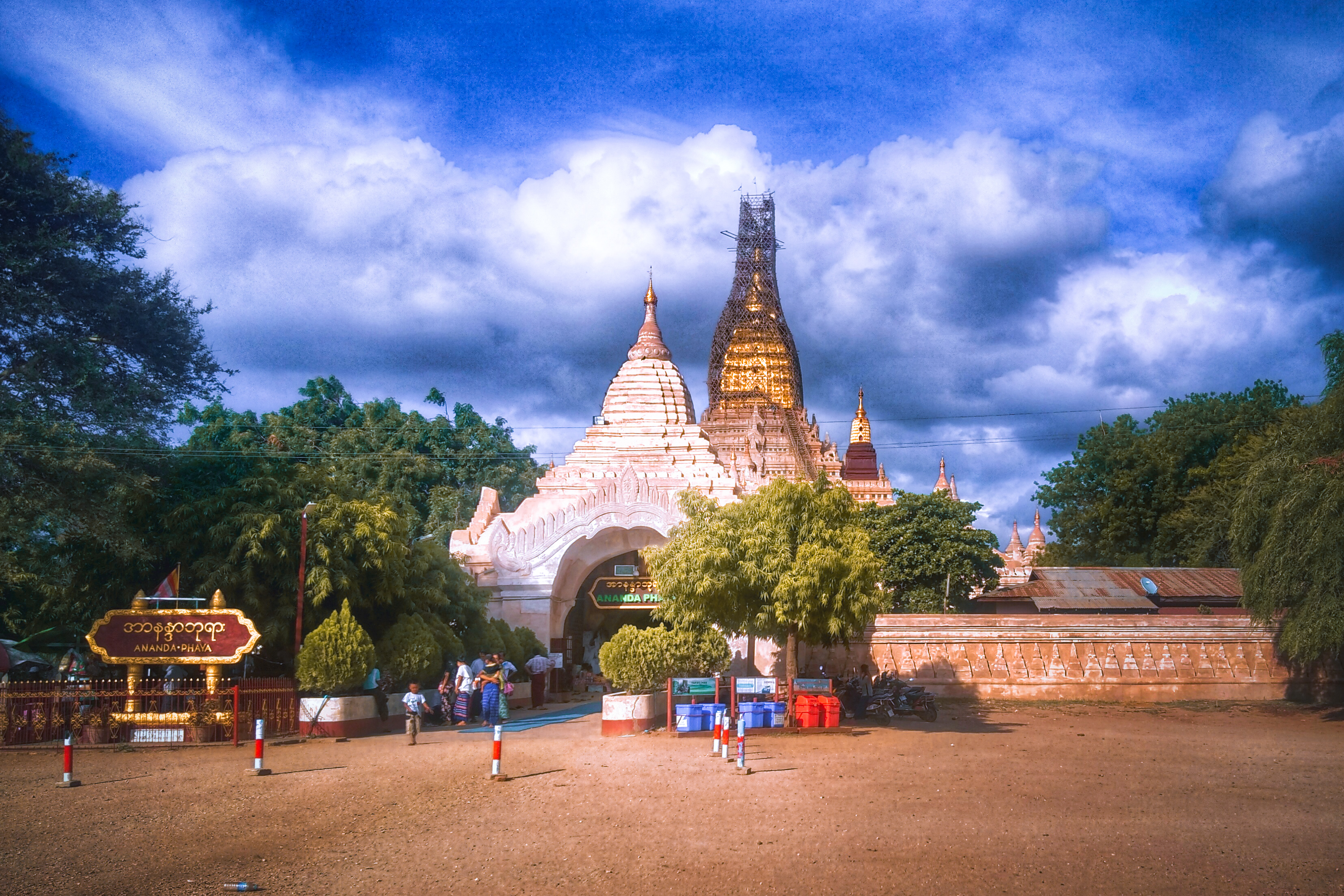
Ananda Temple at Bagan, photographed by Ye Phyo Paing on July 7, 2017. The dated photograph documents an identifiable monument rather than current access or condition.
The count of 3,595 is tied to UNESCO’s documented property and inventory. Popular descriptions using “thousands of temples” communicate scale but simplify its contents. A higher historical estimate would answer another question, concerning buildings once present and the evidence for reconstructing that total. Here the recorded inventory is used explicitly, with its scope preserved. It is a count of known monuments of several kinds, rather than an exact census of every structure ever built in the kingdom. UNESCO: Bagan nomination dossier
What can interiors reveal that skylines cannot?
Bagan preserves sculpture, wall painting, stucco, glazed decoration, votive tablets and inscriptions. Getty treats this varied material as part of an integrated cultural landscape. An interior can preserve sequences of images and the relationship between devotional activity and architecture. Inscriptions can provide information different from a painted scene or a brick wall. These forms of evidence work together, allowing researchers to investigate religious practice, patronage and workmanship beyond the visual drama of the towers. Getty Conservation Institute: Bagan Conservation Project
Why original fabric matters
A wall carries evidence in its materials, joints and surface layers. Repairs can protect that evidence, while replacement can sometimes make it harder to distinguish what is old. Conservation requires decisions about stability, legibility and how much intervention is justified. The aim is to keep buildings usable and understandable while retaining their historical information. Comparing construction types and past repairs helps identify why one monument behaves differently from another under environmental stress. Getty Conservation Institute: Bagan Conservation Project World Bank: Bagan Disaster Risk Management Plan
Why did the kingdom decline?
Getty places the end of Bagan’s period as a royal capital in the context of the Mongol invasion in the late thirteenth century. Political transformation did not erase the monuments or bring religious life to a permanent halt. UNESCO’s inscription emphasises continuing worship and merit-making. The distinction between a kingdom’s political decline and a sacred landscape’s ongoing life is essential. Bagan’s history extends across both, with later communities inheriting and reshaping relationships with the buildings. UNESCO: Bagan’s significance and inventory Getty Conservation Institute: Bagan Conservation Project
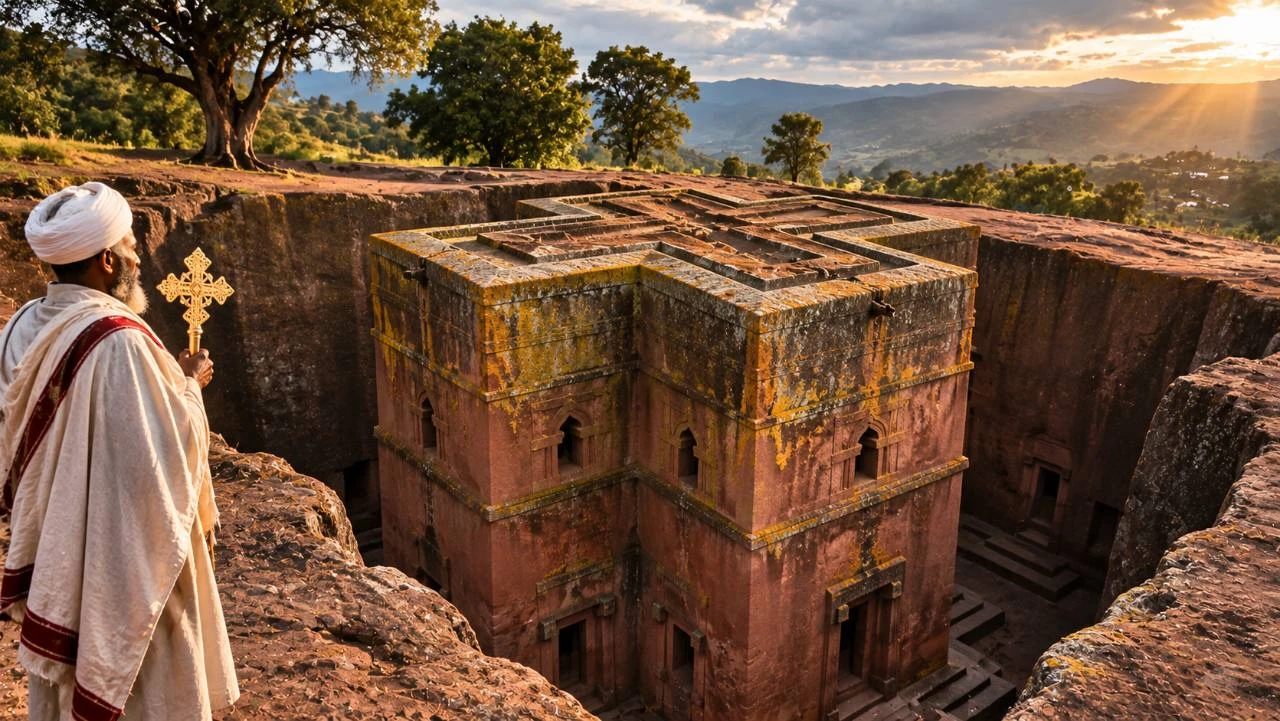
The continuing presence of worshippers changes how preservation should be understood. A shrine can be an archaeological record and an active religious place at the same time. Decisions about access, offerings, maintenance and presentation need to take both roles seriously. The relationship differs from that of an abandoned ruin protected solely for display. For another living sacred landscape, PRESDA’s feature on Lalibela’s rock-hewn churches explores architecture whose care is inseparable from continuing religious use.
How have earthquakes affected Bagan?
The site has experienced damaging earthquakes, notably in 1975 and 2016. The World Bank’s disaster risk plan considers structural vulnerability, preparedness and response across the heritage landscape. Tall upper elements and differences in construction or earlier repairs can affect the kind of damage a building suffers. Assessment therefore has to examine individual monuments within a larger risk strategy. A reconstructed skyline can conceal the difficult structural questions that follow a damaging event. World Bank: Bagan Disaster Risk Management Plan
The nomination dossier records 389 monuments damaged in the 2016 event, while Getty’s broader project description uses “over 400 structures.” Those figures come from different records and should retain their stated scope. They are not a current count of unrepaired buildings. In 2026, the World Heritage Committee also called for continued monitoring after the March 2025 earthquake, including attention to incremental damage. Reporting the latest decision prevents an account of Bagan’s risks from stopping at 2016. UNESCO: Bagan nomination dossier Getty Conservation Institute: Bagan Conservation Project World Heritage Committee: Bagan conservation decision, 2026
What does conservation involve now?
Getty’s project combines research, building assessment, conservation methods and training, rather than treating repairs as isolated cosmetic work. The 2026 committee decision refers to disaster planning, archaeological risk management, agriculture and coordinated mapping. These measures address relationships across the site. Water, land use, development and building condition can interact, so conserving one monument requires awareness of what happens around it. Training and reliable records help future teams understand the choices already made. Getty Conservation Institute: Bagan Conservation Project World Heritage Committee: Bagan conservation decision, 2026
What does World Heritage recognition protect?
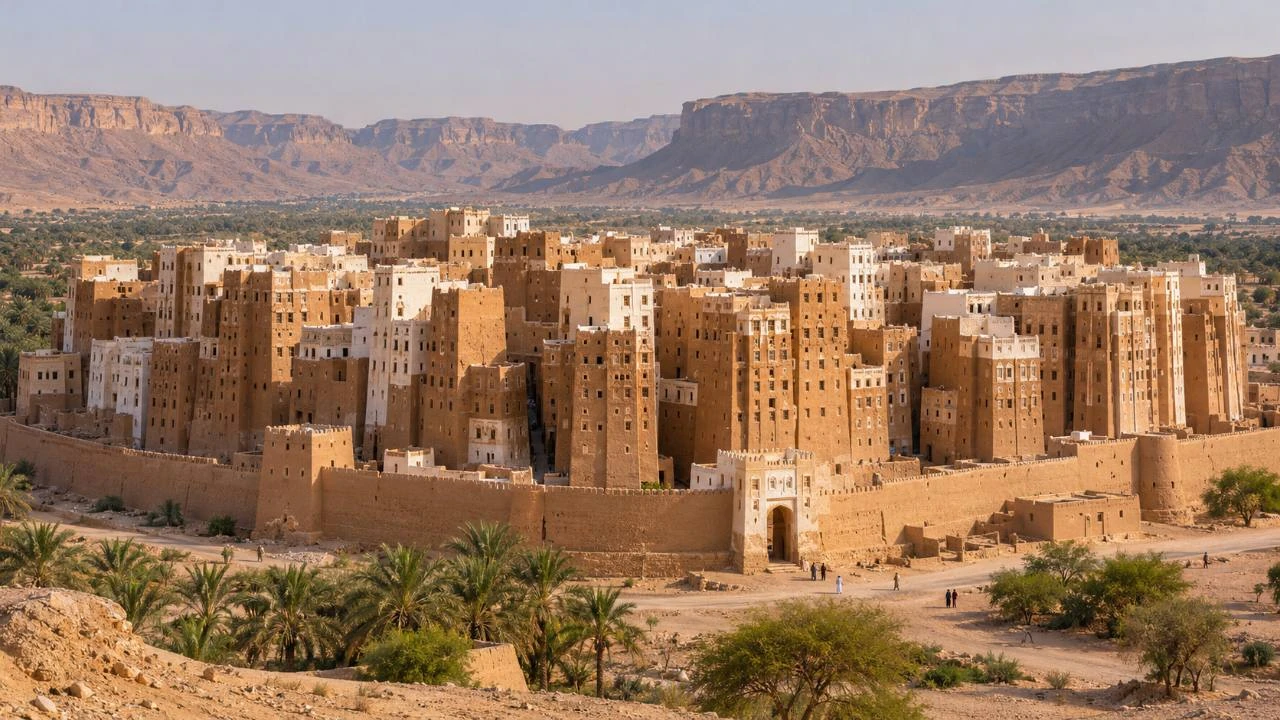
Bagan entered the World Heritage List in 2019. Recognition identifies its exceptional significance and supports a framework for management; it does not guarantee immunity from earthquakes, weather or unsuitable development. Its integrity depends on monuments, setting, evidence and living practices remaining intelligible together. The challenge is to sustain a sacred landscape through change. PRESDA’s account of Shibam’s earthen towers examines another place where materials, maintenance and resident communities form one conservation problem. UNESCO: Bagan’s significance and inventory World Bank: Bagan Disaster Risk Management Plan
The supplied hero illustrates Bagan’s famous skyline and balloons, rather than documenting present operating conditions or access to a particular temple. Dated supporting photographs provide a separate record of identifiable structures. Read with the inventory and conservation evidence, they help restore detail to a landscape often reduced to a spectacular view. Bagan’s achievement lies in the diversity and accumulated meaning of its buildings, and in the continuing human effort required to keep them standing.
FAQ
Frequently Asked Questions
How many temples are there at Bagan?
UNESCO’s inscription records 3,595 monuments across eight components. The inventory includes temples, stupas, monasteries and other religious structures. Describing them all as temples simplifies the count and obscures the architectural diversity of the site.
Why were so many buildings constructed?
Buddhist merit-making encouraged religious donations, while patronage also expressed wealth and political authority. Construction accumulated across generations. Supporting buildings required labour, materials and continuing resources, connecting devotion with the kingdom’s social and economic organisation.
Is Bagan still a religious place?
Yes. UNESCO recognises continuing worship, pilgrimage and merit-making as part of its significance. Bagan is also a landscape of living communities and agriculture, so conservation must consider active religious and everyday uses alongside archaeological evidence.
Did earthquakes destroy every temple?
No. Damage varies by event and structure. The nomination dossier records 389 monuments damaged in 2016, while another project account uses a broader figure of over 400 structures. Those historical counts do not establish the number currently awaiting repair.
Does UNESCO status guarantee that all monuments are safe?
No. World Heritage recognition identifies significance and management responsibilities. Monitoring, structural assessment, maintenance, disaster preparedness and careful development decisions remain necessary. The 2026 committee decision calls for continuing attention to the effects of the March 2025 earthquake.
PRESDA Dispatch
Stay Informed. Stay Aware.
A sharp briefing across AI, gaming, sport, business, world affairs, paparazzi, and lifestyle.