THE BARRELEYE: THE FISH WITH A TRANSPARENT HEAD
Explore Macropinna microstoma, the deep-sea fish with a transparent head, rotating eyes and a remarkable feeding strategy, with verified MBARI research.
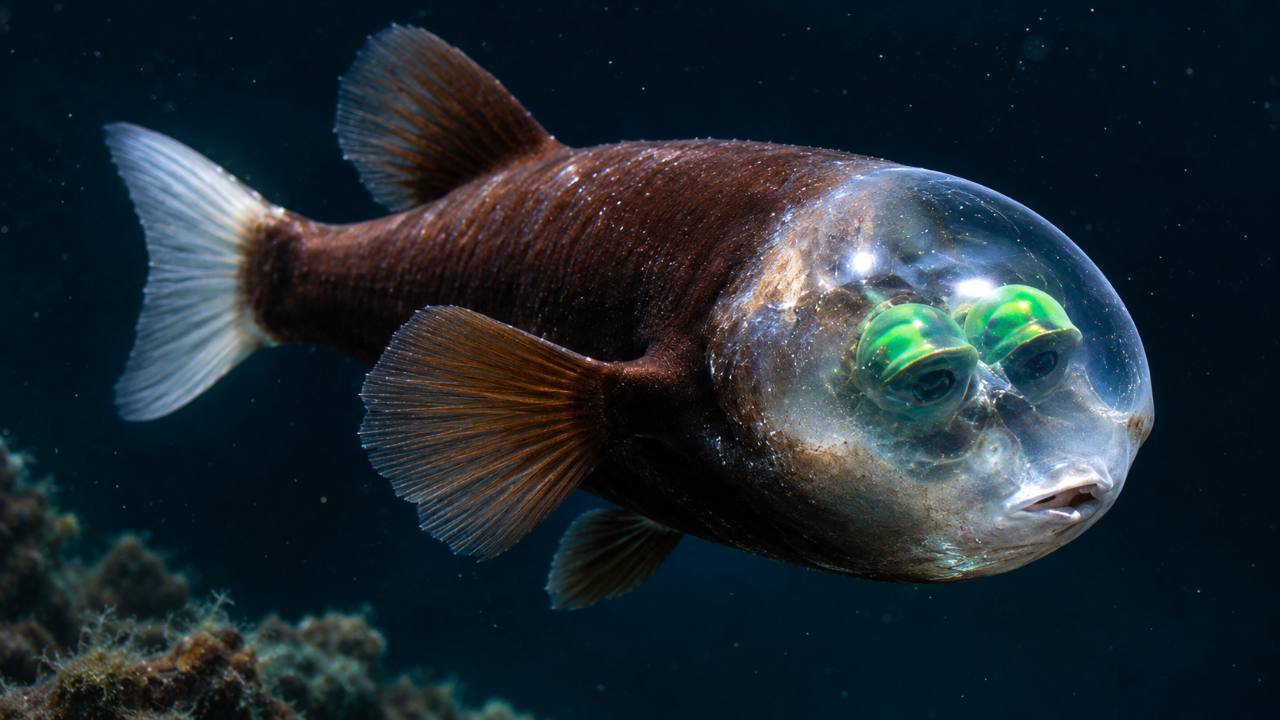
Supplied editorial illustration, preserved unchanged. It is not MBARI research footage or a scientific anatomical plate.
The barreleye fish, Macropinna microstoma, can look through the transparent shield covering its head. Its green-capped tubular eyes rotate from an upward-looking position toward the front, helping a small deep-sea hunter follow food toward its mouth. The spectacular appearance is real biology, although a viral illustration is not a substitute for research footage. MBARI: barreleye species profile
A new MBARI report published on October 28, 2026 returned attention to the fish after an encounter off Central California. Scientists filmed it with a 4K camera, adding a detailed observation to a much older scientific story. Understanding what those images show requires separating the animal’s anatomy, researchers’ interpretations and the limits of an occasional underwater sighting. MBARI, October 28, 2026: eleventh observation and first 4K encounter
The essential facts
MBARI’s current species profile supplies the broader depth range below. Monterey Bay Aquarium describes its familiar Central California observations at 600–800 meters. These figures describe habitat information at different levels of specificity, not contradictory measurements of a single fish. MBARI: barreleye species profile Monterey Bay Aquarium: barreleye natural history
| Feature | Verified detail |
|---|---|
| Species | Macropinna microstoma |
| Size | Up to about 15 cm (6 inches) |
| Depth | MBARI profile: 460–800 m |
| Range | North Pacific, from the Bering Sea to Japan and Baja California |
| Recent observation | MBARI reported its 11th encounter on October 28, 2026 |
What is actually transparent?
The dome is a delicate, fluid-filled shield around the upper part of the head and eyes. Calling it a transparent skull can create the wrong mental picture: this is not an animal swimming with an uncovered brain. The clear tissue forms part of a living structure through which the eyes can receive light. The fish’s body remains opaque. MBARI, February 23, 2009: rotating eyes and transparent shield
The two dark spots just above the mouth are particularly easy to misread as eyes. MBARI identifies them as nares, the fish’s olfactory organs. The prominent green structures inside the dome are the relevant visual landmarks. Distinguishing these features makes authentic front and side views far easier to interpret than judging the animal from a stylized image alone. MBARI, February 23, 2009: rotating eyes and transparent shield
Why a dome can disappear from an old specimen
A fragile feature can be lost during collection. MBARI’s 2009 explanation noted that older descriptions often omitted the shield, probably because nets damaged it while bringing fish to the surface. That matters for the history of discovery: a museum specimen can preserve useful bones or body measurements while failing to preserve the animal’s complete appearance in life. An illustration based on such a specimen may therefore be incomplete without being fraudulent. MBARI, February 23, 2009: rotating eyes and transparent shield
How the eyes solve a deep-sea problem
The mesopelagic, or twilight, zone lies approximately 200–1,000 meters below the surface. NOAA explains that light becomes extremely limited in this interval. Looking upward can reveal a faint silhouette against the remaining downwelling light, whereas looking horizontally presents a different visual scene. The barreleye’s posture makes sense in that uneven lighting environment; the ocean is not simply an equally black room in every direction. NOAA Ocean Exploration: light in the ocean
Tubular eyes collect light effectively but offer a restricted field of view. For years, researchers faced a practical puzzle: how could a fish see food directly above its head and then keep track of it at a forward-facing mouth? Bruce Robison and Kim Reisenbichler combined ROV observations with observations of a living specimen aboard a ship. Their work showed that the eyes were mobile rather than permanently fixed upward. MBARI, February 23, 2009: rotating eyes and transparent shield
The green coloration adds another optical question. MBARI describes filtering of the light environment as part of the explanation for detecting food, including bioluminescent organisms. It is more accurate to explain this as an adaptation to a particular underwater light field than as a claim of magical night vision. A striking color in an ROV image also depends on the lighting used to film the animal. MBARI: barreleye species profile
A feeding strategy with an important caveat
The barreleye’s large, flat fins help it hold position and maneuver precisely. Its food includes zooplankton such as small crustaceans and gelatinous organisms. Monterey Bay Aquarium describes the possibility that it takes crustaceans trapped in siphonophore tentacles. Siphonophores are colonial animals, not underwater plants; their feeding structures create a challenging place for a small fish to approach. Monterey Bay Aquarium: barreleye natural history
MBARI’s species page explicitly presents protection from those stinging tentacles as a scientific interpretation. The dome may protect the eyes while the fish takes food nearby. That is a plausible account linking anatomy and feeding, but it should not be inflated into a claim that every part of the behavior has been repeatedly filmed or that the fish is immune to every sting. Observations and hypotheses answer different questions. MBARI: barreleye species profile
What the 2026 encounter added
The October announcement describes an encounter during the Diving Deep for Delicate Drifters expedition aboard the research vessel David Packard. The team was operating ROV Doc Ricketts about 90 kilometers offshore when it found the fish at approximately 600 meters. Research specialist Shannon Johnson spotted it as the vehicle was returning toward the surface, according to MBARI’s account. MBARI, October 28, 2026: eleventh observation and first 4K encounter
The researchers spent about 20 minutes observing it and varied the lighting to examine the shield. The value of 4K is not that it turns an old species into a new discovery. It can make small anatomical details and movements easier to inspect, communicate and compare with earlier footage. Readers can follow the institute’s genuine video rather than treating an illustration as documentary evidence. MBARI, October 28, 2026: eleventh observation and first 4K encounter
Eleven encounters do not measure a global population
MBARI called this its eleventh observation of the species. The number belongs to the institute’s research record, not to all marine science or every ocean. Older aquarium material cites nine MBARI encounters as of 2022; repeating that older number as the latest total would be misleading. Equally, a low observation count cannot establish extinction risk without information about survey effort, distribution and the probability of detecting the fish. MBARI, October 28, 2026: eleventh observation and first 4K encounter Monterey Bay Aquarium: barreleye natural history
A midwater animal, studied by a moving observatory
MBARI classifies the habitat as midwater. That distinction prevents another common visual misunderstanding: the barreleye is not primarily being described as a reef fish sitting among corals. Depth below the surface and distance above the seafloor are different measurements. A vehicle can be hundreds of meters down while still working in the water column. The fish’s stabilizing fins, suspended posture and upward gaze should be understood in that three-dimensional setting, rather than by assuming a solid seabed immediately beneath every animal in a deep-ocean image. MBARI: barreleye species profile
The institute’s official 2026 video places the encounter against a much larger archive: roughly 7,000 ROV dives and more than 41,000 hours of deep-sea video over nearly four decades. The contrast with eleven barreleye encounters is striking, but the denominators describe the institute’s whole exploration programme. They do not mean every dive searched the same habitat for the same length of time, or that all those hours were devoted to this fish. That is why an encounter rate cannot be read straight from a promotional statistic. MBARI: genuine 2026 ROV footage
The method also helps explain the appeal of patient observation. A camera can record posture and changes of direction that a preserved specimen cannot show, while a collected specimen can answer questions the camera cannot. Combining approaches is more powerful than asking a single dramatic frame to establish anatomy, behavior, distribution and conservation status at once. The latest footage is valuable because it contributes to that cumulative record, not because resolution alone settles every biological uncertainty.
What remains unknown, and how to read the images
The aquarium notes that reproduction remains poorly understood and describes pelagic spawning as a scientific expectation rather than a complete observed life history. A compelling adult image tells us little by itself about mating, larvae or survival through different life stages. The same restraint applies to viral claims that the fish has no predators, never moves or has only just been discovered. Those conclusions do not follow from the cited observations. Monterey Bay Aquarium: barreleye natural history
A responsible image description identifies what the viewer can actually see and where the evidence comes from. Here, the supplied hero is retained as an editorial illustration. MBARI’s own imagery provides the documentary reference for the transparent shield and moving eyes. Keeping those roles separate protects both the science and the reader: an attractive reconstruction can introduce the subject without becoming a source of invented anatomy.
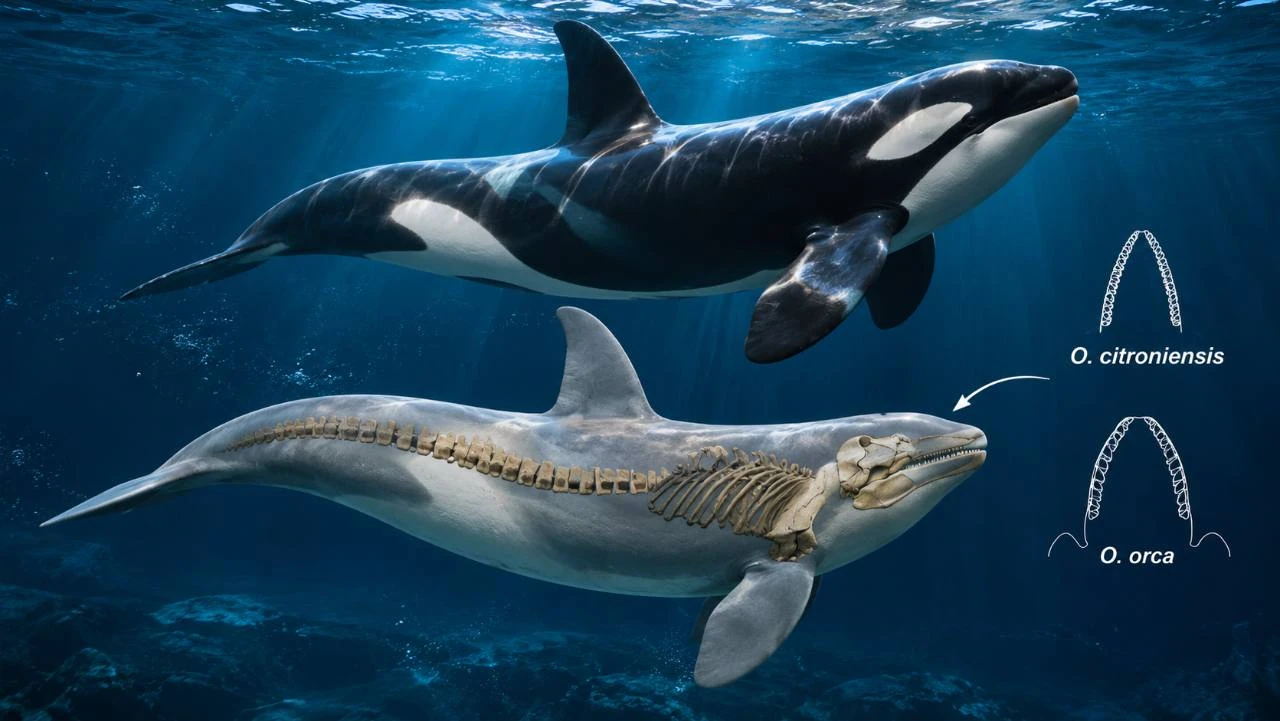
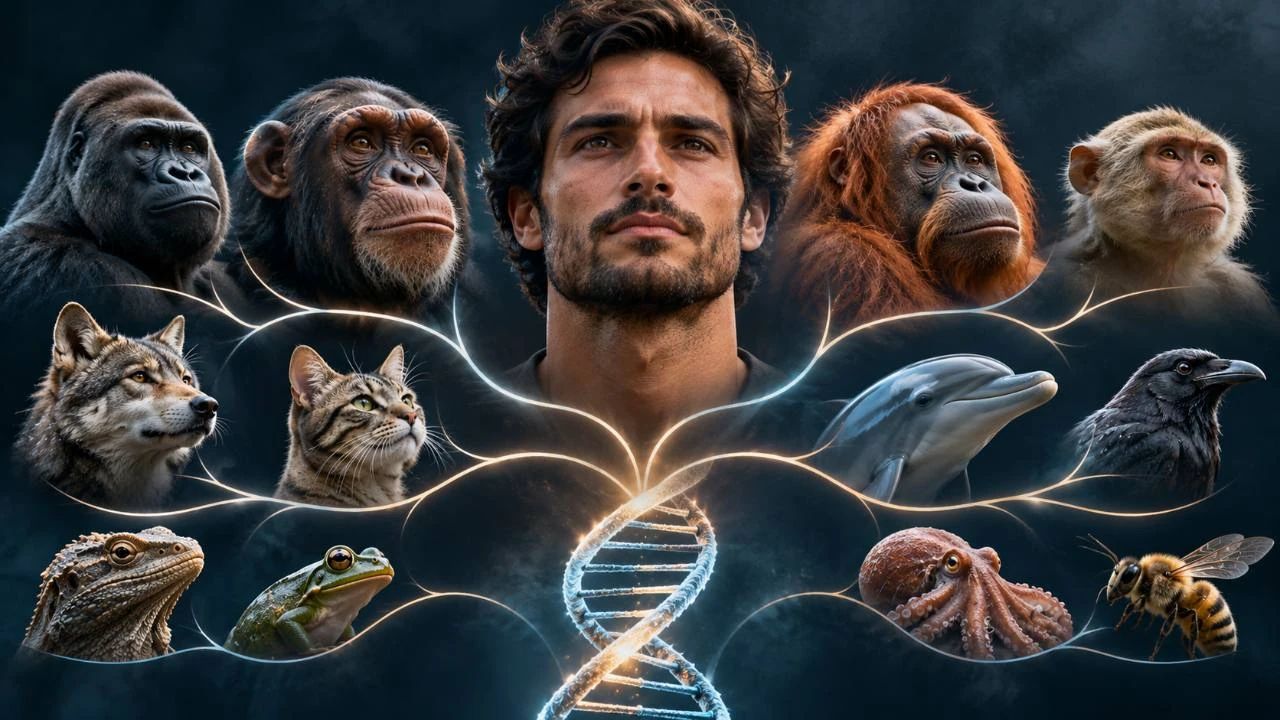
The larger lesson is about how marine biology advances. An old specimen, a brief encounter and a new camera each reveal a different portion of an animal’s life. None is sufficient alone. For more on the distinction between observation and reconstruction, explore PRESDA’s orca fossil research. Our guide to shared DNA offers another example of why a memorable biological fact needs a precise definition.
FAQ
Frequently Asked Questions
Is the barreleye’s entire skull transparent?
The distinctive clear structure is a fluid-filled shield over the eyes. It should not be described as an exposed brain or a wholly transparent bony skull.
Are the two dark marks above its mouth eyes?
No. They are olfactory organs called nares. The conspicuous green structures inside the dome are associated with its tubular eyes.
Was the fish discovered in 2026?
No. Macropinna microstoma was described in 1939. MBARI’s 2026 announcement concerned a new observation and high-resolution footage.
Does eleven sightings mean only eleven fish exist?
No. Eleven was MBARI’s observation count when it published its October 2026 report. It is not a census or a population estimate.
PRESDA Dispatch
Stay Informed. Stay Aware.
A sharp briefing across AI, gaming, sport, business, world affairs, paparazzi, and lifestyle.