RED-LIPPED BATFISH: THE FISH THAT WALKS ON THE SEAFLOOR
Meet the red-lipped batfish, a Galápagos bottom dweller that uses its fins to walk. Explore its feeding adaptations and what its red lips cannot yet explain.
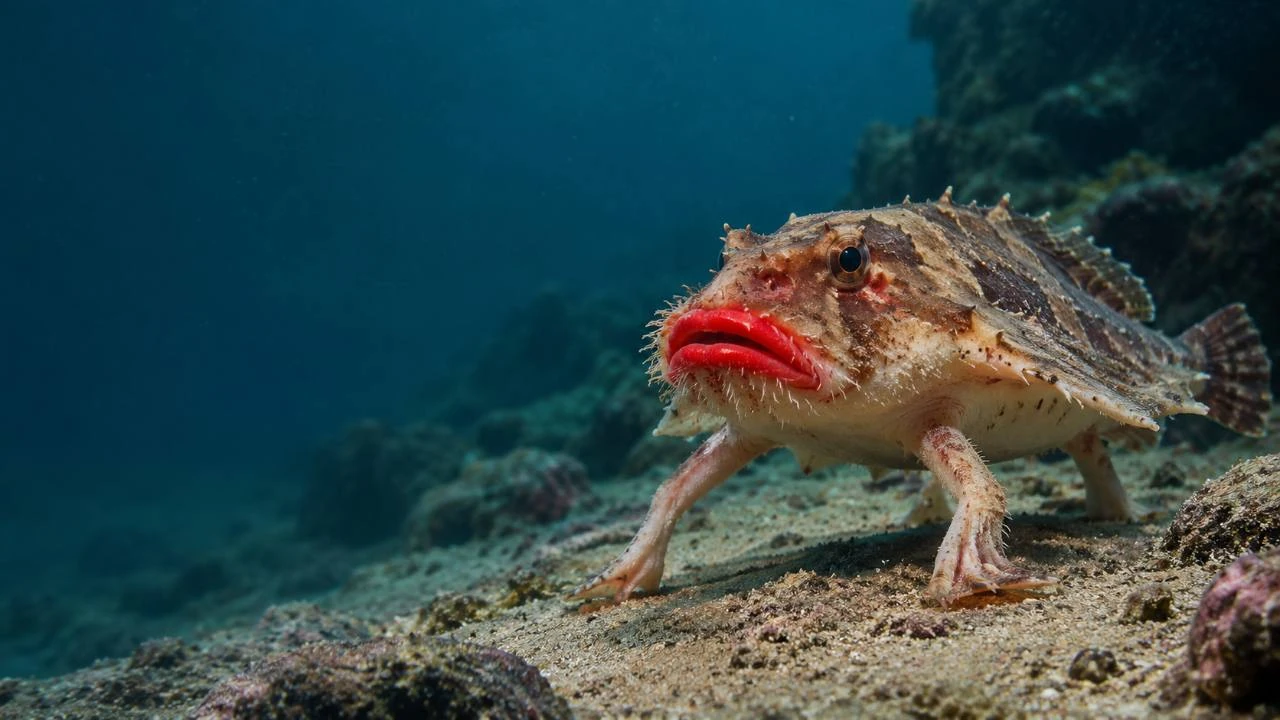
Editorial illustration, not a documented wildlife observation. The depiction is not evidence of exact anatomy, behaviour or colour under natural light. Editorial image supplied for PRESDA. Original creator and reuse licence not provided.
Some fish announce themselves with speed. This one makes an entrance by taking its time. Close to the seabed, a broad-bodied animal props itself on its fins, apparently wearing a startling pair of red lips. The red-lipped batfish is real, but the familiar joke about lipstick can distract from its more interesting achievement: using a fish’s equipment to move through a world of sand, rock and small prey.
A fish built for the bottom
Its scientific name is Ogcocephalus darwini. Galapagos Conservation Trust describes it as a bottom dweller around the Galápagos, living on sandy reef bottoms and the ocean floor. Its brownish-grey upper surface is much less theatrical than its mouth. Seen from above against the substrate, the body offers a different visual story from the close-up portraits that made the species an internet favourite. Galapagos Conservation Trust: red-lipped batfish
Walking with fins, not feet
The apparent legs are fins. They support the animal as it perches and moves along the bottom; they are not the limbs of a land animal returning to the sea. It can also swim. Calling it a walking fish is a useful description of how it moves, provided that the phrase does not become a claim that it has abandoned swimming or evolved human-like knees and feet. Charles Darwin Foundation: Galápagos species database
A small predator with a lure
A structure on its head, called an illicium, is thought to help lure prey. The conservation profile lists small fish, crustaceans and molluscs among its food. This is a small predator’s life, not a miniature seafloor grazing scene. The distinction also matters when interpreting an illustration: a pose can suggest an activity, but a still image cannot establish what an animal was hunting or how it caught it. Galapagos Conservation Trust: proposed lure function Smithsonian Tropical Research Institute: Galápagos batfish
The lips leave an open question
Bright lips are an observable feature; their evolutionary function is a separate question. The source profile does not establish that the colour attracts a mate. Repeating that appealing explanation as a proven fact would go beyond the evidence reviewed here. The honest answer is less tidy and more interesting: noticing a striking feature is the beginning of an investigation, not its conclusion. This fish needs no invented certainty to be extraordinary.
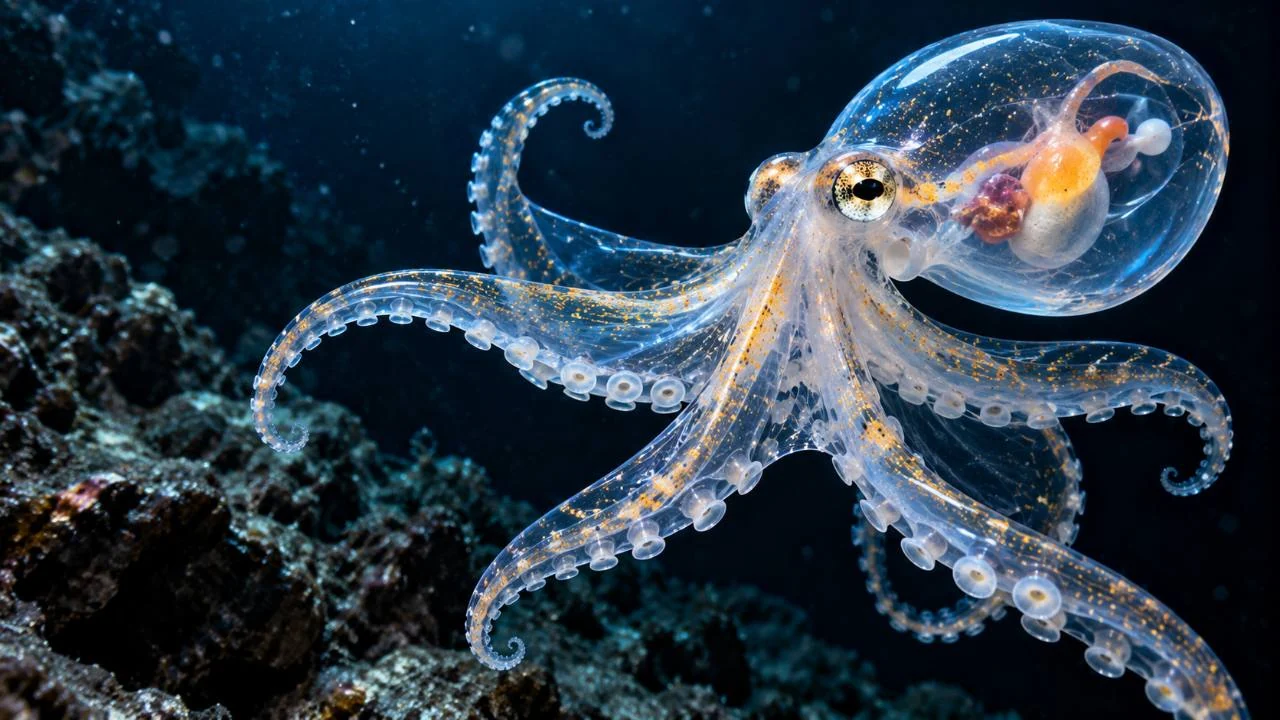
Related reading: The almost invisible glass octopus.
FAQ
Frequently Asked Questions
Can the red-lipped batfish really walk?
It uses its fins to support itself and move along the seabed. It can also swim.
Where does it live?
It is associated with the Galápagos region, including sandy reef bottoms and the ocean floor.
Do its red lips attract mates?
That explanation is not established by the evidence reviewed for this article. The colour and its function are different questions.
PRESDA Dispatch
Stay Informed. Stay Aware.
A sharp briefing across AI, gaming, sport, business, world affairs, paparazzi, and lifestyle.