BEFORE RELIGION: HOW HUMANS BEGAN TO BELIEVE
Why do humans believe and worship? Explore cognition, death, ritual and culture, with the evidence, competing theories and God of the gaps debate explained.
Thunder presents two very different questions: what caused that sound, and does it mean something for us? The first asks for a mechanism. The second can lead towards intention, warning, punishment or protection. Across cultures, people have sometimes understood natural events through supernatural agents. But explaining religion as an ancient mistake about the weather leaves most of the story untold. Source 16: Nature Human Behaviour
Why do humans believe and worship? Research offers several interacting answers: minds that seek causes and recognise agents; people confronting mortality and uncertainty; rituals that organise experience; and communities that transmit commitments across generations. No single explanation is established as the origin of religion. Explaining how a belief develops also does not, by itself, establish whether its object exists. Source 9: Frontiers in Psychology Source 14: Annual Review of Developmental Psychology
BEFORE RELIGION DOES NOT MEAN BEFORE A KNOWN DATE
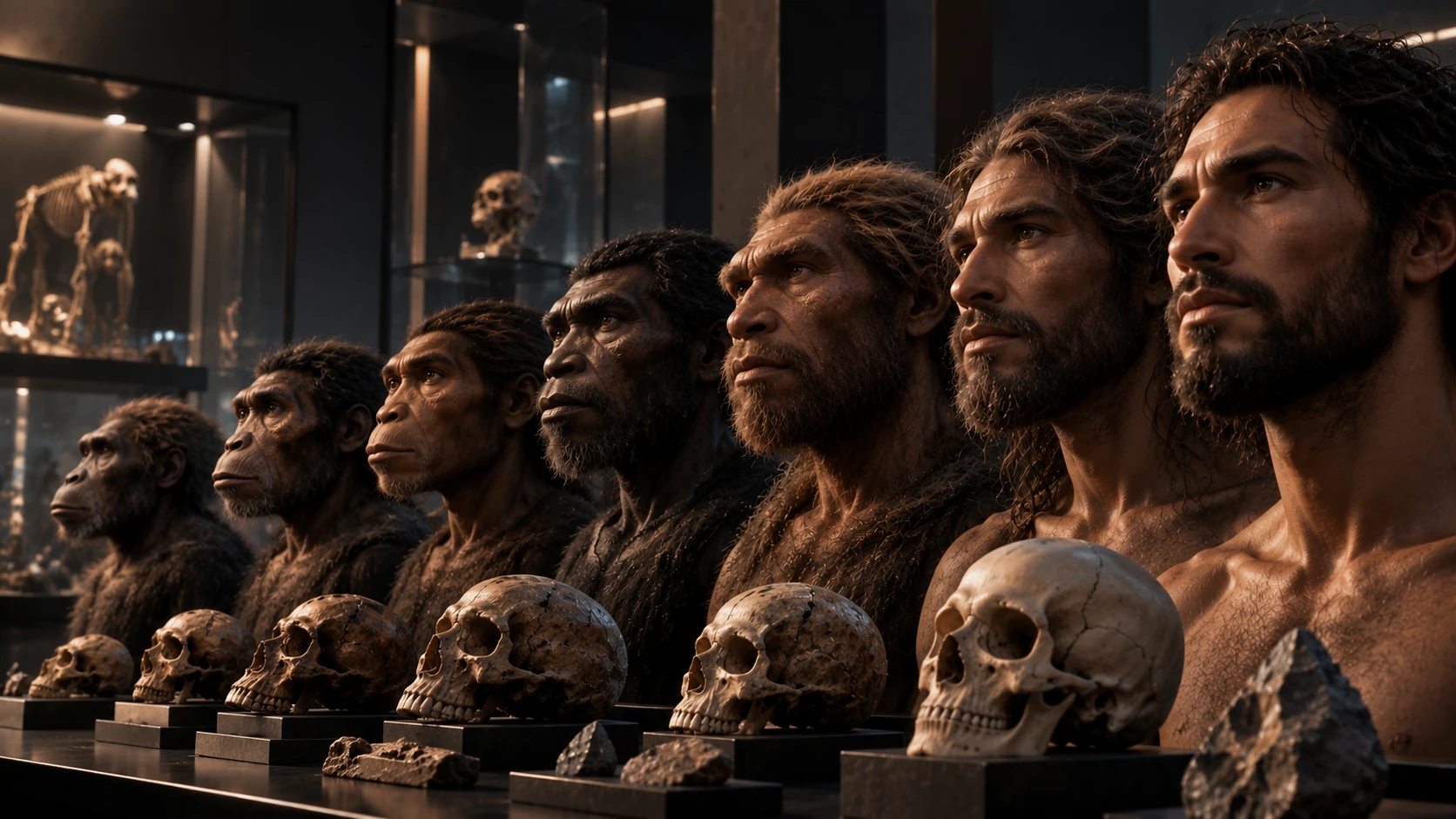
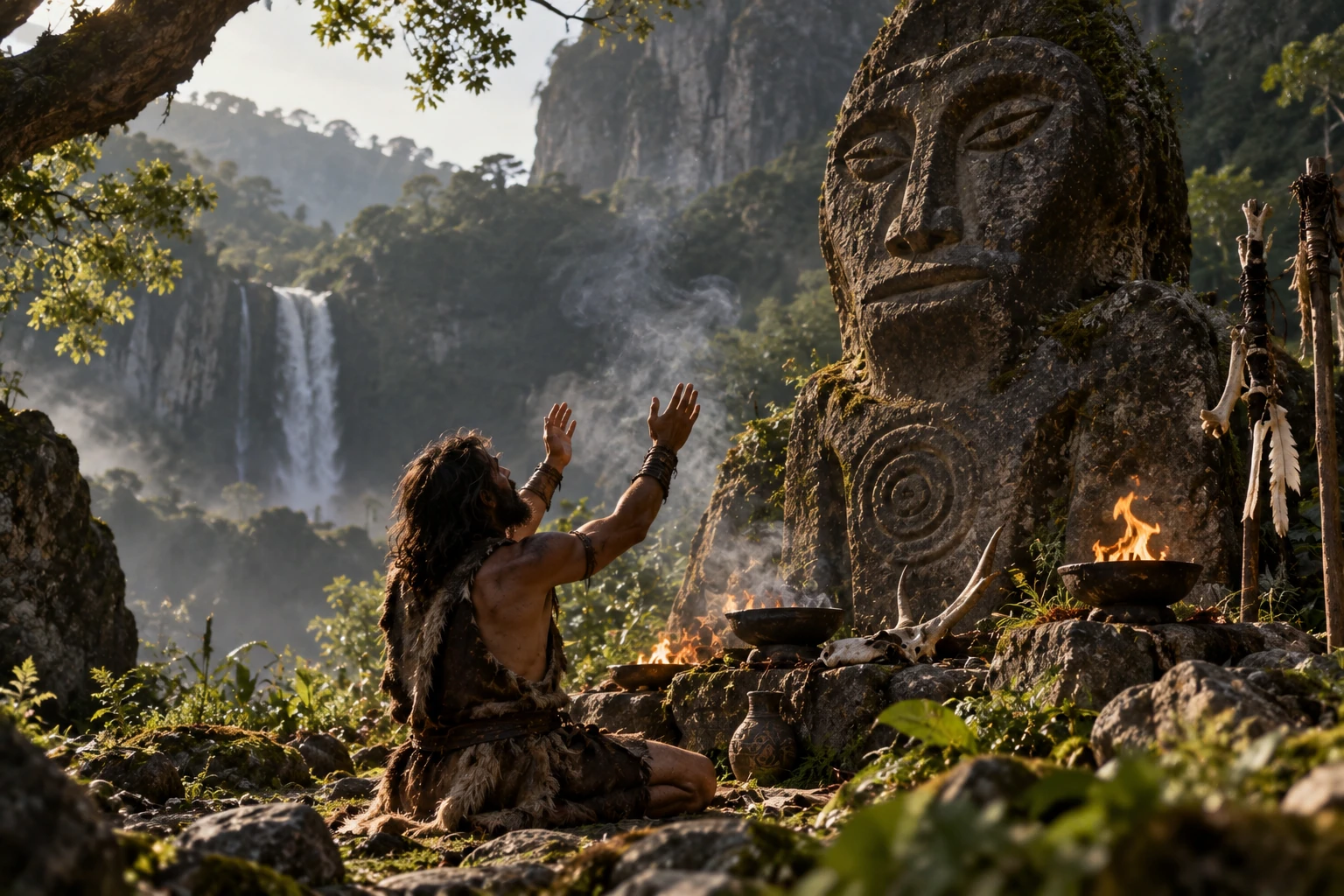
There is no recoverable moment when humanity first believed. Even “religion” is a contested category: traditions differ in how they combine gods, ancestors, practices, ethical disciplines and accounts of reality. Belief and worship are not interchangeable. A person may participate through duty, gratitude or belonging rather than agreement with a precise doctrine. The title frames a question about origins, not a documented age without religion. The hero is an AI-generated conceptual illustration, not evidence of a particular prehistoric people or ceremony. Source 1: Stanford Encyclopedia of Philosophy
Archaeology can recover objects, buildings and repeated practices, but not directly read their makers’ minds. The monumental structures of Early Neolithic Göbekli Tepe invite interpretations involving ritual and cosmology. They do not identify the first religion or supply a complete creed. A striking object is not automatically an idol, and a proposed ritual function remains an interpretation requiring context. Source 2: Cambridge Archaeological Journal
DEATH, UNCERTAINTY AND THE SEARCH FOR CONTROL
Awareness of mortality is one influential starting point. Terror management theory proposes that reminders of death can strengthen attachment to worldviews that give life significance. An influential meta-analysis found support across earlier experiments. Yet such responses concern secular as well as religious commitments. They do not show that fear of death invented gods, or that every believer is primarily seeking reassurance. Source 3: Psychological Bulletin
The evidence is also contested. Later replication work has failed to reproduce several mortality-salience effects. Failure in particular experiments does not erase grief or the comfort some people find in faith. It does mean that an attractive psychological account should not be promoted into a universal historical explanation. Source 4: PLOS ONE
A related hypothesis proposes that an orderly, controlling deity can compensate for a reduced sense of personal control. But a registered replication involving 829 participants in the United States and the Netherlands did not find the predicted experimental increase in belief in a controlling God. Personal control and such belief were correlated in the American sample, not the Dutch one. Context matters, and correlation does not settle causation. Source 5: Comprehensive Results in Social Psychology
A MIND THAT LOOKS FOR PATTERNS AND SOMEONE BEHIND THEM
Pattern recognition, agency attribution and purpose attribution are different operations. A pattern is a regularity. An agent is something understood to act. A purpose is an end an event or object is thought to serve. Rain following a ceremony can be noticed as a sequence, interpreted as an answer, or remembered as evidence that an offering worked. These are possible routes of interpretation, not a reconstruction of the first prayer. Source 9: Frontiers in Psychology
A study in the United States and Afghanistan found associations between implicit pattern learning and belief in God. It did not demonstrate that pattern recognition causes religion. Other experiments have challenged simple links between intuitive thinking and supernatural belief. Ordinary cognitive capacities may make certain ideas easier to entertain, while experience and culture influence which ideas become convincing. Source 6: Nature Communications Source 7: Scientific Reports
Anthropomorphism adds another possibility: interpreting nonhuman entities through human qualities, emotions or intentions. A theoretical account links it to available knowledge about agents, the wish to understand events and social connection. This does not mean all gods are imagined as ordinary people. Nor does it make believers uniquely prone to using human models to understand the world. Source 8: Psychological Review
DREAMS, THE DEAD AND INVISIBLE AGENTS
A dream can make an absent or dead person seem present. Nineteenth-century theorists such as Edward Tylor treated dreams and death as clues to the origins of soul beliefs and animism. These remain historically important proposals, not observed accounts of religion’s birth. Contemporary research examines how intuitions about minds and bodies interact with testimony and learning. No surviving record lets us identify the first dream interpreted as a visitation. Source 1: Stanford Encyclopedia of Philosophy Source 9: Frontiers in Psychology
WHAT RITUAL DOES
Ritual turns uncertainty into actions that can be repeated: a sequence, a place, words, coordinated movements. In a study of 74 Hindu Marathi women in Mauritius, researchers induced anxiety with a public-speaking task and compared habitual temple ritual with a nonritual resting condition. The results supported an anxiety-reduction effect in that setting. They did not isolate a universal mechanism or prove why ritual originally evolved. Source 10: Philosophical Transactions B
Familiarity, expectation, setting and bodily activity remain important interpretive considerations. Repetition also occurs in secular ceremonies. The useful question is not whether ritual is inherently irrational, but what a particular practice does for particular participants under particular conditions. Source 10: Philosophical Transactions B
Coordinated action can also create affiliation. A meta-analysis linked interpersonal synchrony with prosocial outcomes. Singing or moving together may help people experience a group as something larger than its members. This is not an exclusively religious process, and cohesion is not automatically universal kindness: stronger obligations within a group can coexist with boundaries towards outsiders. Source 11: Zeitschrift für Psychologie Source 15: Behavioral and Brain Sciences
DO WATCHFUL GODS MAKE LARGE SOCIETIES POSSIBLE?
One influential proposal links beliefs in morally concerned, knowledgeable, punishing gods with cooperation beyond intimate circles. A cross-cultural study using allocation games found that such beliefs were associated with more impartial treatment of geographically distant co-religionists. That is narrower than demonstrating generosity to everyone. It also does not establish that morality requires religion or that gods caused the historical growth of states. Source 12: Nature
The sequence remains debated. A prominent historical-data paper claiming that complex societies preceded moralizing gods was retracted after problems in the handling of missing data. The lesson is methodological: dates, definitions, absences and uncertain records can change a large historical conclusion. Neither laboratory games nor a disputed chronology settles a universal direction of causation. Source 13: Nature, retraction notice
BELIEF IS LEARNED BETWEEN PEOPLE
Children do not reconstruct a religious tradition from weather and dreams alone. Research on religious cognition emphasises testimony, trusted adults and participation. Cultural-evolution accounts add that costly or consistent commitments can make a model’s professed beliefs more credible to learners. This concerns perceived sincerity, not proof that a doctrine is true. Stories, institutions and practices can persist because people learn them from people they trust. Source 14: Annual Review of Developmental Psychology Source 15: Behavioral and Brain Sciences
WHEN NATURE WAS UNDERSTOOD AS INTENTION
A 2023 study coded supernatural explanations in records of 114 societies and found them more commonly applied to natural phenomena than social events. It supports the importance of explaining the nonhuman world. It is not a sample of humanity’s first believers: ethnographic records, coding choices and the available societies define its reach. Specific traditions show how much more than physical causation could be involved. Source 16: Nature Human Behaviour
In Norse traditions, Thor is associated with thunder and protection, while Odin has important connections with war, wisdom and magic. Freyja’s associations include fertility and love. These are overlapping religious roles, not interchangeable names for a storm god. Written narratives preserved in medieval Christian settings must be read alongside archaeological evidence rather than treated as direct transcripts of every Viking’s beliefs. Source 17: National Museum of Denmark Source 18: Viking Ship Museum
Mesopotamian examples join nature and social order. Iškur/Adad is a weather god; the Sun deity Utu/Šamaš is also associated with justice; Nanna/Suen is a Moon god. Egyptian traditions likewise connected Re with the Sun, Hathor with fertility and other aspects of life, and Osiris with death and the afterlife. Such relationships placed people within a meaningful cosmos, not simply a catalogue of unexplained noises. Source 19: ORACC: Iškur/Adad Source 20: ORACC: Utu/Šamaš Source 21: ORACC: Nanna/Suen Source 22: The Metropolitan Museum of Art
For Mongol traditions, the historical nomination dossier for Burkhan Khaldun describes Chinggis Khan’s reverence for Eternal Heaven, Tenger, often rendered Tengri in broader discussions. UNESCO documents the sacred landscape’s association with mountain, river and cairn worship, and later interaction between shamanic and Buddhist practices. This is a changing historical tradition, not a living fossil of humanity’s earliest religion. Source 23: UNESCO: nomination 1440 Source 24: UNESCO: Burkhan Khaldun
INSTITUTIONS AND MONOTHEISM: NO SINGLE LADDER
Religious organisation does not begin with monotheism. Mesopotamian cities had patron deities, temples and organised cults within polytheistic worlds. Institutions could connect ritual to resources, authority and collective identity. Their existence does not justify a universal sequence in which every society moves from spirits to many gods, then one God, then science. Source 25: The Metropolitan Museum of Art Source 1: Stanford Encyclopedia of Philosophy
Monotheism concerns the existence of one God. Worshipping one deity exclusively is a different claim from denying the existence of all others. Historical traditions have drawn these boundaries in different ways. Political changes, interpretation, encounters and reform matter; there is no demonstrated law of cognition requiring belief systems to converge on a single endpoint. Source 26: Stanford Encyclopedia of Philosophy
ADAPTATION, BY-PRODUCT OR CULTURAL INVENTION?
An adaptation account asks whether some religious dispositions or practices were favoured because they improved survival or reproduction. A by-product account asks whether capacities selected for other purposes, such as reasoning about agents, also make supernatural concepts possible. Cultural accounts examine how practices spread, change and become institutions. These explanations operate at different levels and can overlap. Source 9: Frontiers in Psychology Source 15: Behavioral and Brain Sciences
A practice that strengthens cooperation today is not thereby proven to be a biological adaptation. A cognitively memorable idea is not guaranteed to become a religion. And cultural invention need not mean conscious fabrication: traditions can develop through accumulated interpretation and transmission. A serious explanation must specify what is being explained, a belief, a ritual, an institution or an individual commitment. Source 14: Annual Review of Developmental Psychology Source 15: Behavioral and Brain Sciences
GOD OF THE GAPS
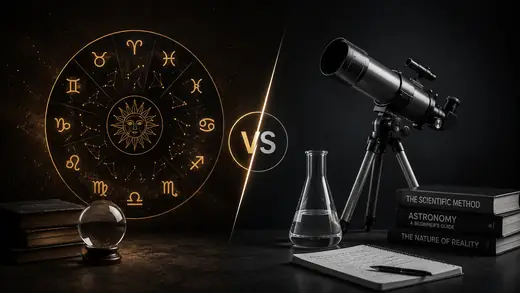
The “God of the gaps” criticism targets an inference: because a natural explanation is missing, divine action must be the answer. Unknown causes are not positive evidence for one proposed cause. As research develops, explanations that depend entirely on a particular gap can lose their support. Thunder is an instructive example: the National Weather Service explains it through the rapid heating and expansion of air along a lightning discharge. Source 27: National Weather Service Source 28: Stanford Encyclopedia of Philosophy
Scientific explanations earn their standing through observation, testing and revision. They can challenge specific supernatural claims about physical events without supplying a complete philosophy of existence. An unexplained event is a research problem; “science has not explained this yet” neither establishes a deity nor guarantees that every conceivable question is scientifically answerable. Source 28: Stanford Encyclopedia of Philosophy
The theological counterargument deserves equal precision. In classical cosmological arguments, God is proposed as an ultimate explanation of existence or contingency, not merely a substitute for meteorology. Some theological approaches concern the grounding of morality or meaning. On these accounts, finding a physical mechanism does not automatically eliminate the metaphysical question being asked. Source 29: Stanford Encyclopedia of Philosophy Source 28: Stanford Encyclopedia of Philosophy
Those arguments remain disputed. Philosophers challenge whether everything needs the proposed explanation, whether a necessary ground must be personal or divine, and whether morality or meaning require God. Believers and nonbelievers also disagree about which questions are legitimate. Presenting these debates fairly requires distinguishing a testable claim about a storm from an argument about why there is a world at all. Source 29: Stanford Encyclopedia of Philosophy Source 28: Stanford Encyclopedia of Philosophy
WHAT THE INVESTIGATION CAN, AND CANNOT, ANSWER
The evidence supports a plural investigation: cognitive tendencies, emotional pressures, social relationships and cultural histories interact. It does not identify one psychological defect shared by believers, or one ancient discovery that created every religion. Explaining how commitments are acquired may inform debate about their reliability, but origins alone do not settle their truth. Source 9: Frontiers in Psychology Source 14: Annual Review of Developmental Psychology
Why humans believe and why humans worship are therefore related questions, not identical ones. Explanation, consolation, obligation, gratitude, identity and meaning can matter in different combinations. Research becomes stronger when it tests those possibilities separately. For the wider evolutionary context, explore PRESDA’s human family tree, and for another reminder that cognition takes different forms, the octopus mind.
FAQ
Frequently Asked Questions
Does science know when religion began?
No. Archaeology can document practices and objects, but cannot identify a first believer or reconstruct a complete prehistoric creed.
Is religion caused by fear of death?
Fear of death is one proposed influence. Research does not establish it as the single origin of religion, and some experimental effects have proved difficult to replicate.
What is God of the gaps?
It is a criticism of inferring divine action from missing natural explanations. It does not describe every theological argument about God.
Does explaining belief prove or disprove God?
No. Research on how beliefs develop does not by itself settle metaphysical claims about whether God exists.
PRESDA Dispatch
Stay Informed. Stay Aware.
A sharp briefing across AI, gaming, sport, business, world affairs, paparazzi, and lifestyle.