CHOCOLATE: FROM ANCIENT CACAO TO A GLOBAL OBSESSION
Explore chocolate’s ancient origins, production science, cocoa farming, health evidence and ethical challenges, with authentic historical and factory photographs.
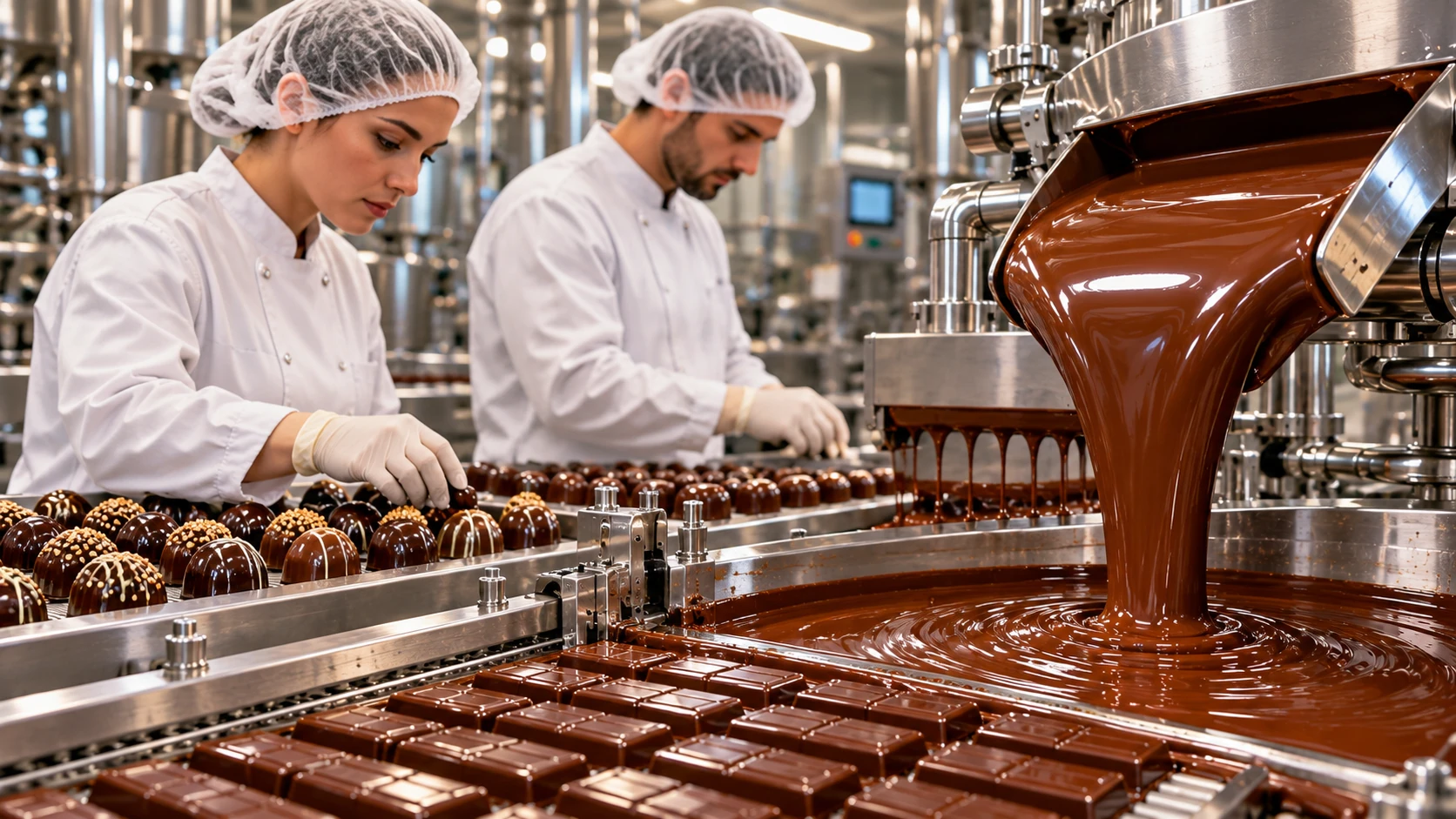
AI-generated editorial illustration supplied for PRESDA. This imagined chocolate factory is not a documentary photograph of a real facility.
Break a square of chocolate and listen. That clean snap is the sound of a carefully arranged fat crystal structure giving way. Let it melt, and a different history unfolds: tropical fruit, microbial fermentation, Indigenous knowledge, colonial commerce and industrial engineering. A food associated with comfort turns out to be one of the world's most elaborate collaborations between nature and human technique.
Chocolate begins with the seeds of Theobroma cacao. It did not begin as a sweet bar, and Europe did not invent its cultural importance. Understanding its journey means holding pleasure and its costs together, from the skill of cocoa farmers to the difference between an intriguing laboratory finding and a genuine health benefit.
Before the bar: cacao in the ancient Americas
One of the most consequential discoveries in chocolate history came from ancient pottery in southeastern Ecuador. A 2018 study of Santa Ana-La Florida identified cacao starch grains, theobromine residues and ancient DNA in material dating back approximately 5,300 years. These independent clues placed early cacao use in the upper Amazon, far earlier than an exclusively Mesoamerican origin story would suggest. Archaeology establishes evidence of use, not the name of the first person to taste cacao or a complete recipe for the earliest drink. Zarrillo and colleagues, 2018
In Mesoamerica, cacao became woven into Maya and later Mexica, commonly called Aztec, social worlds. It appeared in drinks, ceremonial exchanges and systems of value; beans could circulate as payment and tribute. These were living traditions with regional differences, not a single unchanging recipe. A frothy drink and a modern milk-chocolate confection belong to the same botanical story but very different culinary cultures. Sacred associations tell us what people believed and valued. They do not establish medicinal powers by modern clinical standards. Smithsonian: cacao and archaeology
Europe acquires a taste
Spanish colonial encounters carried cacao and knowledge of chocolate across the Atlantic during the sixteenth century. European consumers increasingly sweetened the drink, and chocolate became fashionable among wealthy circles before reaching broader audiences. Its migration was neither an instantaneous discovery nor simply a story of ingenious European cooks. Indigenous preparation supplied the foundation; colonial trade reorganized who produced, sold and enjoyed it. Smithsonian: chocolate history
Like the journey of coffee from crop to global ritual, chocolate's story crosses the boundary between agriculture and culture. A familiar daily indulgence can conceal how many places and people make it possible. Asking where a bar began is more revealing than reading the country printed beside the manufacturer's address.
How chocolate became something to bite
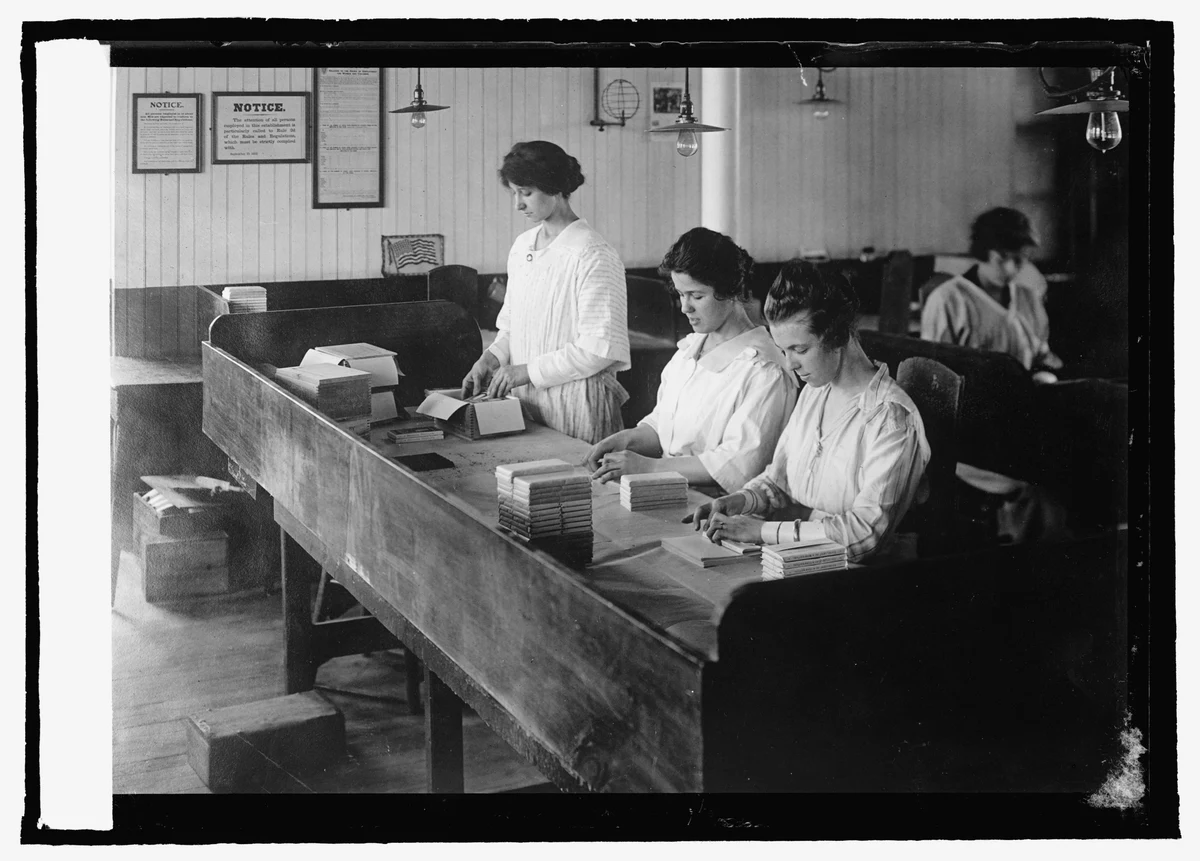
Chocolate factory scene, dated 1909–1920 by the Library of Congress. The catalogue does not identify the factory. Authentic archival photograph.
National Photo Company Collection / Library of Congress, npcc.20363
Public domain. Resized and converted to WebP by PRESDA. Full composition preserved. Reuse follows the individual license stated here.
The nineteenth century changed the material itself. The Van Houten cocoa press, patented in 1828, separated much of the cocoa butter from the solids. Fry's 1847 development of moldable eating chocolate helped establish the familiar bar. These advances made it possible to manipulate fat, sugar and cocoa with increasing precision, rather than merely grind ingredients for a drink. Afoakwa: Chocolate Science and Technology
Milk chocolate followed through experiments associated with Daniel Peter in Switzerland during the 1870s, with condensed milk playing an important role. Nestlé's company history records its connection to this development. In 1879, Rodolphe Lindt introduced conching, prolonged working of the chocolate mass that improved texture and flavor. Machinery did not eliminate craft; it changed the problems makers had to solve. Smoothness, shelf stability and repeatable taste became industrial ambitions. Nestlé: company history Lindt: conching history
On the farm, flavor is already being made
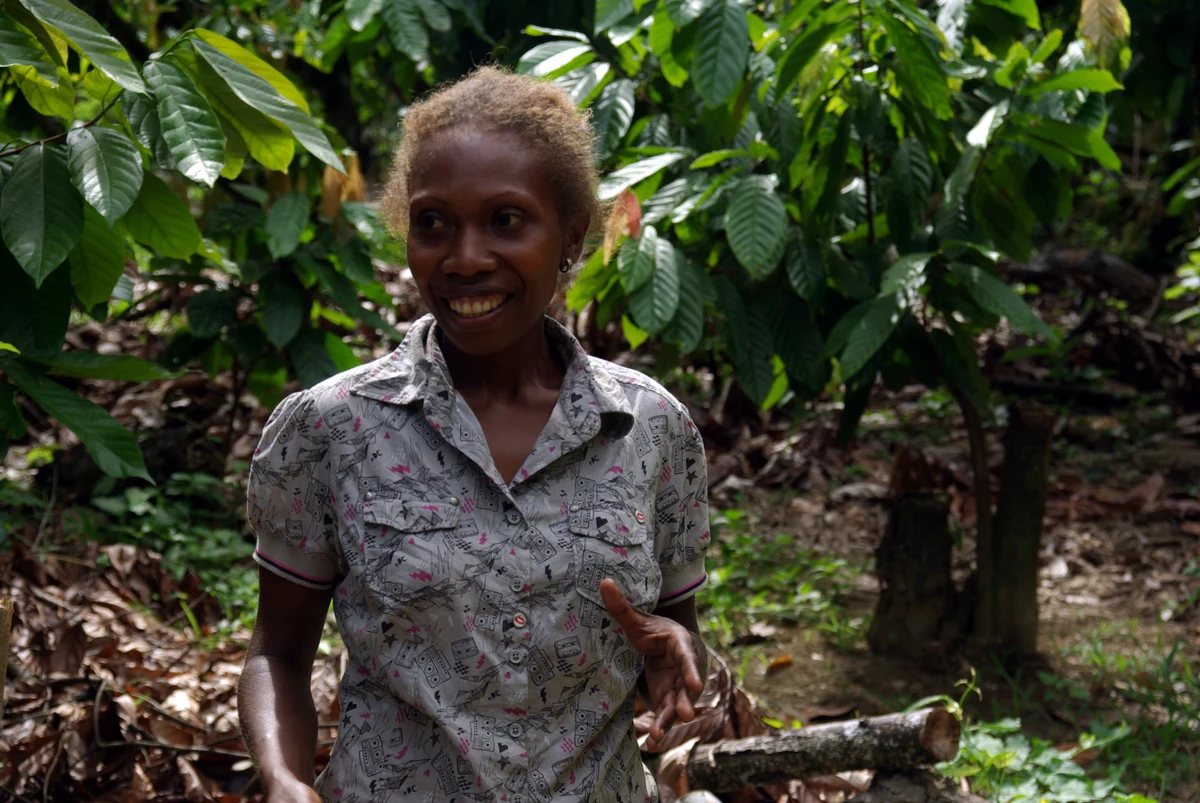
Flora Kebu explains cocoa farming at Kebu farm, Solomon Islands, 25 June 2013. Authentic photograph, unrelated to the child-labor findings discussed later.
CC BY 2.0. Resized and converted to WebP by PRESDA. Full composition preserved. Reuse follows the individual license stated here.
A cacao pod holds seeds surrounded by pale pulp. Harvesting is only the beginning. After the pods are opened, farmers ferment the pulp and seeds, commonly in heaps or boxes, before drying them. Yeasts and bacteria transform the sugary material; heat and acids help trigger changes inside the seeds that prepare the eventual chocolate flavor. Fermentation is not simply leaving beans to rot. It is a demanding biological process whose outcome depends on management and local conditions. Schwan and Wheals: fermentation microbiology
Research finds considerable variation in the microbial communities involved. There is no universal collection of microbes that behaves identically on every farm. This matters commercially: fermentation quality can be damaged long before a prestigious brand receives its cocoa. Farmers' knowledge belongs inside any serious account of chocolate craftsmanship, alongside the work of the chocolatier. Systematic review of cacao fermentation
Inside the factory: heat, particles and crystals
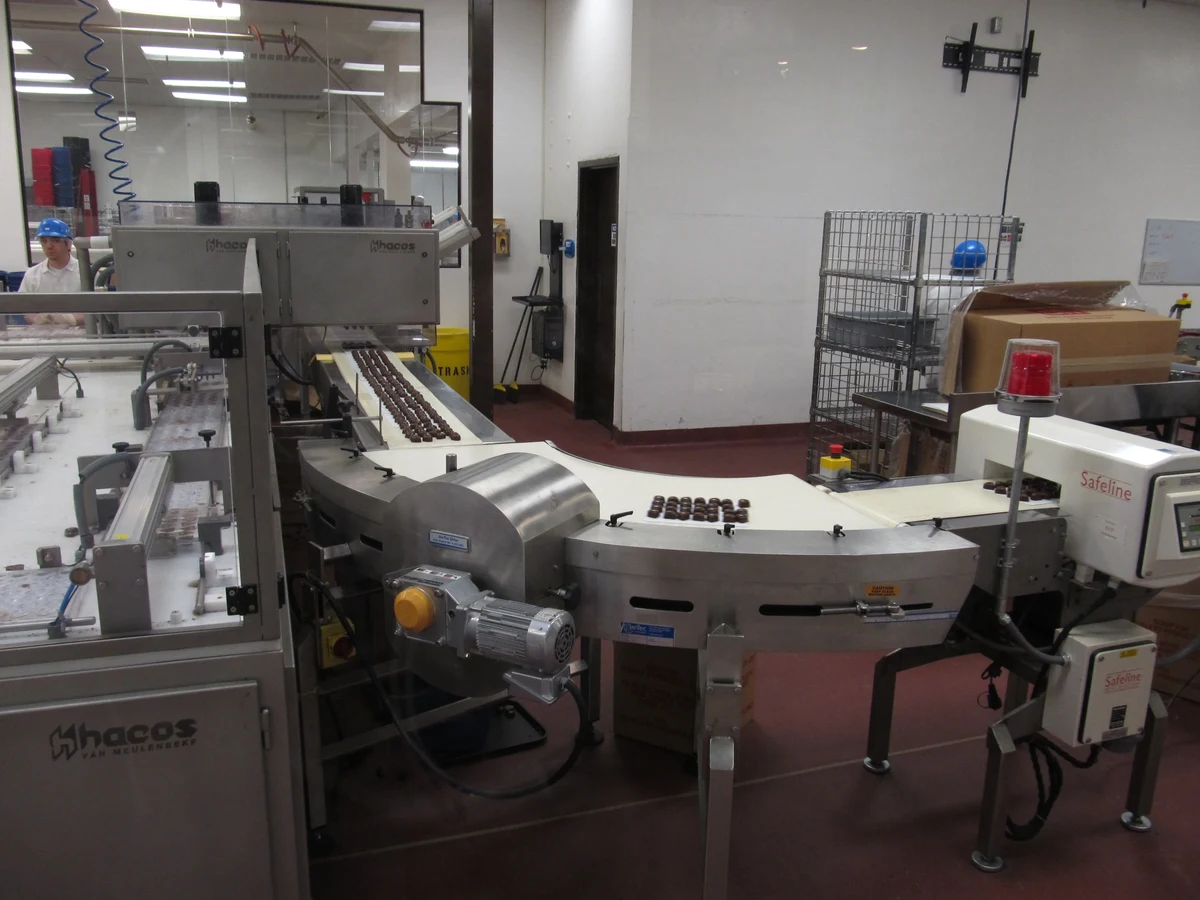
Ethel M Chocolate Factory in Henderson, Nevada, photographed on 14 December 2013. Authentic factory photograph; the resized image remains available under CC BY-SA 2.0.
CC BY-SA 2.0. Resized and converted to WebP by PRESDA. Full composition preserved. Reuse follows the individual license stated here.
Roasting develops flavor from the precursors created during fermentation. Winnowing separates shell from nib, and grinding turns the nibs into cocoa mass, often called cocoa liquor despite containing no alcohol. Pressing can divide this mass into cocoa butter and cocoa cake, which can become powder. For chocolate, makers combine cocoa ingredients with sugar and, where appropriate, milk, then refine the particles. ICCO: cocoa processing
Conching works and aerates the mixture, modifying flavor and helping distribute fat around particles. Tempering tackles a different problem: cocoa butter can solidify in different crystal forms. Controlled heating and cooling encourage a desirable structure, producing gloss, a clean snap and good melting behavior. A dull or streaked surface can reflect changes in fat crystallization rather than a different cocoa variety. The factory is therefore part kitchen, part materials laboratory. Royal Society of Chemistry: chocolate structure
Dark, milk, white and ruby: what changes?
Dark chocolate emphasizes cocoa ingredients and sugar; milk chocolate incorporates milk ingredients as well. Recipes vary widely, and a cocoa percentage describes composition rather than a guaranteed ranking of quality or healthfulness. White chocolate contains cocoa butter but lacks the nonfat cocoa solids that give dark chocolate its characteristic color. Calling it cocoa-free misses that important distinction. Legal definitions and minimum ingredient requirements vary by market. ICCO: ingredients and manufacture
Ruby chocolate entered the commercial conversation in 2017 through Barry Callebaut. The company describes its pink color and fruity character as arising from selected cocoa and processing, without added berry flavor or coloring in the ruby chocolate it introduced. That is a manufacturer's account of a developed product, not evidence for a newly discovered botanical species or superior health effects. Color is a useful invitation to taste, but a poor substitute for reading an ingredient list. Barry Callebaut: ruby introduction
A tropical crop, a worldwide industry
Côte d'Ivoire is the largest cocoa producer, with Ghana and Ecuador also among the major suppliers. Cameroon, Nigeria, Brazil, Peru and Indonesia are important parts of the wider production map. This geography is easily obscured by the association of finished chocolate with Switzerland, Belgium or other manufacturing countries. Cocoa origin and the place where a confection is made are separate pieces of information. ICCO: 2024/25 annual report
The ICCO's August 2026 bulletin estimated world cocoa production at 4.733 million tonnes for the 2024/25 crop year. This is a dated, revisable crop-year estimate, not a calendar-year figure or a total for finished chocolate. The same bulletin withheld its 2025/26 production and grinding estimates. Precision means stating those limits rather than manufacturing a more current number. ICCO: August 2026 bulletin
Names such as Lindt and Nestlé help make chocolate internationally recognizable, while specialist processors such as Barry Callebaut supply ingredients to other businesses. Lindt's history also illustrates how acquisitions, including Ghirardelli, helped build international reach. The industry includes brands, processors, confectioners and farmers performing different jobs. A beautifully wrapped product does not by itself explain how the value of those jobs is distributed. Lindt: international expansion Barry Callebaut: chocolate manufacturing
Health: promising molecules, cautious conclusions
Cocoa contains flavanols, compounds studied for possible effects on cardiovascular health. But cocoa, purified extract and a sweetened chocolate bar are not interchangeable interventions. In the COSMOS randomized trial, 21,442 older American adults received cocoa extract or placebo. Over a median 3.6 years, the primary outcome, total cardiovascular events, was not significantly reduced. A reduction in cardiovascular deaths appeared as a secondary result and warrants further investigation rather than a prescription to eat chocolate. The trial included support from Mars Edge, another detail readers should know when assessing the research. COSMOS trial: original report
Ordinary chocolate can supply considerable energy, added sugar and saturated fat. Processing also affects flavanol content, so a dark color or high cocoa percentage does not tell you the dose used in a study. Enjoyment is a legitimate reason to eat a food without promoting it as medicine. Neither traditional reputation nor the word antioxidant demonstrates that a chocolate bar prevents disease. NIH: chocolate health claims
The people behind the sweetness
The labor story requires equally careful language. NORC's research reported nearly 1.5 million children engaged in hazardous cocoa work in cocoa-growing areas of Côte d'Ivoire and Ghana in 2018/19. That is a finding for particular countries and a survey period, not a current global count. Hazardous work can expose children to dangers incompatible with their health and development. Child labor and forced labor are not interchangeable statistical categories. NORC: child labor findings
This evidence makes sustainability more demanding than an attractive label. Meaningful questions concern family income, access to school, safe adult labor and whether a supply chain can identify and address abuse. Higher retail prices alone cannot demonstrate that farmers are better paid. Nor should an individual farmer pictured in this article be taken as representing the abuses documented elsewhere. The necessary scrutiny belongs to systems and evidence, not assumptions about people or countries.
What kind of future can chocolate have?
The next chapter depends on healthy landscapes as well as factories. FAO's work in Côte d'Ivoire promotes agroforestry, combining cocoa with other trees, as part of efforts to protect forests and strengthen livelihoods. Shade and diversified planting can be useful tools, but their design must fit local conditions. Simply planting more cocoa wherever land is available is not a credible answer to forest loss. FAO: shade and cocoa
Research into controlled fermentation offers another route toward more consistent quality. It cannot replace fair commercial relationships, and no laboratory shortcut removes the need for skilled cultivation. The future is unlikely to depend on one miraculous bean. It will depend on combining agronomy, processing knowledge and accountability. FEMS Microbiology Reviews: fermentation research
Chocolate's great achievement is transformation: a seed becomes a drink, a gift, a bar, a memory. Its unfinished challenge is to make that transformation worthy of the people and landscapes behind it. The next time a square snaps between your fingers, there is more to notice than sweetness. There is an ancient crop, a sophisticated process and a global relationship that deserves to be understood as carefully as the chocolate is made.
FAQ
Frequently Asked Questions
What is this PRESDA article about?
Explore chocolate’s ancient origins, production science, cocoa farming, health evidence and ethical challenges, with authentic historical and factory photographs.
Which category does this story belong to?
This story is part of PRESDA's Lifestyle coverage.
Who published this article?
CHOCOLATE: FROM ANCIENT CACAO TO A GLOBAL OBSESSION was published by PRESDA Editorial on PRESDA.
PRESDA Dispatch
Stay Informed. Stay Aware.
A sharp briefing across AI, gaming, sport, business, world affairs, paparazzi, and lifestyle.