A 99-MILLION-YEAR-OLD INSECT DISCOVERED INSIDE AMBER
Meet Cretodorus noonoo, an extinct planthopper preserved in amber. Its extraordinary mouthparts reveal a proposed feeding strategy in Cretaceous forests.
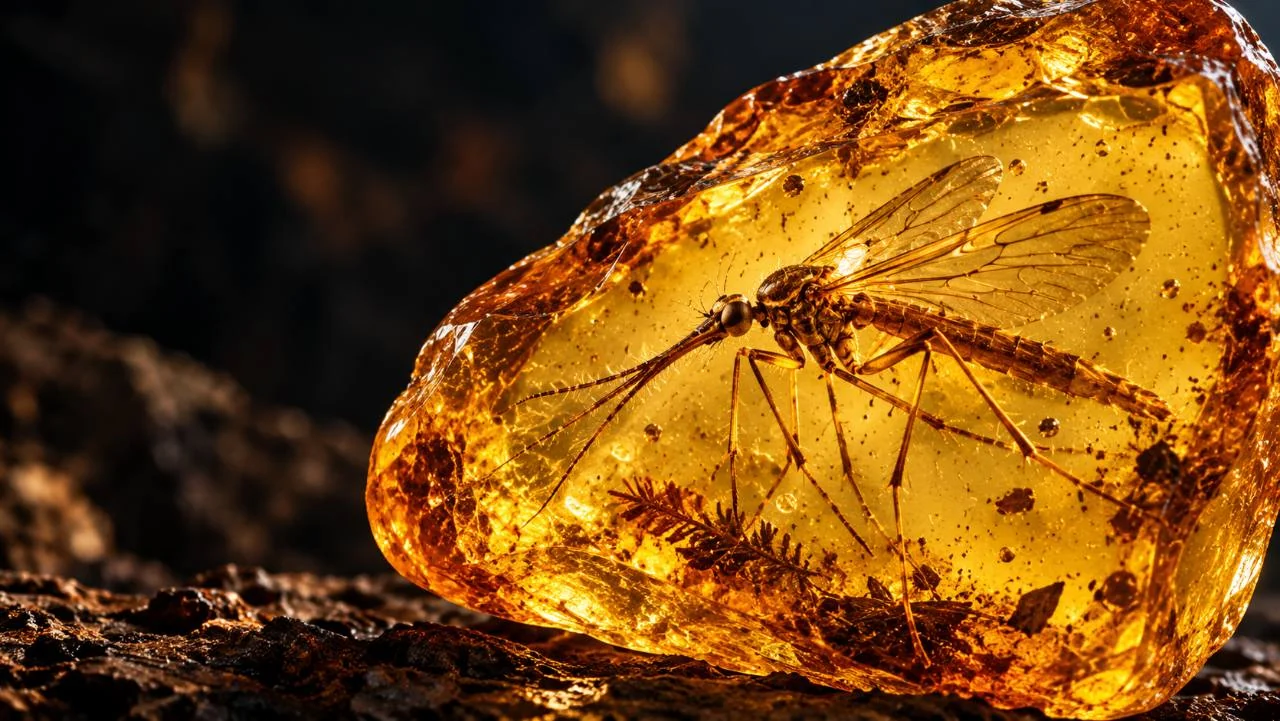
Conceptual illustration, not the original amber specimen or an anatomical reconstruction of Cretodorus noonoo. The described fossil is a planthopper, not a mosquito. Editorial image supplied for PRESDA. Original creator and reuse licence not provided.
A tiny insect in amber can preserve a larger story than its size suggests. In Cretodorus noonoo, the striking clue is a feeding apparatus so elongated and folded that it challenges familiar ideas about how an insect drinks. The animal is extinct; the investigation is modern. Its anatomy offers a way to test how insects used the forests of the Cretaceous.
Which insect was discovered?
The species was described in a 2026 Insects paper on extinct planthoppers. It belongs to Neazoniidae, a fossil group within the true bugs, rather than being identified as a mosquito. The study examined amber inclusions from Myanmar and compared unusual mouthpart structures across several specimens, using microscopy and micro-CT imaging. Fabrikant, Fu and Davranoglou, Insects (2026)
Amber begins as tree resin, not ordinary mineral glass. Trapping can preserve delicate external forms that a flattened rock fossil may lose. But preservation is selective: the view may be blocked, structures may be incomplete and a specimen can be distorted. A clear-looking inclusion still requires careful interpretation, rather than a glance through a polished surface.
The secret is in the folds
Tel Aviv University describes mouthparts reaching nearly twice the insect’s body length. Their transverse folds were structural, not merely surface decoration. The researchers infer that this corrugation allowed flexibility while resisting collapse or kinking, a useful combination for probing a narrow space. The popular nickname “Noo-Noo” refers to the long-nosed vacuum-cleaner character from Teletubbies. Tel Aviv University, Noo-Noo research account (2026)
The proposed target was plant fluid reached through bark fissures or other resistant tissues. That is a functional hypothesis built from anatomy. A long mouthpart alone does not demonstrate nectar feeding, blood drinking or pollination. The paper specifically argues against reading the unusual shape as evidence of a flower-visiting lifestyle.
What does “99 million years old” mean?
The age refers to the fossil-bearing amber’s geological context, not a direct clock inside the insect. Work on zircon minerals associated with Myanmar’s Kachin amber has constrained the deposits to approximately 99 million years ago. This places the animal in the Cretaceous. It does not make the species’ formal description 99 million years old: that scientific act occurred in 2026. Shi et al., Cretaceous Research (2012)
The age is also approximate. Geological dating combines measurements, uncertainty and the relationship between the dated material and the fossil. Reporting a rounded age is appropriate; suggesting an exact birthday is not. Knowing where an amber sample came from matters because different amber deposits need not be the same age.
A fossil is evidence, not a resurrection kit
What survives here is evidence of form and a proposed way of feeding. The research does not report a recoverable genome or a route to reviving the insect. Its significance lies in revealing a feeding design unfamiliar among living relatives. Extinction removed combinations of structures and ecological roles that a modern insect collection alone cannot show.
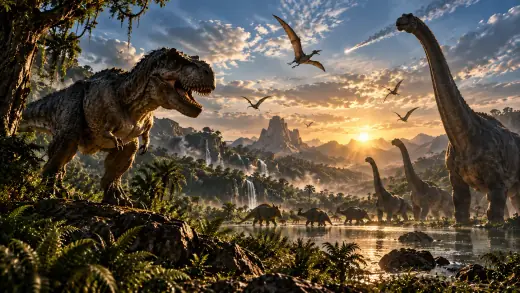
The supplied hero is conceptual editorial artwork, not the original amber specimen or a diagnostic reconstruction of Cretodorus. Its mosquito-like appearance should not replace the study’s identification as a planthopper. For the wider setting, our history of dinosaurs places these small forest inhabitants alongside the much larger animals that dominate Cretaceous imagery.
Related reading: The world of the dinosaurs.
FAQ
Frequently Asked Questions
Was the insect a mosquito?
No. Cretodorus noonoo was described as an extinct planthopper. The supplied illustration is conceptual, not a diagnostic image of the fossil.
Why were its mouthparts so long?
Researchers propose that the long, flexible structure helped it probe bark fissures for plant fluids. The feeding behaviour is inferred from anatomy.
Is its age exact?
No. Approximately 99 million years is a geological age associated with the amber deposits, not an exact date of death for the insect.
PRESDA Dispatch
Stay Informed. Stay Aware.
A sharp briefing across AI, gaming, sport, business, world affairs, paparazzi, and lifestyle.