THE CRUSADES: HOW THE FIGHT FOR JERUSALEM CHANGED HISTORY
From Urban II’s appeal in 1095 to the fall of Acre in 1291, trace how crusading reshaped rule, trade and religious communities.
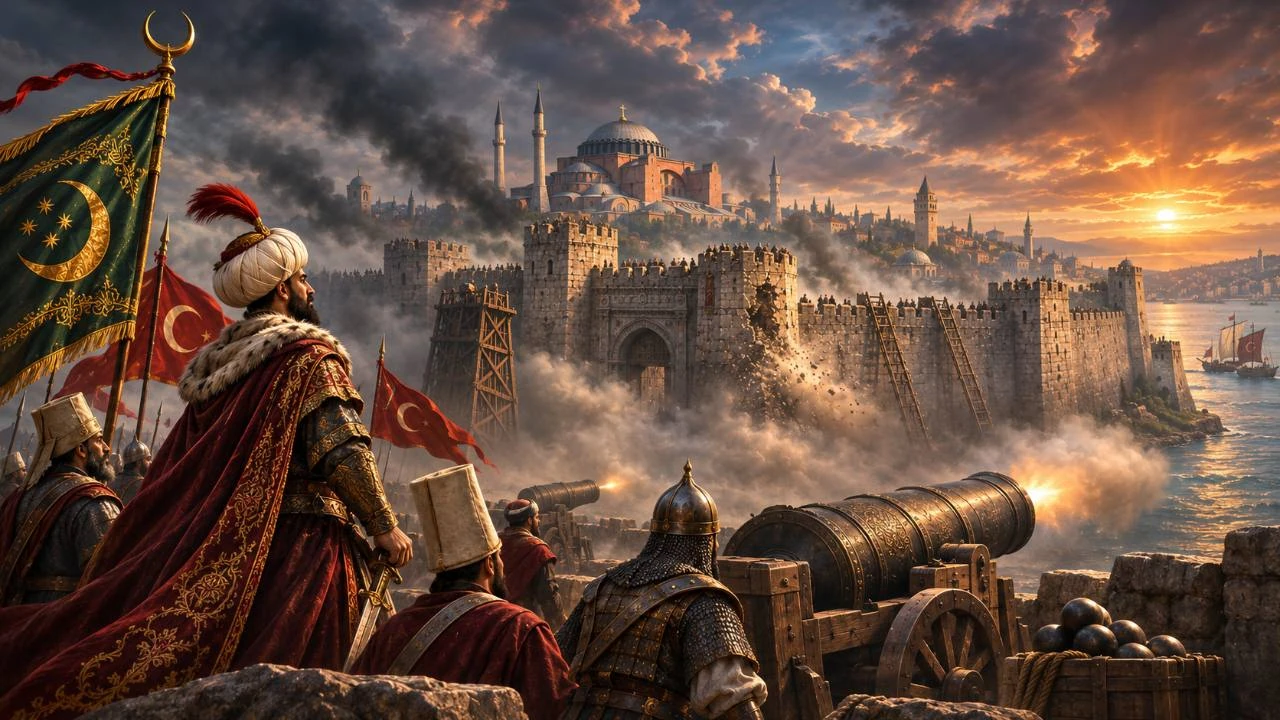
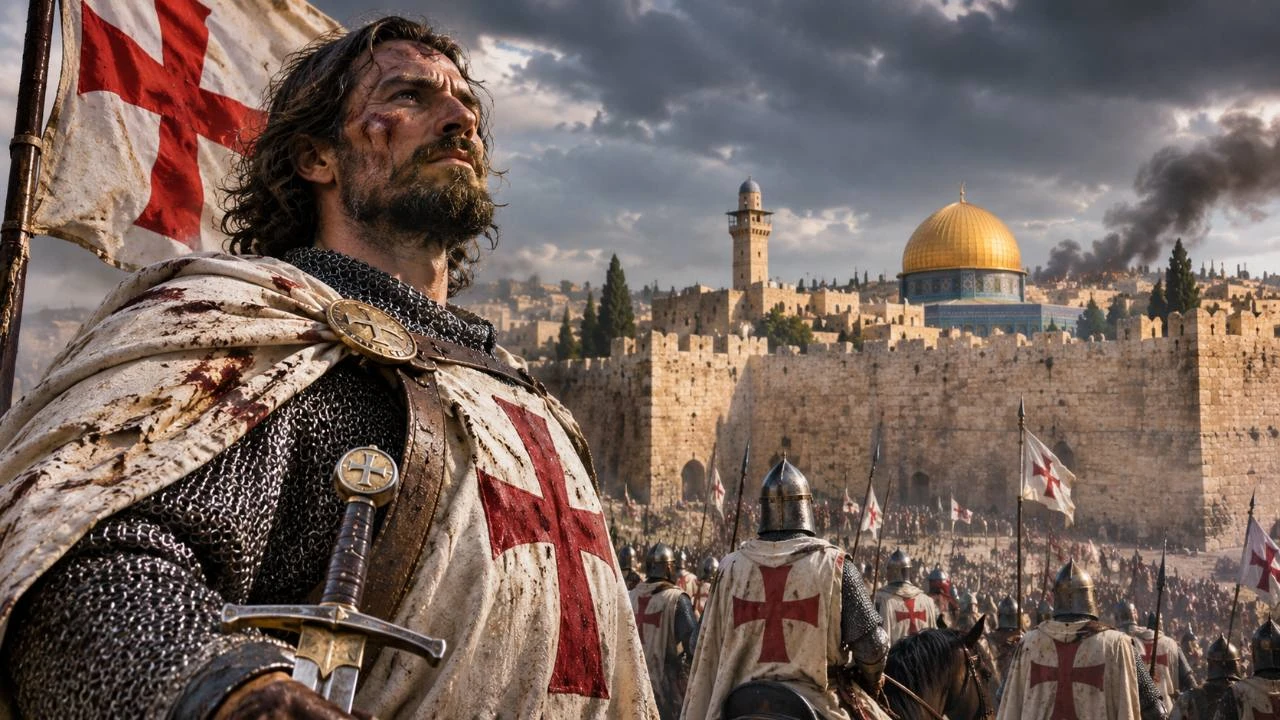
AI-generated historical illustration supplied for PRESDA. The uniforms and skyline combine imagined details and are not evidence of the city’s appearance in 1099.
Jerusalem changed hands in 1099 and again in 1187, but the Crusades were never a single continuous war for one city. The campaigns brought new rulers to the eastern Mediterranean, redirected alliances and commerce, and repeatedly exposed civilians to violence. Jerusalem mattered as a sacred city to Jews, Christians and Muslims. Its political importance rose from those overlapping histories, even as its inhabitants experienced the consequences of decisions made far away. The Met: The Crusades, 1095–1291
From a Byzantine appeal to the First Crusade
Byzantine emperor Alexios I sought military assistance from the West. At Clermont in 1095, Pope Urban II called for an expedition that joined aid for eastern Christians to a religious campaign. Chroniclers wrote down different versions of his speech, so the exact wording is uncertain. Participants made vows and could understand the journey as a penitential undertaking. The movement also drew on family obligations, expectations of patronage and the opportunities created by conquest. Fordham Medieval Sourcebook: accounts of Urban II’s speech
What the capture of 1099 meant for civilians
The crusaders took Jerusalem in July 1099 from the Fatimids. They killed many inhabitants, including Muslims and Jews. Medieval chroniclers described the killings in highly charged language. Their accounts establish the violence, while precise totals remain uncertain. In Europe, some groups associated with the expedition had already attacked Jewish communities in the Rhineland in 1096. The history of crusading violence therefore begins well before the army reached Jerusalem. Fordham Medieval Sourcebook: chronicles of the Crusades
Saladin, the coastal states and Acre
The Kingdom of Jerusalem and other Latin states depended on ports, supplies and shifting alliances. Saladin defeated a major crusader army at Hattin in 1187 and recovered Jerusalem that October. The Third Crusade recovered Acre, but Jerusalem remained outside its control. In 1291 the Mamluks took Acre, ending the principal Latin stronghold on the Levantine coast. That date marks a territorial turning point. Crusading continued in other places and forms. The Met: The Crusades, 1095–1291
Why Constantinople belongs in the story
The Fourth Crusade sacked Constantinople in 1204, even though its people were predominantly Christian. Political intervention in Byzantium, financial pressures and Venetian interests helped divert the expedition. The sack brought a Latin regime to the city and scattered objects that still appear in European collections. It shows how quickly religious commitments, money and local politics could pull an expedition in different directions. Trade and cultural contact continued alongside violence and displacement. The Met: The Crusades, 1095–1291
Jerusalem also changed hands through diplomacy
In 1229, Emperor Frederick II negotiated an agreement with the Ayyubid sultan al-Kamil that restored Christian rule over Jerusalem under terms that preserved Muslim access to key holy places. Jerusalem fell again in 1244. The episode is easily lost in a timeline organized around battles. It shows why the fate of the city cannot be explained without the competing priorities of rulers who were also negotiating with rivals in their own regions. Cardiff University: the Treaty of Jaffa
Related reading · The fall of Constantinople.
FAQ
Frequently Asked Questions
When did the First Crusade begin?
Urban II called for it in 1095 and the main expedition set out in 1096.
When did Saladin recover Jerusalem?
He recovered it in October 1187 after his victory at Hattin.
Why is 1291 significant?
The Mamluk capture of Acre ended the main Latin stronghold on the Levantine coast.
PRESDA Dispatch
Stay Informed. Stay Aware.
A sharp briefing across AI, gaming, sport, business, world affairs, paparazzi, and lifestyle.