Dark Sky Tourism: Traveling to See the Universe
Plan a stargazing journey with seven destination regions, observatory access, Milky Way seasons, real cost examples and responsible night-sky advice.
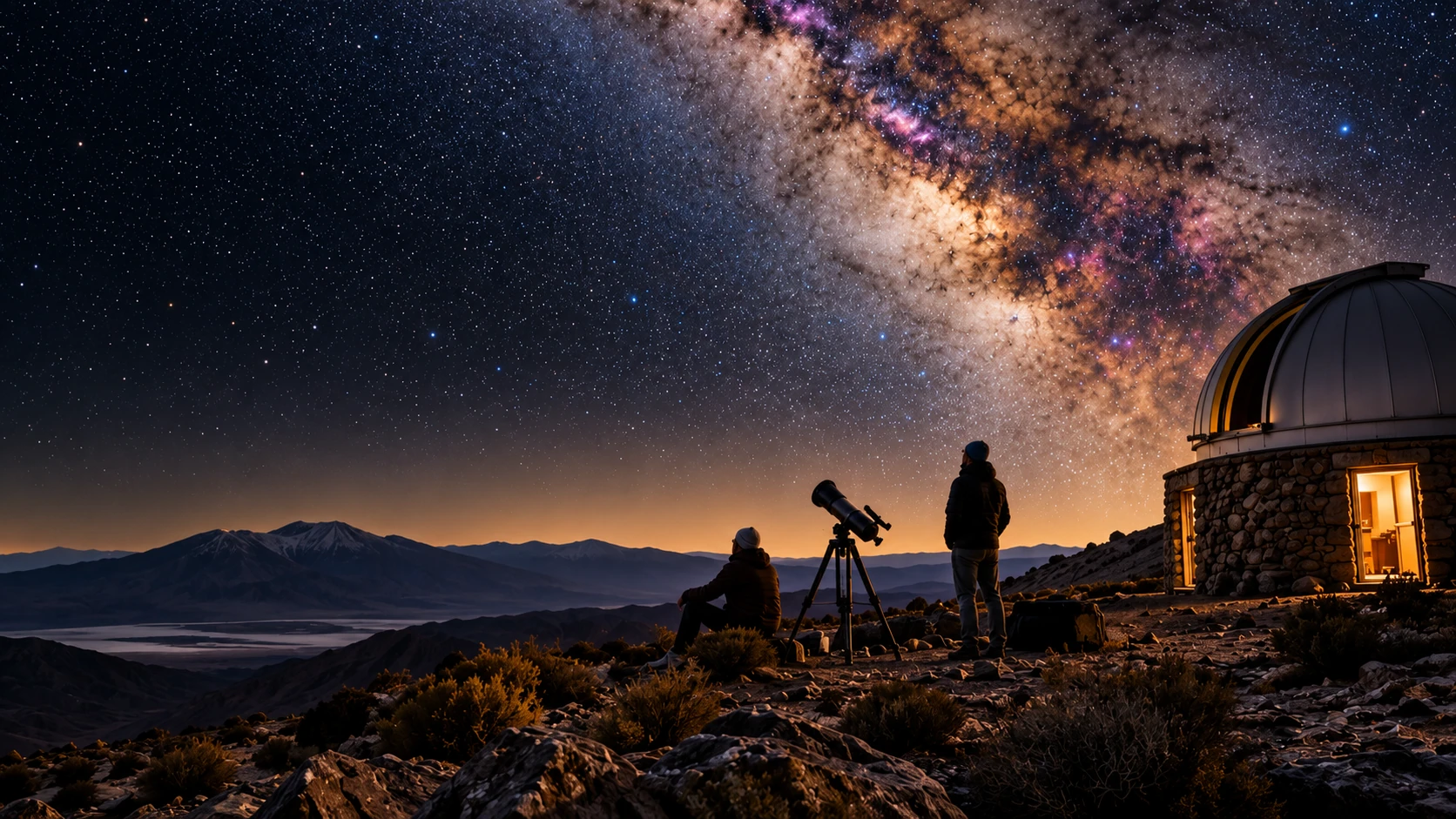
PRESDA AI-generated editorial illustration, supplied and approved for this feature. An imagined observatory scene, not a photograph of a specific destination; the unaided night sky is subtler than this depiction.
Dark sky tourism means travelling to places where artificial light interferes less with the night sky. Its reward can be wonderfully simple: seeing the Milky Way as a real band of light rather than an image on a screen. The trip succeeds through darkness, weather, timing and patient attention, not necessarily an expensive telescope or a journey to the most remote place on Earth.
There is no single world's-best destination for every observer. A photographer seeking the galactic centre, a family hoping to see Saturn and a traveller interested in Indigenous astronomy need different experiences. The destinations below are a varied selection, not a ranking. Practical information was checked in October 2026; reservations, fees, road conditions and access rules should be reconfirmed before departure.
What darkness changes
City lights scatter through the atmosphere and create skyglow, reducing the contrast of faint celestial objects. Leaving that glow can reveal stars and dust lanes that were present all along. Dark adaptation matters too: bright phone screens and headlights can undo the benefit of waiting quietly. Start with a safe, open viewing area, allow time for your eyes to adjust, and use the dimmest practical light for moving around. NASA: finding places to stargaze
Expect the visual sky to be subtler than the photographs. Long exposures collect light over time and can show colour and detail that the unaided eye does not register. The Milky Way often looks pale and cloudlike. That is not a disappointing version of the photograph; it is a different experience, with a scale and stillness no screen can reproduce. Our guide to the universe provides the wider scientific context. NASA: the Great Rift PRESDA: Our Universe
Reserves, parks and the meaning of a label
An International Dark Sky Reserve protects a dark core with support from a surrounding area; a Dark Sky Park combines conservation with responsible lighting and public education. Certification is evidence of stewardship, not a promise of clear weather or unrestricted nighttime entry. Other organisations use different designations. Check the certifying body and the site's actual visitor arrangements rather than treating every dark-sky logo as interchangeable. DarkSky International: place types
The distinction matters when booking accommodation. A hotel near a protected area may still have floodlit grounds. Ask whether outdoor lights can be reduced, whether a suitable observing space is accessible after dark, and whether telescope sessions are included or separately charged. For travellers with limited mobility, a level parking area with an open horizon may be more useful than an isolated summit reached by a difficult trail.
Chile: the Atacama and an observatory reality check
Northern Chile combines desert landscapes with major astronomical infrastructure. Paranal offers a particularly clear example of the difference between visiting science and observing for pleasure. ESO currently lists free Saturday guided tours with compulsory registration. These are scheduled daytime visits. Visitors arrange their own transport to the site, and there is no public accommodation in the observatory's Residencia. ESO: public visits to Paranal
A research visit can explain how large telescopes work, but it should not be sold to yourself as an evening at their eyepieces. Book a separate public stargazing experience if that is the aim. Desert itineraries also demand realistic distances, warm clothing after sunset and attention to altitude. Leave room for a weather cancellation, and choose a base with worthwhile daytime activities rather than staking an entire journey on one clear night.
Namibia: a southern sky with space around it
NamibRand is an International Dark Sky Reserve whose conservation remit includes the night sky as well as the desert landscape. It is a strong choice for travellers who want darkness to be part of a longer encounter with the environment, rather than a short urban excursion. Namibia's tourism authority describes cold winter nights in the desert and summer rainfall, important reminders that a hot-country holiday can still require serious evening layers. DarkSky: NamibRand Namibia Tourism: climate
The southern winter is a sensible starting point for planning, but local cloud forecasts and the Moon remain decisive. Transport and accommodation may dominate the budget. Confirm whether an operator supplies binoculars, telescopes and a knowledgeable guide, and avoid driving unfamiliar remote roads while exhausted after an observing session. A second or third night gives the sky another chance without turning bad weather into a failed holiday.
New Zealand: Aoraki Mackenzie and Takapō
The Aoraki Mackenzie International Dark Sky Reserve offers access to the southern sky in New Zealand's South Island. Around Lake Tekapo / Takapō, astronomy can be combined with an appreciation of Māori relationships with the sky. Choose guides who explain where their cultural knowledge comes from and distinguish living traditions from generic constellation entertainment. DarkSky: Aoraki Mackenzie
Dark Sky Project distinguishes outdoor experiences at Mount John and Cowan's Private Observatory from an indoor experience that can operate irrespective of cloud. That difference is useful when comparing tickets: an indoor interpretation programme is a worthwhile activity, but not a substitute secretly equivalent to a clear telescope night. Southern winter offers long nights and cold conditions; summer changes the darkness window. Read cancellation terms before paying. Dark Sky Project: experiences Dark Sky Project: terms
La Palma and Alqueva: two European approaches
La Palma's Roque de los Muchachos Observatory offers advance-booked visits led by specialist guides. The IAC specifies daylight visits, subject to weather and scientific operations. This is a chance to understand a working observatory, while a separate authorised nighttime excursion serves a different purpose. Mountain weather, road closures and driving times deserve as much attention as the telescope photographs in a brochure. IAC: Roque de los Muchachos visits
In Portugal, the official Dark Sky Alqueva Observatory at Cumeada offers a different setting, linking rural travel with guided skywatching. Visit Portugal also lists the separate Alqueva Lake Observatory near Monsaraz. Check which venue and meeting point a booking actually names. This is a useful option for combining astronomy with villages, food and landscape, rather than building a trip around a remote research facility. Visit Portugal: Cumeada observatory Visit Portugal: Alqueva Lake Observatory
Utah and Northumberland: darkness without an expedition
Natural Bridges in Utah welcomes stargazing from places including the visitor-centre parking area and campsite. NPS identifies summer as a good period for seeing the Milky Way, while warning that clouds and monsoon conditions can intervene. Travellers need not attempt a rocky trail in darkness to have a meaningful night. A familiar, permitted viewing area is often the better first choice. NPS: summer at Natural Bridges
Northumberland offers a contrasting experience: dark skies within a lived-in British landscape, with autumn and winter providing long observing evenings. Its national park publishes a practical stargazing guide. Cloud is a real limitation, so flexibility matters more than promising yourself a particular photograph. A nearby destination that allows several attempts can be a better personal choice than a celebrated overseas site available for one night only. Northumberland National Park: stargazing guide
Choose a season, then choose a night
A Milky Way trip needs more than a new-moon icon on a calendar. The galactic centre's position changes with the hour and season, while latitude affects how high it rises. Check a planetarium application for the exact location and date, including moonrise, moonset and the end of twilight. A moonless period when the desired target is below the horizon will not deliver the image you planned. NASA's skywatching guidance explains why dark summer evenings are useful for northern observers. NASA: July skywatching and the Milky Way
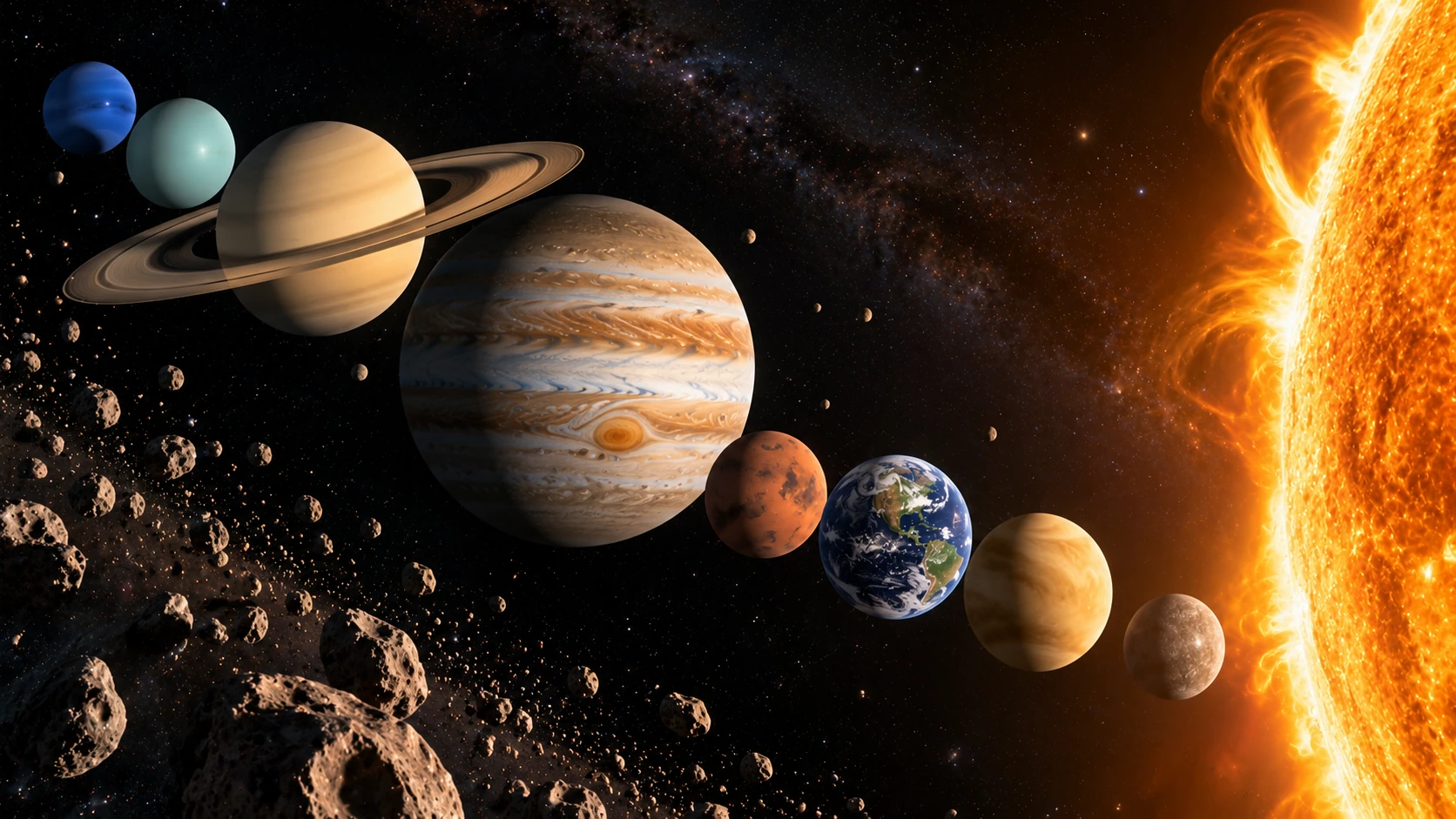
Winter's longer darkness is not automatically better for every target. A bright Moon can interfere with faint structures while becoming an excellent object itself. Planets, star clusters and lunar features can rescue a night that is unsuitable for a wide-field Milky Way photograph. Decide whether the priority is photography, learning or simply looking, and let the programme change with conditions. Our Solar System guide can help identify other rewarding targets. PRESDA: Our Solar System
What a stargazing trip really costs
Costs range from a local outing to a specialist guided holiday. As checked in October 2026, Natural Bridges lists a US$20 private-vehicle entrance fee valid for seven days. Paranal's public tour is free, but reaching it is not. Neither figure includes an entire trip. Transport, lodging, meals, equipment hire and cancellation exposure should be separated from the advertised observing fee. NPS: Natural Bridges fees
Compare equivalent bookings: group size, transport, telescope access, guide language, accessibility, duration and the response to clouds. A cheap ticket can become costly if it requires a long private transfer. Conversely, an expensive lodge is not proof of superior skies. Ask whether cancellation means a refund, a different activity or a credit you cannot use before leaving. These questions often matter more than a universal daily-budget estimate, which would conceal enormous regional differences.
Photograph the sky without forgetting to see it
Begin with a stable tripod, a charged battery and a camera or phone that supports appropriate night settings. Focus carefully and review a test image for blurred stars. Longer exposure is not always better: Earth's rotation can turn points into trails, and bright foreground lights can overwhelm the scene. NASA's smartphone guide explains the practical limitations and possibilities of small cameras. NASA: smartphone astrophotography
Scout the foreground in daylight, stay on permitted surfaces and avoid lighting other people's exposures. Label composites honestly if the sky and landscape were photographed at different times. Keep some time camera-free. The purpose of the journey need not be proving that you captured a more spectacular galaxy than someone else; learning a few constellations can make every later night outdoors more meaningful.
Protect the experience you came to find
Responsible lighting is not simply switching off everything regardless of safety. DarkSky and the Illuminating Engineering Society advocate lighting that has a purpose, is directed carefully, remains no brighter than necessary, operates only when needed and avoids unnecessarily blue-rich light. Visitors can support that approach by choosing considerate accommodation, reducing decorative illumination and respecting local viewing rules. DarkSky and IES: lighting principles
Carry layers, water, an offline route and a practical light for safe movement. Tell someone where you are going, respect private land and wildlife, and never assume an observatory road is open because a map shows it. The most lasting souvenir may be a changed relationship with ordinary darkness. Once you have watched the sky emerge slowly, a less wastefully lit street at home begins to look like an achievable improvement rather than a small sacrifice.
FAQ
Frequently Asked Questions
What is this PRESDA article about?
Plan a stargazing journey with seven destination regions, observatory access, Milky Way seasons, real cost examples and responsible night-sky advice.
Which category does this story belong to?
This story is part of PRESDA's Travel coverage.
Who published this article?
Dark Sky Tourism: Traveling to See the Universe was published by PRESDA Editorial on PRESDA.
PRESDA Dispatch
Stay Informed. Stay Aware.
A sharp briefing across AI, gaming, sport, business, world affairs, paparazzi, and lifestyle.