FINLAND: THE COUNTRY WITH THREE MILLION SAUNAS
Why Finland has roughly three million saunas, how löyly works, what UNESCO recognized and what to expect in a Finnish public sauna.
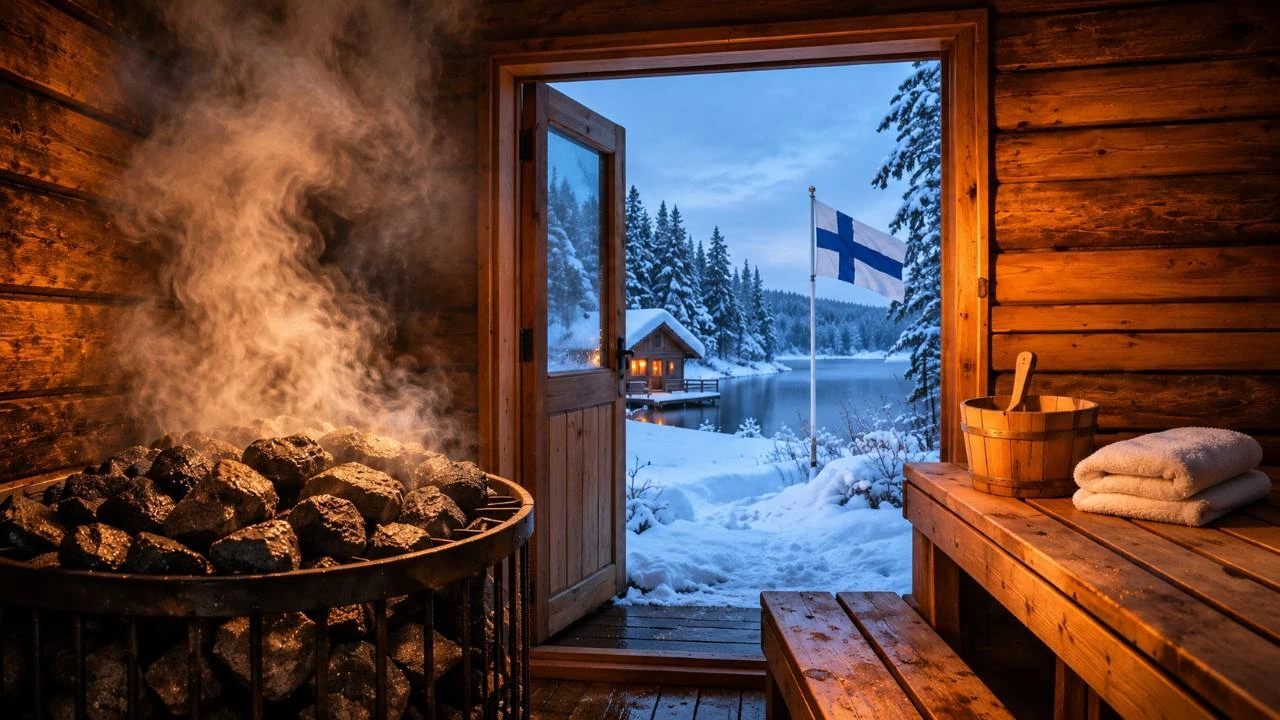
Editorial illustration supplied for PRESDA.
In a Finnish sauna, the sound of water meeting heated stones can tell you when the room is about to feel different. Finnish speakers call the resulting steam and sensation of heat löyly. It is central to the practice that UNESCO inscribed on its Representative List of the Intangible Cultural Heritage of Humanity in 2020. In the same entry, UNESCO cited 3.3 million saunas for about 5.5 million people. The Finnish Heritage Agency gave a figure of 3.2 million. The headline rounds those estimates to three million. Neither source presents the figure as a live count. UNESCO intangible cultural heritage register Finnish Heritage Agency
The number makes more sense once you consider where saunas are found. They can be at a summer cottage by a lake, in a shared building, inside an apartment or in a public establishment. Their distribution matters as much as the total. A room used regularly close to home connects the practice to ordinary life in a way a destination that people visit once cannot. UNESCO intangible cultural heritage register Finnish Heritage Agency
| Sauna type | What distinguishes it |
|---|---|
| Smoke sauna | Stones store heat and the room is aired before use |
| Wood-fired sauna with flue | A stove burns wood and vents smoke through a flue |
| Electric sauna | Electric elements heat the stones |
How many saunas does Finland have?
Finland has roughly three million saunas according to the national and UNESCO accounts published around the inscription. If you divide 3.3 million by 5.5 million, you get about six saunas per ten people. That ratio joins two approximate figures from the same account. It does not measure how many private saunas each household owns, or how frequently each person uses one. Shared facilities make it possible for many users to visit the same room, while a cottage with a sauna counts even if it is used only part of the year. UNESCO intangible cultural heritage register Finnish Heritage Agency
Why the count is an estimate
The round figure can shift depending on the source, the year and the coverage of facilities. A room in a flat, a smoke sauna in a separate building and a public venue all take different forms. A good comparison would need the same counting rules and reference dates on both sides. UNESCO’s total makes the prevalence of the custom intelligible. Its purpose was to document a practice, and it gives no reason to treat the difference between 3.2 and 3.3 million as evidence that exactly 100,000 rooms were added or lost. UNESCO intangible cultural heritage register Finnish Heritage Agency
What löyly is
Löyly is the burst of steam and heat experienced when water reaches hot stones. The room may already be at steady temperature, but the added moisture changes the sensation on the skin. Other people in the room feel it at the same time. That is one reason etiquette matters. The Finnish Sauna Society encourages visitors at its facilities to take account of others when adding water. The relevant skill is learning the rhythm of a shared room, including who is present and how they respond. UNESCO intangible cultural heritage register Finnish Sauna Society visitor customs
The heat varies within the same room
A bench higher in the room is generally warmer than a lower one. The positions are useful because people can want different intensities. The stone heater and the way the room is ventilated also help explain why two saunas can feel different. People often associate the experience with a cycle of warming up, stepping out to cool down and returning if they want to. A lake or a snowy landscape can set the scene for one version of that cycle. A public bath in a city can provide another, with a changing room, a shower and a place to sit. UNESCO intangible cultural heritage register Finnish Sauna Society visitor customs
Smoke, wood and electric saunas
The Finnish Sauna Society’s facilities illustrate the range. Its site at Vaskiniemi lists smoke saunas, conventional wood-burning saunas and an electrically heated sauna. Smoke saunas have a distinctive heating process. Smoke from warming the large mass of stones passes through the room, and the air is cleared before bathing. A conventional wood stove has a flue. An electric heater can bring the stones to temperature without burning fuel in the room. All three can produce löyly if their hot stones are meant for water. Finnish Sauna Society on the smoke sauna Finnish Sauna Society history and facilities
Why a smoke sauna feels different
A smoke sauna requires preparation before anyone enters. The work of heating the stones and clearing the room happens in advance, and the stored heat is what the bathers use. Soot darkens parts of the interior. In an electric sauna the heater can be integrated into the ordinary schedule of a building. The convenience can matter where people visit at predictable hours or live in a small flat. A community may value an old sauna in part because preparing it is a skill that people share. The methods coexist because different settings make room for them. Finnish Sauna Society on the smoke sauna Finnish Sauna Society history and facilities
What did UNESCO recognise?
UNESCO inscribed sauna culture in Finland in 2020. Its entry is about knowledge, practices and their transmission. It is separate from UNESCO’s World Heritage list of individual places. The recognition includes the ways people make, heat, use and share saunas. A family can teach a child what to expect through repeated visits. An association can keep a shared room in use and explain its customs to new members. Those are among the ways a living practice can survive changes in architecture and heating. UNESCO intangible cultural heritage register Finnish Heritage Agency
Sauna and the places people gather
Some saunas are private, while others bring together people who live in the same building or neighbourhood. At a public facility, visitors may share a space with people they have never met. A posted schedule can therefore carry information that friends at a cottage would negotiate by talking to one another. The Finnish Heritage Agency describes safeguarding through cooperation with organisations that teach and support sauna culture. A working room, its maintenance and the people who make others feel welcome all contribute to keeping the practice available. Finnish Heritage Agency Finnish Sauna Society history and facilities
What a visitor should know
The Finnish Sauna Society publishes rules for its own venue. Local customs and opening arrangements can vary. A public establishment may specify whether people should wear swimwear, bring a towel or use a separate room or session. Those rules are useful because Finland has a range of facilities and a visitor may know only one example. It is considerate to read the venue’s guidance, ask if unsure about adding water and allow other people space to cool down or leave. The custom can be quiet or conversational according to the people and the setting. Finnish Sauna Society visitor customs
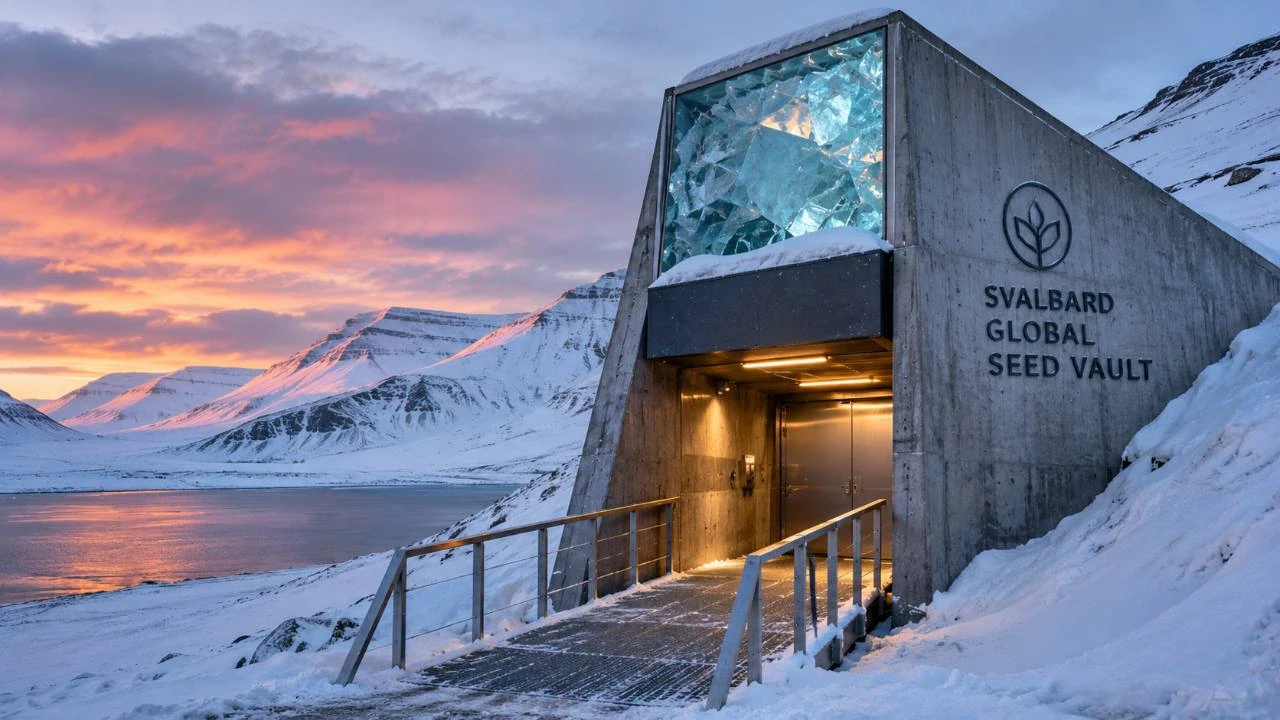
A sauna visit gives the statistics some texture. Millions of rooms matter because large numbers of people can keep returning to a practice they know and can pass it on. The UNESCO listing gives readers a way to see the institution and the ordinary rooms as part of the same history. For another look at the links between northern environments, buildings and traditions of keeping things safe, read PRESDA’s feature on Norway’s Svalbard seed vault.
What survives when the building changes
A stove can change faster than the customs around it. Electricity can make it practical to run a sauna where storing wood or tending a fire would be hard, including in a city building with many users. The idea of a shared room, with a place to wash and cool down, can still feel familiar. A smoke sauna requires a different rhythm of preparation. The building and equipment shape the experience, but people carry knowledge about how to take turns and how to make others comfortable from one setting to the next. That helps explain why safeguarding a practice can mean teaching and maintaining facilities as well as preserving structures. UNESCO intangible cultural heritage register Finnish Heritage Agency Finnish Sauna Society history and facilities
What a public booking can tell a visitor
The simplest clues are often on a venue’s own timetable. A shared session, a group’s private slot and a time with different dress rules may all take place in the same room on the same day. Arriving with the right expectations matters more than turning an account of one sauna into a rule for the whole country. The Finnish Sauna Society’s instructions show how a specific venue makes that information available. Finnish Sauna Society visitor customs
FAQ
Frequently Asked Questions
How many saunas are there in Finland?
UNESCO cites about 3.3 million and the Finnish Heritage Agency cites 3.2 million. Both figures are estimates published around the 2020 inscription.
What is löyly?
It is the steam and heat bathers feel when water is poured onto hot sauna stones.
Does every Finnish sauna have the same rules?
Venues can set different arrangements for swimwear, sessions and other practices. Check the instructions at the facility you plan to visit.
PRESDA Dispatch
Stay Informed. Stay Aware.
A sharp briefing across AI, gaming, sport, business, world affairs, paparazzi, and lifestyle.