FLAMINGOS: WHY THE WORLD’S PINK BIRDS ARE BORN GRAY
Flamingo chicks hatch with gray or pale down. Discover how diet, carotenoid pigments, developing feathers and parental care create their famous pink plumage.
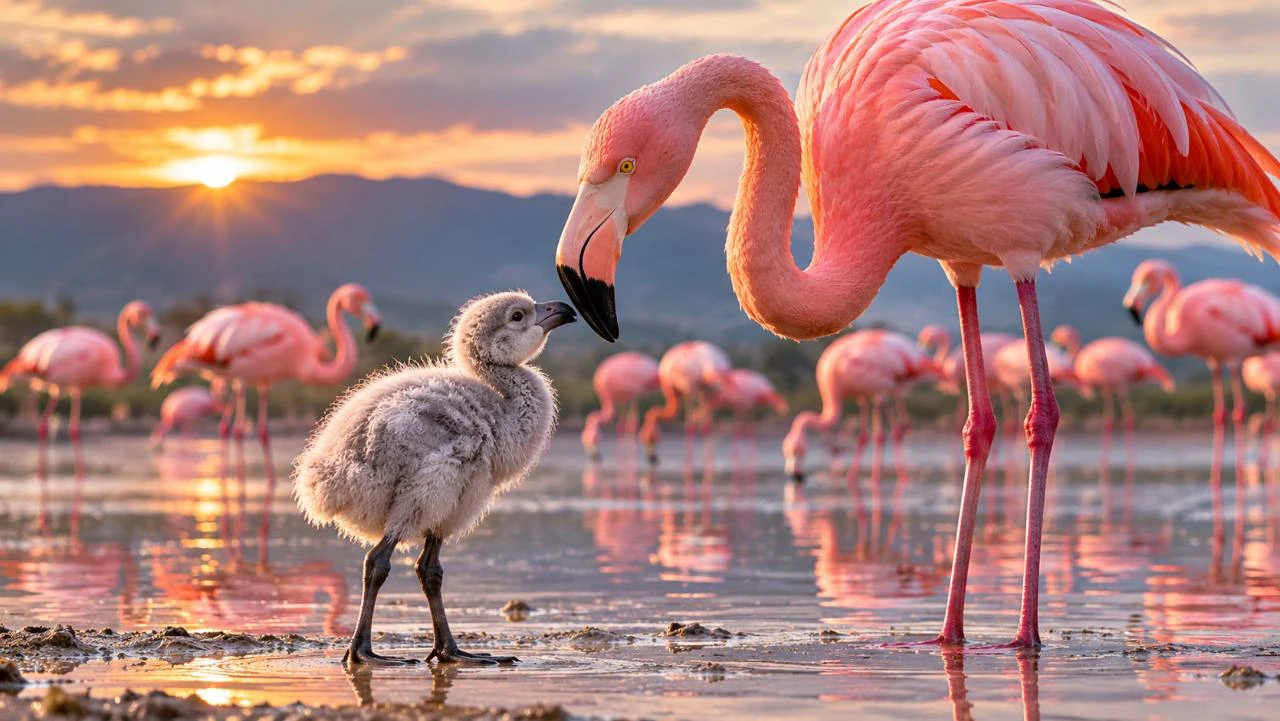
Conceptual wildlife illustration, not a documented family encounter or verified species record. Colour, proportions and setting are illustrative. Editorial image supplied for PRESDA. Original creator and reuse licence not provided.
The gray chick beside a pink adult looks like a small contradiction. If flamingos are the pink birds, why does a young one seem to belong to a different colour scheme? The answer is a reminder that an animal’s appearance can record a process rather than arrive complete at birth. Flamingos hatch from eggs, and their soft early down is very different from the plumage that makes an adult flock so recognisable.
The gray beginning
San Diego Zoo describes newly hatched flamingos as having gray down. Pale or gray early plumage is normal, not evidence that a chick is the wrong species or is simply a pink bird covered in mud. Development changes the bird’s appearance. The familiar phrase born gray is shorthand for the condition at hatching; it should not turn an egg-laying bird into a mammal in the telling. San Diego Zoo: flamingo biology
Pink comes through the food chain
Los Angeles Zoo explains that pink and reddish feather colours come from carotenoid pigments in the diet. Algae and small aquatic animals provide routes for these pigments through the food web. The popular explanation that flamingos turn pink because they eat shrimp captures only part of the picture. Different species filter different foods, and the colour depends on the pigments obtained and processed by the bird, not on one universally required menu item. Los Angeles Zoo: flamingos and dietary pigments
Parents feed more than a colour
Young chicks depend on a rich secretion from the parents’ upper digestive tract, commonly called crop milk. Both male and female flamingos can produce it. It is a bird’s specialised feeding secretion, rather than mammalian milk. Smithsonian keepers describe the demanding work of raising chicks and the gradual change from baby-gray to pink. Receiving food containing pigments does not make a newly hatched chick instantly look like an adult; feather development and sustained nutrition still take time. Smithsonian National Zoo: raising flamingo chicks
Even an adult’s colour can change
Parental feeding can leave adults noticeably paler, with colour returning as the breeding demands ease and their condition changes. Plumage is therefore not a permanent painted surface. Diet, life stage and the demands of reproduction can all influence what an observer sees. Nor does every flamingo species have exactly the same shade: adult birds range across paler pinks, stronger pinks and reddish tones. A single illustration cannot serve as a colour chart for the whole family. San Diego Zoo: flamingo biology
The gray chick is not missing the essential ingredient that makes it a flamingo. It is showing one stage of the animal’s life. That makes the adult’s pink more interesting: a visible connection between food, growth and the work of keeping another generation alive. The famous colour is a biological story that develops, feather by feather.
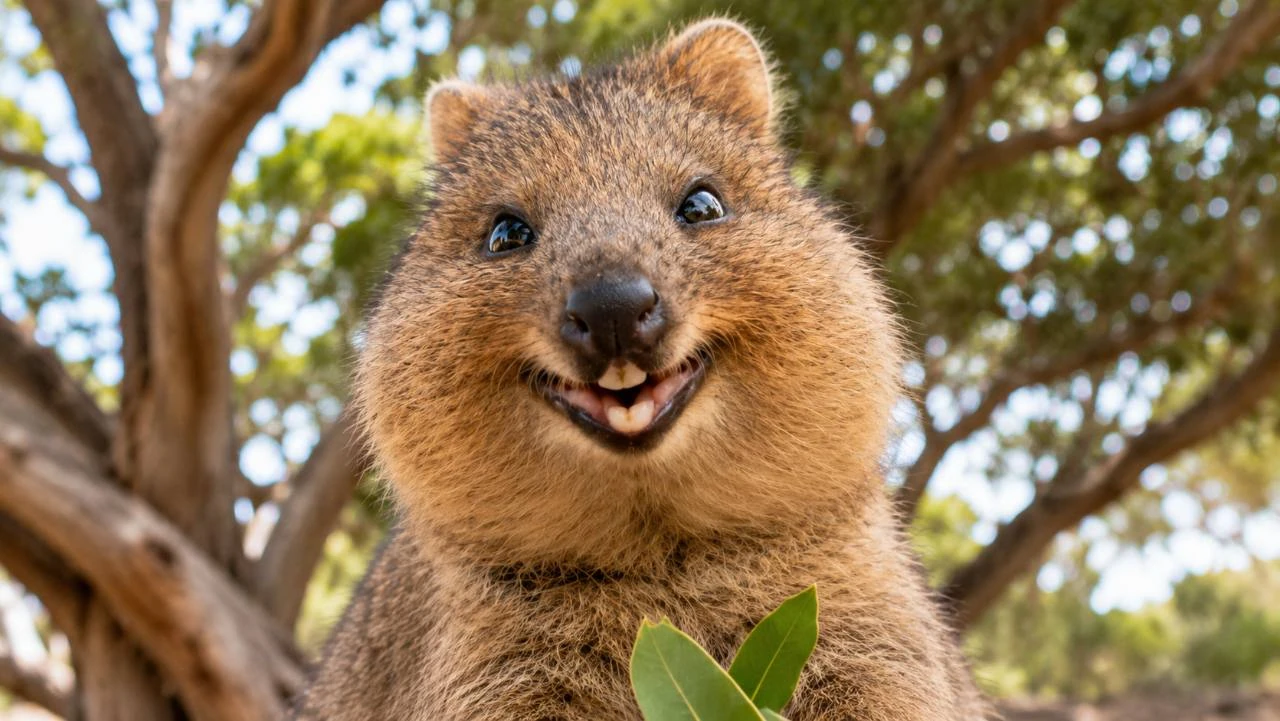
Related reading: The biology behind the quokka’s famous smile.
FAQ
Frequently Asked Questions
Why do flamingo chicks hatch gray?
Their early down differs from adult plumage. Pink develops as the bird grows and incorporates dietary carotenoid pigments.
Do flamingos only get their colour from shrimp?
No. Pigments move through algae and other foods in aquatic food webs; diets vary among species.
Do both parents feed crop milk?
Yes. Both male and female flamingos can produce this nutrient-rich digestive secretion for chicks.
PRESDA Dispatch
Stay Informed. Stay Aware.
A sharp briefing across AI, gaming, sport, business, world affairs, paparazzi, and lifestyle.