FLYING FROGS: THE AMPHIBIANS THAT GLIDE BETWEEN TREES
Discover how flying frogs use webbed hands, feet and body posture to control a descent, and why their aerial movement differs from powered flight.
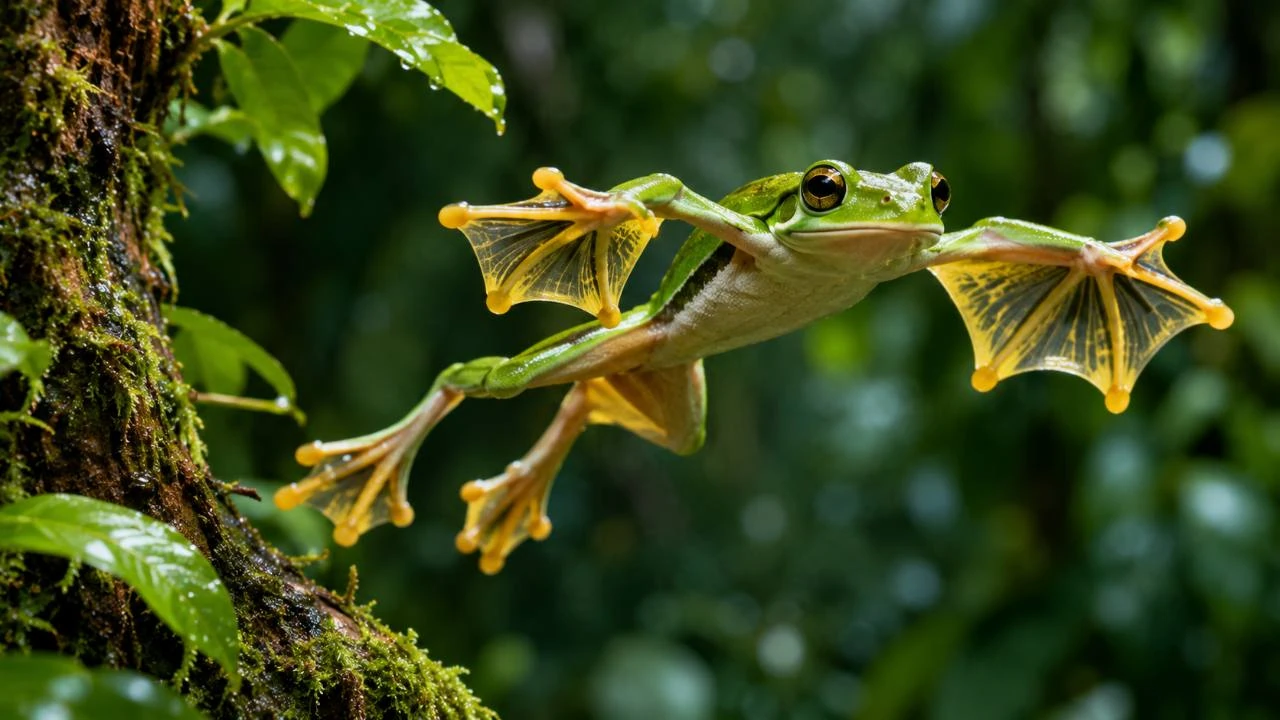
Conceptual wildlife illustration, not a documented glide or verified species identification. Webbing, anatomy and posture are illustrative. Editorial image supplied for PRESDA. Original creator and reuse licence not provided.
A frog leaves a branch, opens its limbs and turns the space below into part of its route. It is a surprising sight because we usually imagine frogs jumping through a short arc or swimming. In a forest canopy, however, the problem is three-dimensional. Reaching another surface can involve managing the air between them. The familiar name flying frog describes that striking ability, while the mechanics reveal something more specific: a controlled, unpowered descent.
What flying means here
Wallace’s flying frog, Rhacophorus nigropalmatus, is a well-known example from the rainforests of Malaysia and Indonesia. The Natural History Museum describes its webbed feet and its ability to move through the air between trees or down to the ground. The animal does not sustain flight by beating wings. It begins with height and uses its spread body and limbs to influence the descent. Gliding and parachuting are useful descriptions of different aspects of that aerial movement. Natural History Museum: Wallace’s flying frog
The importance of spreading out
Extensive webbing between the digits increases the area presented to moving air. Some flying frogs also have skin fringes that contribute to their specialised shape. The Frogs of Borneo reference stresses that only some members of Rhacophorus have strongly developed aerial abilities. Being a tree frog does not automatically make an animal an expert glider, and the label flying frog is not a single species name. Anatomy and behaviour have to be considered together. Frogs of Borneo: Rhacophoridae
A landing problem as well as a distance problem
A classic experimental study by Sharon Emerson and Mimi Koehl used live-animal observations and models to examine aerial performance, including distance, manoeuvrability and stability. This broader approach matters. An animal’s success cannot be read from one dramatic photograph or a maximum-distance claim. Turning toward a target and controlling orientation may matter as much as travelling far. The webbed limbs are parts of a moving system, not detachable miniature aircraft wings. Emerson and Koehl: morphology and behaviour in flying frogs
Life continues after the glide
Research comparing specialised Rhacophorus with less specialised Polypedates has also examined jumping and clinging. That reminds us that an arboreal amphibian needs more than an aerial trick. It must launch, reach a surface and maintain contact there, then continue feeding and breeding. The useful question is how a whole animal functions in a demanding habitat, rather than which single feature makes it look most like a flying machine. McKnight and colleagues: gliding, jumping and clinging
Their achievement is striking precisely because it uses a frog’s existing body in an unusual way. Fingers, toes, skin and posture become tools for managing a brief journey through air. Calling them flying frogs opens the door to the story. Watching how they descend, steer and land is where the biology begins.
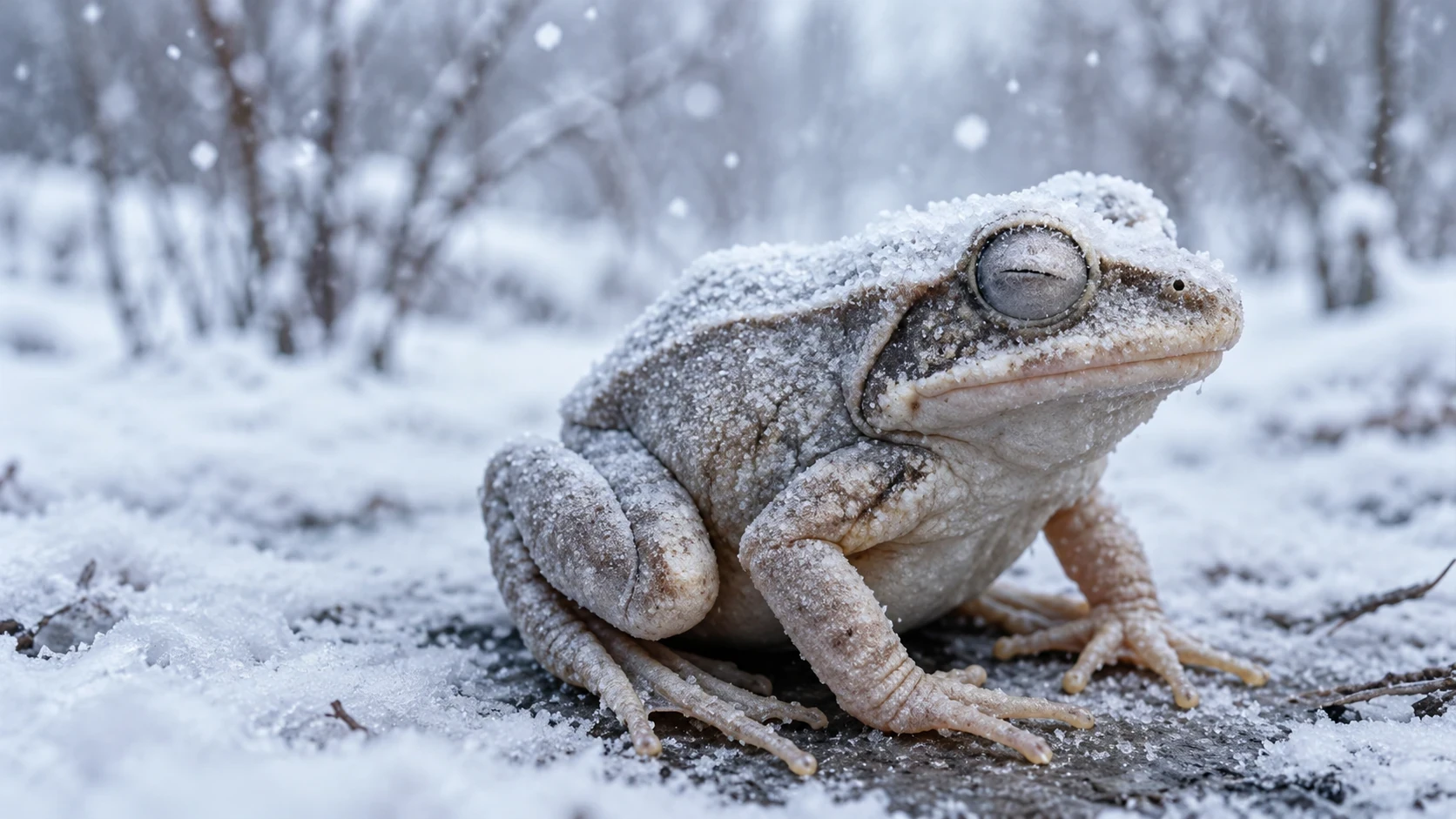
Related reading: How some frogs survive freezing.
FAQ
Frequently Asked Questions
Do flying frogs have powered flight?
No. They control an unpowered descent using their bodies, limbs and webbing rather than beating wings.
Are all tree frogs able to glide?
No. Aerial abilities vary, and well-developed gliding is associated with particular species and adaptations.
Is the hero a documented Wallace’s flying frog?
No. It is a conceptual illustration; the exact species, anatomy and airborne behaviour are not verified.
PRESDA Dispatch
Stay Informed. Stay Aware.
A sharp briefing across AI, gaming, sport, business, world affairs, paparazzi, and lifestyle.